
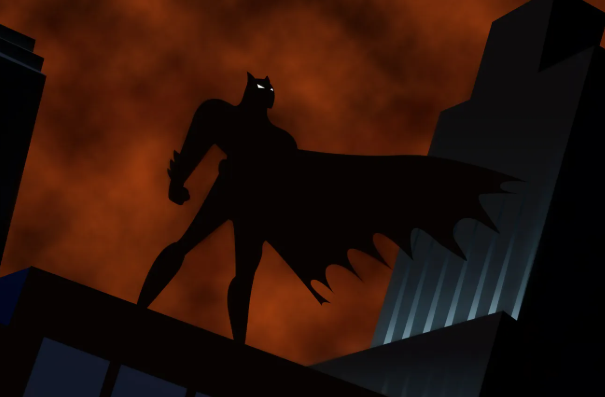
In the heart of a city shrouded in fog and architectural decay, a searchlight pierces the clouds, casting a stylized bat silhouette against the grey sky. For criminals, it is a harbinger of doom; for the innocent, it is a beacon of hope. This is the world of Batman, a figure who has transcended the pages of comic books to become one of the most recognizable cultural icons in human history. Unlike his contemporaries who fly through the stars or command the oceans, Batman stands firmly on the rain-slicked pavement of Earth. He is a character defined not by what he was born with, but by what he chose to become.
To understand Batman is to understand the intersection of trauma, willpower, and the relentless pursuit of justice. He is the “Caped Crusader,” the “World’s Greatest Detective,” and the “Dark Knight.” But beneath the tactical armor and the frightening cowl lies a man named Bruce Wayne. This guide serves as a comprehensive introduction to the legend of Batman, exploring the origins that forged him, the city that tests him, and the enduring legacy that makes him more relevant today than ever before.
1. The Man Behind the Mask: Understanding Bruce Wayne
To the public eye, Bruce Wayne is the quintessential billionaire playboy. He is the heir to the Wayne Enterprises fortune, a philanthropist who frequents high-society galas, and a man who seemingly enjoys the finest luxuries life has to offer. However, this persona is perhaps Batman’s greatest performance. The “real” person exists in the silence of the Batcave, somewhere between the socialite and the vigilante.
Bruce Wayne uses his immense wealth not just for high-tech gadgets, but as a tool for systemic change in Gotham City. Through the Wayne Foundation, he funds hospitals, orphanages, and social programs, attempting to heal the city’s wounds from the top down. Yet, the duality of his life is a heavy burden. He must constantly balance the responsibilities of a corporate titan with the physical and mental demands of his nightly crusade. This internal conflict—the struggle to maintain a “normal” life while being consumed by a mission—is what makes Bruce Wayne one of the most complex characters in fiction. He is a man who sacrificed his own happiness to ensure that his city might one day find peace.
2. The Tragedy That Changed Everything: Thomas and Martha Wayne
Every legend has a beginning, and for Batman, that beginning is rooted in a dark alleyway known as Crime Alley. The story is foundational: a young Bruce Wayne exits a movie theater with his parents, Dr. Thomas Wayne and Martha Wayne. In a moment of senseless violence, a street thug confronts them for Martha’s pearl necklace. Two gunshots ring out, and in an instant, Bruce’s world is shattered.
This event is the “Big Bang” of the Batman universe. The sight of his parents lying lifeless on the cold pavement transformed a happy child into a soul driven by a singular, obsessive purpose. This wasn’t just a loss of family; it was a loss of innocence and a realization that the world was broken. The image of the falling pearls has become a visual shorthand for the birth of a hero. It is the core trauma that Batman revisits every night, a wound that never truly heals, serving as the fuel for his endless war against the criminal element. It is this relatability—the fear of loss—that grounds the character in human emotion.
3. From Grief to Justice: Why the Batman Exists
Most people who experience a tragedy of such magnitude might spiral into despair or seek simple revenge. Bruce Wayne, however, took a different path. On the night of his parents’ funeral, he made a solemn vow: he would spend the rest of his life warring on all criminals to ensure that no other child would ever have to endure the pain he felt.
The transition from a grieving orphan to Batman was not immediate. It required a philosophical shift from seeking vengeance to seeking justice. Vengeance is personal and destructive; justice is societal and restorative. By adopting the mantle of Batman, Bruce Wayne became a symbol that could stand above the law when the law was failing. He chose to become a guardian, a “Dark Knight” who would do what the police could not. This mission is what gives his life meaning. He doesn’t fight because he enjoys violence; he fights because he believes that Gotham City is worth saving, and he is the only one with the resources and the will to do it.
4. Peak Human Potential: The “No Powers” Advantage
One of the most compelling aspects of Batman is that he has no superpowers. He cannot fly, he isn’t invulnerable, and he doesn’t have super-strength. In a league of gods and aliens, Batman is the “ordinary” human. This lack of innate abilities is actually his greatest strength, as it forces him to rely on discipline, preparation, and sheer willpower.
Batman represents the absolute peak of human potential. Everything he achieves is the result of rigorous training and the intelligent application of technology. Because he can be hurt and killed, the stakes of his adventures are inherently higher. When he faces a cosmic threat, he does so with his wits and his tools. This makes him an aspirational figure; while we can never be from another planet or be bitten by a radioactive spider, we can all strive for self-improvement and discipline. His “power” is his mind and his refusal to give up, proving that a determined human can stand toe-to-toe with the most powerful beings in the universe.
5. The World’s Greatest Detective: Intelligence and Training
Before he ever put on the cowl, Bruce Wayne spent years traveling the globe, seeking out the greatest masters of various disciplines. He studied martial arts with masters in the East, learned the art of manhunting from world-class trackers, and mastered escape artistry, chemistry, and forensics. He is not just a brawler; he is a polymath whose intellect is his sharpest weapon.
As the “World’s Greatest Detective,” Batman approaches crime-fighting as a series of puzzles to be solved. He uses deductive reasoning, advanced computer algorithms, and a deep understanding of criminal psychology to track his prey. Whether he is analyzing a chemical toxin left by a villain or piecing together a complex conspiracy involving Gotham’s elite, his brain is always three steps ahead of everyone else. This emphasis on intelligence sets him apart from many other heroes. He wins not just because he is stronger, but because he is smarter and better prepared. He has a plan for every contingency, a trait that has earned him the respect (and sometimes the fear) of his allies.
6. Shadows and Fear: The Power of the Bat Symbol
“Criminals are a superstitious, cowardly lot,” Bruce Wayne famously observed. To fight them, he realized he needed to be more than a man; he needed to be a creature of the night. The choice of the bat was inspired by a childhood phobia. By embracing what he feared, he was able to project that fear onto those who preyed on others.
The Batman persona is a masterclass in psychological warfare. He uses the shadows, theatricality, and high-tech gadgets like smoke pellets and grappling hooks to appear supernatural. When a criminal sees a black-clad figure drop from the ceiling, they don’t see a man in a suit; they see an unstoppable phantom. The Bat-Signal itself is a part of this strategy. It serves as a constant reminder to the underworld that “The Batman” is watching. This use of symbolism is crucial because it allows Batman to have an impact far beyond his physical presence. He can’t be everywhere at once, but the fear of him can be.
7. A City of Shadows: The Atmosphere of Gotham City
Gotham City is more than just a setting; it is a character in its own right. Often depicted with Gothic architecture, towering gargoyles, and a perpetual shroud of rain and smog, Gotham is a city that feels like it is struggling for its soul. It is a place of extreme contrasts: the glittering skyscrapers of the wealthy stand in the shadow of the crumbling tenements of the poor.
The corruption in Gotham runs deep, touching the police department, the mayor’s office, and the courtrooms. This systemic rot is what necessitated Batman’s existence in the first place. Gotham is a labyrinth of dark alleys and secret histories, providing the perfect backdrop for a detective who operates in the shadows. The city’s oppressive atmosphere influences everyone who lives there, creating a breeding ground for the unique “theatrical” criminals that Batman faces. To understand Batman, one must understand Gotham; he is the city’s immune system, fighting off the infections that threaten to consume it from within.
8. A Gallery of Rogues: The Psychology of Batman’s Enemies
Batman possesses arguably the most famous “rogues gallery” in all of fiction. His villains are rarely simple bank robbers; they are colorful, deeply disturbed individuals who often serve as dark reflections of Batman’s own psyche. Each villain represents a different facet of human nature or a different type of madness.
The Joker, his greatest nemesis, represents chaos and the antithesis of Batman’s order. Two-Face represents the duality of man and the precariousness of justice. The Riddler represents the obsession with intellectual superiority, while the Scarecrow explores the mechanics of fear. Many of these villains, like Batman, are products of tragedy or psychological trauma. This creates a fascinating dynamic where Batman often feels a sense of responsibility or even pity for his enemies, seeking to rehabilitate them in Arkham Asylum rather than simply destroying them. The battle between Batman and his rogues is not just physical; it is a perpetual debate about morality, sanity, and the nature of the human spirit.
9. A Multi-Media Legend: The Evolution of the Caped Crusader
While he began in the pages of “Detective Comics,” Batman has successfully migrated to every possible form of media. He has been the star of live-action films that range from campy adventures to gritty, realistic crime dramas. His animated series are often cited as some of the best television ever produced, introducing complex storytelling to a younger audience. In the realm of video games, he has set the standard for superhero action and detective mechanics.
This adaptability is a testament to the strength of the character’s core concept. Batman can be interpreted in many ways: as a dark pulp hero, a high-tech gadgeteer, a campy defender of the law, or a brooding philosophical warrior. Each generation finds a new way to tell his story, yet the fundamental elements—the costume, the origin, the city—remain remarkably consistent. This allows Batman to stay fresh and relevant, appealing to new fans while maintaining the loyalty of those who have followed him for decades. He is a modern myth that continues to grow with each new iteration.
10. The Eternal Appeal: Why Batman Never Goes Out of Style
Why does Batman remain so popular? Perhaps it is because he represents the best of what humanity can be through sheer effort. He is a hero born of tragedy who refused to be a victim. In a world that often feels chaotic and unfair, the idea of a person who uses their resources to stand up for the little guy is deeply resonant.
Batman’s appeal also lies in his relatability. We all have fears, and we all have experienced loss. Batman shows us that we can take our “inner demons” and turn them into something productive. He isn’t perfect; he is often lonely, obsessive, and emotionally distant. These flaws make him more human and his victories more hard-earned. As long as there is injustice in the world, and as long as people feel the need for a protector who understands the darkness, Batman will continue to haunt the rooftops of our collective imagination. He is the hero we want to be, and the guardian we hope is out there in the dark.
Further Reading
- Batman: Year One by Frank Miller and David Mazzucchelli
- Batman: The Dark Knight Returns by Frank Miller
- Batman: The Killing Joke by Alan Moore and Brian Bolland
- Batman: Hush by Jeph Loeb and Jim Lee
- Batman: The Long Halloween by Jeph Loeb and Tim Sale
- DC Comics: 10 Essential Things to Know About Shazam

- DC Comics: 10 Essential Things to Know About Sinestro

- DC Comics: 10 Essential Things to Know About The Reverse Flash

- DC Comics: 10 Essential Things to Know About Hal Jordan

- DC Comics: 10 Essential Things to Know About The Green Lanterns



4 responses to “The Dark Knight Decoded: Why Batman Is the Ultimate Icon of Heroism”
[…] The Dark Knight Decoded: Why Batman Is the Ultimate Icon of Heroism […]
[…] The Dark Knight Decoded: Why Batman Is the Ultimate Icon of Heroism […]
[…] its heart, the battle for Gotham is a struggle between the grid and the static. Batman is the ultimate symbol of order. Every action he takes is calculated, every gadget is categorized, and every movement is part of a […]
[…] Batman, who operates as a silent guardian of the status quo, or Superman, who represents an aspirational […]