
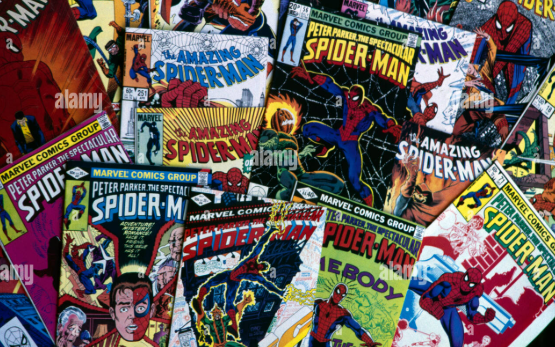
Spider-Man is more than a superhero; he is a cultural phenomenon. From the moment a radioactive spider bit Peter Parker, a sprawling universe of stories was born, spanning thousands of comic issues, dozens of movies, and countless television episodes. For a newcomer, the sheer volume of “Spider-Lore” can feel like being caught in a web—confusing, sticky, and slightly overwhelming. Do you start with the original 1960s comics? Do you jump into the latest multiversal movie? Or do you pick up a controller and swing through a digital New York?
The beauty of Spider-Man is that his core message—”With great power there must also come great responsibility”—is so universal that almost any entry point will eventually lead you back to the heart of the character. This guide is designed to help you navigate the various mediums and find the perfect starting line for your personal journey. Whether you are a reader, a viewer, or a gamer, there is a “friendly neighborhood” entrance waiting for you.
1. The Silver Age Foundation: Starting at the Very Beginning
If you want to understand the DNA of the wall-crawler, there is no substitute for the source material. Starting with Amazing Fantasy #15 (the first appearance) and the subsequent The Amazing Spider-Man run by Stan Lee and Steve Ditko is the purest way to experience the legend. These stories established the “Everyman” archetype: a hero who struggles with his bills, his social life, and his health just as much as he struggles with supervillains.
Reading the original 1960s run allows you to witness the birth of the greatest rogues’ gallery in fiction. You see the first appearances of the Green Goblin, Doctor Octopus, and the Vulture in their original, often campy, but deeply psychological contexts. While the dialogue may feel dated to some modern ears, the plotting is remarkably tight and the character work is surprisingly sophisticated. It provides the foundational knowledge of Peter Parker’s childhood in Queens and his early relationship with Aunt May and Uncle Ben, ensuring you understand every reference made in later adaptations.
2. The Ultimate Reimagining: A Modern Comic Gateway
For those who find the 1960s art style and dialogue a bit too “retro,” the Ultimate Spider-Man series is arguably the best starting point in comic history. Launched at the turn of the millennium, this series was designed as a ground-up reboot for a new generation. It takes the classic origin and stretches it out, giving the characters room to breathe and update their motivations for a contemporary world. Peter Parker is once again a teenager in high school, but his problems feel grounded in modern reality.
Written by Brian Michael Bendis with iconic art by Mark Bagley, this run is famous for its consistency and emotional depth. It removes decades of confusing continuity, allowing a beginner to read from Issue #1 without needing a Wikipedia tab open. This series also eventually paves the way for the introduction of Miles Morales, making it an essential bridge between the classic Peter Parker era and the modern “Spider-Verse” landscape. It is widely considered the gold standard for how to modernize a classic hero without losing his soul.
3. The Cinematic Gateway: The Original Film Trilogy
Many fans today were first introduced to the web-slinger through the lens of a movie camera. If you prefer visual storytelling, starting with the original film trilogy directed by Sam Raimi is a fantastic choice. These films captured the heart of the Silver Age comics but presented them with an operatic, big-budget flair. They focus heavily on the internal struggle of Peter Parker, played with earnest sincerity as he navigates the transition from boy to man.
The first two films in this series, in particular, are masterclasses in superhero storytelling. They provide a clear, concise origin story and introduce legendary villains like the Green Goblin and Doctor Octopus with incredible practical effects and emotional weight. This trilogy established the visual language of Spider-Man for the general public—the swinging through skyscrapers, the iconic mask-removal scenes, and the balance of humor and tragedy. It is a self-contained experience that requires no prior knowledge of the Marvel universe to enjoy.
4. The Animated Standard: The 1990s Classic Series
For an entire generation, the “definitive” Spider-Man isn’t found in a book or a movie, but in the 1994 animated series. This show is perhaps the most comprehensive “crash course” in the Spider-Man mythos ever produced. Over its five-season run, it covers almost every major storyline from the comics, including the Symbiote Saga, the Sinister Six, and even the complicated “Clone Saga,” all while remaining accessible to a younger audience.
The show is famous for its serialized storytelling, which was revolutionary for Saturday morning cartoons at the time. Characters grow, relationships change, and actions have consequences that carry over across multiple episodes. It also serves as a gateway to the broader Marvel Universe, featuring guest appearances from the X-Men, the Fantastic Four, and Captain America. If you want to learn the names, powers, and backstories of a hundred different characters in the shortest amount of time, this animated classic is your best bet.
5. The Next Generation: Entering the Spider-Verse
If you are more interested in the current cultural conversation, jumping straight into the Spider-Verse animated films is a viable—and visually stunning—option. These films shift the focus to Miles Morales, a young hero who takes up the mantle after the Peter Parker of his universe passes away. It introduces the concept of the Multiverse, showing that the “Spider-Man” identity is a universal constant that can be inhabited by anyone.
These films are perfect for beginners because they explain the core tenets of the character through the eyes of someone who is also learning the ropes. You get to see the “Spider-Man” tropes (the bite, the loss, the leap of faith) through a fresh, diverse lens. The animation style is a groundbreaking blend of 2D and 3D that feels like a comic book in motion. While they feature many “Spider-Variants,” the central emotional story of Miles trying to live up to a legacy while forging his own path is easy to follow and deeply resonant.
6. The Modern Web: Joining the Marvel Cinematic Universe
For those who want their Spider-Man integrated into a larger world of gods and aliens, the “Homecoming” era is the place to be. This version of Peter Parker is a high school student who exists alongside the Avengers. It skips the traditional origin story (assuming the audience already knows about the spider bite and Uncle Ben) and instead focuses on Peter’s desire to prove himself as a “hero” on a global stage under the mentorship of established figures like Tony Stark.
This entry point is particularly good for fans of modern blockbuster cinema. The tone is lighter, more comedic, and heavily focused on the “teen movie” aesthetic. However, it still maintains the core theme of responsibility, particularly as Peter learns that being a hero isn’t about having a high-tech suit, but about the choices he makes when things go wrong. These films lead into massive crossover events, making them the perfect choice if you want to see how Spider-Man fits into the “big picture” of a shared universe.
7. The Graphic Novel Route: Self-Contained Masterpieces
If you aren’t ready to commit to a long-running series, there are several “standalone” graphic novels that offer a complete Spider-Man experience in one volume. One of the best for beginners is Spider-Man: Blue. This story is a nostalgic look back at Peter Parker’s early days and his first love, Gwen Stacy. It is an emotional, beautifully illustrated book that captures the melancholy and the hope of the character without requiring you to know 50 years of backstory.
Another excellent standalone is Spider-Man: Life Story. This unique book imagines what would happen if Peter Parker aged in real-time from his debut in the 1960s to the present. It hits all the major milestones of his history but weaves them into a single, cohesive life narrative. These self-contained books are like “prestige television”—high-quality, focused, and deeply moving. They allow you to appreciate the literary merit of the character and understand why he has endured for so long as a symbol of resilience.
8. The Interactive Experience: Swinging into Video Games
In recent years, video games have become one of the most effective ways to experience the Spider-Man story. The modern “Marvel’s Spider-Man” series offers a narrative that rivals the best movies and comics. In these games, you aren’t just watching Peter Parker; you are Peter Parker. You experience the exhilaration of swinging through a perfectly recreated Manhattan and the tension of balancing a job at a lab with the need to stop a prison break.
The story in these games is a fresh take on the mythos, featuring an older, more experienced Peter who is already established as a hero. It introduces Miles Morales as a protégé, allowing you to play through the origins of a new hero while honoring the old one. The “photo mode” and the variety of unlockable suits also provide a visual history of the character’s different eras. For many, the tactile feeling of “being” the hero provides a deeper connection to the material than reading a book ever could.
9. The Spectacular Perspective: The 2008 Animated Gem
While the 1990s series is famous for its scope, the Spectacular Spider-Man (2008) is often cited by hardcore fans as the best written adaptation of the character. This show focuses intensely on the high school years, meticulously building up the relationships between Peter, Harry Osborn, Gwen Stacy, and Flash Thompson. It treats its villains with a level of care and planning rarely seen in animation, showing how their personal lives intersect with Peter’s in tragic ways.
The art style is simplified for the sake of incredibly fluid action sequences, making it one of the best-looking versions of the character in motion. Even though the show was cut short, the two seasons that exist provide a perfect “beginner’s arc” that covers the essentials of the character’s rise to heroism. It balances the “Spider-Man” action and the “Peter Parker” drama more effectively than almost any other medium, making it a “must-watch” for anyone who wants to see the character handled with total narrative precision.
10. The Digital Jump: Using Subscription Services
Finally, if you want to dive into the comics but don’t know which physical book to buy, digital subscription services like “Marvel Unlimited” are a beginner’s best friend. These services are essentially “Netflix for comics,” giving you access to virtually every Spider-Man comic ever published for a monthly fee. They often feature “Reading Guides” specifically designed for beginners, which curate the most important issues and story arcs so you don’t get lost.
This allows you to sample different eras. You can read ten issues of the 1960s run, jump to a 1980s “Venom” story, and then switch to a modern Miles Morales book to see what you like best. This “buffet” approach is the most cost-effective and low-pressure way to explore the character. You can follow your own curiosity—if you see a cool villain in a movie, you can immediately find their first comic appearance. Digital reading turns the overwhelming “Spider-Web” of history into an easily searchable library, putting the entire legend at your fingertips.
Further Reading
- Spider-Man: Blue by Jeph Loeb and Tim Sale
- Ultimate Spider-Man (Vol. 1): Power and Responsibility by Brian Michael Bendis and Mark Bagley
- Spider-Man: Life Story by Chip Zdarsky and Mark Bagley
- The Amazing Spider-Man: Coming Home by J. Michael Straczynski and John Romita Jr.




One response to “The Ultimate Spider-Man Beginner’s Guide: How to Start Your Web-Slinging Journey”
[…] The Ultimate Spider-Man Beginner’s Guide: How to Start Your Web-Slinging Journey […]