
The Marvel Universe is a place of infinite scale, where gods clash with titans and civilizations rise and fall in the blink of a cosmic eye. While Earth has the Avengers to keep its streets safe, the deeper reaches of the star-ways require a different kind of protection. Enter the Guardians of the Galaxy. Far from the polished, military precision of the Fantastic Four or the moral weight of the X-Men, the Guardians are a chaotic, found-family of outcasts, rogues, and former villains who have stepped up to do the dirty work no one else can handle.
To the uninitiated, they are a ragtag group of misfits with a talking raccoon and a walking tree. To the galaxy at large, they are the thin line between existence and total annihilation. Their history in Marvel Comics is a winding path of time travel, galactic wars, and deep-seated trauma that transformed them from obscure side characters into the premiere cosmic team of the modern era. If you want to understand why this team is so vital to the Marvel mythos, you have to look beyond the humor and into the high-stakes drama of the stars.
1. The Original Team from the 31st Century
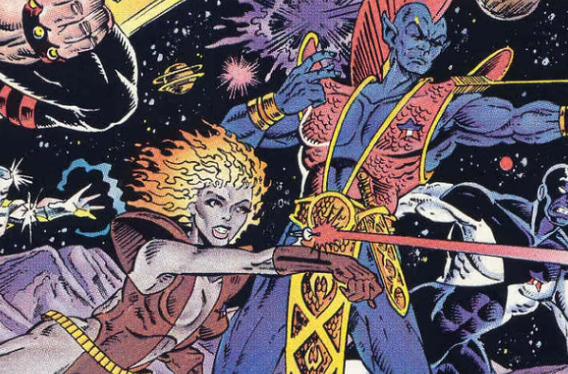
Long before the modern roster took shape, the Guardians of the Galaxy were a completely different team operating in an alternate future. Created as a group of freedom fighters in the 31st century, the original Guardians were led by Major Vance Astro, an astronaut from 20th-century Earth who traveled to the future in cryogenic sleep. Alongside him were unique alien heroes: Charlie-27, a genetically engineered soldier from Jupiter; Martinex, a crystalline being from Pluto; and Yondu Udonta, a blue-skinned archer from Centauri IV.
This original squad fought against the Badoon, a reptilian race that had conquered the Solar System. Their adventures were heavily focused on rebellion and the reclamation of Earth’s legacy in a distant, dystopian future. While they are distinct from the team most people recognize today, their influence is woven into the DNA of the franchise. The modern team actually took the name “Guardians of the Galaxy” as a tribute to these future heroes after a time-traveling encounter. Understanding this legacy helps fans appreciate that the Guardians have always been, at their core, a symbol of resistance against overwhelming cosmic tyranny.
2. Peter Quill: The Heir to a Galactic Throne
While often portrayed as a jovial, music-loving pilot, the comic book version of Peter Quill, or Star-Lord, is a figure of significant galactic pedigree and heavy responsibility. In the source material, Peter is the son of Meredith Quill and J’son, the Emperor of the Spartax Empire. This royal heritage often puts him at odds with galactic politics, as he frequently rejects his birthright in favor of his life as a space-faring rogue.
Quill’s origin is far more grounded in space opera than one might expect. He originally gained the mantle of Star-Lord not just by picking a name, but by winning a competition to represent Earth in the stars. His primary weapon, the Element Gun, is a Spartax relic capable of channeling the four elements: earth, air, fire, and water. Over time, Peter evolved from a somewhat cold, duty-bound soldier into the weary, resourceful leader we know today. His journey is one of personal identity—choosing to be the man he wants to be rather than the monarch the galaxy expects him to be.
3. The Annihilation Event: The Team’s Modern Rebirth
The modern incarnation of the Guardians did not form out of a desire for adventure, but out of absolute necessity following the Annihilation and Annihilation: Conquest events. These were massive, crossover storylines where the universe was nearly destroyed—first by Annihilus and his Negative Zone swarm, and then by the techno-organic Phalanx. In the wake of these wars, the galaxy was fractured and vulnerable.
Peter Quill realized that the galaxy’s “proactive” heroes were too busy reacting to disasters after they happened. He decided to assemble a team of specialists who could spot threats before they grew into universal catastrophes. This wasn’t a group of volunteers; Quill actually had Mantis use her telepathic powers to “nudge” the members into joining, a controversial decision that later caused internal strife. This gritty, war-torn origin sets the Guardians apart from other teams. They aren’t a club; they are a desperate response to a universe that is constantly trying to tear itself apart.
4. Rocket Raccoon: The Guardian of Halfworld
Rocket Raccoon is arguably one of the most complex characters in the Marvel stable. Far from being an experiment gone wrong in a standard lab, his comic book roots lie on Halfworld, a planet-sized asylum for the “Loonies.” To care for the psychiatric patients, sentient robots created genetically engineered animal companions—the “wardens”—to act as guards and therapists. Rocket was the chief ranger of this world, tasked with maintaining order in a chaotic, toy-manufacturing society.
Rocket’s high intelligence and tactical brilliance are the results of intense biological manipulation designed to make him the ultimate caretaker and defender. This background explains his defensive personality and his obsession with weaponry; he was literally born to protect those who couldn’t protect themselves. In the comics, Rocket is less of a “pet” and more of a world-class military strategist who happens to be three feet tall. His relationship with the team provides much of its heart, as he hides a deep well of empathy behind a prickly, cynical exterior.
5. Groot: The Royal Flora Colossus of Planet X
Groot is often seen as the muscle of the group, but his backstory is steeped in ancient cosmic royalty. He hails from Planet X, the capital of the Flora Colossi. While most of his race are aggressive and look down upon “lesser” mammalian life forms, Groot possessed a gentleness that led to his exile. He was cast out for defending a human maintenance girl who had been captured by his people for experimentation.
Groot’s speech—”I am Groot”—is not a result of low intelligence. In the comics, it is explained that the larynx of a Flora Colossus becomes stiff and wooden as they age, making it impossible for them to form complex sentences. However, to those who spend enough time with him, his inflections carry entire paragraphs of wisdom, philosophy, and tactical data. Groot is an ancient, highly educated being with a vast knowledge of quasi-dimensional engineering. He isn’t just a “tree”; he is a displaced king who found a new kingdom among the stars with his best friend, Rocket.
6. Drax the Destroyer: A Human Soul in a Titan’s Body
Many fans are surprised to learn that Drax the Destroyer was originally a human from Earth named Arthur Douglas. While driving with his family, his car was attacked by Thanos, who wanted to eliminate any witnesses to his arrival on Earth. Arthur was killed, but his soul was captured by the cosmic entities Kronos and Mentor. They placed his spirit into a powerful, artificial body designed for one specific purpose: to kill Thanos.
This origin gives Drax a much darker, more singular focus in the comics. For decades, he was a near-mindless engine of destruction, possessing power levels comparable to the Hulk and the ability to fly through space. Over time, he underwent various “rebirths” that lowered his power but increased his intelligence and combat cunning. Drax’s story is a tragedy of a father who lost everything and was resurrected as a weapon. His membership in the Guardians allows him to find a semblance of the humanity he lost, even as he remains the galaxy’s most relentless hunter.
7. Knowhere: The Severed Head of a God
The Guardians of the Galaxy don’t live in a mansion or a tower; they operate out of Knowhere. This isn’t just a space station; it is the severed, decaying head of an ancient Celestial—a god-like being of immense power. Floating at the very edge of space and time, Knowhere serves as a scientific hub and a crossroads for the galaxy’s most dangerous and interesting citizens.
Knowhere is managed by Cosmo, a telepathic Soviet space dog who serves as the station’s security chief and a frequent ally to the Guardians. The station allows the team to travel anywhere in the universe almost instantly via its “Continuum Cortex.” Living inside the skull of a dead god is a perfect metaphor for the Guardians themselves: they are beings living in the wreckage of cosmic giants, trying to make something meaningful out of the leftovers. It provides a unique, gritty backdrop for their adventures, blending high-concept sci-fi with the feel of a frontier boomtown.
8. The Ever-Changing Roster
While the core group of Star-Lord, Gamora, Drax, Rocket, and Groot is the most famous, the Guardians of the Galaxy have had an incredibly diverse roster over the years. Because they are a “proactive” team, they often recruit specialists based on the threat at hand. Major Marvel characters like Iron Man, Venom (Flash Thompson), The Thing, and Captain Marvel (Carol Danvers) have all served as official members of the team.
This rotating roster keeps the group’s dynamic fresh and allows for unique perspectives on cosmic life. For example, seeing the universe through the eyes of Earth-bound heroes like Ben Grimm or Tony Stark highlights just how strange and alien the Guardians’ world really is. Other staple members include Mantis, the “Celestial Madonna”; Moondragon, the powerful telepath and daughter of Drax; and Phyla-Vell, the daughter of the original Captain Mar-Vell. This inclusivity proves that the Guardians aren’t a closed circle; they are a movement for anyone brave (or crazy) enough to face the unknown.
9. The Philosophy of the “Last Line of Defense”
What separates the Guardians from the Nova Corps or the Shi’ar Imperial Guard is their philosophy. They operate in the “fringe” areas of space where law and order don’t exist. They are often viewed as outlaws or vigilantes by the major galactic empires because they don’t follow treaties or respect borders. Their only goal is the preservation of life, regardless of the political cost.
The team often engages in “suicide missions” that other civilizations refuse to touch. Whether it’s stopping a tear in reality (The Fault) or preventing the rebirth of a dark god, the Guardians are the ones who do the dirty work. They are the “last line of defense” not because they are the strongest, but because they are the only ones willing to sacrifice their reputations and their lives for a galaxy that often hates them. They embrace their status as “misfits,” using their unpredictability as a tactical advantage against more rigid, traditional enemies.
10. The Legacy of the Cosmic Shield
Ultimately, the Guardians of the Galaxy represent the idea of found family and the power of redemption. Almost every member of the team has a checkered past—Gamora was an assassin, Drax was a single-minded killer, Rocket was a cynical loner, and Peter Quill was a thief. By coming together, they transform their individual traumas into a collective strength.
They are the “shield” that guards the galaxy, but they are also a support system for one another. Their stories are as much about interpersonal relationships and emotional healing as they are about laser battles and alien invasions. This deep emotional core is what has made them evergreen favorites in the Marvel Universe. They remind readers that you don’t have to be perfect to be a hero; you just have to be there when the world—or the entire universe—needs you most. They are the proof that even in the cold, dark vacuum of space, there is room for friendship, loyalty, and a little bit of chaos.
Further Reading
- Annihilation: Conquest – Dan Abnett and Andy Lanning
- Guardians of the Galaxy (2008) Vol. 1: Legacy – Dan Abnett and Andy Lanning
- Guardians of the Galaxy by Al Ewing: It’s Getting Darker – Al Ewing
- All-New Guardians of the Galaxy – Gerry Duggan
3 responses to “10 Things You Should Know About The Guardians Of The Galaxy – Marvel Comics”
[…] 10 Things You Should Know About The Guardians Of The Galaxy – Marvel Comics […]
[…] 10 Things You Should Know About The Guardians Of The Galaxy – Marvel Comics […]
[…] 10 Things You Should Know About The Guardians Of The Galaxy – Marvel Comics […]