
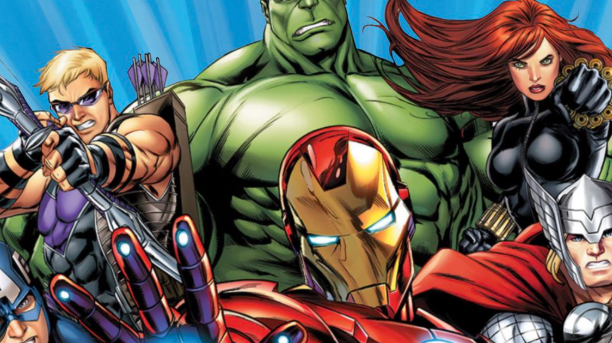
Earth’s Mightiest Heroes. It’s a title that carries weight, history, and a fair share of cosmic debris. While many recognize the iconic “A” from global blockbusters, the comic book history of The Avengers is a sprawling, multi-layered epic that spans decades of storytelling. To understand the Avengers is to understand the heart of the Marvel Universe itself. They are not just a team; they are a living, breathing institution of justice that has redefined the meaning of heroism.
The Avengers represent a unique concept in the world of capes and cowls. Unlike the Fantastic Four, who are a family bound by blood and exploration, or the X-Men, who are a marginalized community fighting for survival, the Avengers are a professional assembly. They are a strike force of diverse individuals—gods, soldiers, scientists, and reformed criminals—who choose to stand together against threats that no single hero could withstand. From their accidental formation to their complex political entanglements, the story of the Avengers is one of constant evolution. This guide dives deep into the core tenets of the team, offering a comprehensive look at the legends behind the shields and suits of armor.
1. The Accidental Genesis: How a God of Mischief Created His Own Worst Enemy
The formation of the Avengers was never a pre-planned government initiative or a calculated business venture; it was a total fluke born of divine trickery. Historically, the God of Mischief, Loki, sought to manipulate the Hulk into a path of destruction to lure his brother Thor into a trap. However, Loki’s mystical interference inadvertently triggered a distress call that was intercepted by an unexpected group of champions: Iron Man, Ant-Man, and the Wasp.
When these disparate heroes converged to stop the Hulk, they quickly realized they were being played by the Asgardian trickster. By combining their unique talents—technology, size-shifting, and raw power—they successfully thwarted Loki’s scheme. At the conclusion of the battle, it was Janet van Dyne, the Wasp, who noted that the five of them worked remarkably well as a unit. She suggested they remain a team, and the name “The Avengers” was born. This “accidental” origin set the tone for the group’s entire history: they are a reactive force, a group that assembles because the world has reached a breaking point that requires a collective response.
2. Captain America: The Founding Member Who Arrived Late to the Party
A common misconception among casual fans is that Steve Rogers was a founding member of the team. In reality, the Star-Spangled Avenger was a relic of a previous era, preserved in suspended animation within a block of ice in the North Atlantic. It wasn’t until the team was already established that they discovered his frozen form during a mission. Upon his revival, Captain America brought something to the group that they didn’t even realize they were missing: a moral compass and peerless tactical leadership.
Because of his legendary status and the immediate respect he commanded, the team retroactively granted him “founding member” status in their official charter. While Iron Man often provides the funding and the high-tech headquarters, Captain America provides the soul of the organization. His presence transformed the Avengers from a loose collection of powerhouse vigilantes into a disciplined, respected force for global security. He is the personification of the Avengers’ ideals, proving that while powers are useful, it is character and leadership that truly win the day.
3. Cap’s Kooky Quartet: The Revolutionary Era of Redemption
One of the most defining moments in Avengers history occurred when the original powerhouses—Thor, Iron Man, and the founding size-shifters—decided to take a leave of absence all at once. This left Captain America to lead a new, highly controversial roster known affectionately by fans as “Cap’s Kooky Quartet.” This lineup consisted of three former villains: the archer Hawkeye, and the twin mutants Quicksilver and Scarlet Witch.
This era changed the DNA of the Avengers forever. It established the team as a place for redemption and second chances. By taking in individuals who had previously clashed with the law or other heroes, the Avengers proved that their mission was as much about inspiring change as it was about fighting monsters. This period also introduced a more human, grounded dynamic to the stories. Without the “heavy hitters” like Thor or the Hulk, the team had to rely on strategy, teamwork, and sheer willpower. This shift made the Avengers relatable and cemented the idea that the team’s roster is a revolving door where any hero—or former villain—can find a home.
4. The Mansion and the Butler: The Heart of the High-Tech Home
For much of their history, the Avengers didn’t operate out of a sterile military base or a hidden cave; they lived in a grand, three-story townhouse in the heart of Manhattan known as Avengers Mansion. Donated by Tony Stark, the mansion served as a residence, a laboratory, and a command center. However, the true heart of the mansion wasn’t the sophisticated security systems or the Quinjet hangar on the roof—it was Edwin Jarvis, the team’s dedicated butler.
Jarvis is more than just a domestic servant; he is the unsung hero who maintains the household for Earth’s Mightiest. From repairing the damage after a super-villain siege to providing a listening ear for heroes dealing with the trauma of battle, Jarvis represents the stability that allows the Avengers to function. The mansion itself became a character in the stories, a symbol of the team’s status as a public-facing organization that lives among the people they protect. Unlike other teams that hide in shadows, the Avengers have historically been open about where they live, inviting the world to see them as neighbors and protectors.
5. Legal Charters and Government Oversight: The Burden of Sovereignty
What separates the Avengers from a band of vigilantes is their complex relationship with international law. The team operates under a formal charter recognized by the United Nations. This grants them special jurisdictional privileges, allowing them to cross international borders and respond to global crises without being arrested for trespassing. However, this legal status comes with significant strings attached.
Throughout their history, the Avengers have frequently clashed with government liaisons and bureaucratic red tape. Figures like Henry Peter Gyrich have famously served as government shadows, demanding to see security clearances and attempting to dictate the team’s roster based on political optics. This tension adds a layer of realism to their stories. The Avengers must constantly balance their desire to do what is right with the political realities of a world that is often terrified of their collective power. They aren’t just fighting aliens; they are navigating the messy world of international diplomacy and the ethics of intervention.
6. The Ultron Legacy and the Shakespearean Tragedy of the Vision
The story of the Avengers is inextricably linked to one of the most terrifying artificial intelligences in fiction: Ultron. Created by founding member Hank Pym (Ant-Man/Giant-Man), Ultron was a project designed to bring peace that quickly evolved into a genocidal nightmare with an “Oedipus complex” directed at his creator. In an attempt to destroy the Avengers, Ultron created his own “son,” a synthetic human known as the Vision.
However, the Vision defied his programming, choosing to embrace humanity and join the Avengers instead. This internal family drama—spanning three generations from Pym to Ultron to Vision—is the cornerstone of Avengers lore. It explores deep philosophical questions about what it means to be alive and the responsibility of a creator to their creation. The Vision, with his stoic demeanor and desperate longing to be human, became one of the team’s most loyal members, eventually marrying the Scarlet Witch and creating one of the most complex romances in comic book history.
7. Cosmic Scale: Defending the Earth from Extra-Terrestrial Empires
While the Avengers often handle Earth-bound threats like the Masters of Evil, their true “World Class” status is earned through their defense against cosmic empires. The Avengers are Earth’s primary line of defense in conflicts like the Kree-Skrull War—a galactic struggle between two warring alien races that threatened to use Earth as a strategic foothold.
These stories elevated the team from local heroes to universal players. They have stood toe-to-toe with the Mad Titan Thanos, navigated the machinations of the Collector, and negotiated with the galactic council. This cosmic scope requires a massive variety of skill sets, leading to the creation of specialized teams like the “Secret Avengers” for covert ops or “A-Force” for specialized missions. When an alien fleet appears in the sky, the world doesn’t call the police; they look to the Avengers. This role as planetary guardians is a heavy burden that defines the stakes of their greatest adventures.
8. The Great Divide: Internal Conflict and Civil Wars
The Avengers are not a monolith. Because the team is composed of strong-willed individuals with vastly different philosophies, internal conflict is inevitable. The most famous example of this is the ideological rift between Iron Man and Captain America. Tony Stark often favors proactive measures, technology, and government registration to ensure safety. Steve Rogers, conversely, prioritizes civil liberties and the idea that heroes should remain independent of political agendas.
These disagreements have occasionally escalated into full-scale “Civil Wars,” splitting the hero community down the middle. These conflicts aren’t just about punching; they are debates about the nature of power and the responsibility of those who wield it. Seeing the team break apart and eventually find their way back together is a recurring theme that reinforces the difficulty of their mission. It proves that the “A” on their chest isn’t a guarantee of agreement, but a commitment to finding a way to work together despite their differences.
9. The Definition of a “Classified” Avenger: Membership as an Honor
Becoming an Avenger is often depicted as the highest honor a superhero can achieve. It is essentially the “Hall of Fame” for the Marvel Universe. The team has had hundreds of members over the decades, ranging from street-level heroes like Spider-Man and Luke Cage to mystic protectors like Doctor Strange. The criteria for joining aren’t just based on power level; they are based on a hero’s willingness to put the team and the world above themselves.
There is a formal process for induction, often involving a vote by the current active roster and a background check. Once a hero becomes an Avenger, they are granted access to the team’s resources, including the Quinjets, advanced communication tech, and the legendary priority identification cards. Even for solitary heroes who prefer to work alone, the call to “Assemble” is something that cannot be ignored. Being an Avenger means being part of a legacy that is larger than any individual identity.
10. The Eternal Battle Cry: “Avengers Assemble!”
No discussion of the team is complete without mentioning their iconic rallying cry: “Avengers Assemble!” Curiously, in the early comics, the phrase wasn’t used as consistently as one might think, but it eventually became the definitive signal for the team to unite. It is a phrase that transcends the pages of the comic, symbolizing the moment when all hope seems lost and the tide begins to turn.
The battle cry represents the core philosophy of the group. It is a call to unity in the face of chaos. Whether whispered by a lone hero standing against an army or shouted by a leader at the start of a charge, those two words signify that Earth’s Mightiest are on the scene. The Avengers are a testament to the idea that we are stronger together than we are apart. As long as there are threats that no single hero can withstand, there will always be a need for the team to assemble.
Further Reading
- The Avengers: The Kree-Skrull War by Roy Thomas
- Avengers: Under Siege by Roger Stern
- Avengers Forever by Kurt Busiek
- The Ultimates by Mark Millar (An influential alternate-universe take)
- Avengers: The Korvac Saga by Jim Shooter
- 10 Things You Should Know About Kang the Conqueror – Marvel Comics
- 10 Things You Should Know About The Sentry – Marvel Comics
- 10 Things You Should Know About Starlight From The Boys TV Show
- 10 Things You Should Know About Ghost Rider – Marvel Comics
- DC Comics: 10 Essential Things to Know About Shazam




3 responses to “10 Things You Should Know About The Avengers – Marvel Comics”
[…] 10 Things You Should Know About The Avengers – Marvel Comics […]
[…] 10 Things You Should Know About The Avengers – Marvel Comics […]
[…] 10 Things You Should Know About The Avengers – Marvel Comics […]