
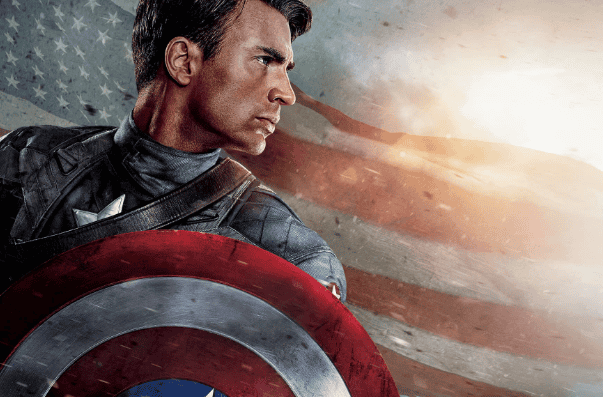
In the early chapters of the modern superhero era, most films were focused on high-tech gadgets or mythological gods. However, the arrival of Captain America: The First Avenger shifted the narrative toward the heart and soul of heroism. This film wasn’t just an origin story; it was a sprawling, pulp-adventure period piece that grounded a sprawling cinematic universe in a sense of history and moral clarity. While many contemporary action films focus on the “super” aspect of their protagonists, this movie focused on the “man.”
Set against the backdrop of a global conflict, the story of Steve Rogers is a timeless tale of an underdog who refuses to back down. The production was a monumental task, requiring the recreation of the 1940s while integrating advanced science-fiction elements. From the groundbreaking visual effects used to create “Skinny Steve” to the introduction of the mysterious organization Hydra, every frame was meticulously crafted to feel like a living comic book. This article explores the legacy, the technical wizardry, and the narrative depth that make this film the emotional foundation of a legendary franchise.
1. The Reluctant Legend: Why Chris Evans Said “No” Three Times
It is nearly impossible to imagine the face of leadership in modern cinema without Chris Evans, but the actor was famously hesitant to take the shield. Evans, who had already played a superhero in a different franchise, was wary of the massive, multi-picture commitment and the loss of privacy that would come with such a high-profile role. He turned down the part three times before finally being convinced by the producers and his own support system to face his fears.
Evans’ hesitation actually mirrored the character of Steve Rogers—a man who didn’t seek the spotlight but felt a moral obligation to serve. Once he accepted, Evans brought a grounded, sincere quality to the role that prevented the character from becoming a “boy scout” caricature. He portrayed Steve not as a man who enjoys fighting, but as a man who hates bullies. This fundamental decency became the North Star for the entire franchise, proving that the character’s greatest strength wasn’t the serum in his veins, but the spirit he possessed before the transformation.
2. The Digital Magic of “Skinny Steve” Rogers
One of the most impressive technical feats in the film’s production was the creation of Steve Rogers before his transformation. To portray the frail, 90-pound version of the character, the filmmakers didn’t want to use simple “head replacement” technology, which can often look unnatural. Instead, they utilized a complex process involving “shrinking” Chris Evans digitally. This required filming every scene at least three times: once with Evans, once with a smaller body double (Leander Deeny) mimicking his movements, and once with no actors at all for the background.
The visual effects team at Lola VFX then painstakingly reduced Evans’ physical mass, narrowing his shoulders, thinning his face, and shortening his stature while maintaining his distinct facial performances. This was crucial because the audience needed to see the “soul” of the character in those early scenes to appreciate his later power. The result was so seamless that many viewers believed a different, look-alike actor had been cast for the first act. This commitment to visual storytelling ensured that the “Super Soldier” transformation felt like a physical manifestation of Steve’s internal courage.
3. Joe Johnston’s Pulp-Adventure Aesthetic
The choice of Joe Johnston as director was a masterstroke for the film’s tone. Johnston, who had previously directed the cult classic The Rocketeer, was an expert at blending 1940s nostalgia with high-flying adventure. He approached Captain America: The First Avenger as a “period piece first, superhero movie second.” This meant focusing on practical sets, authentic-looking costumes, and a warm, sepia-toned color palette that evoked the feeling of a classic war film.
Johnston’s background in design (including his legendary work on the original Star Wars trilogy) allowed him to create a world where advanced Hydra technology felt like it belonged in the 1940s. He utilized “Dieselpunk” aesthetics—combining heavy machinery and industrial designs with futuristic energy weapons. This gave the film a unique visual identity that stood out from the sleek, modern look of other contemporary blockbusters. By leaning into the “pulp” roots of the character, Johnston created a timeless adventure that felt both historic and incredibly fresh.
4. Peggy Carter: More Than a Love Interest
In a genre often criticized for its treatment of female characters, Peggy Carter, played by Hayley Atwell, was a revelation. Peggy was not a “damsel in distress” or a secondary character meant only to motivate the hero. She was a high-ranking officer in the Strategic Scientific Reserve (SSR), an elite soldier in her own right, and a woman who commanded respect in a male-dominated environment. Her relationship with Steve was built on mutual respect and shared values rather than a superficial attraction.
Atwell brought a combination of toughness and vulnerability to the role that made Peggy an instant icon. She served as Steve’s moral equal, often being the one to remind him of his own worth. Their tragic “last dance” remains one of the most emotionally resonant moments in the franchise, highlighting the human cost of Steve’s sacrifice. Peggy’s popularity was so great that she eventually led her own spin-off series and made numerous appearances throughout the timeline, proving that her influence on the world was just as significant as Captain America’s.
5. The Occult and Science: Red Skull and the Rise of Hydra
To provide a villainous foil for the ultimate hero, the film introduced Johann Schmidt, the Red Skull, played by Hugo Weaving. As the head of Hydra, Schmidt represented the dark side of the “Super Soldier” ambition. While Steve Rogers was chosen for his goodness, Schmidt was the result of a prototype serum that amplified his inner malice and physical deformity. Weaving’s performance, combined with a striking practical makeup design, created a villain that was both terrifying and ideologically complex.
Hydra served as a bridge between historical reality and comic book fantasy. The film depicted Hydra as a breakaway sect of the Nazi party that moved beyond political conquest toward global domination using the power of the Tesseract (the Space Stone). This “occult science” angle allowed the film to explore themes of power and corruption. By establishing Hydra as an ancient and persistent threat, the filmmakers laid the groundwork for future stories involving espionage and deep-seated conspiracies that would span decades of the cinematic narrative.
6. Howard Stark and the Bridge to the Future
One of the most effective ways the film connected to the larger universe was through the character of Howard Stark, played by Dominic Cooper. As the father of Tony Stark, Howard provided a tangible link between the 1940s and the modern era. Cooper channeled the charismatic, genius-playboy persona that audiences had come to associate with the Stark name, but he also showed a deeper, more earnest side of the family’s history.
Howard Stark was responsible for creating Captain America’s iconic shield and his various tactical suits. His presence in the film underscored the idea that the “Age of Heroes” didn’t start in the modern day; it was built on the innovations of the past. The interactions between Howard and Steve provided a sense of continuity, showing that the technology and the heroism of the present were standing on the shoulders of giants. This “connective tissue” made the world feel lived-in and historically rich, turning a standalone movie into a vital chapter of a grander epic.
7. The Evolution of the Shield and the Costume
Captain America’s visual identity undergoes a fascinating evolution throughout the film. Initially, Steve is used as a propaganda tool, wearing a bright, flamboyant costume made of cloth and carrying a triangular steel shield. The “Star-Spangled Man with a Plan” montage is a clever meta-commentary on the character’s comic book origins, acknowledging the “campy” elements of the costume before transitioning into something more functional.
When Steve finally goes on his unsanctioned rescue mission, he adopts a more tactical look, layering a leather combat jacket over his stage suit. This eventually leads to the “classic” field uniform—a masterpiece of costume design that looks like functional military gear while retaining the iconic stars and stripes. The circular shield, made of the rare metal Vibranium, became the ultimate symbol of his character: a defensive tool that could also be used with offensive precision. The transition from a “performer” to a “soldier” mirrored Steve’s own journey of finding his place in the world.
8. The Grenade Test: The Definition of a “Good Man”
The heart of the movie—and perhaps the character of Steve Rogers—is summarized in a single scene during basic training. Dr. Abraham Erskine, the creator of the serum, is looking for a candidate who understands the value of strength because they have never had it. To test the recruits, Colonel Phillips (Tommy Lee Jones) throws a dummy grenade into the middle of the group. While the physically superior soldiers scatter for cover, the small, “skinny” Steve Rogers immediately throws his body onto the grenade to protect his fellow recruits.
This moment is the definitive proof of Steve’s worthiness. It illustrates the film’s central theme: that the most important qualities of a hero are courage, self-sacrifice, and empathy. Dr. Erskine famously tells Steve, “Whatever happens tomorrow, you must promise me one thing: that you will stay who you are. Not a perfect soldier, but a good man.” This distinction is what separates Captain America from every other “Super Soldier” attempt in the history of the franchise and remains his defining moral characteristic.
9. The Howling Commandos: A Global Front
Captain America: The First Avenger introduced one of the most diverse and beloved groups of supporting characters: the Howling Commandos. This elite unit of soldiers, rescued by Steve from a Hydra facility, represented a global coalition against tyranny. The team included iconic characters like Dum Dum Dugan, Gabe Jones, Jim Morita, and Bucky Barnes. Their inclusion turned the story from a solo mission into a “band of brothers” war movie.
The Commandos added a sense of camaraderie and “ground-level” perspective to the film. They were the ones who saw Steve Rogers not as a symbol, but as a friend and a leader. Each member brought a unique skill set and personality to the team, and their international makeup reflected the real-world diversity of the Allied forces. Their presence emphasized that even the greatest hero cannot win a war alone, reinforcing the themes of teamwork and shared sacrifice that would later become a staple of the “Avengers” dynamic.
10. The Sacrifice and the “70 Years Later” Twist
The film’s climax is a masterclass in bittersweet storytelling. After defeating the Red Skull aboard a massive bomber destined for New York, Steve Rogers realizes there is no way to land the plane safely without detonating its payload. He makes the conscious choice to crash the plane into the Arctic ice, sacrificing his life and his future with Peggy Carter to save millions. His final conversation with Peggy over the radio, where they plan a “date” they both know will never happen, is the film’s emotional peak.
The twist ending, where Steve wakes up in a modern-day S.H.I.E.L.D. facility after being frozen in ice for decades, changed the stakes for the character entirely. The final line of the movie—”I had a date”—is a heartbreaking reminder of everything he lost. This ending transformed Captain America from a hero of the past into a “man out of time,” setting the stage for his complicated journey in the modern world. It ensured that while he was a legend to the public, he was a tragic figure in private, forever haunted by the life he left behind in the 1940s.
Further Reading
- Captain America: The Art of Captain America — The First Avenger by John Rhett Thomas
- The Road to Marvel’s The Avengers by Various Authors
- MCU: The Reign of Marvel Studios by Joanna Robinson, Dave Gonzales, and Gavin Edwards
- Captain America: The Life and Times of Steve Rogers by Various Authors
- Marvel Cinematic Universe – 10 Things You Need To Know About The MCU’s Spider-Man (MCU) Explained
- The Marvel Blueprint: 10 Genius Ways the MCU Mastered the Art of the Interconnected Universe
- Infinite Realities: The Ultimate Guide to the MCU’s Multiverse Saga and What Lies Beyond the Sacred Timeline
- From Stones to Stars: The Ultimate Guide to the Infinity Saga and How It Changed Cinema Forever
- Earth’s Mightiest Heroes: The Ultimate Guide to the Avengers and Why They Rule the MCU
- The Genius Behind the Armor: 10 Defining Secrets of the MCU’s Iron Man Explained
- 10 Things You Need To Know About The Movie Iron Man 3 (2013)
- 10 Things You Need To Know About The Movie The Avengers (2012)
- 10 Things You Need To Know About Captain America: The First Avenger (2011)
- 10 Things You Need To Know About Thor (2011)



