
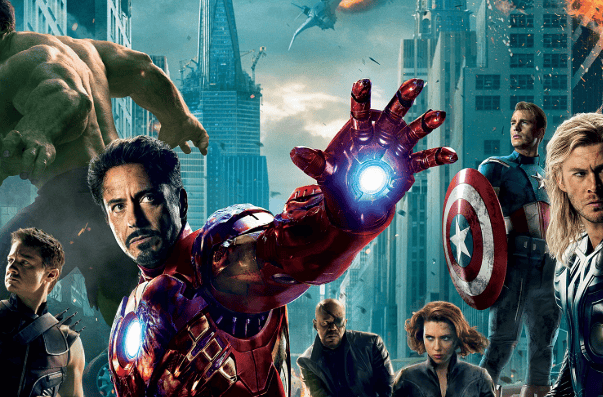
In the history of motion pictures, there are moments that act as “before and after” markers. The release of The Avengers in 2012 was a seismic event that didn’t just break box office records; it fundamentally altered how stories are told on the big screen. Before this film, the idea of taking four separate, successful franchises and merging them into a single, cohesive narrative was considered a logistical nightmare and a creative impossibility. Many industry experts predicted a “clunky” disaster that would buckle under the weight of its own ego. Instead, the world witnessed a masterclass in ensemble storytelling that felt as effortless as a comic book splash page.
This film was the culmination of a five-year experiment. It took the tech-driven world of Iron Man, the gritty realism of The Incredible Hulk, the mythological grandeur of Thor, and the historical heart of Captain America, and fused them together using the “glue” of S.H.I.E.L.D. It was a high-stakes poker game where the pot was the future of the entire Marvel Cinematic Universe (MCU). From the iconic “circular shot” in the streets of Manhattan to the witty, fast-paced dialogue that became a genre hallmark, The Avengers set a standard for the “event movie” that remains the benchmark to this day. This deep dive explores the hidden mechanics, the last-minute additions, and the creative friction that turned a “team-up” into a cultural phenomenon.
1. The Impossible Juggling Act: Joss Whedon’s Visionary Direction
When Marvel Studios looked for a director to helm their biggest project, they didn’t choose a traditional action veteran. They chose Joss Whedon, a creator known for his cult-classic television ensembles like Buffy the Vampire Slayer and Firefly. Whedon’s superpower was his ability to manage a “found family” of disparate characters, ensuring that everyone had a distinct voice and a clear emotional arc. He approached The Avengers not as a war movie, but as a story about six people who didn’t particularly like each other being forced to save the world.
Whedon’s script emphasized the “friction” between the heroes. He understood that watching Captain America and Iron Man argue about philosophy was just as compelling as watching them fight aliens. By leaning into the humor and the interpersonal conflict, he made the eventual “assembly” feel earned. His background in character-driven storytelling allowed the film to feel intimate despite its massive scale. He successfully navigated the “ego problem” by giving each hero a specific role in the narrative, ensuring that no one felt like a sidekick in their own movie.
2. Mark Ruffalo’s Groundbreaking “Humanized” Hulk
After two previous attempts at bringing the Hulk to the big screen with different actors, The Avengers introduced Mark Ruffalo as Bruce Banner. This version of the character was a radical departure. Ruffalo portrayed Banner as a weary, “world-class” intellectual who had reached a zen-like state of acceptance regarding his condition. This subtlety made the character more relatable and provided a perfect foil to the high-energy charisma of Tony Stark. Their “Science Bros” dynamic became one of the film’s most beloved elements.
Technologically, this was the first time the Hulk felt truly integrated into the performance. Using advanced motion-capture technology, the visual effects team mapped Ruffalo’s actual facial expressions and subtle physical tics onto the digital giant. For the first time, you could see the actor’s eyes and emotions in the monster. This version of the Hulk wasn’t just a mindless engine of destruction; he was a character with a sense of humor and a deep, simmering rage that felt controlled until it was unleashed. This innovation made the “Puny God” moment not just a funny beat, but a character-defining display of power.
3. The “Circle Shot”: A Cinematic Icon Born from Chaos
If there is one image that defines the superhero genre, it is the 360-degree tracking shot of the six Avengers standing back-to-back in the rubble of Grand Central Station. This “Circular Shot” was designed to be the ultimate comic book splash page come to life. It was a moment of pure cinematic triumph that signaled to the audience that the team had finally arrived. However, achieving this shot was a technical nightmare that required perfect synchronization between the actors, the stunt team, and the camera crew.
The shot served as a visual “reset” for the film. After nearly two hours of internal bickering and separate missions, the characters were finally aligned in purpose. The camera’s movement around the group emphasized their unity and their defiance against an overwhelming alien force. This single sequence has been parodied and paid homage to countless times, but its impact in the theater was unparalleled. It transformed the movie from a collection of scenes into a singular, cohesive mythic event, proving that the visual language of comics could be translated perfectly into the medium of film.
4. The Last-Minute Legend of the “Shawarma Scene”
The most famous post-credits scene in history was actually a total afterthought. During the film’s press junket—long after principal photography had ended—the cast gathered one last time to film a silent, 30-second clip of the exhausted heroes eating shawarma in a trashed restaurant. This was inspired by a line of dialogue Tony Stark improvises earlier in the film. Because it was filmed so late, the scene almost didn’t make it into the final cut, and it wasn’t even included in many international theatrical runs or early screenings.
There was a major logistical hurdle: Chris Evans had grown a thick beard for another film role. To hide it, the makeup team had to apply a prosthetic jaw and skin to his face, which explains why Captain America is sitting silently with his hand covering his mouth, looking remarkably pained while the others eat. This “humanizing” moment was a stroke of genius. It subverted the typical “heroic” ending by showing the mundane, messy reality of being a superhero. It turned the Avengers into relatable people who just wanted a quiet meal after a long day at the office.
5. Loki’s Evolution into the Ultimate “Fan-Favorite” Antagonist
While the Chitauri provided the “cannon fodder” for the final battle, the heart of the conflict was Tom Hiddleston’s Loki. Following his introduction in Thor, Hiddleston refined his performance to become a charming, megalomaniacal trickster who was always two steps ahead. His motivation wasn’t just conquest; it was a desperate, petty desire to be a king—anywhere and over anyone. This psychological depth made him one of the most compelling villains in cinema history.
Loki’s interactions with each Avenger were meticulously scripted to highlight their specific weaknesses. He manipulated Black Widow’s guilt, challenged Thor’s familial loyalty, and mocked Captain America’s antiquated values. However, his most significant role was as a unifying force. By killing Agent Phil Coulson, Loki inadvertently gave the Avengers the “push” they needed to stop fighting each other and start fighting him. Hiddleston’s ability to be simultaneously terrifying and hilariously “out-classed” (as seen in his encounter with the Hulk) allowed the film to balance its high stakes with a sense of fun.
6. The Battle of New York: A Blueprint for Modern Spectacle
The third act of The Avengers, known as the “Battle of New York,” set the standard for the urban-scale action finale. The production team didn’t just want a generic CGI brawl; they wanted a tactical war movie. They mapped out the geography of Manhattan with incredible precision, ensuring that the audience always knew where each hero was and what their specific objective was. This clarity is what makes the sequence work, despite the hundreds of moving parts and digital effects.
To capture the “ground-level” feel, the production utilized extensive plate photography in New York City, which was then augmented with digital assets. The sound design played a massive role in the immersion, using the mechanical screeches of the Leviathans and the thunderous impact of Thor’s lightning to create a sensory overload. This battle wasn’t just about the Avengers winning; it was about the world changing. The imagery of alien crafts flying through the canyons of Manhattan was a visceral reminder that the “bigger universe” Nick Fury promised was finally here.
7. The Script’s “Secret Weapon”: The Chemistry of the “Original Six”
The true magic of The Avengers wasn’t the $220 million budget; it was the chemistry between the six lead actors. Robert Downey Jr., Chris Evans, Scarlett Johansson, Chris Hemsworth, Jeremy Renner, and Mark Ruffalo formed an off-screen bond that translated directly into their on-screen performances. The “Original Six” spent much of their time on set together, often improvising lines and character beats that made the group feel like a real team.
This chemistry allowed for the “quiet moments” to shine. The scene on the Helicarrier bridge, where the heroes are all arguing around a table, is often cited as a favorite among enthusiasts. It’s a masterclass in blocking and dialogue, with each actor playing off the others’ energy. Scarlett Johansson’s Black Widow acted as the “human” anchor, using her skills as a spy to navigate the egos of gods and billionaires. This ensemble dynamic proved that the franchise wasn’t just about the costumes; it was about the people inside them and the sparks that flew when they collided.
8. Balancing Screen Time: The Mathematical Precision of the Narrative
One of the biggest fears surrounding the film was that it would become “Iron Man and his friends.” Because Robert Downey Jr. was the biggest star at the time, there was a risk of the narrative skewing too heavily in his direction. However, the film is remarkably balanced. Each character is introduced with a sequence that highlights their unique skills and their current emotional state, ensuring that the audience is “checked in” with everyone before they meet.
The narrative uses a “relay race” structure. Hawkeye and Black Widow ground the early action in espionage; Thor and Loki bring the mythological stakes; and Captain America and Iron Man represent the leadership conflict. Even the “newcomer,” Mark Ruffalo’s Hulk, is given the film’s most memorable action beats. This balance was achieved through a rigorous editing process that trimmed the fat and kept the momentum moving. By the time the final credits roll, every Avenger has had a “hero moment” that justifies their place on the team, making the ensemble feel truly democratic.
9. The Introduction of Thanos: The Purple Titan’s Silent Debut
In the mid-credits scene, a hooded figure turns to the camera and reveals a purple, scarred face with a sinister grin. This was the first appearance of Thanos, the “Mad Titan.” At the time, only the most dedicated comic book readers knew who he was, but the line—”To challenge them is to court death”—sent a clear message: the Avengers had just stepped onto a galactic stage. This teaser was the first step in a decade-long narrative arc that would culminate in some of the biggest movies ever made.
This cameo was a massive risk. It promised a future that would take years to pay off. It signaled to the audience that the MCU was playing a “long game,” moving away from simple sequels and toward a massive, interconnected epic. Thanos represented a threat that was beyond anything the team had faced in New York. By ending the film on a note of cosmic dread, the filmmakers ensured that the “assembly” of the Avengers was seen as a beginning, not an ending. It transformed a successful movie into a chapter of a legendary saga.
10. The Legacy of the “Event Movie” Architecture
The success of The Avengers fundamentally changed how Hollywood operates. It proved that the “Shared Universe” model was not just viable, but incredibly lucrative. In the years following its release, almost every major studio attempted to create their own interconnected cinematic worlds. However, The Avengers remains the gold standard because it prioritized character development and solo-film foundations before attempting the “big crossover.” It didn’t just throw heroes together; it invited the audience to live with them first.
Beyond the business model, the film influenced the “tone” of modern blockbusters. The “Whedon-esque” blend of high-stakes action and self-aware humor became the dominant style for a generation of films. It showed that a movie could be epic and meaningful without being “dark and gritty.” It celebrated the “color” and “hope” of the superhero genre, embracing the absurdity of a man in a metal suit fighting alongside a god with a hammer. The Avengers didn’t just save the world on screen; it saved the blockbuster by proving that audiences would show up for a story told with intelligence, heart, and a very large green monster.
Further Reading
- The Art of Marvel’s The Avengers by Jason Surrell
- MCU: The Reign of Marvel Studios by Joanna Robinson, Dave Gonzales, and Gavin Edwards
- The Avengers: The Movie Storybook by Marvel Press
- Joss Whedon: The Biography by Amy Pascale
- Marvel Cinematic Universe – 10 Things You Need To Know About The MCU’s Spider-Man (MCU) Explained
- The Marvel Blueprint: 10 Genius Ways the MCU Mastered the Art of the Interconnected Universe
- Infinite Realities: The Ultimate Guide to the MCU’s Multiverse Saga and What Lies Beyond the Sacred Timeline
- From Stones to Stars: The Ultimate Guide to the Infinity Saga and How It Changed Cinema Forever
- Earth’s Mightiest Heroes: The Ultimate Guide to the Avengers and Why They Rule the MCU
- The Genius Behind the Armor: 10 Defining Secrets of the MCU’s Iron Man Explained
- 10 Things You Need To Know About The Movie Iron Man 3 (2013)
- 10 Things You Need To Know About The Movie The Avengers (2012)
- 10 Things You Need To Know About Captain America: The First Avenger (2011)
- 10 Things You Need To Know About Thor (2011)




One response to “10 Things You Need To Know About The Movie The Avengers (2012)”
[…] of the Stark family legacy, originally conceptualized by Howard Stark but perfected by Tony. In the MCU, this device represents the bridge between modern science and near-magical technology. It is a […]