
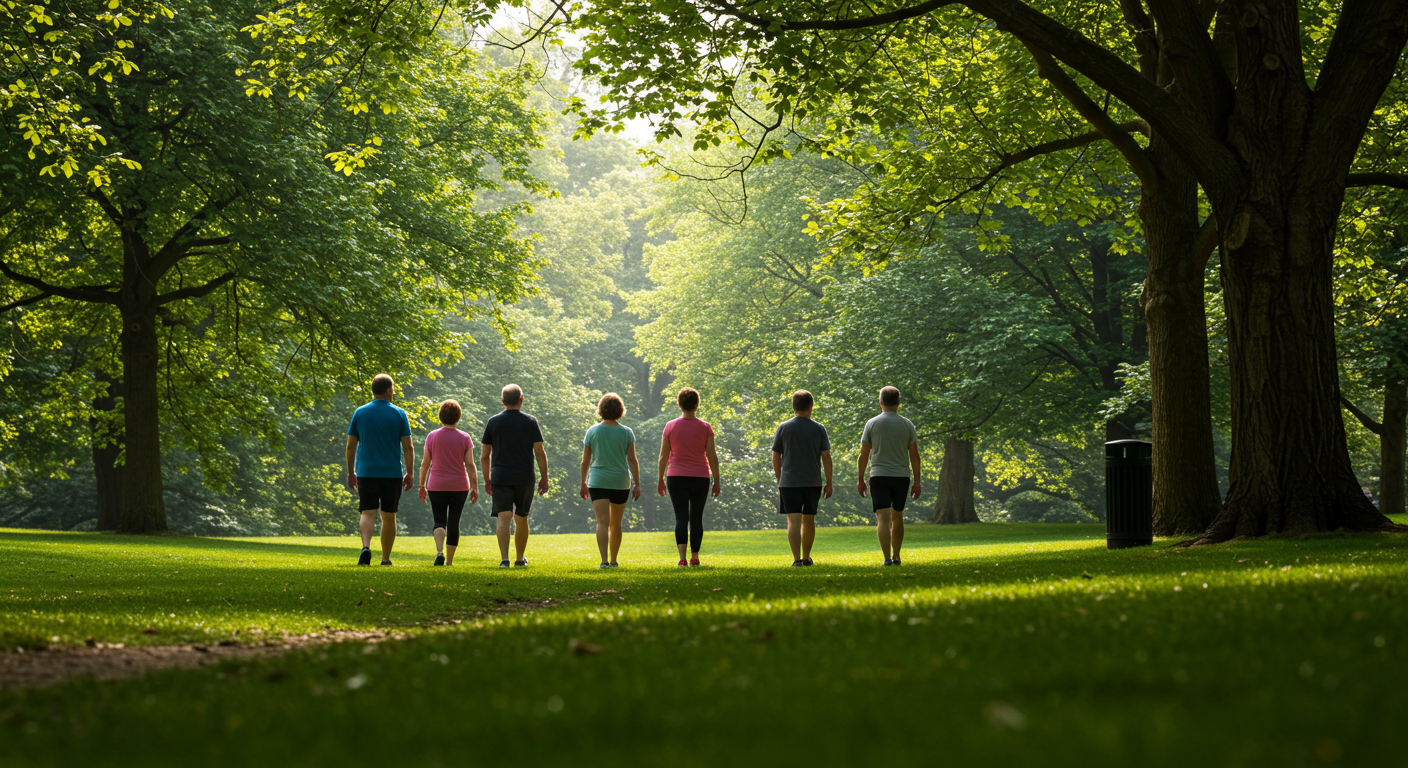
In a world saturated with high-intensity workouts and fleeting fitness fads, the simple act of walking often languishes in the shadows, its profound benefits overlooked amidst the clamor for more strenuous regimens. Yet, beneath its unassuming exterior lies a potent tool for weight loss and mental well-being, a gentle yet transformative practice that weaves physical and psychological health into a seamless tapestry. Walking, far from being a mere mode of locomotion, is a rhythmic meditation, a moving sanctuary where the body and mind find solace and strength.
The Calorie Cascade: Walking’s Impact on Weight Loss
The fundamental principle of weight loss, the caloric deficit, finds a steadfast ally in the act of walking. While it may not induce the dramatic calorie burn of high-intensity interval training, walking’s sustained and consistent nature accumulates a significant caloric expenditure over time. “The cumulative effect of daily walking can be substantial,” explains Dr. James O. Hill, a leading researcher in obesity and metabolism at the University of Colorado, in a study published in the International Journal of Obesity (Hill et al., 2012). A brisk walk, maintained for 30 minutes to an hour, can burn hundreds of calories, contributing to a steady and sustainable weight loss trajectory.
The beauty of walking lies in its accessibility and adaptability. It requires no specialized equipment, no gym memberships, and no complex routines. It can be seamlessly integrated into daily life, whether it’s a stroll to the grocery store, a lunchtime walk in the park, or a leisurely evening amble. This ease of incorporation fosters consistency, a crucial element in any weight loss endeavor. “Consistency is key to long-term success,” emphasizes Dr. Arya Sharma, a professor of medicine at the University of Alberta, in his book Eat Less, Move More, Weigh Less (Sharma, 2014). The ability to maintain a regular walking routine, without the burden of strenuous exertion, enhances adherence and promotes sustained weight management.
Beyond calorie expenditure, walking also influences body composition. It can help reduce visceral fat, the dangerous abdominal fat that surrounds internal organs and increases the risk of chronic diseases. “Walking has been shown to be effective in reducing visceral fat,” notes Dr. Kerry Stewart, a professor of medicine at Johns Hopkins University, in a review published in the Journal of Cardiopulmonary Rehabilitation and Prevention (Stewart, 2013). This reduction in visceral fat not only contributes to a slimmer physique but also improves metabolic health, reducing the risk of type 2 diabetes, heart disease, and other obesity-related conditions.
The Mind’s Tranquil Trail: Walking and Mental Well-being
The benefits of walking extend beyond the physical realm, permeating the landscape of mental health. The rhythmic cadence of footsteps, the gentle sway of the body, and the immersion in natural surroundings create a meditative state, a sanctuary for the mind to unwind and rejuvenate. “Walking is a form of moving meditation,” observes Dr. Andrew Weil, a pioneer in integrative medicine, in his book Spontaneous Happiness (Weil, 2011). This meditative quality reduces stress, alleviates anxiety, and promotes a sense of calm and well-being.
The release of endorphins, the body’s natural mood elevators, during physical activity contributes to the psychological benefits of walking. “Walking triggers the release of endorphins, which have mood-boosting effects,” explains Dr. Michael Otto, a professor of psychology at Boston University, in a study published in the Journal of Psychiatric Research (Otto et al., 2007). This endorphin surge not only enhances mood but also improves sleep quality, reduces fatigue, and increases overall energy levels.
Walking’s connection to nature further amplifies its mental health benefits. Studies have shown that spending time in green spaces reduces stress, improves cognitive function, and enhances emotional well-being. “Nature exposure has a profound impact on mental health,” states Dr. Gregory Bratman, a researcher in environmental health at the University of Washington, in a study published in the Proceedings of the National Academy of Sciences (Bratman et al., 2015). The sensory stimulation of nature, the sights, sounds, and smells, creates a calming and restorative environment, fostering a sense of connection to the natural world.
The Paved Path to Progress: Practical Applications and Future Directions
Integrating walking into a weight loss and mental fitness regimen is a simple yet effective strategy. Start with short walks, gradually increasing the duration and intensity. Incorporate walking into daily routines, such as walking to work, taking the stairs, or strolling during lunch breaks. Find a walking buddy for added motivation and social support. Explore scenic routes, such as parks, trails, or waterfronts, to enhance the mental benefits of nature exposure.
The future of walking as a tool for weight loss and mental well-being holds immense potential. Technological advancements, such as fitness trackers and mobile apps, can help monitor progress, track routes, and provide personalized feedback. Public health initiatives should promote walking as a safe and accessible form of physical activity, particularly in urban environments. Further research should explore the optimal duration, intensity, and frequency of walking for various populations and health conditions.
Conclusion
Walking, in its unassuming simplicity, emerges as a powerful catalyst for weight loss and mental well-being. Its ability to seamlessly integrate into daily life, its gentle yet effective calorie-burning capacity, and its profound influence on mental clarity and emotional balance make it an indispensable tool for holistic health. Embracing the peripatetic path, the rhythmic cadence of footsteps, and the tranquil communion with nature, we discover a transformative journey, a moving sanctuary where the body and mind find solace and strength.
Further Reading
- Bratman, Gregory N., et al. “Nature Experience Reduces Rumination and Subgenual Prefrontal Cortex Activation.” Proceedings of the National Academy of Sciences, vol. 112, no. 28, 2015, pp. 8567-8572.
- Hill, James O., et al. “Physical Activity and Public Health: Updated Recommendation for Adults From the American College of Sports Medicine and the American Heart Association.” International Journal of Obesity, vol. 36, no. 11, 2012, pp. 1432-1453.
- Otto, Michael W., et al. “Exercise Facilitates Cognitive-Behavioral Therapy for Anxiety Disorders.” Journal of Psychiatric Research, vol. 41, no. 5, 2007, pp. 377-384.
- Sharma, Arya M. Eat Less, Move More, Weigh Less: Exercise and Diet Plans for Overweight and Obese People. Canadian Obesity Network, 2014.
- Stewart, Kerry J. “Effects of Exercise on Cardiovascular Risk Factors Associated With Visceral Obesity.” Journal of Cardiopulmonary Rehabilitation and Prevention, vol. 33, no. 2, 2013, pp. 88-95.
- Weil, Andrew. Spontaneous Happiness. Little, Brown and Company, 2011.




Leave a Reply