
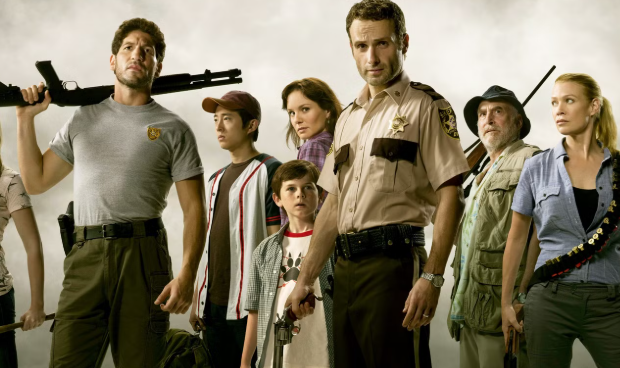
Dead Reckoning: 10 Essential Facts That Define the World of The Walking Dead
In the annals of television history, few series have managed to grip the collective throat of the public quite like the saga of the undead rising. What began as a localized survival story in the sweltering heat of Georgia evolved into a sprawling, multi-generational epic that redefined the horror genre for a mainstream audience. The world of this survival drama is bleak, uncompromising, and relentlessly focused on a singular question: what happens to the human soul when the world as we know it ends?
To the uninitiated, it might look like just another “zombie show,” but fans know better. It is a character study wrapped in a nightmare, a sociological experiment where the variables are scarcity, trauma, and the ever-present threat of a bite. The mythology of the series is dense, built on a foundation of graphic novels but carving its own path through the tall grass of televised storytelling. Whether you are just beginning your journey from the hospital bed with the protagonist or you are looking to understand the mechanics of this broken world, these ten essential facts provide the necessary map to navigate the apocalypse.
1. The “Z” Word Does Not Exist in This Universe
One of the most striking aspects of the series is that the word “zombie” is never uttered by the characters. This isn’t an oversight; it is a deliberate creative choice that fundamentally alters how the characters interact with their environment. In the world of the show, pop culture as we know it—specifically the works of George A. Romero and the broader genre of zombie fiction—simply does not exist. The characters have no blueprint for what is happening. They aren’t “surviving a movie trope”; they are encountering a biological impossibility with zero preparation.
This lack of cultural context is why the survivors develop their own regional terminologies. In the South, they are “Walkers.” To the residents of Woodbury, they might be “Biters.” Other groups call them “Lurkers,” “Roamers,” or “Cold Bodies.” This linguistic diversity reflects the fragmentation of society. Without a central internet or media to name the threat, humanity reverts to a primitive state of naming things based on their direct actions. It reinforces the isolation of the apocalypse, making the monsters feel more like a natural disaster or a new, terrifying part of the local ecology rather than a fictional monster come to life.
2. The Universal Infection: Death is the Only Trigger
Early in the journey, a pivotal revelation at a center for disease control changed the stakes of the series forever. The survivors learned that the “wildfire” virus—or whatever caused the reanimation—is already inside every living person. You do not need to be bitten to turn into a monster; you only need to die. Whether it is a heart attack, a car accident, or a peaceful passing in one’s sleep, the result is the same: the brain stem reboots, and the body becomes a mindless predator.
This “universal infection” adds a layer of existential dread to every interaction. Every person is a ticking time bomb. It removes the safety of a “clean” group and forces the survivors to treat the dead with a level of ritualistic violence. “Protecting the brain” becomes the only way to ensure a loved one truly rests in peace. This fact also explains why the world fell so quickly; every hospital, nursing home, and accident site became a ground zero for a new outbreak. The enemy isn’t just the monsters outside the gates; the enemy is the very biology of the human survivors themselves.
3. The Protagonist’s Evolution from Lawman to Leader
The story begins through the eyes of Rick Grimes, a small-town sheriff’s deputy who wakes from a coma to find the world has ended. Rick represents the “old world” values of law, order, and morality. For much of the early series, his struggle is centered on maintaining his humanity while making the increasingly brutal choices required for survival. He is the “Officer Friendly” who believes that there must be a way back to civilization, a way to keep his hands clean while keeping his family safe.
However, the “Rickocracy” eventually gives way to a more hardened, pragmatic version of leadership. His transformation is the emotional backbone of the series. As he loses friends, family, and his own sense of safety, Rick evolves into a man willing to bite a throat out to protect his son or execute a threat before it can manifest. This transition mirrors the audience’s own descent into the mindset of the apocalypse. We start by wanting Rick to be a hero; we end by needing him to be a survivor. His legacy is the benchmark against which every other leader in the series is measured.
4. The “Daryl Dixon” Factor: A Character Born of Screen Chemistry
Interestingly, one of the most popular and enduring characters in the history of the show never existed in the original source material. Daryl Dixon, the crossbow-wielding tracker with a heart of gold and a rough exterior, was created specifically for the television adaptation. Initially intended to be a recurring character or a minor antagonist alongside his brother Merle, the performance of the actor and the undeniable chemistry with the rest of the cast made him indispensable.
Daryl’s presence changed the trajectory of the show. He provided a bridge between the “outcast” elements of society and the core group of survivors. His journey from a guarded, volatile loner to a trusted lieutenant and eventually a lead protagonist is one of the most rewarding arcs in the series. Daryl represents the idea that the apocalypse can actually be a form of redemption for those who were discarded by the old world. In a world without social hierarchies, a man with a crossbow and tracking skills is more valuable than a man with a law degree, proving that the end of the world is the ultimate equalizer.
5. Humans are the Real Monsters (The Storm vs. The Weather)
As the series progresses, a chilling realization sets in: the “Walkers” are not the primary threat. While the undead are dangerous in large numbers, they are predictable. They move at a set speed, they are driven by a singular instinct, and they can be managed with the right tactics. In the metaphor of the series, the undead are “the weather”—a constant, hazardous condition of the environment that you must dress for and respect.
The real “storm” comes from the other humans. The series introduces a rotating cast of antagonistic communities, from the sophisticated tyranny of the Governor’s Woodbury to the brutal, meritocratic cruelty of Negan’s Saviors, and the primal, animalistic cult of the Whisperers. These villains represent the different ways human society can warp when the guardrails of civilization are removed. The show argues that the greatest danger in a lawless world isn’t the dead trying to eat you, but the living trying to control you, use you, or take what you have. The “walking dead” of the title often refers as much to the survivors as it does to the monsters.
6. The Shambling Decay: Monsters That Change Over Time
One of the most impressive technical feats of the show is the commitment to the visual evolution of the undead. Because the world is seen over the course of several years, the “Walkers” do not remain static. In the beginning, they look like fresh corpses—pale, bloody, but still recognizable as people. As time passes, the effects of heat, humidity, and simple biological decay take their toll. The monsters become more skeletal, their skin turns to leather or moss-covered rot, and their physical integrity weakens.
This attention to detail, led by legendary practical effects masters, serves a narrative purpose. It emphasizes the passage of time and the environmental impact on the apocalypse. Some Walkers become fused to trees by vines; others melt into the pavement of sun-scorched highways. This decay also changes the tactics of survival. A “fresh” Walker might be stronger and faster, while an “ancient” one might be fragile but harder to spot in the undergrowth. This visual storytelling ensures that the threat never feels stagnant, even as the survivors become experts at dispatching individual threats.
7. The Deviations from the Graphic Novel Source Material
The series is based on a long-running comic book series by Robert Kirkman, but it is not a literal, shot-for-shot adaptation. The show treats the comics as a “rough map” rather than a strict script. This allows the writers to surprise even the most hardcore fans. Major characters who die early in the comics might survive for years on the show, while others who are central to the comic’s ending might meet an untimely demise on screen.
These deviations are crucial for maintaining tension. In a show where “anyone can die,” the ability to subvert the expectations of those who have read the books is a powerful tool. It allows for the creation of “remixed” storylines—taking a famous moment from the comics but giving it to a different character or changing the outcome entirely. This creates two distinct versions of the apocalypse: one on the page and one on the screen, both sharing the same DNA but evolving in different directions. For the viewer, it means that no one is truly safe, regardless of their status in the source material.
8. The Importance of “The Group” as a Surrogate Family
At its heart, the series is a story about found family. The core group of survivors—often referred to by fans as “Team Family”—consists of individuals who likely would never have spoken to one another in the old world. A pizza delivery boy, a housewife, a lawyer, a redneck, and a cop become a tight-knit unit capable of taking on entire armies. This bond is the only thing that keeps them sane in a world designed to break them.
The show frequently explores the tension between protecting the “inner circle” and helping outsiders. Every time the group brings in a new member, they risk a “Trojan Horse” situation, but every time they turn someone away, they lose a piece of their own humanity. This surrogate family dynamic provides the emotional stakes. We don’t watch to see how they kill zombies; we watch to see how they protect each other. The losses felt by the characters are felt by the audience because the show spends so much time building the domesticity of their survival—the quiet moments of sharing a meal or a joke amidst the ruins.
9. The Geography of the Apocalypse: From Cities to the Wild
The setting of the series undergoes a massive shift that mirrors the collapse of infrastructure. The early episodes are defined by the urban sprawl of Atlanta—clogged highways, towering skyscrapers, and the claustrophobia of city streets. However, as the world dies, the survivors are forced into the rural wilderness. The “forest” becomes the primary setting, representing a return to a more primitive, frontier-style existence.
This shift in geography highlights the loss of technology. Without gasoline, cars become useless relics, leading the characters to rely on horses and wagons. Without electricity, the night becomes a terrifying, impenetrable wall. The move from the city to the countryside also introduces different types of survival challenges, from finding clean water to dealing with the changing seasons. The landscape itself is a character, transitioning from a graveyard of the old world into a blooming, overgrown wilderness where nature is slowly reclaiming the concrete and steel of human ambition.
10. The Expanding Universe and the CRM
While the initial story focused on a small band of survivors, the world eventually opened up to reveal a much larger, more complex geopolitical landscape. This includes the introduction of the Civic Republic Military (CRM), a massive, secretive organization with advanced technology, helicopters, and a vision for rebuilding civilization on a grand scale. The CRM represents the “endgame” of the apocalypse—the point where survival ends and the reconstruction of a global power begins.
The presence of the CRM connects various storylines and spin-offs, suggesting that while our main characters were fighting for their lives in the woods, a larger shadow war was being fought for the future of the planet. It introduces themes of authoritarianism and the cost of “security” in a dangerous world. This expansion ensures that the story doesn’t just end with a single community’s safety, but looks toward the possibility of a new world order. It elevates the series from a simple horror story to a complex political thriller, proving that the world of the walking dead is far larger than anyone could have imagined.
Further Reading
- The Walking Dead Compendium Vol. 1-4 by Robert Kirkman and Charlie Adlard
- The original graphic novel series that serves as the foundation for the entire franchise.
- The Art of AMC’s The Walking Dead Universe by Matthew K. Manning
- A deep dive into the production design, makeup effects, and visual evolution of the show.
- The Walking Dead: Rise of the Governor by Robert Kirkman and Jay Bonansinga
- A novel that explores the origin of one of the series’ most iconic villains, providing context to the fall of society.
- The World of The Walking Dead by Paul Ruditis
- An encyclopedic guide to the characters, locations, and lore of the television series.
- 10 The Exorcist III (1990) Movie Facts You Didn’t Know
- 10 Scream (1996) Movie Facts That Changed Horror
- 10 Hostel (2005) Movie Facts That Shocked Viewers
- 10 Hellraiser (1987) Movie Facts That Built Its Legacy
- 10 Candyman (1992) Movie Facts That Still Give Chills
- 10 Essential Facts About The Texas Chainsaw Massacre (1974)
- 10 Essential Facts That Explain the World of The Walking Dead TV Show
- From – Season 1 Full Recap and Spoilers Explained
- 10 Things You Should Know About The Thing (1982) – Movie Facts and Hidden Details
- 10 Fascinating Supernatural Facts You Probably Missed – TV Show Lore



