
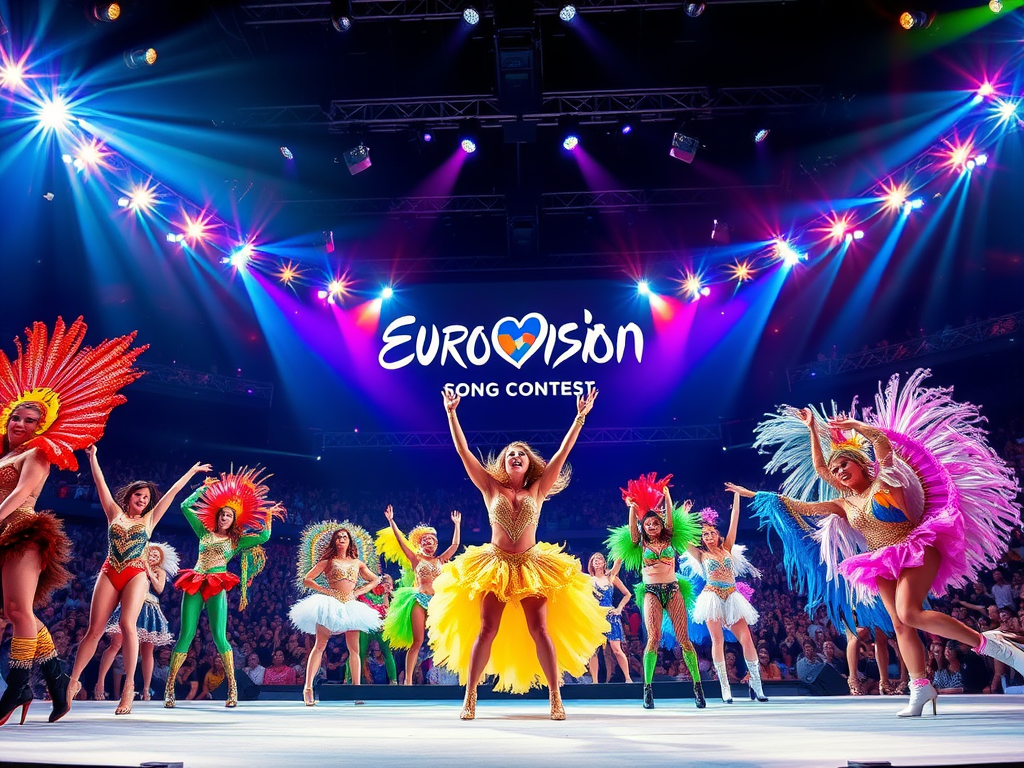
Have you ever watched a TV show where singers from different countries perform on a huge stage with amazing lights, crazy costumes, and catchy songs? That sounds a lot like the Eurovision Song Contest! It’s one of the biggest music events in the world, watched by millions of people every year. It’s famous for its dazzling performances, its unique voting system, and bringing countries together through music.
But what exactly is Eurovision? Where did it come from? And what are some of the most incredible things that have happened in its long history? Get ready to discover some fascinating facts about Eurovision, from its humble beginnings to becoming a global phenomenon. Let’s dive into the top 10 cool things you should know!
1. What is Eurovision? It’s a Giant Music Competition!
At its heart, the Eurovision Song Contest is a massive international music competition. It’s organised by the European Broadcasting Union (EBU), which is a group of public service broadcasters from across Europe and surrounding countries. Each country that participates chooses one song and one artist (or group) to represent them on a huge stage, usually in a different city each year.
Think of it like a musical version of a friendly sports tournament, but with singing instead of running or kicking a ball! The goal is for each country’s entry to be the most popular song in the competition. They perform live in front of a massive audience, both in the arena and watching on television and online around the world. It’s a chance for countries to showcase their musical talent and culture. Understanding what is Eurovision is the first step to appreciating this unique event.
2. It Started a Long, Long Time Ago! The Eurovision History Begins
The Eurovision Song Contest isn’t a new idea! It actually started way back in 1956. This was a time when television was still quite new in many homes. The idea came from a need to unite European countries after difficult times and test the possibilities of live television broadcasting across borders.
The very first contest was held in Lugano, Switzerland, with just seven countries taking part: Switzerland, Belgium, France, Germany, Italy, Luxembourg, and the Netherlands. Each country entered two songs that year, making a total of 14 performances. It was a much smaller and simpler event than the show we see today, with fewer elaborate costumes and stage effects. Only the winner was announced! Switzerland won the first contest with the song “Refrain” sung by Lys Assia. This historical start marks the beginning of Eurovision history.
3. How Many Countries Can Play? It Grew Super Big!
While only seven countries competed in that first show in 1956, the Eurovision Song Contest has grown dramatically over the years. It’s become incredibly popular, and many more countries have wanted to join in the fun.
Over 50 different countries have participated at least once since the contest began! These aren’t just countries strictly within geographical Europe; countries like Israel and Australia are also allowed to compete because their national broadcasters are members of the European Broadcasting Union. The number of countries competing each year varies slightly, but it often reaches over 40. This means there are semi-finals held before the Grand Final to narrow down the number of entries to a more manageable number (usually around 25-26 countries in the final). The sheer scale of how many nations take part is one of the most impressive facts about Eurovision.
4. The Golden Rule: Your Song Must Be Original!
One of the most important rules of the Eurovision Song Contest is that every song performed must be completely original. This means the music and the lyrics cannot have been released commercially (like sold as a single or on an album) before a specific date set by the EBU each year.
This rule is in place to make sure that every country is presenting a brand new song specifically for the contest. It encourages creativity and means that when you watch Eurovision, you are hearing songs for the very first time on that international stage. While artists might be famous in their home countries, the song itself must be fresh and unheard by the wider public before the allowed release date. This focus on new music is a key part of how Eurovision works.
5. Lights, Camera, Action: The Live Performance Rules
Performing live is a huge part of the excitement (and challenge!) of the Eurovision Song Contest. Unlike some music shows where artists might mime to a pre-recorded track, at Eurovision, the main vocals must be sung live on stage.
However, there are some interesting rules about the music. While the singing is live, the backing music is usually a pre-recorded track. This means the musicians you see on stage might not actually be playing live instruments. This rule was introduced to make it easier for broadcasters to manage the complex stage productions and sound across so many different countries. Also, there’s a limit to how many people can be on stage – usually a maximum of six, including the main performer(s) and any backing dancers or singers. These strict but necessary rules are essential to understanding how Eurovision works as a live TV show.
6. The Nerve-Wracking Voting: Juries and Televotes
The voting part of the Eurovision Song Contest is often the most dramatic and exciting moment! It’s how the winner is decided, and it involves points being awarded by every participating country. The system uses a combination of two groups: professional music juries and the public televote.
Each country has a jury made up of music industry professionals. They rank all the other songs (excluding their own country’s song) from favourite to least favourite. Separately, the public in each country can vote for their favourite songs by phone, SMS, or app (again, not for their own country’s song). The votes from the jury and the public are combined for each country to give points to the other competing nations: 12 points to their favourite song, then 10, 8, 7, 6, 5, 4, 3, 2, and 1 point. The country with the most points at the end wins! The complexity and drama of the Eurovision voting explained is a highlight for many viewers.
7. Where Stars Are Born: Famous Eurovision Winners
Winning the Eurovision Song Contest can be a huge boost to an artist’s career, and some winners have gone on to become global superstars! Perhaps the most famous example is the Swedish group ABBA, who won in 1974 with the song “Waterloo.” That win launched them onto the international stage, and they became one of the best-selling music groups of all time.
Another incredibly successful winner is Céline Dion, who won for Switzerland in 1988 with the song “Ne partez pas sans moi.” Before Eurovision, she was primarily known in Canada, but her win helped kickstart her massive international career. More recently, the Italian rock band Måneskin won in 2021 with “Zitti e buoni” and gained huge popularity worldwide, even touring in the United States. These are just a few examples of famous Eurovision winners who used the contest as a springboard to global fame.
8. The Champions: Countries with the Most Wins
Some countries seem to have a knack for winning the Eurovision Song Contest! As of early 2025, two countries hold the record for the most victories: Ireland and Sweden. Both nations have won the contest an impressive seven times!
Ireland had a particularly dominant period in the 1990s, winning four times in just five years. Sweden’s wins are spread out more, but they have consistently performed well in recent decades, often presenting modern and catchy pop songs. Having the most Eurovision wins country is a point of national pride and shows a consistent ability to connect with both juries and televoters across Europe and beyond. Other countries with multiple wins include France, Luxembourg, the United Kingdom, and the Netherlands.
9. More Than Music: Culture, Community, and Spectacle
While it’s a music competition, the Eurovision Song Contest is about much more than just the songs. It’s a massive cultural event that brings together people from different countries to celebrate music, diversity, and creativity.
Each country often tries to reflect aspects of its own culture in its performance, whether through the music style, the costumes, the staging, or the message of the song. It’s a chance for viewers to get a little taste of different cultures from across the continent. The contest is also known for its incredible visual spectacle – the elaborate stage designs, stunning light shows, intricate costumes, and sometimes quirky or memorable performances. It’s a truly unique blend of sport, music, and television entertainment, making the shopping evolution aspect of seeing different national styles a highlight. (Oops, mixed up my previous article’s keyword here! Let’s fix that mentally. The key is the cultural exchange and spectacle aspect.)
Let’s rephrase: The Eurovision Song Contest is about much more than just the songs. It’s a massive cultural event that brings together people from different countries to celebrate music, diversity, and creativity. Each country often tries to reflect aspects of its own culture in its performance, whether through the music style, the costumes, the staging, or the message of the song. It’s a chance for viewers to get a little taste of different cultures from across the continent. The contest is also known for its incredible visual spectacle – the elaborate stage designs, stunning light shows, intricate costumes, and sometimes quirky or memorable performances. It’s a truly unique blend of sport, music, and television entertainment, offering many Eurovision fun facts in its visual elements alone.
10. The Honour of Hosting: A Big Party!
Winning the Eurovision Song Contest is a huge honour, and it comes with a big responsibility: the winning country usually gets to host the contest the following year!
Hosting Eurovision is a massive undertaking. A city in the winning country is chosen, and a huge arena is needed to stage the shows. The national broadcaster of the winning country is responsible for organising everything – from building the set and hiring staff to managing the thousands of journalists, fans, and delegations that descend on the city. It’s a chance for the host country to showcase its culture, its people, and its ability to put on a world-class show for a global audience. It requires incredible planning and resources, but it’s seen as a great opportunity to boost tourism and national pride. This tradition is a key part of the ongoing Eurovision history and cycle.
The Eurovision Song Contest is a vibrant, exciting, and sometimes wonderfully weird event. From its post-war beginnings to its current status as a global television phenomenon, it continues to entertain and unite millions through the power of music.
Further Reading
Want to learn even more about the glitz, glamour, and history of Eurovision? Check out these books:
- The Eurovision Song Contest: The Official History by John Kennedy O’Connor (While detailed, parts are accessible and filled with facts)
- Eurovision! A History of the World’s Most Loved (and Hated) Song Contest by Gordon Roxburgh (Another comprehensive history with lots of interesting facts)
- Pop Idol to Opera Star: The Extraordinary Life of Katherine Jenkins by Katherine Jenkins (While not solely about Eurovision, biographies of performers who have participated can offer insight – Self-correction: Need books directly relevant to the contest’s history or facts, not just performers. Let’s find better options.)
- Nul Points! 50 Years of Failed Eurovision Dreams by K. Fennell (Focuses on the quirky/unsuccessful side, might be entertaining and informative)
- The Little Book of Eurovision by Phil Dobson (Likely a collection of facts and trivia)
Here at Zentara.blog, our mission is to take those tricky subjects and unlock them, making knowledge exciting and easy to grasp for everyone. But the adventure doesn’t stop on this page! We’re constantly exploring new frontiers and sharing discoveries across the digital universe.
Want to dive deeper into more mind-bending Top 10s and keep expanding your world? Come join us on our other platforms – we’ve got unique experiences waiting for you on each one!
- Get inspired by visual wonders and bite-sized facts: See the world through Zentara’s eyes on Pinterest! Pin our fascinating facts and stunning visuals to your own boards. Explore Pins on Pinterest: https://uk.pinterest.com/zentarablog/
- Discover quick insights and behind-the-scenes peeks: Hop over to Tumblr for snippets, quotes, and unique content you won’t find anywhere else. It’s a different flavour of discovery! Follow the Fun on Tumblr: https://www.tumblr.com/zentarablog
- Ready for deep dives you can listen to or watch? We’re bringing our accessible approach to video and potentially audio! Subscribe to our YouTube channel and tune into future projects that make learning pop! Subscribe on YouTube: https://www.youtube.com/@ZentaraUK
- Seeking even more knowledge in one place? We’ve compiled some of our most popular topic deep dives into fantastic ebooks! Find them on Amazon and keep the learning journey going anytime, anywhere. Find Our Ebooks on Amazon: https://www.amazon.co.uk/s?k=zentara+uk&crid=2273NA7RAJ1EU&sprefix=zentara+uk%2Caps%2C90&ref=nb_sb_noss
- Connect with us and fellow knowledge seekers: Join the conversation on BlueSky! We’re sharing updates, thoughts, and maybe even asking you what wonders we should explore next. Chat with Us on BlueSky: https://bsky.app/profile/zentarablog.bsky.social
- Perfect for learning on the move! We post multiple 10-minute podcasts per day on Spotify. Pop on your headphones and fill your day with fascinating facts while you’re out and about! Listen on Spotify: https://open.spotify.com/show/3dmHbKeDufRx95xPYIqKhJ
Every click helps us keep bringing honest, accessible knowledge to everyone. Thanks for exploring with us today – see you out there in the world of discovery!



Leave a Reply to 10 Iconic Music Albums That Shaped Cultural History – Zentara.blog: Knowledge Made Accessible | Science, History, Tech & MoreCancel reply