
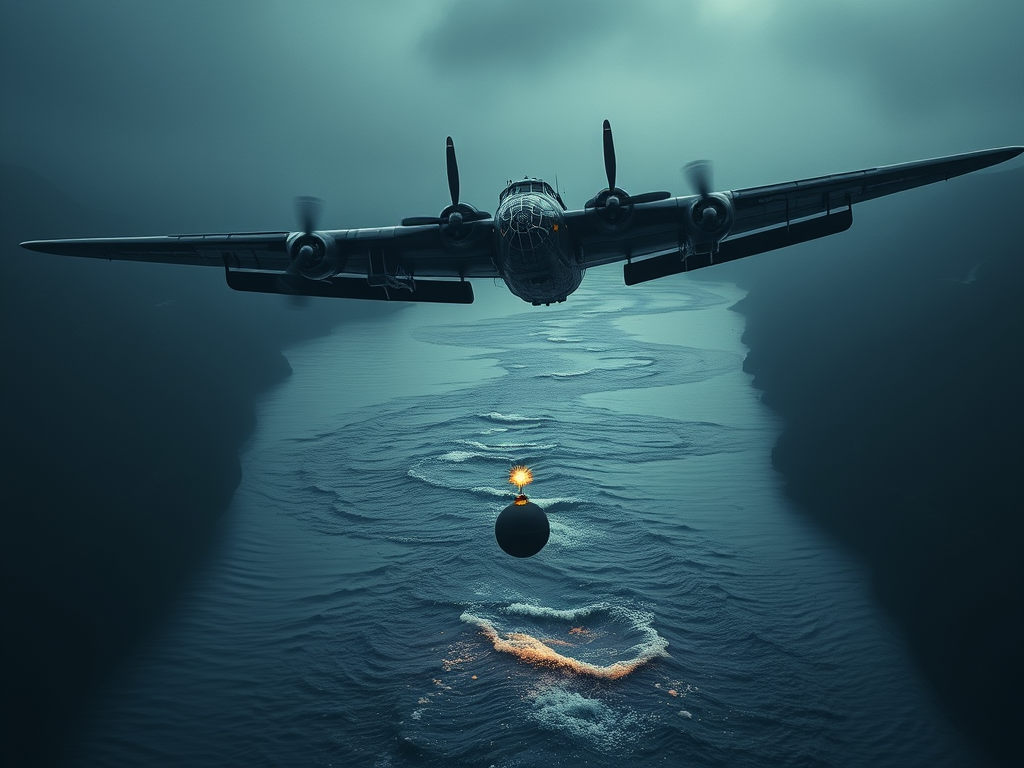
The story of the Dambusters is one of the most famous and daring tales of the Second World War. It’s about brave pilots, a clever invention, and a mission that seemed almost impossible. On the night of May 16th-17th, 1943, a special squadron of the Royal Air Force, 617 Squadron, set out in modified Lancaster bombers to attack dams in Germany’s industrial heartland, the Ruhr Valley. Their goal was to cripple German industry by unleashing millions of tons of water.
While many know about the bouncing bomb and the successful breaches of the Möhne and Eder Dams, there are lots of fascinating details that often get overlooked. These facts shine a light on the incredible planning, ingenuity, and sheer bravery involved in Operation Chastise, as the raid was officially known. It wasn’t just about dropping a bomb; it was a complex puzzle with many pieces, each vital to the mission’s outcome.
Getting it right meant flying at incredibly low altitudes in the dark, navigating tricky terrain, and facing heavy enemy fire, all while delivering a brand-new, untested weapon with pinpoint accuracy. The story is full of incredible characters, from the brilliant but quirky inventor to the young, courageous airmen who flew into danger.
Let’s dive into some of the less talked-about aspects of this legendary raid, exploring the ingenious solutions, the human stories, and the lasting impact of the Dambusters. These ten facts will give you a deeper understanding of why this mission remains so remarkable, even today.
1. The Bouncing Bomb Wasn’t Just a Simple Sphere
When you think of the bouncing bomb, you probably picture a sphere skipping across the water like a stone. While that’s the basic idea, the actual “Upkeep” bomb used in the Dambusters raid was much more complex, and importantly, it wasn’t a perfect sphere. The final operational version was actually cylindrical, shaped more like a large barrel or a massive oil drum laying on its side. It weighed over 9,000 pounds! This cylindrical shape was easier to manufacture and handle within the aircraft than a large sphere would have been.
A critical part of its design was the backspin. Before being dropped, the bomb was rotated at a high speed – about 500 revolutions per minute – by a hydraulic motor inside the Lancaster bomber. This backspin was absolutely essential for the bomb to work correctly. As it was dropped at a very low altitude (just 60 feet!), the spin helped it bounce across the water’s surface in a controlled way, preventing it from simply plunging straight down. It also helped the bomb stay pressed against the dam wall after it hit, allowing it to sink to the correct depth before exploding. It’s a fantastic example of Barnes Wallis‘s clever engineering, applying principles of physics (like Magnus effect, though he might not have called it that) in a completely new way to overcome the challenge of destroying the heavily protected German dams.
2. The Low Altitude Flying Was Achieved with Simple Lights
One of the most dangerous and impressive parts of the Dambusters raid was the requirement to fly at an incredibly precise altitude of just 60 feet (about the height of a six-story building) over the water at night. Flying that low in the dark, over potentially choppy water, with hills and obstacles around, was incredibly risky and demanding on the pilots. Standard altimeters, which measure height above sea level using air pressure, weren’t accurate enough for this task, and radar altimeters were still new and unreliable, especially over water.
The ingenious solution was incredibly simple: two spotlights, one mounted under the nose of the Lancaster bomber and the other under the fuselage, angled towards each other. When the aircraft was flying at exactly 60 feet above the water, the light beams from these two spotlights would meet and form a single, clear figure-of-eight shape on the surface of the water. If the pilot was too high, they would see two separate light pools. If they were too low, the figure-of-eight would spread out or disappear beneath the aircraft. This visual guide, simple as it was, allowed the pilots to maintain the critical height needed to successfully bounce the “Upkeep” bomb towards the dam walls. It was a low-tech but brilliantly effective solution to a major technical challenge, highlighting the practical innovation needed for Operation Chastise.
3. The Squadron Was Formed Specifically for This One Mission
617 Squadron RAF, which became forever known as the Dambusters, didn’t exist before this raid was planned. It was specially created in March 1943 for the sole purpose of carrying out Operation Chastise. Because the mission required such highly specific skills – exceptionally accurate low-level night flying and navigation, along with the ability to deliver a unique weapon – the crews weren’t just taken from existing squadrons. Instead, they were hand-picked from across Bomber Command, selecting individuals with proven skill, experience, and courage.
Many of the airmen selected had already completed full tours of operations, meaning they had flown dozens of dangerous missions over enemy territory. Bringing them together under the command of the dynamic and experienced Wing Commander Guy Gibson allowed for focused, intensive training specifically geared towards the unique challenges of attacking the dams. They trained in secret for weeks, practising low flying over water, often using lakes and reservoirs in the UK that somewhat resembled the German targets. This dedicated approach to forming a specialist squadron for a one-off, high-stakes mission was unusual for the time and was a key factor in the eventual, albeit costly, success of the Dambusters raid.
4. There Were Multiple Target Dams, Not Just One Big One
While the breaching of the Möhne Dam is often the most famous image associated with the Dambusters raid, the mission, known as Operation Chastise, actually targeted multiple dams in the Ruhr Valley. The primary targets were the Möhne and Eder dams, which were large masonry or concrete gravity dams that held back vast reservoirs crucial for water supply and hydroelectric power for German industries. These were the targets that the bouncing bomb was specifically designed to destroy by exploding underwater against their walls.
However, there was also a third primary target: the Sorpe Dam. Unlike the Möhne and Eder, the Sorpe was a large earth embankment dam. The “Upkeep” bouncing bomb wouldn’t be effective against this type of structure. The plan for the Sorpe was different; aircraft assigned to this target were intended to drop a standard bomb directly onto the crest of the dam, hoping that repeated hits would erode the earthworks and cause a breach. This required a different approach run and bombing technique. Due to difficulties in locating the Sorpe in the darkness and poor weather, and the need for multiple precise drops, it was attacked later in the night and, though damaged, was not breached like the Möhne and Eder. Secondary targets, including the Lister, Ennepe, and Diemel dams, were also identified in case the main targets were successfully attacked early. This shows the comprehensive planning behind the raid, aiming for maximum disruption across the region.
5. Getting the Bomb’s Speed Right Was As Important As the Height
We’ve already touched on the critical importance of flying at exactly 60 feet above the water for the bouncing bomb to work. But height was only half the battle. The aircraft also had to be flying at a very specific speed – around 232 miles per hour (370 km/h) – when the bomb was released. If the aircraft was too slow, the bomb wouldn’t have enough energy to skip across the water the required distance or maintain its stability. It might drop too short, sink prematurely, or veer off course. If the aircraft was too fast, the bounces might be too high or uncontrolled, potentially causing the bomb to clear the dam entirely or break up on impact.
Achieving and maintaining this precise speed at such a low altitude, in the dark, often through turbulence or under fire, added another layer of difficulty for the pilots of the Lancaster bomber. It required constant vigilance and fine adjustments to the engines. The combination of exact height and exact speed was crucial for the bouncing bomb to perform its intended ricocheting path across the reservoir and hit the dam wall at the correct point and with the right amount of spin. It was a testament to the skill and training of the 617 Squadron crews that they were able to achieve these incredibly demanding parameters under operational conditions during the Dambusters raid.
6. Barnes Wallis Faced Huge Opposition to His Idea
Today, Barnes Wallis is celebrated as the brilliant inventor of the bouncing bomb and a hero of the Dambusters raid. However, getting his radical idea accepted and developed was a long and frustrating struggle for him. When he first proposed the concept of a bomb that would skip across water to bypass torpedo nets and explode underwater against a dam, many in the British military and scientific establishment were highly skeptical, even dismissive. They thought the idea was outlandish and impractical.
Wallis was an unconventional thinker, an engineer who often worked outside the box. His previous work included designing airships and aircraft structures using innovative geodetic principles. But the bouncing bomb seemed too much like science fiction to some. He conducted his initial experiments using simple models, famously skipping marbles or ball bearings across a water tank in his garden or using scaled-down prototypes dropped from aircraft into reservoirs or the sea. Despite promising results from these tests, he faced inertia, doubt, and even ridicule from senior figures who favoured more conventional bombing strategies. It took immense perseverance, tireless lobbying, and the support of a few influential people who recognised the potential of his idea for the project to finally get the go-ahead and for 617 Squadron to be formed to carry out Operation Chastise. Wallis’s struggle highlights that even the most groundbreaking ideas can face significant resistance.
7. The Pilots Used Improvised Bombsights for Accuracy
With the need to drop the bouncing bomb at a precise distance from the dam wall (around 400-450 yards) while flying low and fast at night, the standard bombsights used by Bomber Command were simply not suitable. These sights were designed for bombing from much higher altitudes. The target point for the “Upkeep” bomb was fixed relative to the dam, not directly below the aircraft.
To solve this, Wing Commander Guy Gibson and his team came up with a surprisingly simple, low-tech solution. For the Möhne and Eder dams, which had distinctive towers or structures on either side of the dam wall, they used a triangular wooden bombsight. The bomb aimer would look through a sighting hole at the apex of the triangle and line up two nails fixed to the base with the two towers on the dam. When the nails lined up perfectly with the towers, it meant the aircraft was at the correct distance from the dam for the bomb release. It was a clever bit of field engineering, using the geometry of the situation to create a simple but effective targeting tool. For the Sorpe Dam, which didn’t have these towers, a different method involving a stopwatch and timing the run from a known landmark was planned, though navigating to the Sorpe itself proved difficult on the night. These improvised sights are another example of the practical innovation that was vital to the success of the Dambusters raid and a testament to the ingenuity of the aircrews involved in Operation Chastise.
8. Not All the Bombs Worked as Planned
While the Dambusters raid is famous for the successful breaching of the Möhne and Eder dams, it’s important to remember that not every bouncing bomb dropped performed perfectly, and several aircraft and crews were lost before even reaching the targets. Even among the bombs that were successfully delivered, there were issues. At the Möhne Dam, several bombs were dropped before the wall finally gave way. Some bounced off course, some hit obstacles like netting (which the bomb was designed to avoid, but low-level flight and debris were still hazards), and at least one may have exploded prematurely.
At the Eder Dam, which was in a more challenging location with surrounding hills making the low approach difficult, several crews also had problems with their bombing runs. Some had to make multiple attempts to get the height, speed, and position right. One bomb hit the top of the dam, bouncing over and exploding harmlessly on the other side, damaging the attacking aircraft in the process. The Sorpe Dam, as mentioned earlier, required a different bombing method with a standard bomb, and despite multiple attacks, it was only damaged, not breached. The raid highlights the inherent risks and unpredictable nature of wartime operations, even with meticulous planning and a groundbreaking weapon. The success at the Möhne and Eder was a triumph, but it came at a significant cost and through overcoming numerous technical and operational challenges on the night of Operation Chastise.
9. The Raid Had a Significant Psychological Impact
Beyond the physical damage caused by the flooding in the Ruhr Valley, the Dambusters raid had a massive psychological impact, both in Britain and Germany. For the British public, who had endured years of wartime hardship and bombing raids, the success of Operation Chastise was a huge morale booster. It demonstrated that the RAF could strike a significant blow against Germany’s industrial heartland using innovative technology and incredible bravery. The story of the Dambusters quickly captured the public imagination and became a symbol of British ingenuity and defiance. The news was a much-needed piece of positive information during a tough period of the war.
In Germany, the raid caused shock and disruption. While the physical damage, particularly to the Möhne and Eder areas, was significant, the long-term impact on overall German war production was less decisive than initially hoped, as repairs were made relatively quickly, partly using forced labour. However, the psychological blow was considerable. It showed that even vital infrastructure deep within Germany was vulnerable to attack, forcing the Germans to divert resources and manpower to defence and repair efforts that could have been used elsewhere. The audacity and success of the raid, particularly the mystery surrounding how the dams were breached, created uncertainty and concern among the German leadership. The Dambusters raid became a propaganda victory for the Allies and a stark reminder to the Axis powers that they were not invincible.
10. The Cost in Lives Was High
While the Dambusters raid is rightly celebrated for its ingenuity and bravery, it’s crucial to remember the heavy human cost. Operation Chastise was a highly dangerous mission, and the aircrews of 617 Squadron knew the risks they were taking. Of the 19 Lancaster bombers that set out on the raid, a staggering eight did not return. Fifty-three airmen from the squadron were killed, and three were taken prisoner of war. These were highly trained and experienced crew members, their loss a significant blow.
The causes of these losses were varied: some aircraft were shot down by German anti-aircraft fire (flak) or night fighters, particularly when flying at the extremely low altitudes required. Others crashed after hitting power lines or high ground in the dark. The sheer difficulty and danger of the low-level navigation and attack runs in enemy territory contributed significantly to the casualties. On the ground in Germany, the flooding caused by the breached dams also resulted in a tragic loss of life, with estimates suggesting around 1,300 people were killed, including many civilians and forced labourers. The story of the Dambusters raid is a powerful reminder of the sacrifices made during wartime and that even successful missions often come at a terrible price for those involved. Wing Commander Guy Gibson, the squadron’s leader, was awarded the Victoria Cross for his extraordinary bravery during the raid, but he too would tragically lose his life later in the war during a different operation.
Further Reading
If you’d like to learn more about the incredible story of the Dambusters, here are some books that can help you delve deeper:
- The Dam Busters by Paul Brickhill
- Enemy Coast Ahead by Guy Gibson (his own account of his wartime experiences, including the raid)
- Chastise: The Dambusters Story 1943 by Max Hastings
- Barnes Wallis’s Bouncing Bomb: Operations Chastise and Goodwood by Stephen Flower (Focuses more on the technical aspects and Wallis)
The Dambusters raid, also known as Operation Chastise, remains a captivating historical event. It highlights the innovative engineering of Barnes Wallis, the incredible bravery and skill of 617 Squadron led by Wing Commander Guy Gibson VC, and the unique challenge of delivering the bouncing bomb from specially modified Lancaster bomber aircraft to targets like the Mohnes Dam raid, the Eder Dam raid, and the Sorpe Dam raid.
Here at Zentara.blog, our mission is to take those tricky subjects and unlock them, making knowledge exciting and easy to grasp for everyone. But the adventure doesn’t stop on this page! We’re constantly exploring new frontiers and sharing discoveries across the digital universe.
Want to dive deeper into more mind-bending Top 10s and keep expanding your world? Come join us on our other platforms – we’ve got unique experiences waiting for you on each one!
- Get inspired by visual wonders and bite-sized facts: See the world through Zentara’s eyes on Pinterest! Pin our fascinating facts and stunning visuals to your own boards. Explore Pins on Pinterest: https://uk.pinterest.com/zentarablog/
- Discover quick insights and behind-the-scenes peeks: Hop over to Tumblr for snippets, quotes, and unique content you won’t find anywhere else. It’s a different flavour of discovery! Follow the Fun on Tumblr: https://www.tumblr.com/zentarablog
- Ready for deep dives you can listen to or watch? We’re bringing our accessible approach to video and potentially audio! Subscribe to our YouTube channel and tune into future projects that make learning pop! Subscribe on YouTube: https://www.youtube.com/@ZentaraUK
- Seeking even more knowledge in one place? We’ve compiled some of our most popular topic deep dives into fantastic ebooks! Find them on Amazon and keep the learning journey going anytime, anywhere. Find Our Ebooks on Amazon: https://www.amazon.co.uk/s?k=zentara+uk&crid=2273NA7RAJ1EU&sprefix=zentara+uk%2Caps%2C90&ref=nb_sb_noss
- Connect with us and fellow knowledge seekers: Join the conversation on BlueSky! We’re sharing updates, thoughts, and maybe even asking you what wonders we should explore next. Chat with Us on BlueSky: https://bsky.app/profile/zentarablog.bsky.social
- Perfect for learning on the move! We post multiple 10-minute podcasts per day on Spotify. Pop on your headphones and fill your day with fascinating facts while you’re out and about! Listen on Spotify: https://open.spotify.com/show/3dmHbKeDufRx95xPYIqKhJ
Every click helps us keep bringing honest, accessible knowledge to everyone. Thanks for exploring with us today – see you out there in the world of discovery!




Leave a Reply