
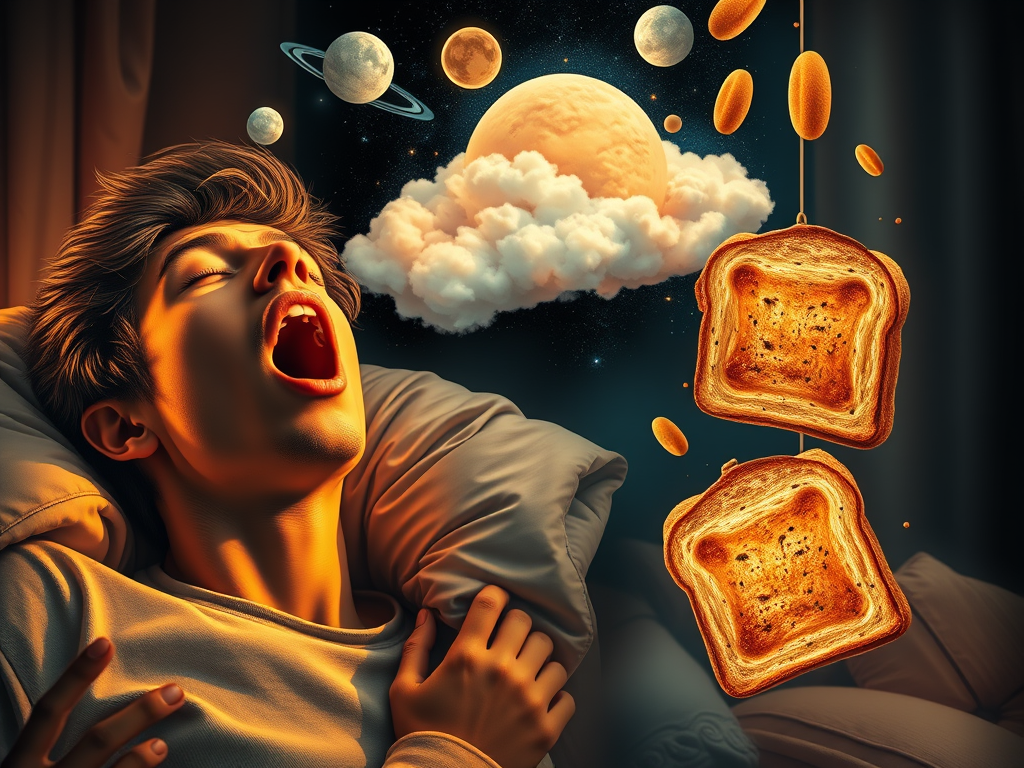
Have you ever stopped to wonder about the everyday things that happen around you, or even to you? Our daily lives are filled with little mysteries and marvels that we often take for granted. From a simple yawn to the way time seems to fly by, there are fascinating questions and surprisingly complex science hidden just beneath the surface. Get ready to explore some intriguing questions about daily life and uncover the hidden science in everyday life. You might be amazed by the science behind common things we see and do every single day! Let’s dive into ten ordinary phenomena and the curious questions they make us ask.
1. The Contagious Yawn: Why Do We Yawn, and Why is it Catchy?
You see someone yawn, and suddenly, you feel the urge to yawn too. What’s that all about? Yawning is an incredibly common human (and animal!) behaviour, but scientists are still exploring all its secrets. One big question is: why is it so contagious? One idea is that it’s linked to empathy – our ability to understand and share the feelings of others. Seeing someone yawn might trigger “mirror neurons” in our brain, making us copy the action. But what’s the original purpose of a yawn? It’s not just about being tired or bored. Some research suggests yawning helps cool down our brains, helping us stay alert. Others think it might help increase oxygen intake, though this idea is less supported now. So, that big, satisfying stretch of your jaw is one of the mysteries of ordinary things that’s both a social signal and a physiological puzzle.
2. The Land of Nod: Why Do We Need Sleep, and What Are Dreams?
Every night, we spend hours in a strange state called sleep. We lie unconscious, yet our brains are surprisingly active, especially when we dream. Why do things happen everyday like needing so much sleep? It’s not just about resting our bodies. Sleep is crucial for our brains to function properly. It helps consolidate memories (sorting and storing the day’s information), clear out waste products that build up in the brain while we’re awake, and allows our bodies to repair themselves. And what about dreams? Those bizarre movies our minds play can be vivid and emotional. While no one knows for sure why we dream, theories suggest dreams might help us process emotions, solve problems, or are just a side effect of random brain firings during REM (Rapid Eye Movement) sleep. The science of everyday things like sleep shows how essential it is for our health and well-being.
3. Gravity’s Unseen Grip: Why Do Things Always Fall Down, Never ‘Up’?
You drop your toast (butter-side down, of course!), and it lands on the floor. Every time. But why? What is this invisible force called gravity that pulls everything towards the ground? This is one of the most fundamental intriguing questions about daily life. Sir Isaac Newton famously described gravity as a force of attraction between any two objects with mass – the more massive the object (like Earth), the stronger its pull. Albert Einstein later gave us an even deeper understanding, explaining gravity as a curve or warp in the fabric of space and time caused by mass. Imagine placing a bowling ball on a trampoline; it creates a dip, and a marble rolling nearby will curve towards it. While we can describe how gravity works very accurately, its deepest nature, especially how it fits with other fundamental forces, remains one of the biggest mysteries of ordinary things in physics.
4. Time’s Arrow: Why Does Time Only Seem to Move Forward?
Tick-tock, tick-tock… time marches on, always forward, never backward. We get older, seasons change, but we can’t rewind our lives like a movie. But why does time have this one-way direction? This “arrow of time” is a profound puzzle. One of the main explanations comes from a concept in physics called entropy. Entropy is basically a measure of disorder or randomness in a system. The Second Law of Thermodynamics states that the total entropy of an isolated system can only increase over time. Think about an egg: it’s easy to break it (increasing disorder), but virtually impossible for the broken pieces to spontaneously reassemble into a whole egg (decreasing disorder). Our universe as a whole is thought to be moving towards a state of greater disorder, and this progression might be why we experience time moving in one direction. The science behind common things like the flow of time is truly mind-bending!
5. The Annoying Hiccup: What Causes Hiccups and Why Are They So Stubborn?
Hic! There it is – that sudden, involuntary gulp of air followed by a little squeak. Hiccups can be funny, but they can also be incredibly annoying, especially when they just won’t stop! Why do things happen everyday (or at least, quite often) like getting hiccups? Hiccups happen because of a sudden, involuntary contraction (a spasm) of your diaphragm, the large muscle below your lungs that helps you breathe. When it spasms, you suck in air quickly, and the “hic” sound comes from your vocal cords snapping shut abruptly. The irritation of the phrenic nerve, which controls the diaphragm, is often the culprit. But what’s their purpose? Many scientists think hiccups have no real purpose now and might be an evolutionary leftover from ancient ancestors, possibly related to how amphibians gulp air and water. This makes hiccups one of those quirky mysteries of ordinary things.
6. Déjà Vu’s Eerie Feeling: Why Do We Sometimes Feel We’ve Lived a Moment Before?
Have you ever been in a new place or situation and suddenly felt an overwhelming, eerie sensation that you’ve experienced this exact moment before, even though you know you haven’t? That’s déjà vu (French for “already seen”). It’s a common experience, but what causes it? This is one of the more perplexing intriguing questions about daily life. There isn’t one single answer, but several theories exist. One idea is that it’s like a tiny blip in your brain’s memory system. Your brain might mistakenly tag a new experience as an old memory. Another theory suggests a brief delay in information processing from one of your senses, so your brain experiences the same input twice in quick succession, with the second one feeling like a memory. It’s not a sign of anything serious, just one of those fascinating ways our brains can play tricks on us, adding to the hidden science in everyday life.
7. The Winter Zap: Why Do We Get Static Shocks More in Winter?
You reach for a doorknob, especially on a cold, dry day, and ZAP! A tiny spark and a little shock. What’s behind this surprising jolt of static electricity? It all comes down to tiny particles called electrons. Sometimes, when two different materials rub together (like your shoes on a carpet), electrons can jump from one material to the other. This builds up an imbalance of electrical charge, called static electricity. When you then touch something that conducts electricity well, like a metal doorknob, the extra electrons jump quickly to or from the doorknob to balance things out, creating that spark and shock. Why more in winter? Cold winter air holds less moisture than warm summer air. Moist air helps to carry away these electrical charges before they build up too much. Dry air, however, is an insulator, allowing the charge to accumulate on you until you touch something conductive. The science of everyday things like this can be quite electrifying!
8. Chasing Rainbows: How Are They Formed and Why Can’t We Reach Their End?
After a rain shower, if the sun comes out, you might be lucky enough to see a beautiful arc of colours in the sky – a rainbow! But how are rainbows formed, and is there really a pot of gold at the end? Rainbows are optical illusions caused by sunlight interacting with water droplets. When sunlight enters a raindrop, it bends (refracts), then reflects off the back of the raindrop, and then bends again as it exits. Different colours of light bend at slightly different angles. This separation of colours is called dispersion, and it’s what splits the white sunlight into the spectrum of colours we see: red, orange, yellow, green, blue, indigo, and violet. Each person sees their own unique rainbow because it depends on their position relative to the sun and the raindrops. Because a rainbow is an optical effect based on your viewing angle, you can never actually reach it. As you move, the rainbow moves too! This is one of the most beautiful things we see everyday explained by physics.
9. The Browning Apple: Why Does Cut Fruit Turn Brown?
You cut an apple or a banana, leave it out for a bit, and it starts to turn brown. Why does this happen? It’s not because the fruit is instantly spoiling! This browning is a chemical reaction called oxidation, similar to how iron rusts. Fruits contain natural chemicals called enzymes and phenols. When you cut the fruit, you break open its cells, exposing these chemicals to oxygen in the air. An enzyme called polyphenol oxidase (PPO) causes the phenols to react with oxygen. This reaction produces melanin, a brown pigment (it’s the same pigment that colours our skin and hair!). Different fruits brown at different rates depending on how much of these enzymes and phenols they contain. You can slow it down by reducing the fruit’s exposure to oxygen (like covering it) or by adding an acid like lemon juice, which interferes with the enzyme’s activity. It’s a simple example of chemistry happening right in your kitchen, another piece of the science behind common things.
10. Goosebump Mysteries: Why Do We Get Goosebumps When Cold or Scared?
You step out into the cold, or watch a scary movie, and suddenly the tiny hairs on your arms stand on end, creating little bumps on your skin. These are goosebumps! But why do we get them? Goosebumps are caused by tiny muscles at the base of each hair follicle, called arrector pili muscles, contracting and pulling the hair upright. This is an involuntary reflex. For our ancient, hairier ancestors, this had a couple of useful purposes. When it was cold, fluffing up their thicker coat of body hair would trap a layer of air close to the skin, providing better insulation and helping them stay warm. When faced with a threat, making their hair stand on end could make them appear larger and more intimidating to a potential predator. For modern humans with much less body hair, goosebumps don’t do much to keep us warm or scare off enemies, but the reflex remains – a fascinating little echo of our evolutionary past and one of the mysteries of ordinary things our bodies do.
Further Reading
If these intriguing questions have sparked your curiosity, here are some books that delve deeper into the science of everyday life:
- What If?: Serious Scientific Answers to Absurd Hypothetical Questions by Randall Munroe – Explores science through hilarious and thought-provoking scenarios, many rooted in everyday physics.
- The Magic of Reality: How We Know What’s Really True by Richard Dawkins – Aims to explain the science behind natural phenomena for a younger audience.
- Stuff Matters: Exploring the Marvelous Materials That Shape Our Man-Made World by Mark Miodownik – Uncovers the fascinating science behind everyday materials.
- Why Don’t Penguins’ Feet Freeze?: And Hundreds of Other Questions from New Scientist – A collection of intriguing questions and answers about the world around us.
- How Things Work: The Physics of Everyday Life by Louis A. Bloomfield – Explains the physics behind hundreds of common objects and experiences.
Here at Zentara.blog, our mission is to take those tricky subjects and unlock them, making knowledge exciting and easy to grasp for everyone. But the adventure doesn’t stop on this page! We’re constantly exploring new frontiers and sharing discoveries across the digital universe.
Want to dive deeper into more mind-bending Top 10s and keep expanding your world? Come join us on our other platforms – we’ve got unique experiences waiting for you on each one!
- Get inspired by visual wonders and bite-sized facts: See the world through Zentara’s eyes on Pinterest! Pin our fascinating facts and stunning visuals to your own boards. Explore Pins on Pinterest: https://uk.pinterest.com/zentarablog/
- Discover quick insights and behind-the-scenes peeks: Hop over to Tumblr for snippets, quotes, and unique content you won’t find anywhere else. It’s a different flavour of discovery! Follow the Fun on Tumblr: https://www.tumblr.com/zentarablog
- Ready for deep dives you can listen to or watch? We’re bringing our accessible approach to video and potentially audio! Subscribe to our YouTube channel and tune into future projects that make learning pop! Subscribe on YouTube: https://www.youtube.com/@ZentaraUK
- Seeking even more knowledge in one place? We’ve compiled some of our most popular topic deep dives into fantastic ebooks! Find them on Amazon and keep the learning journey going anytime, anywhere. Find Our Ebooks on Amazon: https://www.amazon.co.uk/s?k=Zentara+UK&ref=nb_sb_noss
- Connect with us and fellow knowledge seekers: Join the conversation on BlueSky! We’re sharing updates, thoughts, and maybe even asking you what wonders we should explore next. Chat with Us on BlueSky: https://bsky.app/profile/zentarablog.bsky.social
- Perfect for learning on the move! We post multiple 10-minute podcasts per day on Spotify. Pop on your headphones and fill your day with fascinating facts while you’re out and about! Listen on Spotify: https://open.spotify.com/show/3dmHbKeDufRx95xPYIqKhJ
Every click helps us keep bringing honest, accessible knowledge to everyone. Thanks for exploring with us today – see you out there in the world of discovery!




Leave a Reply