
Unmasking the Mystery: 10 Shocking Secrets Behind “Scooby-Doo, Where Are You!” That Will Blow Your Mind
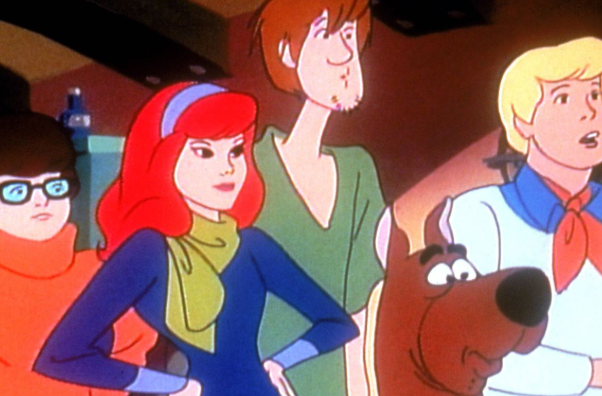
For decades, the rumble of a brightly colored van and the sound of frantic paws hitting the floor have signaled the start of a journey into the supernatural. The “Mystery Inc.” gang—consisting of a brave leader, a fashion-forward socialite, a book-smart skeptic, a hungry hippy, and a cowardly Great Dane—has become a cornerstone of global entertainment. Since its debut in the late 1960s, the series has transcended generations, evolving from a simple weekend morning distraction into a multi-billion-dollar franchise.
However, the path to Bedrock-style success was paved with creative roadblocks, last-minute overhauls, and surprising cultural influences. Most fans see the iconic masks being pulled off villains and assume they know the whole story. But if you look under the hood of the Mystery Machine, you’ll find a production history filled with more twists than a haunted mansion’s secret passage. From political pressure to legendary crooners, the origins of this animated classic are far more complex than a simple “ghost” story.
1. The Show Was a Direct Response to Television Violence
In the late 1960s, the landscape of children’s programming was under intense scrutiny. Groups like Action for Children’s Television (ACT) and various parental organizations were putting massive pressure on networks to tone down the violence in Saturday morning cartoons. Popular action-adventure shows of the era, such as Space Ghost and The Herculoids, were being criticized for their aggressive content. CBS executive Fred Silverman needed a show that could provide thrills and excitement without relying on superheroes or combat.
He reached out to William Hanna and Joseph Barbera with a specific request: create a show that combined mystery and comedy. The goal was to develop a program that would satisfy the audience’s hunger for adventure while pacifying the concerns of parent-teacher associations. The “mystery” element allowed for tension and stakes, while the “comedy” element—primarily driven by the antics of a talking dog—ensured the tone remained light and non-threatening. This pivot didn’t just save a time slot; it fundamentally changed the philosophy of animated storytelling, proving that conflict could be resolved through deductive reasoning and teamwork rather than just punches and lasers.
2. From Rock Band to Detectives: The “Mysterious Five”
Before the gang was a group of meddling kids in a van, they were a rock band traveling the country to play gigs. The original pitch for the show was titled The Mysterious Five. The ensemble consisted of Geoff, Mike, Kelly, Linda, and W.W. (a dog who played the bongo drums). This concept was heavily influenced by the massive success of The Archie Show, which featured a group of teenagers who were also in a band. The creators believed that the “teen-band-solves-mysteries” formula was the safest bet for a commercial hit.
However, as the development process continued, the musical elements began to feel distracting. The writers realized that the group dynamic worked better if they were just amateur sleuths with distinct personalities rather than pop stars. The “Mysterious Five” was eventually trimmed down to four humans, and the dog’s role was elevated from a background musician to a central comedic figure. The name “Geoff” became Fred, “Linda” became Velma, and “Kelly” became Daphne. This evolution from a musical gimmick to a character-driven mystery remains one of the most significant “what ifs” in animation history, as a rock-playing Scooby-Doo would have likely led to a very different legacy.
3. Scooby-Doo Was Almost a Sheepdog Named “Too Much”
The breed and personality of the show’s canine star were subjects of intense debate during the character design phase. Initially, the creative team considered making the dog a large, cowardly Sheepdog. This was largely because another popular cartoon at the time featured a Sheepdog, and the creators wanted to lean into a recognizable aesthetic. The dog was also tentatively named “Too Much,” a slang phrase from the era that suggested something was “over the top” or “too cool.”
The design eventually shifted toward a Great Dane, but not because of the breed’s natural elegance. The animators intentionally drew the character with “incorrect” traits for a Great Dane—such as a curved back, bowed legs, and a chin that was too small—to make him look less like a pedigree show dog and more like a lovable, clumsy goofball. The decision to move away from a Sheepdog was a stroke of genius; the sleek yet lanky silhouette of a Great Dane allowed for more expressive physical comedy. If the “Sheepdog” idea had stuck, we might never have seen the iconic visual gags involving Scooby trying to hide behind furniture that is half his size.
4. The Frank Sinatra Connection to Scooby’s Name
One of the most legendary anecdotes in television history involves the naming of the titular character. Even after the show was greenlit, the dog still didn’t have a permanent name. CBS executive Fred Silverman was flying to a meeting when he heard Frank Sinatra’s recording of “Strangers in the Night” playing over the airplane’s speakers. As the song faded out, Sinatra improvised a scat-style vocalization: “Dooby-dooby-doo.”
Silverman reportedly had an epiphany in that moment. He realized that the name “Scooby-Doo” had a rhythmic, catchy quality that would resonate with children. He decided then and there that the dog should be the namesake of the show. Upon landing, he pushed for the title change to Scooby-Doo, Where Are You! This change shifted the focus from the human ensemble to the dog himself, cementing Scooby as the undisputed star. It is a rare instance where a piece of high-brow vocal improvisation directly led to the branding of a cartoon classic, forever linking the “Chairman of the Board” to the “Leader of the Mystery Inc. Gang.”
5. Casey Kasem’s Vegan Activism and Shaggy Rogers
The voice of Norville “Shaggy” Rogers was provided by the legendary radio DJ Casey Kasem. While Shaggy is famous for his bottomless stomach and love for “Scooby Snacks,” Kasem himself was a staunch vegan and animal rights advocate. This led to a fascinating behind-the-scenes conflict regarding the character’s dietary habits. Kasem was uncomfortable with Shaggy being depicted as a meat-eater, especially in commercial tie-ins or advertisements for fast-food products.
At one point, Kasem actually walked away from the role in the late 1990s because he refused to perform Shaggy’s voice for a Burger King commercial. He eventually returned to the character only after the producers agreed that Shaggy would be portrayed as a vegetarian in future iterations of the series. This dedication to his personal ethics influenced how Shaggy was written for decades, adding a layer of real-world conviction to a character who is often dismissed as a simple comedic trope. Kasem’s influence ensured that Shaggy remained a gentle soul who cared deeply for animals, mirroring the actor’s own life’s work.
6. Frank Welker: The Unbroken Link to the Original Pilot
In the world of voice acting, consistency is rare. Actors are often replaced as they age or as production styles change. However, Scooby-Doo, Where Are You! features one of the most impressive streaks in entertainment history. Frank Welker was cast as Fred Jones in 1969, providing the voice for the “leader” of the gang. What makes this surprising is that Welker has continued to voice Fred in nearly every animated incarnation of the character for over half a century.
At the time of his original casting, Welker was a relatively new talent, but his ability to project a clean-cut, authoritative, yet approachable voice made him the perfect fit for the ascot-wearing detective. Welker’s longevity has provided a “vocal DNA” for the franchise that keeps it grounded, no matter how much the art style or the plots change. He eventually took over the voice of Scooby-Doo himself in later years, but his tenure as Fred remains a legendary feat of endurance. When you hear Fred speak today, you are hearing the exact same man who brought him to life during the show’s very first recording session.
7. The Mystery of the Cartoon “Laugh Track”
Modern viewers often find it jarring to hear a laugh track on a cartoon, but for the original 1969 series, it was a vital part of the “domestic sitcom” aesthetic the creators were chasing. Because the show was modeled after live-action comedies like The Many Loves of Dobie Gillis and The Archie Show, Hanna-Barbera decided to include a canned audience reaction. They used a “laff box” invented by Charley Douglass, which contained dozens of different types of recorded laughter.
The use of the laugh track was a psychological tactic. It signaled to children that the show was “safe” and “funny,” even when the gang was being chased by a terrifying ghost or a creepy swamp monster. It bridged the gap between a scary mystery and a family-friendly comedy. As the years went on and animation moved away from the sitcom format, the laugh track was eventually phased out, but for the original series, those phantom chuckles are an inseparable part of the nostalgia. It reminds us that Scooby-Doo wasn’t just a cartoon; it was a half-hour comedy that happened to be hand-drawn.
8. Velma Was Originally the “Cynical Intellectual”
Velma Dinkley is widely regarded as the brains of the operation, but in the earliest drafts of the show, her character had a much sharper edge. Influenced by the character Zelda Gilroy from The Many Loves of Dobie Gillis, Velma was intended to be somewhat cynical and socially awkward. Her obsession with science and logic wasn’t just a plot device; it was a personality trait that often put her at odds with the more “traditional” or “fashionable” members of the group.
As the series developed, the writers softened her character to make her more of a team player, but they kept her signature “lost glasses” gag. This famous bit—where Velma loses her spectacles and crawls around saying, “My glasses! I can’t see without my glasses!”—actually originated from a voice actor’s real-life mishap. During a table read, the original voice of Velma (Nicole Jaffe) dropped her glasses and uttered the line spontaneously. The producers thought it was so endearing and fit the character so well that they wrote it into the script, creating one of the most recognizable catchphrases in animation history.
9. The “Ghost” Monsters Were a Cultural Milestone
Before Scooby-Doo, most “monsters” in media were either actual supernatural beings or misunderstood creatures like King Kong or Frankenstein’s monster. Scooby-Doo, Where Are You! popularized a very specific trope: the “Old Man Smithers” reveal. At the end of almost every episode, the supernatural threat is unmasked to reveal a human being in a costume, usually motivated by greed, real estate disputes, or revenge.
This was a revolutionary concept for children’s television because it promoted skepticism and critical thinking. It taught an entire generation that things that seem scary or “magical” often have a logical, human explanation. By “unmasking” the monsters, the show stripped away their power and shifted the focus toward the importance of investigation and evidence. This formula became so iconic that “pulling the mask off the monster” has become a universal metaphor for exposing a fraud. It turned the horror genre on its head and made the “villain” someone relatable—albeit a bit dramatic—rather than an untouchable force of evil.
10. The Mystery Machine was the Ultimate Counter-Culture Icon
The Mystery Inc. gang’s van, the Mystery Machine, is perhaps the most famous vehicle in television history, second only to the Batmobile. However, its design was a bold move for a mainstream cartoon in 1969. With its psychedelic flower-power paint job and “hippie van” silhouette, it was a direct nod to the counter-culture movement of the era. The van represented freedom, mobility, and the “youth-led” revolution of the time.
Interestingly, the van doesn’t belong to Fred (the driver); in the show’s lore, it is often implied to be Daphne’s father’s vehicle or a shared asset of the group. The Mystery Machine served as a mobile headquarters, a kitchen, and a sanctuary for the gang. Its bright, optimistic colors contrasted sharply with the dark, gloomy graveyards and abandoned mansions the gang visited. This visual contrast was a key element of the show’s success; the van represented the safety and unity of the “family” unit against the chaos of the outside world. It remains an enduring symbol of the 1960s, a piece of rolling art that perfectly captured the spirit of a generation while remaining functional for a group of amateur detectives.
Further Reading
- Scooby-Doo! The Essential Guide by Glenn Dakin
- Hanna-Barbera: The Art of Animation by Jerry Beck
- The Encyclopedia of Scooby-Doo by Various Authors
- My Life in Toons: From Flatbush to Bedrock in Under a Century by Joe Barbera
- 10 Things You Should Know About Foghorn Leghorn – Looney Tunes
- 10 Futurama TV SHOW Facts That Still Hold Up
- 10 Things You Should Know About Speedy Gonzales – Looney Tunes
- 10 Things You Should Know About Yosemite Sam – Looney Tunes
- 10 Things You Should Know About The Looney Tunes
- 10 Things You Should Know About Road Runner – Looney Tunes
- 10 Things You Should Know About Wile E. Coyote – Looney Tunes
- 10 Things You Should Know About Tweety Pie – Looney Tunes
- 10 Things You Should Know About Sylvester The Cat – Looney Tunes
- 10 Things You Should Know About Porky Pig – Looney Tunes



