
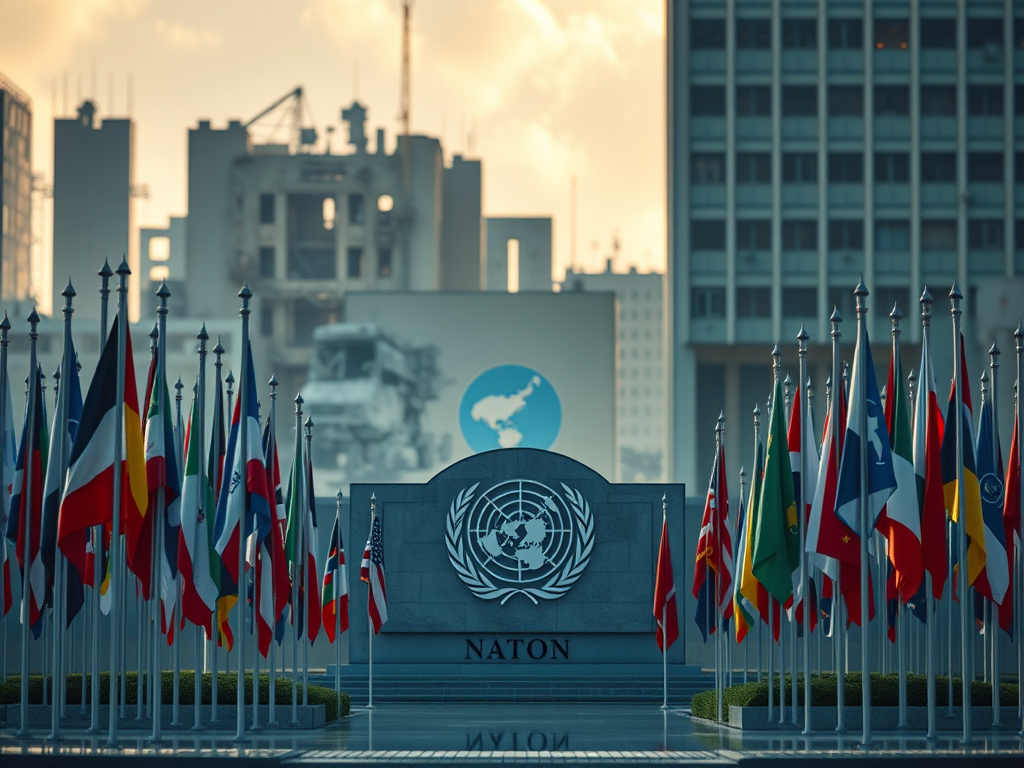
World War 2 was the most devastating conflict in human history, costing millions of lives and destroying entire countries. But from the ashes of this terrible war, world leaders realized something crucial: to prevent such a catastrophe from ever happening again, nations needed to find better ways to cooperate and keep the peace. This urgent need led to the creation of powerful international organizations like the United Nations (U.N.) and the North Atlantic Treaty Organization (NATO).
These organizations, along with other agreements, helped build a new global order—a system of rules and shared goals designed to make the world more stable, peaceful, and prosperous. This wasn’t easy, especially as the Cold War soon divided the world, but the commitment to working together, born out of the horrors of World War 2, laid the foundation for the international cooperation we see today. Let’s explore ten key ways World War 2 shaped the creation and purpose of these vital global organizations.
1. The Urgency for Peace: Never Again
The sheer scale of destruction and loss of life in World War 2 made it clear that humanity could not afford another global conflict. Leaders recognized that previous efforts to maintain peace, like the League of Nations after World War 1, had failed. There was a strong feeling of “Never Again” – a deep desire to prevent future wars and widespread human suffering. This shared goal, born from the horrors witnessed across the globe, became the driving force behind the creation of the United Nations.
The leaders of the Allied powers (like the United States, United Kingdom, Soviet Union, and China) understood that to achieve lasting peace, countries had to talk to each other, solve problems together, and create a system where international law and cooperation were stronger than aggression. This powerful urgency to prevent future conflicts was the very first step in building the post-WWII global order.
2. Birth of the United Nations: A Forum for All Nations
The United Nations (U.N.) was officially established on October 24, 1945, just months after World War 2 ended. Its main purpose was to prevent future wars, promote human rights, and encourage cooperation among nations to solve global problems. Think of it like a global town hall, where almost every country in the world can come together to discuss issues and try to find peaceful solutions.
The idea for the U.N. actually began during the war, with leaders like U.S. President Franklin D. Roosevelt and British Prime Minister Winston Churchill discussing plans for a new world body. The U.N. Charter, its founding document, outlined the organization’s goals, which included maintaining international peace and security, developing friendly relations among nations, and achieving international cooperation. Unlike the League of Nations, the U.N. was designed to be stronger and more inclusive, involving the most powerful nations from the start.
3. The U.N. Security Council: Protecting Global Peace
Within the United Nations, one of the most important bodies created is the Security Council. Its primary responsibility is to maintain international peace and security. It has the power to investigate disputes, recommend ways to settle them, and even authorize actions like sanctions (economic penalties) or peacekeeping missions to prevent or stop conflicts.
The Security Council has 15 members, but five of them are permanent members with special powers: China, France, Russia (formerly the Soviet Union), the United Kingdom, and the United States. These five nations were the main victorious powers of World War 2. Each of these five permanent members has a “veto” power, meaning they can block any resolution they disagree with. This structure was a compromise to ensure that the most powerful nations would be committed to the U.N.’s work, even if it sometimes means disagreement.
4. The U.N.’s Broader Mission: Beyond Just Peace
While peace and security are at its core, the United Nations quickly expanded its mission to address a wide range of global issues. Leaders realized that poverty, disease, illiteracy, and human rights abuses could also lead to instability and conflict. So, the U.N. established many specialized agencies and programs to tackle these challenges.
For example, UNICEF helps children, the World Health Organization (WHO) deals with global health, and the Food and Agriculture Organization (FAO) works on food security. The U.N. also championed human rights, creating the Universal Declaration of Human Rights in 1948. This broader approach to global problems reflects the understanding that true peace isn’t just the absence of war, but also the presence of justice, well-being, and opportunity for all.
5. The Cold War’s Influence: A Divided World
Even as the U.N. was being created, a new global struggle began: the Cold War. This was a period of intense rivalry between the two new superpowers—the United States (and its allies) and the Soviet Union (and its allies). It wasn’t a “hot” war with direct fighting between them, but a competition of ideologies (communism vs. democracy) and military strength, often fought through proxy wars and an arms race.
The Cold War greatly influenced how the post-WWII global order developed. The Security Council was often paralyzed by vetoes from the U.S. or the Soviet Union, making it difficult for the U.N. to act on certain conflicts. This division led Western nations to seek additional ways to protect themselves, which directly led to the creation of military alliances like NATO.
6. Birth of NATO: A Collective Shield Against Threat
The North Atlantic Treaty Organization (NATO) was founded on April 4, 1949. It was created by the United States, Canada, and several Western European nations. Its main purpose was to provide a “collective security” against the growing threat from the Soviet Union and its allies during the Cold War. Think of it like a promise: if one member country is attacked, all the other members will come to its aid.
This idea is captured in Article 5 of NATO’s treaty, which states that an armed attack against one member shall be considered an attack against all. This was a powerful deterrent against potential Soviet aggression. NATO brought together countries with similar democratic values to form a strong military alliance, ensuring that no single nation would have to face a powerful enemy alone. It was a direct response to the new threats that emerged after World War 2.
7. Decolonization and U.N. Expansion: A Changing World
Another major consequence of World War 2 and a factor in the evolving global order was decolonization. Before the war, many countries in Asia and Africa were colonies ruled by European powers. The war weakened these colonial empires and strengthened independence movements. The United Nations played a significant role in supporting these newly independent nations.
As countries gained their independence, many joined the U.N., dramatically increasing its membership from 51 founding states to nearly 200 today. This expansion made the U.N. a truly global organization, representing diverse cultures and political systems. It also meant that issues of economic development, human rights, and social justice, especially for newly independent nations, became even more central to the U.N.’s work.
8. Peacekeeping Operations: The U.N.’s Boots on the Ground
One of the unique tools developed by the United Nations to maintain peace is peacekeeping operations. These missions involve sending military personnel from different member countries to conflict zones to monitor ceasefires, protect civilians, and help implement peace agreements. The first U.N. peacekeeping mission was established in 1948 in the Middle East.
Peacekeeping forces usually wear light blue helmets and act as neutral observers, helping to calm tensions and create a safe environment for peace talks. While they don’t engage in combat unless in self-defense, their presence often helps prevent conflicts from escalating. These missions are a direct legacy of the U.N.’s founding purpose to prevent war and are a complex but vital way the post-WWII global order attempts to resolve disputes peacefully.
9. Economic Cooperation: The Bretton Woods System
Beyond security and political organizations, World War 2 also prompted the creation of new global economic rules. In 1944, even before the war ended, Allied nations met at Bretton Woods in New Hampshire, USA, to plan a new international financial system. The goal was to prevent the economic chaos and protectionism (countries trying to protect their own economies by hurting others) that had contributed to the Great Depression and World War 2.
This meeting led to the creation of the International Monetary Fund (IMF) and the World Bank. The IMF helps countries with financial problems, while the World Bank provides loans for development projects. This “Bretton Woods system” aimed to create a stable global economy, encourage trade, and prevent future financial crises. It was another cornerstone of the global order built after World War 2, recognizing that economic stability is linked to world peace.
10. The Enduring Legacy: A System Still Adapting
The global order established after World War 2, with the United Nations, NATO, and other institutions, has faced many challenges over the decades. The Cold War tested its limits, and new global issues like climate change, terrorism, and pandemics constantly require new approaches. However, these organizations have adapted and evolved, remaining essential players on the world stage.
They represent a fundamental shift in international relations: a move towards greater cooperation, shared responsibility, and a recognition that global problems require global solutions. The lessons learned from the horrors of World War 2 continue to guide efforts to build a more peaceful, just, and prosperous world for everyone. The framework built in the mid-20th century remains the foundation upon which much of our modern international relations stand.
Further Reading
- “A Little History of the World” by E.H. Gombrich (Provides broader historical context)
- “What Is the United Nations?” by Michele Celeste (A simple introduction to the U.N.)
- “NATO for Kids” (Check official NATO website or educational resources for their simplified materials)
- “The Cold War: A Kids’ Guide” by Steven Otfinoski (Helps explain the context of NATO’s creation)
- “The United Nations (A True Book: Civics)” by Christine Webster (An informational book for younger readers)
Here at Zentara.blog, our mission is to take those tricky subjects and unlock them, making knowledge exciting and easy to grasp for everyone. But the adventure doesn’t stop on this page! We’re constantly exploring new frontiers and sharing discoveries across the digital universe.
Want to dive deeper into more mind-bending Top 10s and keep expanding your world? Come join us on our other platforms – we’ve got unique experiences waiting for you on each one!
- Get inspired by visual wonders and bite-sized facts: See the world through Zentara’s eyes on Pinterest! Pin our fascinating facts and stunning visuals to your own boards. Explore Pins on Pinterest: https://uk.pinterest.com/zentarablog/
- Discover quick insights and behind-the-scenes peeks: Hop over to Tumblr for snippets, quotes, and unique content you won’t find anywhere else. It’s a different flavour of discovery! Follow the Fun on Tumblr: https://www.tumblr.com/zentarablog
- Ready for deep dives you can listen to or watch? We’re bringing our accessible approach to video and potentially audio! Subscribe to our YouTube channel and tune into future projects that make learning pop! Subscribe on YouTube: https://www.youtube.com/@ZentaraUK
- Seeking even more knowledge in one place? We’ve compiled some of our most popular topic deep dives into fantastic ebooks! Find them on Amazon and keep the learning journey going anytime, anywhere. Find Our Ebooks on Amazon: https://www.amazon.co.uk/s?k=Zentara+UK&ref=nb_sb_noss
- Connect with us and fellow knowledge seekers: Join the conversation on BlueSky! We’re sharing updates, thoughts, and maybe even asking you what wonders we should explore next. Chat with Us on BlueSky: https://bsky.app/profile/zentarablog.bsky.social
- Perfect for learning on the move! We post multiple 10-minute podcasts per day on Spotify. Pop on your headphones and fill your day with fascinating facts while you’re out and about! Listen on Spotify: https://open.spotify.com/show/3dmHbKeDufRx95xPYIqKhJ
Every click helps us keep bringing honest, accessible knowledge to everyone. Thanks for exploring with us today – see you out there in the world of discovery!




Leave a Reply