
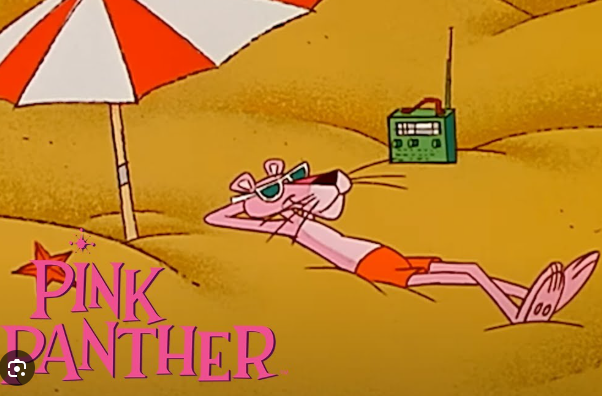
The Silent Icon: 10 Shocking Facts About The Pink Panther Show That Redefined Cool
There is perhaps no character in the history of animation who exudes as much effortless sophistication as the Pink Panther. With his lanky frame, cool gait, and a penchant for turning the mundane into the surreal, he became an accidental superstar. While most cartoon icons of the era relied on frantic dialogue, catchphrases, or slapstick violence, the Pink Panther leaned into the power of silence, a mid-century modern aesthetic, and a jazz score that remains one of the most recognizable pieces of music in the world.
When The Pink Panther Show made its television debut in the late 1960s, it didn’t just bring a movie character to the small screen; it brought an entire vibe. It was a cocktail of avant-garde art, dry wit, and rhythmic timing that felt more like a short film from a prestigious festival than a Saturday morning distraction. But the journey from a three-minute movie credit sequence to a global franchise is filled with creative gambles, legal hurdles, and a legendary partnership between two animation titans. To truly appreciate this rosy feline, one must look at the “pink” logic that governed his world.
1. The Accidental Star of the Silver Screen
The Pink Panther was never intended to have his own show. In fact, he wasn’t even supposed to be a character in the traditional sense. His origin lies in the opening credits of the 1963 live-action film The Pink Panther, starring Peter Sellers as the bumbling Inspector Clouseau. The “Pink Panther” in the movie title referred to a literal diamond that had a flaw resembling a leaping panther. Director Blake Edwards wanted an animated character to accompany the credits to make the title sequence more engaging.
He hired Friz Freleng and David H. DePatie to create a character that was “cool, sophisticated, and pink.” The resulting animation was so captivating that audiences often enjoyed the credits more than the film itself. The character’s popularity exploded overnight, leading to a theatrical short titled The Pink Phink, which won an Academy Award. This success proved that the panther had “legs,” leading the creators to realize they had a standalone star on their hands. It is a rare case in Hollywood where a graphic design element evolved into a multi-generational cultural icon.
2. The Power of Pantomime and Silent Comedy
In an era where cartoons like The Flintstones or Scooby-Doo were heavily reliant on dialogue and laugh tracks, The Pink Panther Show took a massive creative risk by remaining almost entirely silent. The Panther does not speak; instead, he communicates through expressive eyebrow raises, deliberate shrugs, and rhythmic movement. This choice was a direct homage to the legends of the silent film era, such as Charlie Chaplin and Buster Keaton.
By removing dialogue, the creators forced the audience to pay closer attention to the visual storytelling and the timing of the gags. This lack of a language barrier also made the show incredibly easy to export to international markets, as there was no need for dubbing. The Panther’s silence became his greatest strength, giving him an air of mystery and intellectual superiority over his antagonists. He didn’t need to yell to be funny; he just needed to calmly outsmart a tiny, big-nosed man with a paintbrush. This focus on pantomime ensured the show remained timeless, as visual humor rarely ages as poorly as topical slang or vocal puns.
3. Henry Mancini’s Jazz Masterpiece
It is impossible to separate the Pink Panther from his music. Composer Henry Mancini created a theme that did more than just introduce the show; it defined the character’s soul. The slinky tenor saxophone melody, punctuated by brass and a steady, rhythmic beat, perfectly captured the Panther’s “cool” persona. Mancini famously stated that he wrote the theme to match the character’s walk, creating a symbiotic relationship between the animation and the score.
The music functioned as the “voice” of the show. Since there was no dialogue, the score had to emphasize the tension, the curiosity, and the triumph in every scene. The use of jazz was a departure from the orchestral or “boing-bounce” sound effects typical of Saturday morning fare. It gave the show an adult, “cocktail party” atmosphere that appealed to parents as much as it did to children. The theme went on to win Grammy awards and remains a gold standard for how music can elevate a character from a drawing to a living, breathing personality.
4. The Birth of DePatie-Freleng Enterprises
The show’s existence is the result of a major industry shakeup. In the early 1960s, Warner Bros. made the shocking decision to close its legendary animation department. Friz Freleng, the man behind Bugs Bunny and Daffy Duck, found himself out of a job. Along with executive David H. DePatie, he formed DePatie-Freleng Enterprises (DFE). They leased the very same studio space they had just been laid off from, but now they were the bosses.
The Pink Panther was their flagship creation and the project that put the studio on the map. Because they were an independent entity, they were forced to be more creative with smaller budgets. This led to the “minimalist” art style that defined the show—abstract backgrounds, limited character movement, and a focus on strong silhouettes. This aesthetic, often called “limited animation,” became a hallmark of the 1960s and 70s, but DFE used it with such artistic intent that it looked like a stylistic choice rather than a financial necessity. They proved that a small, hungry studio could out-innovate the giants of the industry.
5. “The Inspector” and the Clouseau Connection
Every episode of The Pink Panther Show featured “The Inspector” as a middle segment. This character was a direct, though legally distinct, parody of Peter Sellers’ Inspector Clouseau. While the Panther represented cool competence, The Inspector represented frantic, self-assured incompetence. He was accompanied by his long-suffering Spanish sidekick, Sergeant Deux-Deux, who constantly had to fix the Inspector’s mistakes while uttering his catchphrase, “Sì, Monsieur.”
Interestingly, the Inspector was not voiced by Peter Sellers, but by Pat Harrington Jr., who delivered a pitch-perfect French accent that mimicked Sellers’ performance. These segments added variety to the show, providing a more traditional slapstick experience to balance the surreal, quiet humor of the Panther. The Inspector’s world was one of exploding bombs, disguises, and “The Commissioner” constantly losing his temper. This contrast helped the show appeal to different comedic tastes while keeping the overall “mystery and crime” aesthetic intact.
6. A Revolutionary Color Palette and Mid-Century Aesthetic
Visually, the show was a departure from the bright, primary-colored worlds of its contemporaries. The Pink Panther lived in a world of pastels, magentas, and abstract shapes. The animation often ignored the laws of physics and perspective, favoring a graphic design approach that looked like it jumped off the pages of a 1960s lifestyle magazine. The backgrounds were often incomplete or suggested rather than fully rendered, allowing the character’s vibrant pink to pop off the screen.
This “Modern Art” approach to animation was revolutionary. It treated the screen like a canvas. If the Panther needed to paint a wall, the background might literally shift colors as he moved. This surrealism allowed the writers to create “logic-defying” gags, like the Panther walking into a painting or pulling an object out of thin air. It was a sophisticated look that respected the intelligence of the viewer, suggesting that the world was whatever the Panther wanted it to be. This aesthetic has remained a major influence on modern graphic designers and animators who value “style over realism.”
7. The Ant and the Aardvark: A Masterclass in Voice Acting
Another beloved segment introduced in the late 1960s was The Ant and the Aardvark. These shorts focused on a blue aardvark’s endless, unsuccessful attempts to catch a clever red ant. While the premise was a classic predator-prey dynamic similar to Coyote and Road Runner, the execution was entirely unique due to the voice work of John Byner.
Byner performed both roles, but he based the voices on famous celebrities of the era. The Aardvark was a dead-on impression of the legendary Jackie Mason, complete with his distinct neurotic delivery and Yiddish-inflected humor. The Ant was an impression of Dean Martin, portraying the character as a laid-back, “cool cat” who was never ruffled by the Aardvark’s schemes. This celebrity-mimicry added a layer of “in-joke” humor for adults while providing funny, distinct voices for children. The banter between the two was sharp and fast-paced, proving that DFE could do high-energy dialogue just as well as they did silent pantomime.
8. The “Pink” Logic: Surrealism as a Plot Device
The Pink Panther didn’t just exist in our world; he operated under “Pink Logic.” This meant that the laws of nature were secondary to the needs of the gag. In many episodes, the Panther would engage in a battle of wits with an unnamed, white, egg-shaped character (often called the “Little Man”). These battles were often over something simple, like building a house or painting a room.
However, the Panther could manipulate the environment in ways no other character could. He could step over a “horizon line” as if it were a physical rope or use his own shadow as a tool. This surrealist approach meant that the audience could never predict how a scene would end. The Panther wasn’t just a prankster; he was a master of his own reality. This kept the show feeling fresh and intellectual, as it relied on clever visual paradoxes rather than simple “falling off a cliff” humor. It invited the viewer to look at the world through a skewed, magenta lens.
9. Global Appeal and the Lack of a Language Barrier
Because the core Pink Panther shorts were silent, the show became an international juggernaut almost immediately. Most American cartoons of the late 60s required extensive translation and cultural adaptation to work in foreign markets. A joke about a specific American celebrity or a pun on an English word might get lost in translation. The Pink Panther, however, was a universal language.
Whether a viewer was in Tokyo, Paris, or New York, they could understand a raised eyebrow or a frustrated sigh. The character’s sophisticated, slightly detached attitude resonated with European audiences particularly well, as he felt more like a character from a French New Wave film than a loud American cartoon. This global footprint ensured the show’s longevity, as it could be played on any network in any country without a single line of dialogue being changed. The Panther became a citizen of the world, proving that great comedy is a visual, not vocal, medium.
10. The Mystery of the Saturday Morning Laugh Track
When The Pink Panther Show moved to NBC in 1969, the network made a demand that remains controversial among animation purists: they insisted on adding a laugh track. NBC executives were worried that children wouldn’t know when to laugh during the silent segments. They believed the silence might be too “experimental” or “unsettling” for a young audience used to the boisterous energy of other Saturday morning shows.
The producers at DePatie-Freleng were reportedly unhappy with this addition, feeling it cluttered the carefully timed musical score and undermined the Panther’s “cool” silence. In later years, when the show was released for home media or aired on cable networks, the laugh tracks were often removed to restore the original theatrical vision. However, for those who grew up watching the original 1969 broadcast, those phantom chuckles are a nostalgic part of the experience. It serves as a fascinating reminder of the era’s television “rules” and how networks were often afraid to let a piece of art speak for itself.
Further Reading
- Pink Panther: The Art and History by Jerry Beck
- DePatie-Freleng: The First 10 Years by Mark Arnold
- Hanna-Barbera: The Art of Animation (for context on the era) by Jerry Beck
- The Encyclopedia of Animated Cartoons by Jeff Lenburg
- 10 Things You Should Know About Foghorn Leghorn – Looney Tunes
- 10 Futurama TV SHOW Facts That Still Hold Up
- 10 Things You Should Know About Speedy Gonzales – Looney Tunes
- 10 Things You Should Know About Yosemite Sam – Looney Tunes
- 10 Things You Should Know About The Looney Tunes
- 10 Things You Should Know About Road Runner – Looney Tunes
- 10 Things You Should Know About Wile E. Coyote – Looney Tunes
- 10 Things You Should Know About Tweety Pie – Looney Tunes
- 10 Things You Should Know About Sylvester The Cat – Looney Tunes
- 10 Things You Should Know About Porky Pig – Looney Tunes



