
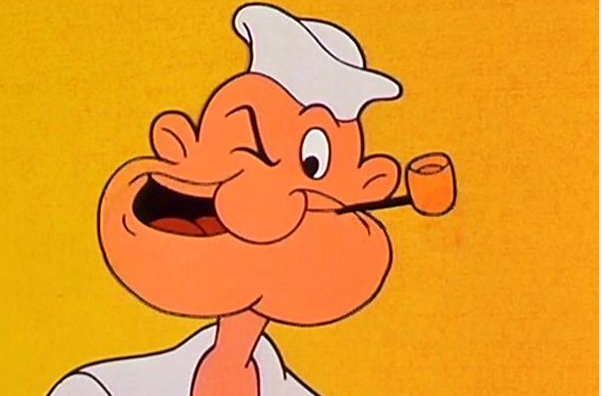
Strong to the Finish: 10 Untold Secrets of the 1960s Popeye the Sailor That Will Blow Your Mind
The whistle of a pipe, the scent of spinach, and the rhythmic “toot-toot” of a steamship are hallmarks of a legend that has patrolled the high seas of popular culture for nearly a century. While many recognize the squinting sailor from his early theatrical shorts, the 1960s television series produced by King Features Syndicate represents a unique, chaotic, and fascinating era in animation history. This specific iteration brought the sailor man into living rooms across the globe with an unprecedented volume of episodes, forever cementing his place as a domestic icon.
To understand the 1960s Popeye is to understand a pivotal moment in the transition from cinema to television. It was an era where quantity met creative necessity, leading to some of the most bizarre and intriguing production stories in the medium. Whether you grew up watching him punch his way through trouble or discovered him through the lens of animation history, these secrets reveal the man behind the anchor tattoo in a way you’ve never seen before.
1. The Great Name Debate: Why Bluto Became Brutus
For many fans, the bearded antagonist of the series is known as Bluto. However, when the 1960s television series began production, viewers were introduced to a “new” villain who looked remarkably similar but went by the name Brutus. This wasn’t a creative whim, but a result of a massive legal misunderstanding. The producers at King Features Syndicate mistakenly believed that Paramount Pictures owned the rights to the name “Bluto” from the earlier theatrical shorts.
In reality, the character had originated in the original comic strips, which King Features already owned. By the time they realized they had the legal right to use the name Bluto, “Brutus” had already been designed and integrated into the new series. To justify the change, Brutus was often portrayed as slightly broader and more oafish than the original Bluto, though his goal remained the same: winning the heart of Olive Oyl. This naming quirk created a generational divide among fans, with some insisting on the original moniker while a new generation of TV viewers grew up fearing the shadow of Brutus.
2. The Ad-Libbed Magic of Jack Mercer’s “Mumbles”
One of the most endearing qualities of the 1960s Popeye series is the sailor’s tendency to mumble under his breath. These witty, often nonsensical remarks were rarely found in the original scripts. They were the brainchild of Jack Mercer, the legendary voice actor who portrayed Popeye for decades. Because the 1960s series often featured limited animation to save time and money, Mercer used his improvisational skills to fill the “dead air” with personality.
Mercer would often record his lines after the animation was mostly complete. If a character’s mouth wasn’t moving but the scene felt empty, he would add Popeye’s trademark gravelly asides. These “mumbles” often contained the best jokes of the episode, ranging from fourth-wall-breaking commentary to clever puns. This technique not only saved the production from feeling static but also gave Popeye a depth of character that felt spontaneous and human. Mercer’s ability to find humor in the silence is a primary reason why the TV series remains watchable and charming even as animation styles have evolved.
3. A Production Speed Record: 220 Episodes in Two Years
The sheer scale of the 1960s Popeye project is staggering. In a feat that is almost unheard of in the modern industry, King Features Syndicate produced a whopping 220 episodes between 1960 and 1962. To achieve this, the work was outsourced to several different animation studios around the world, including Jack Kinney Productions, Rembrandt Films, and even Larry Harmon Pictures. This massive output was driven by the insatiable demand of television networks for daily content.
Because so many different studios were working on the series simultaneously, the quality and art style fluctuated wildly from one episode to the next. In some segments, Popeye’s pipe might switch sides of his face, or his tattoos might vanish entirely. Despite these technical inconsistencies, the volume of work ensured that Popeye remained a constant presence in the lives of children. It was a factory-line approach to art that prioritized accessibility over perfection, yet it resulted in some of the most experimental and psychedelic imagery ever seen in a mainstream cartoon of that era.
4. Olive Oyl: The Leading Lady Who Preceded the Hero
While the show is titled after the sailor, the character of Olive Oyl actually has more seniority in the world of fiction. Olive Oyl debuted in the Thimble Theatre comic strip nearly a full decade before Popeye ever made an appearance. Originally, the strip focused on Olive, her brother Castor Oyl, and her then-boyfriend Ham Gravy. Popeye was initially introduced as a minor character for a single story arc involving a trip to a casino.
However, the audience’s reaction to the salty sailor was so overwhelmingly positive that he eventually took over the strip, and Ham Gravy was phased out in favor of the Popeye-Olive romance. The 1960s series leaned heavily into this dynamic, portraying Olive not just as a damsel in distress, but as the emotional anchor of the show. Her distinct silhouette—long, thin limbs and a simple bun—made her an icon of minimalist character design. Understanding that Olive Oyl was a star in her own right long before Popeye arrived adds a layer of historical respect to their often-tumultuous on-screen relationship.
5. The Real-Life Sailor: Frank “Rocky” Fiegel
The impossible physique and resilient spirit of Popeye weren’t entirely products of imagination. The character was inspired by a real man named Frank “Rocky” Fiegel, who lived in the hometown of creator E.C. Segar. Fiegel was a local legend known for his incredible physical strength and his penchant for getting into fistfights. Much like the cartoon character, Fiegel was a heavy smoker who almost always had a pipe clenched in his jaw.
Fiegel was also known for his kindness toward children, often telling them tall tales of his battles. When Segar began drawing his comic, he used Fiegel’s hardened features and gritty persona as the blueprint for his new hero. In a touching tribute to this real-world inspiration, Fiegel’s headstone even features an engraving of the 1929 version of Popeye. This connection to a real person gives the 1960s cartoon a grounded, folk-hero quality; when Popeye stands up to a bully, he is channeling the spirit of a real-life brawler who never backed down from a challenge.
6. The Scientific Error That Fueled the Spinach Myth
The central “power-up” of the series—Popeye’s consumption of spinach to gain super strength—is one of the most successful marketing accidents in history. The association between spinach and iron was largely popularized due to a mathematical error in the late 19th century. A researcher reportedly misplaced a decimal point when recording the iron content of spinach, making it appear ten times more nutritious than it actually was.
While the 1960s show continued to promote the idea that spinach would cause muscles to inflate like balloons, the real-world impact was undeniable. Spinach consumption in the United States increased significantly during the character’s height of popularity. In fact, spinach growers in Crystal City, Texas, were so grateful for the boost in sales that they erected a statue of Popeye. The cartoon transformed a bitter vegetable into a symbol of power and health, proving that entertainment can have a direct and measurable impact on the dietary habits of an entire nation.
7. The Mysterious Origin of Swee’Pea
One of the most confusing characters for casual viewers of the 1960s series is Swee’Pea, the crawl-around baby in the nightshirt. Many mistakenly assume Swee’Pea is the biological child of Popeye and Olive Oyl, but the show’s lore tells a different story. In the original mythology, Swee’Pea was a “demurrer” baby left on Popeye’s doorstep. Popeye effectively adopted the child, becoming a single father figure in an era where such roles were rarely seen in media.
In the 1960s series, Swee’Pea often functioned as a plot catalyst, wandering into dangerous construction sites or high-wire acts, forcing Popeye to save him. The child’s ability to survive these hazards—and occasionally show a burst of super-strength himself—added a whimsical, supernatural element to the show. The fact that Popeye, a rough-and-tumble sailor, was primarily defined by his protective love for a foundling child added a layer of “gentle giant” depth to his character that resonated with family audiences.
8. Eugene the Jeep: The Fourth-Dimensional Sidekick
Perhaps the strangest character to appear in the 1960s episodes was Eugene the Jeep. A small, yellow, dog-like creature with a red nose, the Jeep was actually a magical being from a fourth-dimensional world. He could walk through walls, disappear at will, and possessed a form of precognition that allowed him to predict the future. His only diet consisted of orchids, making him one of the most high-maintenance pets in animation history.
The Jeep’s presence in the 1960s series often pushed the plots into the realm of the surreal. While most episodes focused on the rivalry between Popeye and Brutus, the Eugene-centric stories explored fantasy and science fiction. Interestingly, many historians believe that the versatile, “go-anywhere” nature of this character inspired the naming of the “Jeep” military vehicle during world conflicts. To see such a bizarre, magical creature in a cartoon about a sailor is a reminder of the experimental roots of the original comic strip that the 1960s show tried to keep alive.
9. The Missing Tattoos and Animation “Shortcuts”
As mentioned, the 1960s series was produced with a “TV budget,” which was significantly lower than the theatrical budgets of the 1930s. This led to several infamous animation shortcuts that have become a point of fascination for fans. One of the most common errors involved Popeye’s iconic anchor tattoos. In many frames, the tattoos would simply disappear, or they would be drawn on the wrong side of his forearm depending on which studio was handling the animation.
Furthermore, the character of Popeye often moved with a “sliding” motion rather than a fully realized walking cycle. Backgrounds were frequently reused, and the “cycling” of animation frames (where a character repeats the same three movements) was used to pad out scenes. While these might seem like flaws, they created a distinct, almost “pop art” aesthetic that defines the 1960s era. The limited animation forced the voice actors to work harder and the writers to be more clever with their dialogue, proving that creative spirit can still shine through even under strict financial constraints.
10. A Global Ambassador for Marine Lore and Health
Beyond the punches and the comedy, the 1960s Popeye series served as a gateway to maritime culture for millions of inland children. The show introduced viewers to nautical terminology, various types of vessels, and the romanticized life of a merchant mariner. Even though the physics were impossible and the stories were fantastical, Popeye represented a specific type of blue-collar hero: the hardworking, honest sailor who relied on his own two hands (and a can of greens) to settle disputes.
The show’s enduring legacy is its ability to present a moral compass. Popeye’s code of ethics—protecting the weak, staying loyal to his friends, and only using his strength when absolutely necessary—made him a role model. Even in the 1960s, a time of massive social change, Popeye remained a steadfast figure of traditional grit and integrity. He proved that you don’t need a cape or a secret identity to be a superhero; sometimes, all you need is a sense of right and wrong and the willingness to eat your vegetables.
Further Reading
- Popeye: An Illustrated History of E.C. Segar’s Character by Fred M. Grandinetti
- The Art of Popeye by Bobby London
- Thimble Theatre and the Evolution of Popeye by Various Historians
- Hanna-Barbera: The Art of Animation (for context on 1960s production) by Jerry Beck
- 10 Things You Should Know About Foghorn Leghorn – Looney Tunes
- 10 Futurama TV SHOW Facts That Still Hold Up
- 10 Things You Should Know About Speedy Gonzales – Looney Tunes
- 10 Things You Should Know About Yosemite Sam – Looney Tunes
- 10 Things You Should Know About The Looney Tunes
- 10 Things You Should Know About Road Runner – Looney Tunes
- 10 Things You Should Know About Wile E. Coyote – Looney Tunes
- 10 Things You Should Know About Tweety Pie – Looney Tunes
- 10 Things You Should Know About Sylvester The Cat – Looney Tunes
- 10 Things You Should Know About Porky Pig – Looney Tunes



