
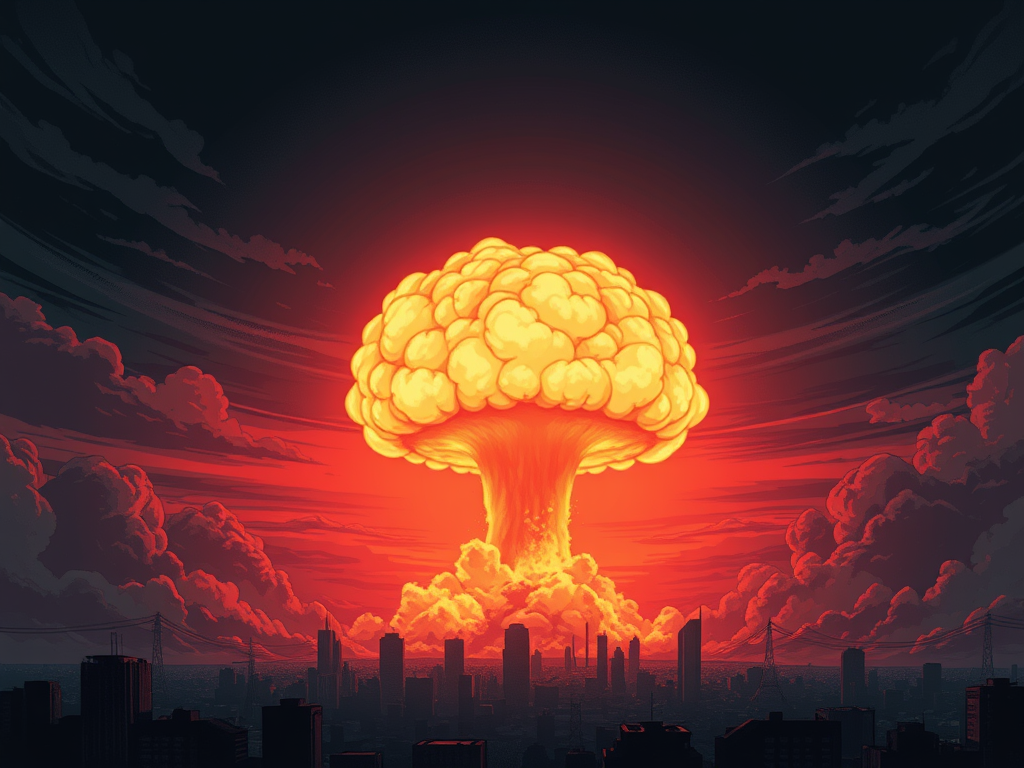
Imagine a weapon so powerful it could destroy an entire city in an instant. That was the incredible, terrifying reality of the atomic bomb, developed in top-secret during World War 2. The decision to build and use this weapon was a massive gamble, a huge risk taken to try and end the most destructive war in history. And when it was finally used, it truly changed everything, not just for the war, but for the entire future of our planet.
The story of the atomic bomb involves brilliant scientists, immense secrecy, and profound ethical questions about the power of technology. It brought World War 2 to a swift end, but it also ushered in a new age—the Nuclear Age—where the threat of unimaginable destruction became a constant shadow over the world. This article will explore ten key aspects of how this ultimate weapon came to be, how it was used, and the profound changes it brought about.
1. The Scientific Race: Unlocking the Atom’s Power
The story of the atomic bomb begins with scientists around the world discovering amazing things about the atom, the tiny building blocks of everything. They learned that a huge amount of energy was hidden inside these atoms, specifically through a process called nuclear fission. When certain atoms (like uranium or plutonium) are split, they release a tremendous burst of energy.
As World War 2 raged, scientists, many of them refugees who had fled Nazi Germany, worried that Germany might try to build an atomic bomb first. They alerted U.S. President Franklin D. Roosevelt to this possibility. This fear ignited a secret and urgent scientific race to harness atomic power. It wasn’t just about winning the war; it was about preventing the enemy from getting such a powerful weapon first, knowing the devastating consequences if they did.
2. The Manhattan Project: A Top-Secret Undertaking
To develop the atomic bomb, the United States launched a highly secretive and enormous project called the Manhattan Project. It began in 1942, involving hundreds of thousands of people—scientists, engineers, technicians, and laborers—working in secret facilities across the country, from Los Alamos, New Mexico, to Oak Ridge, Tennessee, and Hanford, Washington. Many workers didn’t even know what they were building, just that it was vital for the war effort.
The project was incredibly complex and expensive, costing billions of dollars (a huge amount at the time). Its goal was to overcome enormous scientific and engineering challenges to create an actual working atomic bomb. The success of the Manhattan Project was a testament to human ingenuity and teamwork, but it also showed the extraordinary lengths nations would go to gain an advantage in the desperate fight of World War 2.
3. Key Scientists: Oppenheimer and Einstein
Two of the most famous scientists linked to the atomic bomb are J. Robert Oppenheimer and Albert Einstein. Einstein, a brilliant physicist, famously wrote a letter to President Roosevelt in 1939, warning him about the potential for an atomic bomb and urging the U.S. to research it. While Einstein didn’t work directly on the bomb’s development during the war, his initial letter was a crucial spark.
J. Robert Oppenheimer was the scientific director of the Los Alamos Laboratory, the main research and design site for the atomic bomb. He was a brilliant theoretical physicist who led the team of scientists responsible for turning complex scientific theories into a working weapon. He was often called the “father of the atomic bomb” for his leadership in this immense undertaking, though he later expressed deep regrets about its creation and use.
4. The First Test: Trinity and the Dawn of a New Age
After years of intense work and countless challenges, the Manhattan Project reached its climax with the Trinity test. On July 16, 1945, in the New Mexico desert, the world’s first atomic bomb was detonated. The explosion was unlike anything humanity had ever witnessed. It created a blinding flash of light, a mushroom cloud that rose miles into the sky, and a massive shockwave that could be felt far away.
The scientists who witnessed it were awestruck and terrified. Many immediately understood the immense power they had unleashed. This moment marked the dawn of the Nuclear Age, a new era in human history where humanity possessed the power to destroy itself. The Trinity test proved that the atomic bomb was no longer just a theory; it was a terrifying reality.
5. The Decision to Use the Bomb: Ending World War 2
After the successful Trinity test, U.S. President Harry S. Truman (who had become president after FDR’s death) faced an incredibly difficult decision: should he use the atomic bomb? World War 2 was still raging in the Pacific, and Japan was fighting fiercely, refusing to surrender even after Germany had been defeated. Military planners estimated that a full-scale Allied invasion of Japan’s home islands would result in millions of casualties for both sides.
Truman hoped that using the atomic bomb would force Japan to surrender quickly, saving countless lives by avoiding a long and bloody invasion. It was a terrible choice, weighing the immediate destruction of the bomb against the projected deaths from a prolonged war. The decision was made to use the weapon, marking a desperate and final gamble to end the global conflict.
6. Hiroshima and Nagasaki: The Cities That Changed Forever
On August 6, 1945, the atomic bomb nicknamed “Little Boy” was dropped from a U.S. bomber plane, the Enola Gay, on the Japanese city of Hiroshima. The explosion instantly destroyed most of the city, killing tens of thousands of people and causing widespread devastation. Three days later, on August 9, 1945, a second atomic bomb, “Fat Man,” was dropped on the city of Nagasaki.
These two bombings caused unprecedented destruction and loss of life. The cities were incinerated, and many more people suffered from radiation sickness in the weeks, months, and years that followed. The sheer scale of destruction and suffering shocked the world. These were the only times atomic bombs have been used in warfare, and they remain a stark reminder of the weapon’s terrifying power.
7. Japan’s Surrender: The End of World War 2
The devastating power of the atomic bombs on Hiroshima and Nagasaki, combined with the Soviet Union’s declaration of war on Japan and invasion of Manchuria, finally convinced Japan’s leaders that further resistance was futile. On August 15, 1945 (which became known as V-J Day, Victory over Japan Day), Emperor Hirohito announced Japan’s unconditional surrender.
This surrender officially marked the end of World War 2. The use of the atomic bombs achieved the immediate goal of ending the war quickly, avoiding a massive ground invasion that many believed would have been even more deadly. The world breathed a sigh of relief that the most terrible conflict in history was finally over, but it was also left with a chilling awareness of humanity’s new destructive capabilities.
8. The Cold War and the Nuclear Arms Race
While the atomic bomb ended World War 2, it quickly ushered in a new era of global tension: the Cold War. The United States was briefly the only country with atomic weapons, but the Soviet Union soon developed its own. This began a terrifying nuclear arms race, where both superpowers built more and more powerful atomic and hydrogen bombs.
The world lived under the constant threat of nuclear war, a concept called “Mutually Assured Destruction (MAD),” meaning that if one side launched a nuclear attack, the other could retaliate, leading to the destruction of both. The atomic bomb didn’t bring lasting peace; it brought a new kind of uneasy peace based on fear. This nuclear standoff shaped international politics for decades after World War 2.
9. Nuclear Energy: A Double-Edged Sword
The same scientific principles that led to the destructive atomic bomb also opened the door to a powerful new source of energy: nuclear energy. After the war, scientists and engineers began to explore how nuclear fission could be used for peaceful purposes, specifically to generate electricity.
Today, nuclear power plants around the world use controlled nuclear reactions to produce electricity for millions of homes and businesses. While nuclear energy offers a powerful and clean source of power (without burning fossil fuels), it also comes with risks, including the safe disposal of radioactive waste and the potential for accidents or the misuse of nuclear materials. The atomic gamble truly gave humanity a double-edged sword: immense power for destruction or for progress.
10. A Changed World: The Ethical Dilemma
The atomic bomb didn’t just end a war; it fundamentally changed everything about human existence. It forced humanity to confront the terrifying reality that it now possessed the means to destroy civilization. This realization led to deep ethical dilemmas and ongoing debates about the responsibility of scientists, leaders, and citizens.
The bomb remains a powerful symbol of the dangers of unchecked power and the critical importance of international cooperation to prevent nuclear proliferation (the spread of nuclear weapons). It emphasizes the need for peaceful conflict resolution and a global commitment to disarmament. The atomic gamble reshaped geopolitics, science, and human consciousness, forever altering our perception of war, peace, and our own power.
Further Reading
- “What Was the Atomic Bomb?” by Sarah Fabiny
- “Bomb: The Race to Build—and Steal—the World’s Most Dangerous Weapon” by Steve Sheinkin (A thrilling, well-researched account for middle schoolers)
- “J. Robert Oppenheimer: The Man, The Scientist, The Bomb” by Andrew Hodges
- “Hiroshima” by John Hersey (Classic account of the bombing, for a slightly older audience)
- “The Cold War (A True Book: The Civil Rights Movement)” by Stephanie Fitzgerald (Provides context for the nuclear age)
Here at Zentara.blog, our mission is to take those tricky subjects and unlock them, making knowledge exciting and easy to grasp for everyone. But the adventure doesn’t stop on this page! We’re constantly exploring new frontiers and sharing discoveries across the digital universe.
Want to dive deeper into more mind-bending Top 10s and keep expanding your world? Come join us on our other platforms – we’ve got unique experiences waiting for you on each one!
- Get inspired by visual wonders and bite-sized facts: See the world through Zentara’s eyes on Pinterest! Pin our fascinating facts and stunning visuals to your own boards. Explore Pins on Pinterest: https://uk.pinterest.com/zentarablog/
- Discover quick insights and behind-the-scenes peeks: Hop over to Tumblr for snippets, quotes, and unique content you won’t find anywhere else. It’s a different flavour of discovery! Follow the Fun on Tumblr: https://www.tumblr.com/zentarablog
- Ready for deep dives you can listen to or watch? We’re bringing our accessible approach to video and potentially audio! Subscribe to our YouTube channel and tune into future projects that make learning pop! Subscribe on YouTube: https://www.youtube.com/@ZentaraUK
- Seeking even more knowledge in one place? We’ve compiled some of our most popular topic deep dives into fantastic ebooks! Find them on Amazon and keep the learning journey going anytime, anywhere. Find Our Ebooks on Amazon: https://www.amazon.co.uk/s?k=Zentara+UK&ref=nb_sb_noss
- Connect with us and fellow knowledge seekers: Join the conversation on BlueSky! We’re sharing updates, thoughts, and maybe even asking you what wonders we should explore next. Chat with Us on BlueSky: https://bsky.app/profile/zentarablog.bsky.social
- Perfect for learning on the move! We post multiple 10-minute podcasts per day on Spotify. Pop on your headphones and fill your day with fascinating facts while you’re out and about! Listen on Spotify: https://open.spotify.com/show/3dmHbKeDufRx95xPYIqKhJ
Every click helps us keep bringing honest, accessible knowledge to everyone. Thanks for exploring with us today – see you out there in the world of discovery!




Leave a Reply