
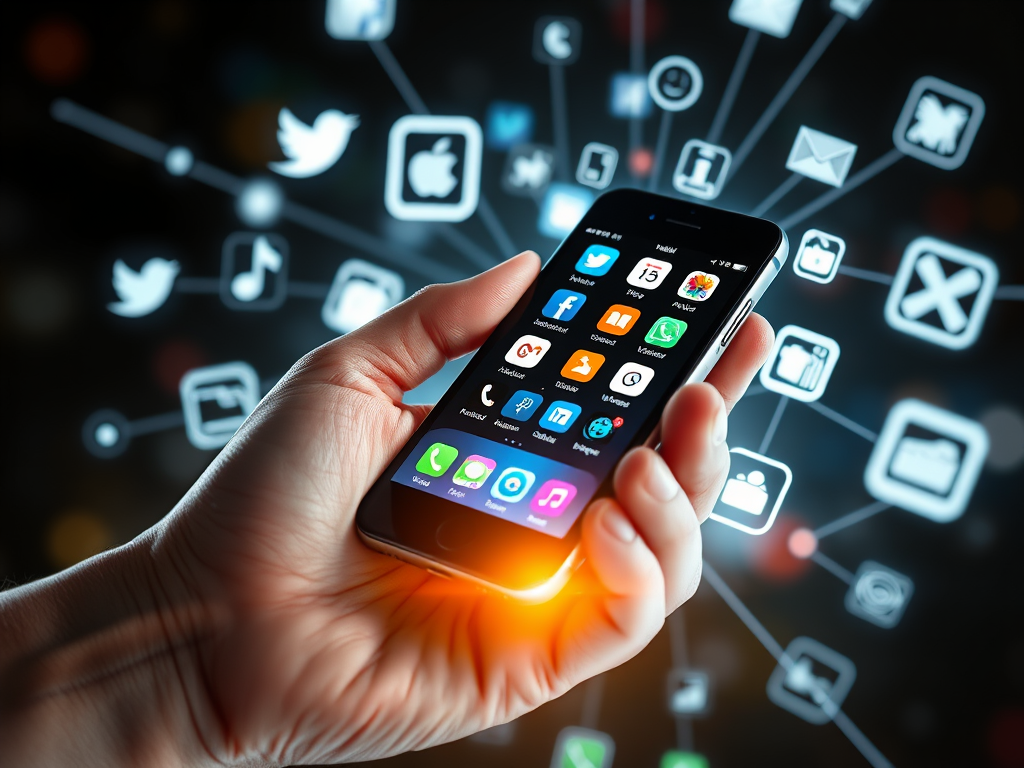
The smartphone, a device that fits in the palm of your hand, has arguably been one of the most transformative technologies of the 21st century. What started as a luxury communication tool has evolved into an indispensable extension of ourselves, fundamentally altering how we live, work, communicate, learn, and entertain ourselves. Since the introduction of the first true smartphones in the mid-1990s and their widespread adoption with the iPhone’s launch in 2007, these devices have catalyzed profound shifts across every facet of modern culture.
Before the smartphone, accessing information, connecting with distant friends, or capturing a moment required dedicated devices and often a fixed location. Now, a vast array of capabilities—from banking and navigation to photography and social networking—are instantly accessible, anywhere, anytime. This unprecedented convergence of technologies has not only made daily life more convenient but has also brought about significant changes in our social behaviors, expectations, and the very fabric of society.
The impact of smartphones is both celebrated and debated, bringing immense benefits alongside new challenges. They have created entirely new industries, redefined existing ones, and spurred a constant demand for instant gratification and perpetual connectivity. Their pervasive presence has become so ingrained that it’s difficult to imagine modern life without them. This article will delve into ten pivotal ways smartphones have forever changed modern culture, highlighting their undeniable and often profound influence.
1. Redefining Communication: Instant and Multifaceted Connectivity
Smartphones have radically redefined communication, moving far beyond simple voice calls. They ushered in an era of instant and multifaceted connectivity through text messaging, instant messaging apps (WhatsApp, WeChat), video calls, and social media platforms. Before smartphones, long-distance communication often meant planned calls or slower emails. Now, real-time conversations across continents are commonplace, making the world feel significantly smaller.
This shift has changed social norms around availability and responsiveness. We expect immediate replies, and a quick text or emoji can convey a message that once required a phone call. The rise of video calls has allowed for more personal connections over distances, blurring the lines between physical presence and virtual interaction. While fostering constant connection, this also creates pressure for perpetual availability, fundamentally altering the pace and nature of our personal and professional exchanges.
2. Ubiquitous Information Access: The World in Your Pocket
Perhaps the most significant change brought by smartphones is ubiquitous information access. With a few taps, we can access the sum of human knowledge through search engines, encyclopedias, news apps, and educational platforms. No longer tied to a desktop computer or a physical library, the internet is literally in our pockets, available at any moment of curiosity or need.
This has transformed how we learn, solve problems, and stay informed. From settling a debate with friends to looking up directions, translating a foreign phrase, or diagnosing a minor issue, instant information has become an expected utility. While empowering individuals with knowledge, this constant access also raises concerns about information overload, the spread of misinformation, and the erosion of deep-focus reading as quick snippets become the norm.
3. Transforming Social Interactions: Always Connected, Yet Sometimes Disconnected
Smartphones have profoundly transformed social interactions, creating a paradox of being “always connected, yet sometimes disconnected.” Social media apps on smartphones allow us to maintain vast networks, share daily moments, and stay updated on the lives of friends, family, and even celebrities across geographical boundaries. “Scrolling” through feeds and reacting to content has become a primary mode of social engagement.
However, this constant digital connection often comes at the expense of face-to-face interaction. The phenomenon of people absorbed in their phones in social settings, “phubbing” (phone snubbing) others, or experiencing “FOMO” (fear of missing out) on online events is now common. While fostering new forms of community and connection, smartphones have also introduced challenges to traditional social etiquette and contribute to feelings of loneliness or anxiety for some, highlighting a complex shift in how we relate to each other.
4. Reshaping Media Consumption: On-Demand and Personalized Content
Smartphones have fundamentally reshaped media consumption, moving us from scheduled broadcasts and physical media to an on-demand, personalized streaming paradigm. Music, videos, movies, news, and podcasts are now available anytime, anywhere, at our fingertips. Streaming services like Netflix, YouTube, Spotify, and TikTok are largely consumed on mobile devices, leading to a massive shift away from traditional television, radio, and physical media formats.
This has empowered consumers with unprecedented choice and control over their entertainment and information. Content creators, from major studios to individual YouTubers, can reach global audiences directly. The rise of short-form video and bite-sized news consumption, tailored by algorithms, reflects new habits of media engagement. This shift has also impacted traditional media industries, forcing them to adapt to mobile-first strategies and constant content creation to capture fragmented attention spans.
5. The Rise of the “App Economy” and Digital Services: Convenience at Scale
Smartphones are the backbone of the “App Economy,” giving rise to an entire ecosystem of digital services that have seamlessly integrated into daily life. From ride-sharing (Uber, Lyft) and food delivery (Deliveroo, Just Eat) to mobile banking, fitness tracking, and smart home control, dedicated applications have replaced numerous traditional services and physical objects.
This has ushered in an era of unparalleled convenience, transforming mundane tasks into effortless digital interactions. We can manage our finances, book appointments, track our health, and access essential services without ever leaving our homes or making a phone call. The app economy has created millions of jobs, spawned countless startups, and fundamentally changed consumer expectations for speed, efficiency, and personalized service across virtually every industry.
6. Transforming Photography and Visual Culture: Every Moment Captured
Smartphones have single-handedly transformed photography and visual culture. What was once a specialized hobby requiring dedicated equipment is now a ubiquitous daily activity. Almost everyone carries a high-quality camera in their pocket, enabling them to capture and instantly share photos and videos of virtually every aspect of their lives.
This has fueled the rise of visual social media platforms like Instagram and Snapchat, where images and short videos are the primary mode of communication. It has democratized content creation, turning everyday individuals into photographers, videographers, and citizen journalists. While allowing for spontaneous capture of memories and immediate sharing, this constant documentation also brings concerns about privacy, curated online personas, and the blurring lines between real life and its digital representation.
7. Impact on Work and Productivity: The Portable Office
Smartphones have profoundly impacted work and productivity, creating a portable office that allows individuals to work, manage tasks, and collaborate from almost anywhere. Email access, document editing, video conferencing, and project management tools are readily available on mobile devices, blurring the lines between work and personal life.
This has enabled greater flexibility, remote work, and instant responsiveness, particularly in industries that require constant communication. However, it also brings the expectation of perpetual availability, leading to increased stress and difficulty “switching off” from work. While boosting efficiency and connectivity, the smartphone’s integration into professional life has reshaped work-life balance and created new challenges for managing digital boundaries.
8. Navigation and Location-Based Services: Never Lost Again?
Gone are the days of unfolding large paper maps or stopping to ask for directions. Smartphones have revolutionized navigation and location-based services through integrated GPS, mapping applications (Google Maps, Apple Maps), and real-time traffic updates. Getting from point A to point B has become an intuitive, turn-by-turn process available to billions.
Beyond simple directions, location-based services power a vast array of apps, from finding nearby restaurants and checking in at social venues to tracking fitness routes and identifying points of interest. This has fostered a greater sense of confidence in exploring unfamiliar places and has fundamentally changed how we interact with our physical environment. While offering unprecedented convenience, it also raises privacy concerns about constant location tracking and data collection.
9. The Gamification of Daily Life: Apps, Rewards, and Engagement
Smartphones have brought about the gamification of daily life, integrating game-like elements, rewards, and progress tracking into non-game applications. Fitness apps reward steps, language learning apps offer streaks, and productivity apps provide badges for completing tasks. This trend taps into psychological principles of motivation, making routine activities more engaging and habit-forming.
Beyond dedicated gaming apps (which are a massive industry on their own), the underlying principles of gamification—such as instant feedback, points, levels, and social sharing of achievements—have been applied to everything from finance to education. This has altered our interaction with digital interfaces, encouraging prolonged engagement and fostering a constant pursuit of progress, often driven by notification cues and virtual rewards.
10. Transforming Financial Transactions: The Rise of Mobile Payments
Smartphones have dramatically transformed financial transactions, ushering in the era of mobile payments and digital wallets. Services like Apple Pay, Google Pay, and various banking apps allow users to make payments with a tap of their phone, transfer money instantly, and manage their finances without carrying physical cash or cards.
This shift offers unparalleled convenience and security, reducing reliance on traditional banking infrastructure and cash. It has accelerated the move towards a cashless society in many parts of the world. From splitting bills with friends to making purchases online or in-store, smartphones have become the primary tool for managing personal finances, democratizing access to financial services for many and creating new paradigms for commerce.
Further Reading
- “Irresistible: The Rise of Addictive Technology and the Business of Keeping Us Hooked” by Adam Alter
- “Ten Arguments for Deleting Your Social Media Accounts Right Now” by Jaron Lanier
- “The Shallows: What the Internet Is Doing to Our Brains” by Nicholas Carr
- “Digital Minimalism: Choosing a Focused Life in a Noisy World” by Cal Newport
- “Screen Time: How to Make Peace with Your Devices and Take Back Your Life” by Anya Kamenetz
Here at Zentara.blog, our mission is to take those tricky subjects and unlock them, making knowledge exciting and easy to grasp for everyone. But the adventure doesn’t stop on this page! We’re constantly exploring new frontiers and sharing discoveries across the digital universe. Want to dive deeper into more mind-bending Top 10s and keep expanding your world? Come join us on our other platforms – we’ve got unique experiences waiting for you on each one!
Get inspired by visual wonders and bite-sized facts: See the world through Zentara’s eyes on Pinterest!
Pin our fascinating facts and stunning visuals to your own boards. Explore Pins on Pinterest: https://uk.pinterest.com/zentarablog/
Discover quick insights and behind-the-scenes peeks: Hop over to Tumblr for snippets, quotes, and unique content you won’t find anywhere else. It’s a different flavour of discovery! Follow the Fun on Tumblr: https://www.tumblr.com/zentarablog
Ready for deep dives you can listen to or watch? We’re bringing our accessible approach to video and potentially audio! Subscribe to our YouTube channel and tune into future projects that make learning pop! Subscribe on YouTube: https://www.youtube.com/@ZentaraUK
Seeking even more knowledge in one place? We’ve compiled some of our most popular topic deep dives into fantastic ebooks! Find them on Amazon and keep the learning journey going anytime, anywhere. Find Our Ebooks on Amazon: https://www.amazon.co.uk/s?k=Zentara+UK&ref=nb_sb_noss
Connect with us and fellow knowledge seekers: Join the conversation on BlueSky! We’re sharing updates, thoughts, and maybe even asking you what wonders we should explore next. Chat with Us on BlueSky: https://bsky.app/profile/zentarablog.bsky.social
Perfect for learning on the move! We post multiple 10-minute podcasts per day on Spotify. Pop on your headphones and fill your day with fascinating facts while you’re out and about! Listen on Spotify: https://open.spotify.com/show/3dmHbKeDufRx95xPYIqKhJ
Follow us on Instagram for bytesize knowledge! We post multiple posts per day on our official Instagram account. https://www.instagram.com/zentarablog/ Every click helps us keep bringing honest, accessible knowledge to everyone. Thanks for exploring with us today – see you out there in the world of discovery!




Leave a Reply