
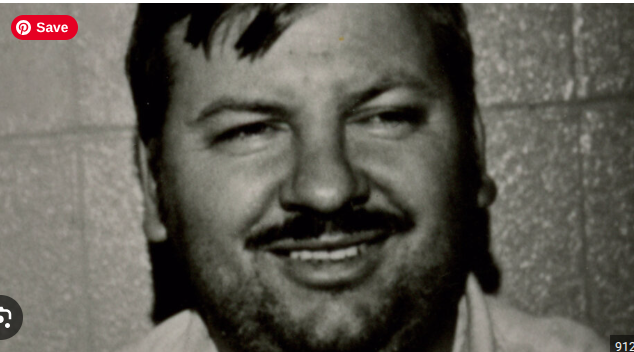
The name John Wayne Gacy evokes a chilling dread, synonymous with a depraved double life that horrified a nation. From 1972 to 1978, in the quiet suburbs of Chicago, Gacy perpetrated a series of heinous crimes, targeting young men and boys, while simultaneously projecting an image of a respectable businessman and beloved community figure, even performing as a clown at children’s parties. His discovery and subsequent conviction revealed a darkness almost unfathomable, forcing society to confront the chilling reality that pure evil can hide in plain sight.
Gacy’s case was not just a local tragedy; it sent shockwaves across the United States and beyond, fundamentally altering how law enforcement approached serial killer investigations and forcing a re-evaluation of the psychological profiles of such offenders. The sheer number of his victims, and the macabre way in which he disposed of their bodies beneath his seemingly ordinary home, cemented his place as one of history’s most notorious and disturbing serial killers.
His story is a grim reminder of the predators who can exist within our communities, highlighting the deceptive nature of appearances and the profound vulnerability of those lured by promises of work or friendship. This article delves into ten disturbing facts about John Wayne Gacy, exploring the elements that made his crimes so uniquely terrifying and his legacy so deeply unsettling.
1. The “Killer Clown” Persona: A Deceptive Facade
Perhaps the most infamous and unsettling aspect of John Wayne Gacy’s public persona was his role as Pogo the Clown (and sometimes “Patches the Clown”). Gacy frequently dressed up as a clown for charitable events, children’s parties, and local parades in his community. This seemingly benevolent and jovial facade allowed him to appear as a trustworthy and endearing figure, completely at odds with the monstrous acts he committed in secret. Imagine the dissonance: a man who brought joy and laughter to children by day was, by night, a sadistic murderer. This chilling dichotomy served as a powerful tool of deception, enabling him to gain the trust of potential victims and avoid suspicion for years. The “killer clown” moniker became a terrifying shorthand for his crimes, forever linking a symbol of innocence with unspeakable evil, a truly disturbing serial killer fact.
2. A Staggering Victim Count: The Crawl Space of Horrors
John Wayne Gacy was convicted of 33 murders, making him one of the most prolific serial killers in U.S. history at the time. The sheer number of his victims was horrifying, but the method of disposal added another layer of macabre shock. Twenty-six of his victims were found buried in the cramped, foul-smelling crawl space beneath his ranch-style home at 8213 West Summerdale Avenue in Norwood Park Township, Illinois. Three other bodies were buried elsewhere on his property, and four were discarded in the Des Plaines River. The excavation of Gacy’s property became a grim, arduous process, revealing the unimaginable scale of his crimes and turning a suburban home into a site of immense horror. The discovery of the bodies in crawl space was a pivotal and grotesque moment in the investigation, making his victim count a truly shocking crime detail.
3. The Modus Operandi: Lure, Deception, and Brutality
Gacy’s method of operation (modus operandi) was chillingly consistent and manipulative. He often lured his young male victims, typically teenagers and young adults, to his home under the guise of offering them construction work for his contracting business, or sometimes simply by offering a ride or a place to stay. Once inside, Gacy would use a deceptive “magic trick” involving handcuffs, persuading his victims to put them on. This seemingly innocent ruse quickly turned into a terrifying nightmare as Gacy subjected his captives to brutal sexual assault, torture, and ultimately, murder, typically by asphyxiation or strangulation with a garrote. His calculated use of deception and trust, followed by extreme violence, defined his serial killer methods and highlighted his deep-seated psychopathy, underscoring the Gacy modus operandi.
4. Prior Convictions and Early Warning Signs: A Troubling Past
Gacy’s horrific crimes in Illinois were not his first encounters with the law for sexual offenses. In 1968, he was convicted of sodomy in Waterloo, Iowa, after sexually assaulting a teenage boy and was sentenced to 10 years in prison. Despite exhibiting clear behavioral issues, he served only 18 months before being released on parole. This early conviction, and his subsequent release, represents a significant missed opportunity to prevent future tragedies. His problematic behavior, including aggressive outbursts and sexual deviancy, extended back into his youth, marked by a difficult relationship with an abusive, alcoholic father. These early warning signs and prior convictions illustrate a deeply disturbed individual whose violent tendencies were evident long before his infamous killing spree, making his release a devastating failure of the justice system.
5. The Robert Piest Disappearance: The Unraveling of the Mask
The elaborate facade Gacy maintained for years began to crack with the disappearance of 15-year-old Robert Piest on December 11, 1978. Piest was last seen talking to Gacy about a potential job, and when he didn’t return home, his family alerted authorities. This disappearance was pivotal. Police focused on Gacy as the last person to see Piest, and their investigation, despite initial resistance from Gacy, intensified. The search for Piest eventually led police to Gacy’s home, where a foul odor (which Gacy attributed to moisture problems) had long been a source of complaint from neighbors. The relentless pursuit of Piest’s whereabouts led to the critical search warrant that ultimately uncovered the horrors beneath Gacy’s house, making the Robert Piest case the crucial turning point in the Gacy investigation.
6. Living Above His Victims: The Constant Odor of Death
Perhaps one of the most chilling aspects of Gacy’s crimes was the fact that he lived above the buried remains of his victims for years. The foul odor emanating from his crawl space was a constant presence, not only to Gacy but also to his family, friends, and unsuspecting guests. He concocted various excuses for the smell, blaming it on plumbing issues, moisture, or even deceased rats. Imagine the sheer psychological detachment required to live in such close proximity to the evidence of your heinous crimes, hosting parties and conducting business while the bodies of young men decomposed beneath your floorboards. This chilling detail underscores Gacy’s extreme psychopathy and his complete lack of empathy or remorse, highlighting the truly disturbing living conditions he maintained during his murder spree.
7. The Psychological Profile: A High-Functioning Psychopath
John Wayne Gacy’s psychological profile paints a picture of a classic high-functioning psychopath. He exhibited a profound lack of empathy, a grandiose sense of self-worth, pathological lying, and a masterful ability to manipulate others. Despite his horrific acts, he was able to maintain a seemingly normal life, holding down a job, running a successful contracting business, and being active in his community and local politics. He displayed no genuine remorse for his victims, often rationalizing his actions or blaming others. Psychologists who evaluated him described him as a deeply disturbed individual with antisocial personality disorder. His ability to compartmentalize his violent fantasies from his public persona is a key characteristic of psychopathy, allowing him to operate undetected for so long, making him a chilling example of serial killer psychology.
8. The Trial: Insanity Defense Rejected
Gacy’s trial, which began in January 1980, garnered massive media attention. His defense team pursued an insanity defense, arguing that Gacy suffered from a dissociative identity disorder, claiming an alter ego named “Jack” was responsible for the murders. Several psychologists testified for the defense, diagnosing him with conditions like schizophrenia or antisocial personality disorder. However, prosecutors successfully argued that Gacy was sane and fully aware of his actions, demonstrating the meticulous planning and deception involved in his crimes. The jury ultimately rejected the insanity plea, finding him guilty of all 33 murders on March 13, 1980. This landmark verdict underscored the legal system’s view of his accountability, dismissing his attempt to evade responsibility for his horrific murders.
9. Impact on Serial Killer Investigations: The “Hidden in Plain Sight” Paradigm
The John Wayne Gacy case had a profound and lasting impact on serial killer investigations and law enforcement practices. Before Gacy, many serial killers were stereotyped as social outcasts or drifters. Gacy shattered this stereotype, proving that a meticulous, well-integrated member of society – a “pillar of the community” – could be a brutal mass murderer. His case highlighted the importance of looking beyond superficial appearances and focusing on behavioral patterns and victimology. It also emphasized the critical role of forensic anthropology and DNA identification in recovering and identifying victims, particularly those buried covertly. Gacy’s ability to operate undetected for so long led to increased vigilance among law enforcement regarding individuals who might seem “above suspicion,” forever altering the approach to identifying and apprehending deceptive serial killers.
10. The Execution: A Long-Awaited End
After years of appeals, legal maneuvers, and public debate, John Wayne Gacy was executed by lethal injection on May 10, 1994, at Stateville Correctional Center in Illinois. His final moments were marked by an eerie calm, reportedly uttering his last words: “Kiss my ass.” The execution brought a long-awaited sense of closure for the victims’ families, who had endured years of pain and uncertainty. It also marked the end of one of the most terrifying sagas in American criminal history. The Gacy execution served as a culmination of the justice system’s response to his unspeakable crimes, bringing a definitive end to the life of the man known as the Killer Clown, and closing a dark chapter in the history of serial murder.
In conclusion, John Wayne Gacy remains a chilling figure in criminal history, not only for the sheer scale and brutality of his crimes but for the unsettling ease with which he concealed his monstrous true self behind a facade of normalcy. His case continues to serve as a stark reminder of the darkest corners of human behavior and the vigilance required to protect the innocent from those who hide in plain sight.
Further Reading
- Buried Dreams: Inside the Mind of a Serial Killer by Tim Cahill
- Killer Clown: The John Wayne Gacy Story by Terry Sullivan and Peter T. Maiken
- The Man Who Could Not Kill Enough: The Story of the Psychopathic Mass Murderer John Wayne Gacy by Charles P. Roberts
- Portrait of a Killer: Jack the Ripper – Case Closed by Patricia Cornwell (While not solely about Gacy, it delves into forensic psychology of such cases)
Here at Zentara.blog, our mission is to take those tricky subjects and unlock them, making knowledge exciting and easy to grasp for everyone. But the adventure doesn’t stop on this page! We’re constantly exploring new frontiers and sharing discoveries across the digital universe. Want to dive deeper into more mind-bending Top 10s and keep expanding your world? Come join us on our other platforms – we’ve got unique experiences waiting for you on each one!
Get inspired by visual wonders and bite-sized facts: See the world through Zentara’s eyes on Pinterest!
Pin our fascinating facts and stunning visuals to your own boards. Explore Pins on Pinterest: https://uk.pinterest.com/zentarablog/
Discover quick insights and behind-the-scenes peeks: Hop over to Tumblr for snippets, quotes, and unique content you won’t find anywhere else. It’s a different flavour of discovery! Follow the Fun on Tumblr: https://www.tumblr.com/zentarablog
Ready for deep dives you can listen to or watch? We’re bringing our accessible approach to video and potentially audio! Subscribe to our YouTube channel and tune into future projects that make learning pop! Subscribe on YouTube: https://www.youtube.com/@ZentaraUK
Seeking even more knowledge in one place? We’ve compiled some of our most popular topic deep dives into fantastic ebooks! Find them on Amazon and keep the learning journey going anytime, anywhere. Find Our Ebooks on Amazon: https://www.amazon.co.uk/s?k=Zentara+UK&ref=nb_sb_noss
Connect with us and fellow knowledge seekers: Join the conversation on BlueSky! We’re sharing updates, thoughts, and maybe even asking you what wonders we should explore next. Chat with Us on BlueSky: https://bsky.app/profile/zentarablog.bsky.social
Perfect for learning on the move! We post multiple 10-minute podcasts per day on Spotify. Pop on your headphones and fill your day with fascinating facts while you’re out and about! Listen on Spotify: https://open.spotify.com/show/3dmHbKeDufRx95xPYIqKhJ
Follow us on Instagram for bytesize knowledge! We post multiple posts per day on our official Instagram account. https://www.instagram.com/zentarablog/ Every click helps us keep bringing honest, accessible knowledge to everyone. Thanks for exploring with us today – see you out there in the world of discovery!




Leave a Reply