
In the grand and often brutal theatre of conflict, the most decisive battles are not always waged with swords and shields, nor with bullets and bombs. Instead, they are fought in the six inches of space between a person’s ears: the human mind. This is the realm of psychological warfare, a subtle and sophisticated art of influencing the enemy’s thoughts, emotions, and ultimately, their will to fight. Long before the advent of 24-hour news cycles and social media, commanders and strategists understood the immense power of shaping perceptions. From the ancient plains of China to the dense jungles of Vietnam, the principles of psychological operations, or psyops, have been honed and adapted, proving that the whisper of an idea can be as potent as the roar of a cannon.
This article delves into ten historical tactics of psychological warfare that have been used to masterful effect throughout the ages. These are not just dusty relics of the past; they are foundational strategies that, in many ways, continue to inform the methods of influence and persuasion we see in the modern world. By understanding these enduring techniques, we can gain a clearer perspective on the non-lethal, yet profoundly impactful, dimension of human conflict.
1. The Art of Deception: Sun Tzu and Winning Without Fighting
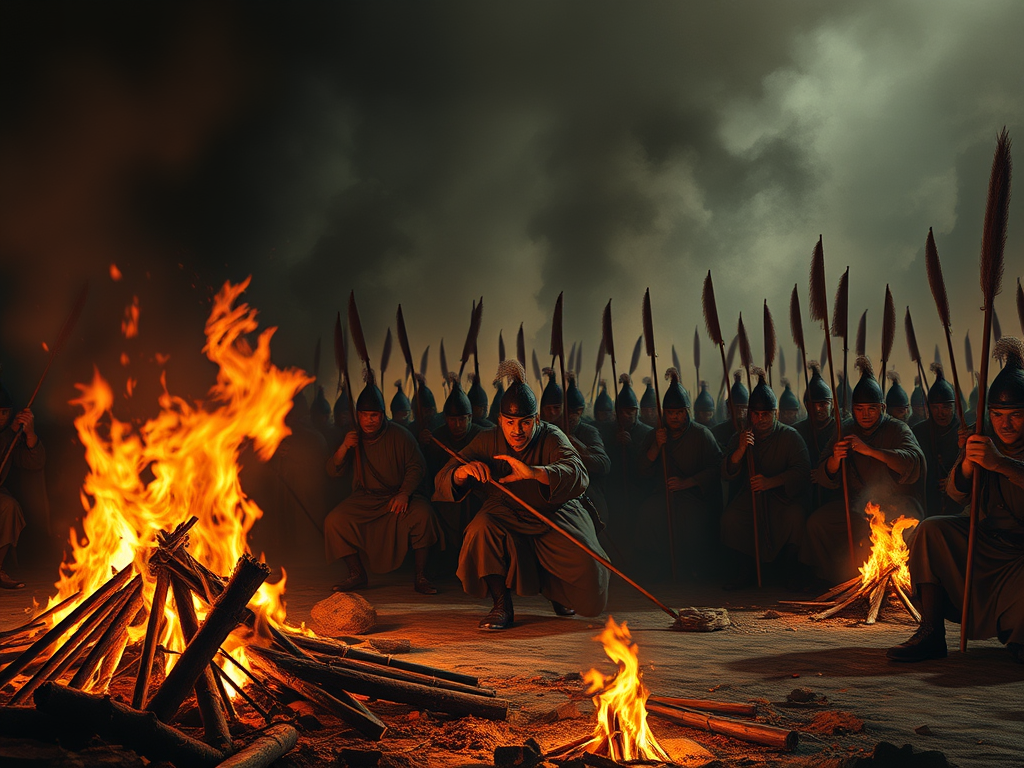
The ancient Chinese general and strategist Sun Tzu, in his seminal work “The Art of War,” laid a foundational principle for all subsequent psychological warfare: “All warfare is based on deception.” For Sun Tzu, the ultimate victory was one achieved without a single clash of arms. This was not a call for passivity, but rather a sophisticated strategy of manipulating the enemy’s perceptions to such a degree that they are defeated before the battle even begins. This involved creating illusions of strength where there was weakness, and weakness where there was strength. A commander might, for instance, have his troops light numerous campfires at night to suggest a much larger force, or feign a retreat to lure an overconfident enemy into a well-laid trap.
This use of fear in warfare was not about overt terror, but the gnawing uncertainty and miscalculation it fostered in the mind of the opposing general. By controlling the flow of information and presenting a distorted picture of reality, a skilled strategist could dictate the terms of engagement, forcing the enemy to react to shadows and phantoms. The goal was to break the enemy’s spirit, to sow seeds of doubt and confusion among their ranks, and to make the prospect of battle seem so daunting and unpredictable that surrender or retreat became the most logical course of action. Sun Tzu’s teachings on psychological warfare emphasize that the mental and moral collapse of an enemy is a far more profound and lasting victory than their mere physical destruction.
2. The Mongol Horde’s Terrifying Reputation: Spreading Fear Ahead of the Army
Genghis Khan and his Mongol successors were masters of a particularly brutal, yet undeniably effective, form of psychological warfare. Their strategy was built on the cultivation of a terrifying reputation that would often precede their armies, doing much of the work of conquest before a single arrow was loosed. When the Mongols laid siege to a city, they would frequently offer a choice: surrender and be spared, or resist and face annihilation. This was no idle threat. If a city resisted, the Mongols would not only conquer it but would often systematically slaughter its population, leaving only a few survivors to escape and spread the horrific tales of what had transpired.
This calculated use of terror was a powerful method of influencing enemy morale. The stories of the Mongols’ ruthlessness would travel from one settlement to the next, carried by the very people who had witnessed it firsthand. By the time the Mongol horde appeared on the horizon of a new city, its inhabitants were already gripped by fear and indecision. The debate would rage within the city walls: is it better to fight and risk utter destruction, or to submit and live? This division and paralysis were precisely the intended effects. The Mongols understood that the fear of the unknown, amplified by gruesome firsthand accounts, could be a more potent weapon than any siege engine. Their reputation became a self-fulfilling prophecy of conquest.
3. “Ghost Army”: The Allied Deception of World War II
During the Second World War, the Allies deployed one of the most creative and elaborate examples of psychological warfare in history: the 23rd Headquarters Special Troops, more famously known as the “Ghost Army.” This unique unit was comprised not of combat soldiers, but of artists, actors, sound engineers, and designers. Their mission was to deceive the German army about the size and location of Allied forces, using a combination of inflatable tanks, dummy aircraft, powerful sound systems broadcasting the noises of troop movements, and fake radio transmissions. By creating the illusion of a massive army where there was none, they could draw enemy divisions away from the actual sites of Allied attacks.
One of the most significant historical examples of psychological warfare, the Ghost Army’s operations were crucial to the success of several key campaigns, most notably the D-Day landings in Normandy. By creating a phantom army under the command of General George S. Patton in the southeast of England, they convinced the Germans that the main invasion would come at the Pas-de-Calais, the narrowest point of the English Channel. This elaborate ruse kept vital German reinforcements tied down and away from the Normandy beaches, saving countless Allied lives. The Ghost Army’s success underscores a fundamental principle of psyops: perception is reality. By manipulating what the enemy sees and hears, it is possible to control their actions and shape the battlefield to one’s own advantage.
4. Propaganda in War: The Power of Words and Images
Propaganda has long been a cornerstone of psychological warfare, and its use was refined to a potent science during the First and Second World Wars. Both the Allied and Axis powers understood that to sustain a war effort, it was essential to maintain high morale on the home front while simultaneously undermining the morale of the enemy. This was achieved through a relentless barrage of posters, films, radio broadcasts, and leaflets, all designed to shape public opinion and demonize the opposing side. Propaganda in war often employed powerful emotional appeals, portraying the conflict as a righteous struggle of good versus evil.
On the home front, propaganda posters encouraged citizens to buy war bonds, conserve resources, and report suspicious activity, fostering a sense of national unity and shared purpose. When directed at the enemy, propaganda took a different, more insidious form. Leaflets dropped over enemy lines would often carry messages designed to sow dissent and encourage desertion. They might highlight the comforts of being a prisoner of war, question the competence of the enemy’s leaders, or exploit existing social and political divisions. For example, the British Political Warfare Executive during WWII produced “black propaganda” – material that purported to come from German sources but was in fact designed to spread disillusionment and distrust within the Nazi regime. This constant assault on the enemy’s beliefs and loyalties was a critical component of the overall war effort.
5. Operation Wandering Soul: Exploiting Cultural Beliefs in Vietnam
The Vietnam War saw the United States employ a particularly inventive and culturally specific form of psychological warfare known as “Operation Wandering Soul.” This psyops technique was based on the traditional Vietnamese belief that the souls of the dead must be properly buried in their homeland to find peace. If a person is not given a proper burial, their soul is believed to wander the earth in pain and torment. The U.S. military capitalized on this deeply held cultural belief by creating eerie audio tapes that simulated the ghostly wails and cries of deceased Viet Cong soldiers.
These tapes, often broadcast from helicopters or by soldiers on patrol in the dense jungle, were designed to prey on the fears and superstitions of the enemy. The mournful sounds, combined with spoken warnings that the listener would suffer the same fate if they continued to fight, were intended to erode their morale and will to resist. While the overall effectiveness of Operation Wandering Soul is debated, it stands as a stark example of how understanding an adversary’s culture and psychology can be weaponized. It demonstrates a key aspect of modern psyops: the targeting of specific psychological vulnerabilities to achieve a desired effect. This tactic moved beyond simple deception to a more profound manipulation of deeply ingrained cultural and spiritual beliefs.
6. The Trojan Horse: A Legendary Tale of Deception
The story of the Trojan Horse, as recounted in Virgil’s Aeneid, is one of the most enduring and iconic tales of psychological warfare from the ancient world. After a decade of fruitless siege against the city of Troy, the Greeks devised a cunning plan. They constructed a massive wooden horse, left it on the beach as an apparent offering to the gods, and then sailed away, seemingly in defeat. The Trojans, believing they had won the war, brought the horse into their heavily fortified city as a trophy. That night, a select group of Greek soldiers hidden inside the horse emerged, opened the city gates for their returning army, and Troy was finally conquered.
While the historical accuracy of the Trojan Horse is a matter of scholarly debate, its symbolic power is undeniable. The story illustrates a masterful use of deception that played upon the enemy’s pride, their relief at the end of a long war, and their religious beliefs. It was a non-lethal warfare strategy that achieved what ten years of conventional fighting could not. The horse itself was a psychological weapon, a symbol of victory that blinded the Trojans to the imminent danger it contained. This legendary tactic has become a metaphor for any strategy that uses trickery to infiltrate and subvert an opponent from within, a timeless lesson on the importance of looking beyond the surface and questioning the motives behind an enemy’s apparent concessions.
7. Radio Free Europe/Radio Liberty: The Cold War Battle of the Airwaves
The Cold War was a conflict fought not primarily on traditional battlefields, but in the ideological and psychological spheres. A key weapon in this struggle was the radio broadcast. Organizations like Radio Free Europe and Radio Liberty, funded by the U.S. government, broadcast news, music, and cultural programming into the communist countries of the Eastern Bloc. While ostensibly providing an alternative to state-controlled media, these broadcasts were a sophisticated form of psychological operation designed to undermine the authority of the Soviet Union and its satellite regimes.
By providing uncensored news and information, these radio stations exposed the propaganda and lies of the communist governments, fostering dissent and a desire for freedom among the populace. They also broadcast Western music and cultural content, which served to counteract the bleak and repressive cultural landscape of the Eastern Bloc and showcase the appeal of Western society. This was a long-term strategy aimed at eroding the ideological foundations of the communist world. The broadcasts were a constant reminder to those living behind the Iron Curtain that a different way of life was possible. In this sense, Radio Free Europe and Radio Liberty were engaged in a protracted psychological campaign to win the hearts and minds of the people, a battle of ideas that ultimately contributed to the collapse of the Soviet Union.
8. Leaflet Drops: A Rain of Persuasion from the Skies
One of the most common and enduring psychological warfare tactics is the dropping of leaflets from the air. This method, used extensively in conflicts from World War I to the recent wars in Iraq and Afghanistan, allows for the direct communication of messages to enemy soldiers and civilians. The content of these leaflets can vary widely, but they generally aim to achieve a few key objectives: to persuade enemy soldiers to surrender, to demoralize them by highlighting their hardships and the futility of their cause, or to provide instructions on how to give up without being harmed.
During World War II, the Allies dropped millions of leaflets over German-occupied Europe. Some of these were “safe conduct passes,” promising good treatment to any German soldier who surrendered with the leaflet in hand. Others contained news of German defeats or messages from captured soldiers attesting to the good conditions in Allied prisoner-of-war camps. These leaflets were designed to be a tangible piece of propaganda that a soldier could hold in their hand, a stark contrast to the state-controlled information they were receiving from their own side. The very act of dropping these leaflets in vast quantities demonstrated the air superiority of the opposing force, in itself a demoralizing factor. This tactic, while simple in concept, proved to be a highly effective method of influencing enemy morale on a massive scale.
9. The Power of Symbols: Banners, Flags, and Insignia
Symbols have always played a crucial role in human conflict, serving as powerful tools for both inspiring one’s own side and intimidating the enemy. The use of banners, flags, and distinctive insignia is a form of psychological warfare that operates on a primal level, communicating identity, strength, and intent without a single word being spoken. The Roman legions, with their iconic eagle standards (aquila), are a prime example. The aquila was not just a piece of metal; it was the embodiment of the legion’s honor, pride, and fighting spirit. Its loss in battle was considered a profound humiliation, and its presence on the battlefield was a rallying point for the Roman soldiers and a menacing sight for their foes.
Similarly, the skull and crossbones emblem used by pirate ships, and later adopted by some military units, was a deliberate choice to inspire fear. It was a clear and unambiguous message: surrender or die. In more modern times, the swastika of the Nazi party became a potent symbol of their ideology and military might, its presence intended to evoke feelings of both nationalistic fervor and terror. The strategic use of symbols is a testament to the fact that psychological warfare is not always about complex deception or elaborate propaganda campaigns. Sometimes, the most effective way to influence the enemy is through the simple, powerful, and universally understood language of symbols.
10. Shock and Awe: The Overwhelming Display of Force
The doctrine of “shock and awe,” most famously associated with the 2003 invasion of Iraq, is a modern manifestation of a long-standing psychological warfare tactic: the overwhelming and rapid display of military power to paralyze the enemy’s will to resist. The goal is not just to defeat the enemy’s military forces, but to create such a spectacular and terrifying demonstration of force that their command and control structures collapse, and their soldiers and leaders are left feeling utterly helpless and defeated. This is achieved through a massive and coordinated assault, often involving airpower, that targets key infrastructure and symbols of power.
The psychological impact of such an assault can be devastating. The sheer scale and intensity of the attack are designed to create a sense of futility, to convince the enemy that resistance is not only pointless but suicidal. This tactic is rooted in the use of fear in warfare, but it elevates it to a strategic level. It is not just about scaring individual soldiers, but about breaking the psychological cohesion of the entire enemy state. While the long-term effectiveness of shock and awe campaigns is a subject of ongoing debate, their underlying principle remains a core tenet of psychological warfare: that a decisive blow to the enemy’s psyche can be as effective, if not more so, than a protracted war of attrition. By demonstrating an unassailable superiority in military power, the aim is to win the war by convincing the enemy that it is already lost.
Further Reading
For those interested in delving deeper into the fascinating and often unsettling world of psychological warfare, the following books offer accessible and insightful explorations of the topic:
- The Art of War by Sun Tzu
- Propaganda by Edward Bernays
- The Ghost Army of World War II: How One Top-Secret Unit Deceived the Enemy with Inflatable Tanks, Sound Effects, and Other Audacious Fakery by Rick Beyer and Elizabeth Sayles
- War on the Mind: The Military Uses and Abuses of Psychology by Peter Watson
- Psychological Warfare by Paul M. A. Linebarger
Here at Zentara.blog, our mission is to take those tricky subjects and unlock them, making knowledge exciting and easy to grasp for everyone. But the adventure doesn’t stop on this page! We’re constantly exploring new frontiers and sharing discoveries across the digital universe. Want to dive deeper into more mind-bending Top 10s and keep expanding your world? Come join us on our other platforms – we’ve got unique experiences waiting for you on each one!
Get inspired by visual wonders and bite-sized facts: See the world through Zentara’s eyes on Pinterest!
Pin our fascinating facts and stunning visuals to your own boards. Explore Pins on Pinterest: https://uk.pinterest.com/zentarablog/
Discover quick insights and behind-the-scenes peeks: Hop over to Tumblr for snippets, quotes, and unique content you won’t find anywhere else. It’s a different flavour of discovery! Follow the Fun on Tumblr: https://www.tumblr.com/zentarablog
Ready for deep dives you can listen to or watch? We’re bringing our accessible approach to video and potentially audio! Subscribe to our YouTube channel and tune into future projects that make learning pop! Subscribe on YouTube: https://www.youtube.com/@ZentaraUK
Seeking even more knowledge in one place? We’ve compiled some of our most popular topic deep dives into fantastic ebooks! Find them on Amazon and keep the learning journey going anytime, anywhere. Find Our Ebooks on Amazon: https://www.amazon.co.uk/s?k=Zentara+UK&ref=nb_sb_noss
Connect with us and fellow knowledge seekers: Join the conversation on BlueSky! We’re sharing updates, thoughts, and maybe even asking you what wonders we should explore next. Chat with Us on BlueSky: https://bsky.app/profile/zentarablog.bsky.social
Perfect for learning on the move! We post multiple 10-minute podcasts per day on Spotify. Pop on your headphones and fill your day with fascinating facts while you’re out and about! Listen on Spotify: https://open.spotify.com/show/3dmHbKeDufRx95xPYIqKhJFollow us on Instagram for bytesize knowledge! We post multiple posts per day on our official Instagram account. https://www.instagram.com/zentarablog/ Every click helps us keep bringing honest, accessible knowledge to everyone. Thanks for exploring with us today – see you out there in the world of discovery!




Leave a Reply