
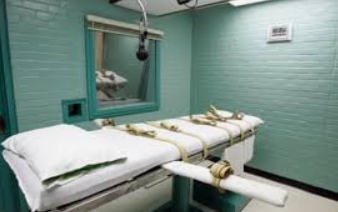
The practice of capital punishment is one of the most contentious ethical issues of our time. For those who believe it is an immoral and unethical act, advocating for its abolition requires a clear-eyed understanding of what the process truly entails. Beyond the political and legal debates, there is the stark, human reality of a person’s last day on Earth, a day governed by strict, unyielding procedures. This article aims to shed light on that reality. It is not intended to be sensationalist or macabre. Instead, it is an educational examination of ten procedural aspects and traditions surrounding the final 24 hours of condemned prisoners in various countries that still practice capital punishment. By understanding the methodical nature of the state’s ultimate punishment, we can better inform our own ethical conclusions.
1. The Death Watch and Isolation (United States)
In the United States, particularly in states with active death rows like Texas and Florida, the final 24-48 hours of a prisoner’s life are spent under a “death watch.” The inmate is moved from their regular death row cell to a special cell located within the execution complex itself. This move signifies the final, irrevocable stage of the process. The death watch cell is under constant, direct observation by correctional officers to prevent any self-harm attempt and to monitor the prisoner’s physical and psychological state. All personal belongings are removed, and the inmate is given a new set of clothes. This period is one of profound isolation, stripped of all routine and familiarity. The prisoner is acutely aware that they are in the very place where their life will end, with the sounds and atmosphere of the impending execution ever-present. This intense surveillance and isolation is a legally mandated procedure, designed for security, but it also serves as a stark and psychologically intense prelude to the execution itself.
2. The Ritual of the Last Meal (United States and others)
The tradition of the “last meal” is one of the most well-known aspects of capital punishment, practiced most famously in the United States. It is often seen as a final gesture of humanity. The prisoner is allowed to request a special meal, subject to certain limitations on cost and availability. Some states, like Texas, abolished the practice after a prisoner ordered an elaborate meal and then refused to eat it. In states that still allow it, the requests can range from simple comfort foods like a cheeseburger and fries to elaborate multi-course meals. This ritual serves a complex psychological purpose. For the state, it projects an image of compassion in the final moments. For the prisoner, it is one of the last personal choices they are allowed to make. However, many abolitionists view the tradition as a grotesque and hollow ceremony, a small, superficial act of kindness that serves only to mask the brutality of the act that will follow.
3. The Highly Secretive Process (Japan)
Japan is one of the few developed democracies that retains capital punishment, and its system is defined by extreme secrecy and psychological cruelty. Prisoners on death row are often given no advance notice of their execution date until the morning it is to be carried out. They wake up on a seemingly normal day, only to be informed that it will be their last. Their families are typically notified only after the execution has taken place. This practice is condemned by international human rights groups as a form of psychological torture, leaving the condemned and their families in a perpetual state of uncertainty and fear. In the final hours after being informed, the prisoner is offered a last meal, meets with a spiritual advisor, and is given time to write final letters. The execution itself is by hanging. The entire process is hidden from public view, a stark contrast to the highly publicised legal battles in the US.
4. The Role of the Family Visit (Singapore and Global)
For most condemned prisoners around the world, the final day includes a last visit with their family. This is a moment of profound and heart-wrenching emotion. The conditions of these visits vary. In some jurisdictions, they may be “contact visits,” allowing the prisoner to touch their loved ones for the last time. In others, they are conducted through a glass partition. These visits are heavily monitored by prison staff. They are an opportunity for final goodbyes, for expressions of love and remorse, and for families to see their relative one last time. In countries like Singapore, which has one of the highest per capita execution rates in the world, the family visit is a key part of a very swift end-of-life process. After the president rejects a clemency appeal, the execution date is set, usually for the following Friday. The family is informed and allowed visits during that final week. It is a deeply traumatic experience, a final, fleeting human connection before the state severs it permanently.
5. Spiritual Rites and Confession (Global)
Regardless of the country or method of execution, a near-universal procedure is the provision of a spiritual advisor. The state acknowledges the prisoner’s right to final religious or spiritual comfort. A priest, pastor, imam, monk, or other spiritual guide will spend time with the condemned in their final hours. This time is used for prayer, confession, meditation, and the performance of last rites specific to the inmate’s faith. For a Christian inmate, this may involve taking Holy Communion or receiving an anointing. For a Muslim inmate, it would involve final prayers (salah) and seeking forgiveness from Allah. This spiritual counsel is intended to provide peace and solace to the prisoner, helping them prepare mentally and spiritually for death. It is a moment where the cold, legal process of the state intersects with the deepest, most personal aspects of human belief and mortality.
6. The Sharia Law of Qisas (Saudi Arabia, Iran, Pakistan)
In several countries that operate under Islamic Sharia law, the concept of Qisas (“retaliation in kind” or “an eye for an eye”) plays a crucial role in murder cases. Under this principle, the family of a murder victim has the legal right to either demand the execution of the convicted person or to forgive them. If they forgive the perpetrator, they can demand a payment of diyah (blood money) instead. This means that, right up to the final moments before a scheduled execution, a condemned prisoner’s life hangs in the balance, contingent upon the decision of the victim’s family. In the prisoner’s last 24 hours, final, desperate negotiations often take place between the prisoner’s family and the victim’s family. The execution may be called off at the very last second if the victim’s family announces their forgiveness, a moment of high drama that underscores a completely different philosophical and legal approach to capital punishment than that found in the West.
7. The Preparation of the Body (Medical Executions)
In jurisdictions that use lethal injection, primarily the United States, the final hours involve a very clinical, medicalised preparation. The prisoner is strapped to a gurney, and IV lines are inserted into their veins by a trained medical team. Finding a viable vein can sometimes be a difficult and painful process, particularly in inmates who have a history of intravenous drug use. Two lines are typically inserted as a backup. The prisoner is then left in the execution chamber, connected to the IV lines that run through a wall to an adjacent room where the executioner will administer the sequence of fatal drugs. This methodical, step-by-step preparation is designed to present the execution as a peaceful and quasi-medical procedure, devoid of the overt violence of other methods. However, abolitionists argue this is a deceptive facade that masks the reality of the state killing a sedated and immobilised human being.
8. The Final Weighing (Historic and Modern)
A lesser-known but historically significant procedure in hangings is the final weighing of the prisoner. This is not a random act but a grimly practical calculation. To ensure a swift and humane death by severing the spinal cord (as opposed to a slow death by strangulation), the length of the rope “drop” must be precisely calculated based on the prisoner’s weight. A drop that is too short may lead to strangulation, while a drop that is too long could result in decapitation. Therefore, on their last day, the condemned prisoner is weighed. This data is used by the executioner to consult a specific table of weights and corresponding drop lengths. This cold, scientific calculation, turning a human being into a variable in a physics equation, is a chilling example of the methodical planning that underpins the act of a state-sanctioned execution.
9. The Reading of the Warrant and Final Statement (Global)
In the final moments before the execution is carried out, a formal procedure takes place in most jurisdictions. An official, often the prison warden or a representative of the judiciary, will read the official death warrant to the prisoner. This document is the legal instrument authorising the execution, and its reading signifies that all appeals have been exhausted and the sentence of the court is about to be carried out. Following the reading of the warrant, the prisoner is typically asked if they wish to make a final statement. This is their last opportunity to speak to the world. Some prisoners use this moment to express remorse, others to proclaim their innocence. Some remain silent, while others may speak words of love to their family or defiance to the state. This statement, or the refusal to make one, is recorded and becomes part of the official record of the execution.
10. The Public and Official Witnesses (Global)
Executions are not carried out in a vacuum. They are witnessed. The composition of the witness group varies by country. In the United States, there are typically several witness rooms. One is for the family of the victim, and another is for the family of the condemned prisoner—though they are separated and cannot see each other. There are also official state witnesses and, crucially, media witnesses. The presence of journalists is intended to ensure a level of public transparency, providing an independent account of the state’s actions. In other countries, the witnesses may be purely official, consisting of judicial, medical, and prison personnel. The role of these witnesses is to observe the procedure and confirm that the sentence has been legally carried out. For the witnesses themselves, it is often a deeply disturbing experience, bearing firsthand witness to the methodical and deliberate extinguishing of a human life.
Further Reading
For a deeper, more academic exploration of capital punishment and the ethical questions it raises, these books are invaluable resources:
- Dead Man Walking: An Eyewitness Account of the Death Penalty in the United States by Sister Helen Prejean
- The Death Penalty: An American History by Stuart Banner
- The Hanging Tree: Execution and the English People 1770-1868 by V. A. C. Gatrell
- Peculiar Institution: America’s Death Penalty in an Age of Abolition by David Garland
Here at Zentara.blog, our mission is to take those tricky subjects and unlock them, making knowledge exciting and easy to grasp for everyone. But the adventure doesn’t stop on this page! We’re constantly exploring new frontiers and sharing discoveries across the digital universe. Want to dive deeper into more mind-bending Top 10s and keep expanding your world? Come join us on our other platforms – we’ve got unique experiences waiting for you on each one!
Get inspired by visual wonders and bite-sized facts: See the world through Zentara’s eyes on Pinterest!
Pin our fascinating facts and stunning visuals to your own boards. Explore Pins on Pinterest: https://uk.pinterest.com/zentarablog/
Discover quick insights and behind-the-scenes peeks: Hop over to Tumblr for snippets, quotes, and unique content you won’t find anywhere else. It’s a different flavour of discovery! Follow the Fun on Tumblr: https://www.tumblr.com/zentarablog
Ready for deep dives you can listen to or watch? We’re bringing our accessible approach to video and potentially audio! Subscribe to our YouTube channel and tune into future projects that make learning pop! Subscribe on YouTube: https://www.youtube.com/@ZentaraUK
Seeking even more knowledge in one place? We’ve compiled some of our most popular topic deep dives into fantastic ebooks! Find them on Amazon and keep the learning journey going anytime, anywhere. Find Our Ebooks on Amazon: https://www.amazon.co.uk/s?k=Zentara+UK&ref=nb_sb_noss
Connect with us and fellow knowledge seekers: Join the conversation on BlueSky! We’re sharing updates, thoughts, and maybe even asking you what wonders we should explore next. Chat with Us on BlueSky: https://bsky.app/profile/zentarablog.bsky.social
Perfect for learning on the move! We post multiple 10-minute podcasts per day on Spotify. Pop on your headphones and fill your day with fascinating facts while you’re out and about! Listen on Spotify: https://open.spotify.com/show/3dmHbKeDufRx95xPYIqKhJ
Follow us on Instagram for bytesize knowledge! We post multiple posts per day on our official Instagram account. https://www.instagram.com/zentarablog/ Every click helps us keep bringing honest, accessible knowledge to everyone. Thanks for exploring with us today – see you out there in the world of discovery!




Leave a Reply