
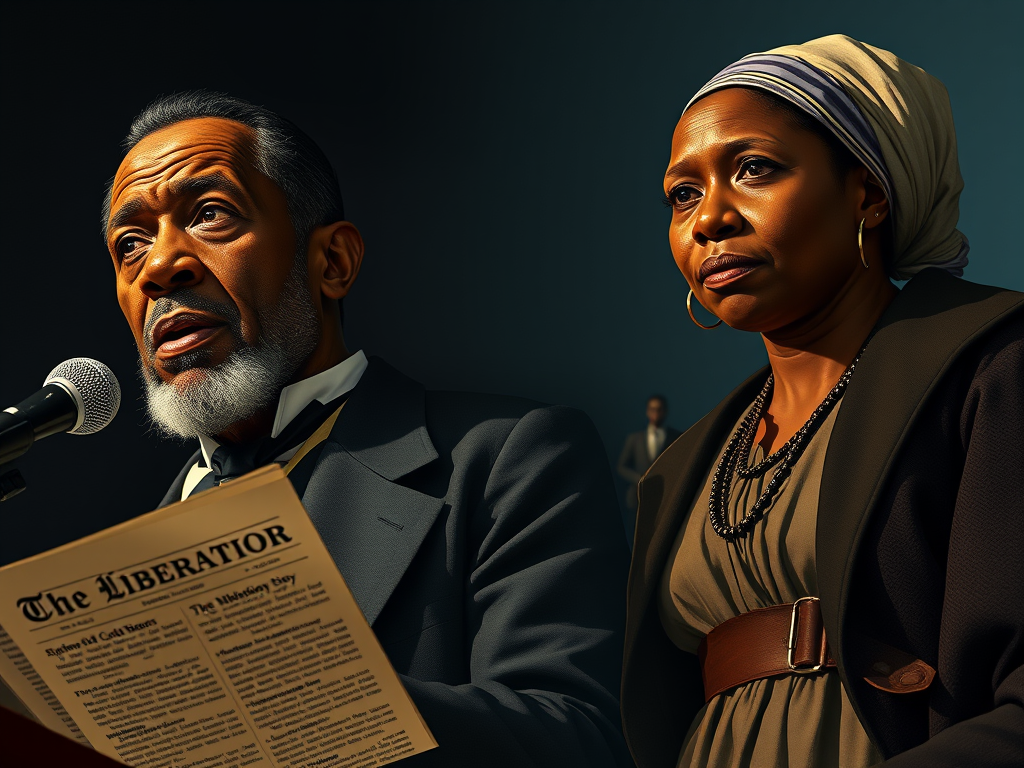
The fight to end the institution of slavery was a long, arduous, and often dangerous struggle waged by courageous individuals from all walks of life. This was not a monolithic group but a diverse coalition of activists, writers, orators, and organisers who, driven by moral conviction and a belief in human equality, dedicated their lives to the cause of freedom. These figures challenged the prevailing social, political, and economic structures of their time, using a variety of methods from fiery speeches and powerful writing to daring rescue missions. Their tireless efforts laid the groundwork for emancipation and forever changed the course of history.
Understanding the abolitionist movement requires looking at the remarkable people who were its heart and soul. Here are ten of the most influential figures who fought for freedom.
William Lloyd Garrison: The Uncompromising Voice of Abolition
In an era when many abolitionists favoured a gradual approach, William Lloyd Garrison was a radical and uncompromising voice demanding the immediate and unconditional emancipation of all enslaved people. His chosen weapon was the power of the press. In 1831, he founded the influential anti-slavery newspaper, The Liberator, which he published weekly for 35 years until the end of the Civil War. Garrison’s writing was fiery, passionate, and designed to shock the conscience of the nation.
He famously wrote in the first issue, “I am in earnest—I will not equivocate—I will not excuse—I will not retreat a single inch—AND I WILL BE HEARD.” He was a co-founder of the American Anti-Slavery Society in 1833, which grew to have more than 250,000 members. Garrison’s approach, known as “moral suasion,” aimed to convince people of the profound sin of slavery through powerful arguments and appeals to Christian morality. He was a controversial figure, even among fellow abolitionists, and his unyielding stance made him a target for pro-slavery mobs. Yet, his relentless agitation was crucial in shifting public opinion and ensuring that the moral question of slavery remained at the forefront of national debate.
Harriet Tubman: The “Moses” of Her People
Harriet Tubman was a figure of immense courage and determination, an escaped slave who risked her life time and again to guide others to freedom. After her own escape from a Maryland plantation in 1849, she became the most famous “conductor” on the Underground Railroad, a secret network of safe houses and routes for enslaved people. Over the course of a decade, she made approximately 13 perilous journeys back into the slave-holding South.
Tubman, often nicknamed “Moses,” is said to have never lost a “passenger,” guiding an estimated 70 people, including her own family, to freedom in the North and Canada. Her methods were strict and effective; she carried a pistol not only for protection but also to ensure that a frightened escapee would not turn back and compromise the mission. Her work did not stop there. During the Civil War, Tubman served the Union Army as a cook, a nurse, and, most notably, as an armed scout and spy. She became the first woman to lead an armed expedition in the war, the Combahee Ferry Raid, which liberated more than 700 enslaved people in South Carolina. Her life was a testament to extraordinary bravery and an unwavering commitment to liberty.
Frederick Douglass: The Orator Who Gave a Voice to the Enslaved
Frederick Douglass was one of the most powerful and influential figures of the 19th century. Having escaped slavery in 1838, he possessed a brilliant intellect and a captivating gift for oratory that made him a formidable force in the abolitionist movement. His speeches, delivered with eloquence and moral authority, provided a firsthand account of the brutality and dehumanisation of slavery, challenging the myths and justifications of slaveholders.
In 1845, he published his first autobiography, Narrative of the Life of Frederick Douglass, an American Slave, which became an instant bestseller and a foundational text of the abolitionist cause. The book was so articulate that many sceptics refused to believe it was written by a former slave, forcing Douglass to flee to the United Kingdom to avoid recapture. He later founded his own abolitionist newspaper, The North Star, and became a trusted advisor to President Abraham Lincoln during the Civil War, advocating tirelessly for the emancipation of enslaved people and the right of Black men to fight for the Union. Douglass’s life and work demonstrated the immense potential that slavery sought to crush and provided undeniable proof of the humanity and intellectual equality of African Americans.
Sojourner Truth: An Advocate for Abolition and Women’s Rights
Born into slavery in New York as Isabella Baumfree, Sojourner Truth became a powerful travelling preacher and advocate for both abolition and women’s rights. After escaping to freedom in 1826, she experienced a profound religious awakening and, in 1843, renamed herself Sojourner Truth, believing it was her divine mission to travel the country and speak the “truth” about the evils of slavery.
Standing at nearly six feet tall, her commanding presence and deep, resonant voice captivated audiences. Though illiterate, she was a gifted and compelling speaker who drew on her personal experiences to make her case. She is most famous for her impromptu speech at the 1851 Women’s Rights Convention in Akron, Ohio, which would later become known as “Ain’t I a Woman?” In it, she powerfully challenged the prevailing notions of female frailty by detailing her own immense strength and suffering as an enslaved woman, demanding equal rights for all women, Black and white. Sojourner Truth’s intersectional approach, linking the struggles for racial and gender equality, was ahead of its time and made her a unique and vital voice in the fight for justice.
Harriet Beecher Stowe: The Author Who Galvanized a Nation
Harriet Beecher Stowe, a writer from a prominent religious family, wielded a pen that proved to be one of the abolitionist movement’s most potent weapons. Her 1852 novel, Uncle Tom’s Cabin, was a phenomenal success, selling hundreds of thousands of copies in its first year and becoming the best-selling novel of the 19th century. The book’s emotional and vivid depiction of the suffering of enslaved characters, such as Uncle Tom and Eliza, had a profound impact on public opinion, particularly in the North.
For many readers, the novel personalised the abstract issue of slavery, exposing its brutal reality and moral bankruptcy in a way that political speeches and pamphlets had not. It effectively galvanised anti-slavery sentiment and was a significant factor in the growing sectional tensions that led to the Civil War. Upon meeting Stowe, President Abraham Lincoln is famously said to have remarked, “So you’re the little woman who wrote the book that started this great war.” While perhaps an overstatement, the comment highlights the immense cultural and political impact of her work in shaping the moral landscape of America.
John Brown: The Militant Abolitionist
While many abolitionists advocated for nonviolent “moral suasion,” John Brown was a fervent evangelist who believed that slavery was a sin so deeply entrenched that it could only be purged with blood. He was a radical activist who became convinced that the only way to end slavery was through violent insurrection. His name first came to national attention during the “Bleeding Kansas” conflicts of the 1850s, where he led anti-slavery forces in deadly clashes with pro-slavery settlers.
Brown’s actions culminated in his infamous raid on the federal armoury at Harpers Ferry, Virginia, in 1859. His plan was to seize the arsenal’s weapons and distribute them to enslaved people in the area, sparking a massive slave rebellion. The raid ultimately failed, and Brown was captured, tried for treason, and hanged. In the South, he was condemned as a dangerous terrorist. However, in the North, many abolitionists viewed him as a martyr who had sacrificed his life for the cause of freedom. His defiant and eloquent words before his execution inspired many and further polarized the nation, making him a prophetic and controversial figure in the march towards civil war.
The Grimké Sisters: Southern Belles Turned Abolitionist Firebrands
Sarah and Angelina Grimké were unlikely but powerful voices in the abolitionist movement. Born into a wealthy, slave-holding family in Charleston, South Carolina, they witnessed the horrors of the institution firsthand and developed a deep-seated moral opposition to it. Rejecting their privileged background, they moved north to Philadelphia, converted to Quakerism, and became outspoken activists.
The sisters were unique because they could speak and write about the evils of slavery from personal experience. Angelina’s 1836 pamphlet, An Appeal to the Christian Women of the South, urged southern women to use their moral influence to fight against slavery. They became prominent lecturers for the American Anti-Slavery Society, a shocking defiance of the era’s social norms that prohibited women from speaking publicly to mixed-gender audiences. The fierce criticism they received for their public role led them to become pioneers not only for abolition but also for women’s rights. They argued that the fight for the rights of enslaved people was intrinsically linked to the fight for the rights of women, making them crucial figures in the foundations of both movements.
Olaudah Equiano: The Enslaved Man Who Told His Story to the World
A key figure in the British abolitionist movement, Olaudah Equiano‘s life story was a powerful testament against the slave trade. Kidnapped from his home in West Africa as a child, he endured the horrors of the Middle Passage and was enslaved in the West Indies and the American colonies. Through a combination of intelligence and good fortune, he managed to earn enough money to purchase his own freedom in 1766.
Equiano settled in London and became an active abolitionist. In 1789, he published his autobiography, The Interesting Narrative of the Life of Olaudah Equiano, or Gustavus Vassa, the African. The book was a sensation. It provided a graphic, first-person account of the brutality of the slave trade and the experience of enslavement, making a powerful emotional and intellectual case for its abolition. The narrative was widely read and went through numerous editions, helping to sway public opinion in Great Britain. Equiano travelled extensively to promote his book and the abolitionist cause, becoming a prominent and respected voice that was instrumental in the passage of the British Slave Trade Act of 1807.
William Wilberforce: The Politician Who Ended an Empire’s Shame
William Wilberforce was a devout British politician who dedicated most of his parliamentary career to the abolition of the slave trade. After a profound religious conversion in the 1780s, he was persuaded by fellow abolitionists, including Thomas Clarkson, to become the leader of the abolitionist cause in the House of Commons. For nearly two decades, Wilberforce relentlessly introduced bills to end the slave trade, facing immense opposition from those who profited from the institution.
His campaign was a masterclass in political organisation and moral persuasion. Working alongside a dedicated committee, he helped gather evidence, publish pamphlets, organise petitions, and build a broad coalition of support. Wilberforce’s deep faith, powerful oratory, and unwavering persistence gradually wore down the opposition. His efforts culminated in the passage of the Slave Trade Act of 1807, which abolished the trafficking of enslaved Africans within the British Empire. Though he did not live to see the complete abolition of slavery itself, he continued to campaign for that cause until his death in 1833, just three days after learning that the bill for the abolition of slavery throughout the empire was assured of passing into law.
Lucretia Mott: The Quaker Minister and Tireless Agitator
A Quaker minister, activist, and social reformer, Lucretia Mott was a foundational figure in both the abolitionist and women’s rights movements. Her Quaker faith instilled in her a deep belief in the equality of all people, and she was an early and staunch opponent of slavery. Along with her husband, James Mott, she helped found the Pennsylvania Anti-Slavery Society.
Mott was a gifted speaker and a key organiser, known for her ability to eloquently argue the moral case against slavery. Her home was a stop on the Underground Railroad, and she actively boycotted products made with slave labour. Her experience within the abolitionist movement highlighted the secondary status of women. When she and other female delegates were denied seating at the World Anti-Slavery Convention in London in 1840 simply because of their gender, it was a pivotal moment. This exclusion solidified her belief that the fight for women’s rights was inseparable from the fight for racial justice. Eight years later, Mott, along with Elizabeth Cady Stanton, organised the seminal Seneca Falls Convention, the first women’s rights convention in the United States, launching the formal women’s suffrage movement.
Further Reading
For those interested in exploring the abolitionist movement and its remarkable figures in greater detail, these books provide excellent and accessible accounts:
- Narrative of the Life of Frederick Douglass, an American Slave by Frederick Douglass
- Harriet Tubman: The Road to Freedom by Catherine Clinton
- The Slave’s Cause: A History of Abolition by Manisha Sinha
- Bury the Chains: Prophets and Rebels in the Fight to Free an Empire’s Slaves by Adam Hochschild
- Uncle Tom’s Cabin by Harriet Beecher Stowe
Here at Zentara.blog, our mission is to take those tricky subjects and unlock them, making knowledge exciting and easy to grasp for everyone. But the adventure doesn’t stop on this page! We’re constantly exploring new frontiers and sharing discoveries across the digital universe. Want to dive deeper into more mind-bending Top 10s and keep expanding your world? Come join us on our other platforms – we’ve got unique experiences waiting for you on each one!
Get inspired by visual wonders and bite-sized facts: See the world through Zentara’s eyes on Pinterest!
Pin our fascinating facts and stunning visuals to your own boards. Explore Pins on Pinterest: https://uk.pinterest.com/zentarablog/
Discover quick insights and behind-the-scenes peeks: Hop over to Tumblr for snippets, quotes, and unique content you won’t find anywhere else. It’s a different flavour of discovery! Follow the Fun on Tumblr: https://www.tumblr.com/zentarablog/
Ready for deep dives you can listen to or watch? We’re bringing our accessible approach to video and potentially audio! Subscribe to our YouTube channel and tune into future projects that make learning pop! Subscribe on YouTube: https://www.youtube.com/@ZentaraUK
Seeking even more knowledge in one place? We’ve compiled some of our most popular topic deep dives into fantastic ebooks! Find them on Amazon and keep the learning journey going anytime, anywhere. Find Our Ebooks on Amazon: https://www.amazon.co.uk/s?k=Zentara+UK&ref=nb_sb_noss
Connect with us and fellow knowledge seekers: Join the conversation on BlueSky! We’re sharing updates, thoughts, and maybe even asking you what wonders we should explore next. Chat with Us on BlueSky: https://bsky.app/profile/zentarablog.bsky.social
Perfect for learning on the move! We post multiple 10-minute podcasts per day on Spotify. Pop on your headphones and fill your day with fascinating facts while you’re out and about! Listen on Spotify: https://open.spotify.com/show/3dmHbKeDufRx95xPYIqKhJFollow us on Instagram for bytesize knowledge! We post multiple posts per day on our official Instagram account. https://www.instagram.com/zentarablog/ Every click helps us keep bringing honest, accessible knowledge to everyone. Thanks for exploring with us today – see you out there in the world of discovery!




Leave a Reply