
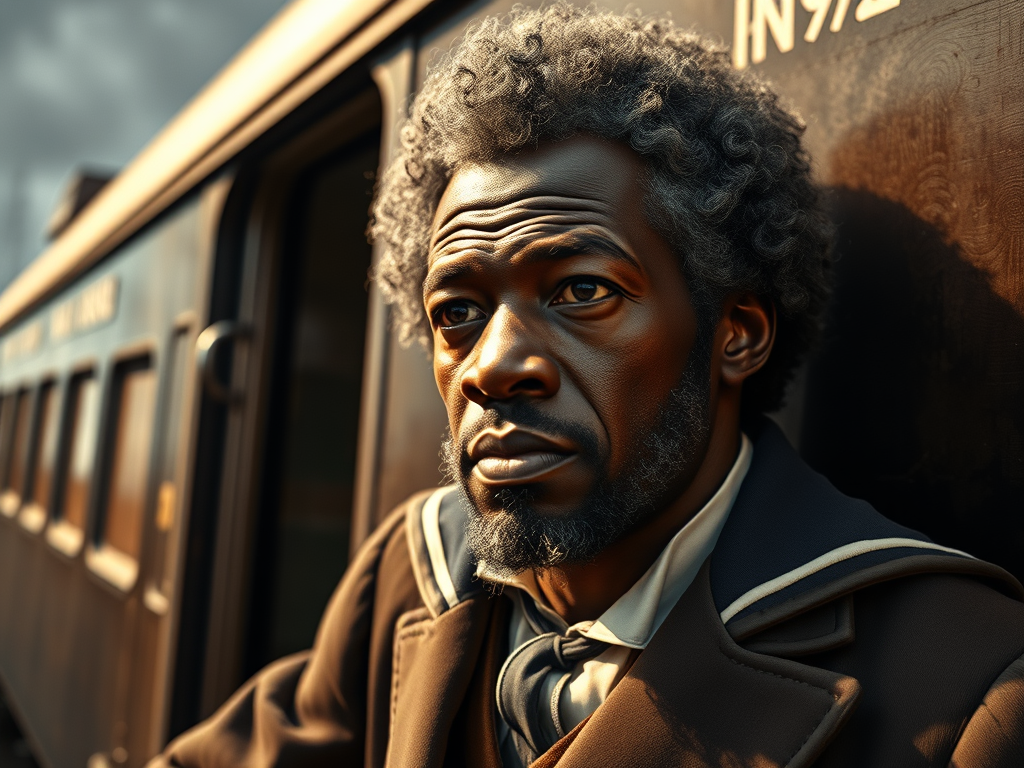
In the grand narrative of American history, few figures stand as tall or speak with as much moral clarity as Frederick Douglass. Born into the brutal reality of slavery, he seized his own freedom and rose to become one of the most powerful voices of the 19th century. As a formidable abolitionist, a masterful writer, and a spellbinding orator, Douglass dedicated his life to the cause of liberty and justice for all. His journey from chattel to statesman is a story of incredible courage, intellectual genius, and unwavering resolve. Douglass did more than just condemn slavery; he dissected its moral and philosophical underpinnings, challenging the conscience of a nation and shaping the course of its history. This article explores the ten pivotal aspects of his extraordinary life, from his daring escape and the publication of his groundbreaking autobiography to his influential role as a political advisor and his unyielding fight for equality. We will examine the power of his words, the bravery of his actions, and the enduring legacy of a man who, by sheer force of will, remade himself and, in doing so, helped to remake America.
1. The Audacity of Freedom: Douglass’s Daring Escape from Bondage
Frederick Douglass’s life as one of history’s great freedom fighters began with the ultimate act of self-liberation: his escape from slavery in 1838. This was no simple flight; it was a meticulously planned and incredibly risky endeavor that, had it failed, would have resulted in certain punishment, likely sale to the brutal cotton plantations of the Deep South, or even death. At the age of 20, disguised as a free Black sailor—a costume made possible by a sailor’s protection pass borrowed from a friend—Douglass boarded a train in Baltimore, his heart pounding with a mixture of terror and hope. He traveled by train, steamboat, and ferry, constantly under the threat of being discovered by slave catchers or suspicious officials who could demand to see his “free papers” at any moment.
This journey was not just a physical one; it was a profound act of rebellion against a system designed to strip him of his humanity. In slavery, he was considered property, a thing to be bought and sold. By escaping, he was asserting his own identity, his right to self-ownership, and his innate human dignity. The courage it took to undertake this perilous journey cannot be overstated. It was a defiant claim to the freedom that was his birthright, a foundational experience that would fuel his life’s work. His successful arrival in the free North was not the end of his struggle, but the beginning of his public fight. This personal triumph over the institution of slavery gave his later speeches and writings an unshakeable authenticity and moral authority. He didn’t just speak against slavery as a theoretical evil; he spoke as someone who had looked it in the eye and, through intellect and bravery, had conquered it.
2. The Power of the Pen: “Narrative of the Life of Frederick Douglass, an American Slave”
In 1845, just seven years after his escape, Frederick Douglass published his first autobiography, “Narrative of the Life of Frederick Douglass, an American Slave.” This slim volume was a literary bombshell. At a time when pro-slavery arguments often depicted enslaved people as content, subhuman, and incapable of intellectual thought, Douglass’s eloquent, incisive, and deeply personal account was a devastating rebuttal. The book was an immediate bestseller in both the United States and Europe, selling thousands of copies and making Douglass an international figure in the abolitionist movement.
The Narrative was revolutionary for several reasons. First, it was a firsthand account of the brutal realities of slavery, detailing the whippings, the separation of families, and the soul-crushing psychological torment inflicted upon the enslaved. Douglass named his former masters and the specific locations of his enslavement, a courageous act that put him in immense danger of being recaptured under the Fugitive Slave Act. Second, the sheer quality of the prose was a powerful argument in itself. The clarity, intelligence, and rhetorical power of his writing completely dismantled the racist myth that Black people were intellectually inferior. It proved that a mind and soul of the highest order had been trapped in bondage. The Narrative forced readers to confront the humanity of the enslaved and the utter moral depravity of the institution. It was more than a memoir; it was a political weapon, a work of art, and an irrefutable testament to the resilience of the human spirit.
3. “The North Star”: Douglass as an Independent Publisher and Editor
Driven by a desire to control his own message and provide a platform for Black voices, Frederick Douglass founded his own abolitionist newspaper, The North Star, in 1847. The name was deeply symbolic, referring to the star that escaping slaves followed on their journey to freedom. The paper’s motto, “Right is of no Sex—Truth is of no Color—God is the Father of us all, and we are all brethren,” proclaimed its radical and inclusive vision. By becoming a publisher and editor, Douglass took another crucial step in his evolution from a fugitive slave to a national leader. He was no longer just a speaker for white-led abolitionist societies; he was an independent force, shaping the discourse on his own terms.
Running a newspaper was a monumental challenge. Douglass faced financial hardship, logistical nightmares, and constant opposition from pro-slavery factions. Yet, he persevered, writing and editing fiery editorials that not only condemned slavery but also advocated for a wide range of social reforms, including women’s suffrage, temperance, and educational equality. The North Star (which later merged to become Frederick Douglass’ Paper) became one of the most influential Black-owned, anti-slavery publications of its time. It provided a vital space for Black writers to articulate their own arguments for liberation and equality. It also allowed Douglass to engage in intellectual debates with other abolitionists, refining his own political philosophy. His role as a newspaperman solidified his position as a leading thinker and strategist of the movement, demonstrating that the fight for freedom must be waged not only on the speaker’s platform but also on the printed page.
4. A Voice to Shake a Nation: Douglass’s Unrivaled Oratorical Skill
While his writing was powerful, it was perhaps on the public stage that Frederick Douglass had his most electrifying impact. Blessed with a commanding physical presence, a booming baritone voice, and a brilliant mind, he was widely regarded as one of the greatest orators of his era. In a time before electronic media, the spoken word was a primary vehicle for political change, and Douglass was its undisputed master. He delivered thousands of speeches across the United States and Great Britain, captivating audiences with his blend of logical argumentation, emotional appeal, and searing moral indictment.
His speeches were masterpieces of rhetoric. He could move his listeners from tears to righteous anger, often using his own life as a powerful illustration of slavery’s horrors. One of his most famous speeches, “What to the Slave Is the Fourth of July?”, delivered in 1852, is a prime example of his genius. In it, he skillfully exposed the hypocrisy of a nation that celebrated its independence while holding millions in bondage, calling the Fourth of July “a day that reveals to him, more than all other days in the year, the gross injustice and cruelty to which he is the constant victim.” His power as an orator came from his authenticity. He was not speaking about abstract principles; he was speaking about his own lived experience and the experience of millions of others. This allowed him to connect with his audience in a way that few could, forcing them to confront the chasm between their professed ideals and their nation’s reality.
5. A Radical Alliance: Douglass and the Women’s Suffrage Movement
Frederick Douglass’s fight for liberty was not confined to the abolition of slavery; he was also a passionate and lifelong advocate for women’s rights. He understood that the struggle for equality was interconnected and that the arguments used to deny rights to Black people were similar to those used to deny rights to women. His commitment to this cause was made clear at the very beginning of his public life. In 1848, he was the only African American and one of the few men to attend the Seneca Falls Convention, the first women’s rights convention in the United States.
At the convention, the most controversial proposal was the resolution demanding the right for women to vote. Many of the attendees, both men and women, feared it was too radical and would jeopardize the entire movement. It was Frederick Douglass who stood up and delivered an impassioned speech in favor of the resolution. He argued eloquently that he could not accept the right to vote as a Black man if women were denied that same right. His powerful intervention helped to sway the debate, and the resolution passed. This act cemented a lifelong alliance with leaders of the suffrage movement, such as Susan B. Anthony and Elizabeth Cady Stanton. Though their alliance would be strained by political disagreements after the Civil War, Douglass remained a steadfast supporter of women’s suffrage until his death, demonstrating a consistent and principled commitment to universal human rights.
6. From Agitator to Advisor: A Counsel to President Lincoln
The relationship between Frederick Douglass and President Abraham Lincoln is one of the most compelling dramas of the Civil War. Initially, Douglass was a fierce critic of Lincoln. He was impatient with the president’s cautious approach to slavery, pushing him to move more decisively towards emancipation and the enlistment of Black soldiers. Douglass used his newspaper and his speeches to pressure the administration, arguing that the war could not be won without striking at the heart of the Southern rebellion: the institution of slavery.
As the war progressed, however, Lincoln’s and Douglass’s positions began to align. Their relationship evolved from one of public criticism to one of mutual respect and direct consultation. Douglass met with Lincoln at the White House on several occasions, a remarkable event for a time when Black men were rarely, if ever, welcomed in the halls of power. In these meetings, Douglass urged the president to ensure equal pay and treatment for Black soldiers and to make emancipation the explicit goal of the war. Lincoln, in turn, came to value Douglass’s counsel, recognizing him as a key leader and representative of Black Americans. This relationship between the former slave and the sitting president was a powerful symbol of the nation’s unfolding transformation. It showed that Douglass had transcended the role of an outside agitator to become an influential political insider, using his voice to shape federal policy at the highest level.
7. “Men of Color, to Arms!”: Douglass’s Role in Recruiting Black Soldiers
When President Lincoln finally authorized the enlistment of African American men into the Union Army in 1863, Frederick Douglass threw his full support behind the effort. He saw this as a pivotal moment, an opportunity for Black men to not only contribute to the war effort but also to fight for their own freedom and citizenship. He became a prominent recruiter, traveling across the North and publishing stirring editorials with headlines like “Men of Color, To Arms!” He argued that by taking up arms, Black men could prove their patriotism, courage, and worthiness of full equality.
In his recruitment speeches, Douglass passionately declared, “Once let the black man get upon his person the brass letter, U.S., let him get an eagle on his button, and a musket on his shoulder and bullets in his pocket, there is no power on earth which can deny that he has earned the right to citizenship.” His two sons, Charles and Lewis, were among the first to enlist in the famed 54th Massachusetts Infantry, the first Black regiment raised in the North. Douglass’s recruitment efforts were instrumental in bringing thousands of Black soldiers into the Union Army. These soldiers went on to fight with immense bravery in crucial battles, and their service was a major factor in the Union’s ultimate victory. For Douglass, their military service was more than a strategic asset; it was a profound moral statement that forever changed the debate about race and citizenship in America.
8. The Post-War Fight: Championing the 13th, 14th, and 15th Amendments
The end of the Civil War did not mark the end of Frederick Douglass’s struggle. He understood that the battle for true freedom had just begun. During the turbulent era of Reconstruction, he dedicated himself to ensuring that the promises of emancipation were enshrined in the U.S. Constitution. He became a leading advocate for the passage of what are known as the Reconstruction Amendments. He championed the 13th Amendment, which formally abolished slavery throughout the nation. He then fought tirelessly for the 14th Amendment, which granted citizenship to all persons born or naturalized in the United States—including the formerly enslaved—and guaranteed all citizens “equal protection of the laws.”
Perhaps his most intense focus was on the 15th Amendment, which prohibited the denial of the right to vote based on “race, color, or previous condition of servitude.” Douglass saw the ballot as the essential tool of empowerment and self-protection. He crisscrossed the country, speaking and writing in support of these amendments, arguing that without them, the freedom won on the battlefield would be meaningless. He knew that true liberty required not just the absence of chains but the presence of political power and civil rights. His work during this period was crucial in shaping the legal foundation for the civil rights movement that would follow a century later, cementing his legacy as not just an abolitionist, but a nation-builder.
9. A Statesman and Diplomat: Douglass’s Later Government Service
In the later years of his life, Frederick Douglass’s long and arduous journey from the margins of society to the center of power was fully realized through his service in several high-ranking government positions. These appointments were deeply symbolic, representing a level of federal recognition for a Black man that was unprecedented at the time. He served as President of the Freedman’s Savings Bank, as U.S. Marshal for the District of Columbia, and as Recorder of Deeds for the District of Columbia. Each of these roles allowed him to work within the system he had once fought so hard from the outside.
His most prominent diplomatic role came in 1889 when he was appointed as the U.S. Minister and Consul General to Haiti. This was a particularly significant post, as Haiti was the world’s first independent Black republic, a nation born from a successful slave revolt. As the U.S. representative, Douglass navigated complex diplomatic and commercial issues with dignity and skill. Although his tenure was challenging, his appointment was a powerful statement to the world about America’s changing racial landscape. These government posts demonstrated the immense distance Douglass had traveled. The man who was once hunted as a fugitive was now an official representative of the United States government, a testament to his own extraordinary perseverance and the profound changes he had helped to bring about in the nation.
10. The Enduring Legacy: The “Conscience of the Nation”
Frederick Douglass passed away in 1895, but his influence continues to resonate powerfully today. His legacy is not simply that of a historical figure, but that of an enduring moral compass for the nation. He remains a symbol of the transformative power of education, the moral imperative of social justice, and the courage to speak truth to power. His life story serves as a powerful reminder that the fight for freedom and equality is a long and ongoing process. His writings, particularly his three autobiographies, are considered classics of American literature and are essential reading for understanding the history of race and slavery in the United States.
Douglass’s ideas about self-reliance, the importance of literacy, and the need for constant agitation against injustice have inspired generations of activists, leaders, and ordinary citizens. He taught us that true patriotism is not blind allegiance, but a willingness to criticize one’s country in order to make it better. He demonstrated that one person, armed with intellect, courage, and a powerful voice, can indeed change the world. More than a century after his death, Frederick Douglass remains the “Lion of Anacostia,” the “Sage of Cedar Hill”—a towering figure whose words continue to challenge us to live up to the highest ideals of liberty and justice for all. He is, and always will be, the conscience of the nation.
Further Reading
For those who wish to delve deeper into the monumental life and work of Frederick Douglass, these books provide essential insights:
- Narrative of the Life of Frederick Douglass, an American Slave by Frederick Douglass: His first and most famous autobiography. It is a foundational text of American literature and the abolitionist movement.
- Frederick Douglass: Prophet of Freedom by David W. Blight: This Pulitzer Prize-winning biography is a comprehensive and masterful account of Douglass’s life, thought, and impact on American history.
- My Bondage and My Freedom by Frederick Douglass: His second autobiography, which expands on his earlier narrative and offers deeper reflections on the psychological impact of slavery and his development as a thinker and leader.
- The Radical and the Republican: Frederick Douglass, Abraham Lincoln, and the Triumph of Antislavery Politics by James Oakes: An insightful examination of the complex and crucial relationship between two of the 19th century’s most important figures.
- Giants: The Parallel Lives of Frederick Douglass and Abraham Lincoln by John Stauffer: This book explores the fascinating similarities and differences in the lives and intellectual journeys of Douglass and Lincoln, showing how their paths converged to change the nation.
Here at Zentara.blog, our mission is to take those tricky subjects and unlock them, making knowledge exciting and easy to grasp for everyone. But the adventure doesn’t stop on this page! We’re constantly exploring new frontiers and sharing discoveries across the digital universe. Want to dive deeper into more mind-bending Top 10s and keep expanding your world? Come join us on our other platforms – we’ve got unique experiences waiting for you on each one!
Get inspired by visual wonders and bite-sized facts: See the world through Zentara’s eyes on Pinterest!
Pin our fascinating facts and stunning visuals to your own boards. Explore Pins on Pinterest: https://uk.pinterest.com/zentarablog/
Discover quick insights and behind-the-scenes peeks: Hop over to Tumblr for snippets, quotes, and unique content you won’t find anywhere else. It’s a different flavour of discovery! Follow the Fun on Tumblr: https://www.tumblr.com/zentarablog
Ready for deep dives you can listen to or watch? We’re bringing our accessible approach to video and potentially audio! Subscribe to our YouTube channel and tune into future projects that make learning pop! Subscribe on YouTube: https://www.youtube.com/@ZentaraUK
Seeking even more knowledge in one place? We’ve compiled some of our most popular topic deep dives into fantastic ebooks! Find them on Amazon and keep the learning journey going anytime, anywhere. Find Our Ebooks on Amazon: https://www.amazon.co.uk/s?k=Zentara+UK&ref=nb_sb_noss
Connect with us and fellow knowledge seekers: Join the conversation on BlueSky! We’re sharing updates, thoughts, and maybe even asking you what wonders we should explore next. Chat with Us on BlueSky: https://bsky.app/profile/zentarablog.bsky.social
Perfect for learning on the move! We post multiple 10-minute podcasts per day on Spotify. Pop on your headphones and fill your day with fascinating facts while you’re out and about! Listen on Spotify: https://open.spotify.com/show/3dmHbKeDufRx95xPYIqKhJFollow us on Instagram for bytesize knowledge! We post multiple posts per day on our official Instagram account. https://www.instagram.com/zentarablog/ Every click helps us keep bringing honest, accessible knowledge to everyone. Thanks for exploring with us today – see you out there in the world of discovery!




Leave a Reply