
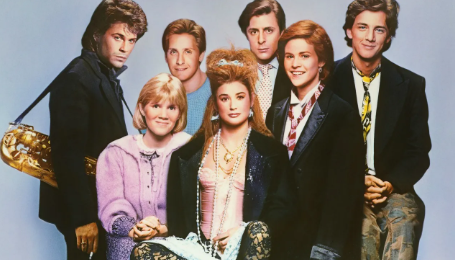
Pull up a chair at St. Elmo’s Bar, order a beer, and prepare for a blast of pure, unadulterated 1980s nostalgia. We’re talking about St. Elmo’s Fire, the film that took a group of the hottest young actors on the planet and perfectly captured the messy, confusing, and electrifying moment between college graduation and the stark reality of adult life. Released in 1985, this Joel Schumacher classic became a cultural touchstone, a cinematic yearbook for Generation X. It defined a specific kind of post-collegiate angst, filled with big hair, bigger shoulder pads, and even bigger emotions. The story of seven friends—Kirby, Kevin, Alec, Leslie, Jules, Wendy, and Billy—navigating love, careers, and betrayal in Georgetown became the definitive “Brat Pack” movie. It wasn’t just a film; it was a phenomenon, complete with an unforgettable, chart-topping theme song. You might think you know it all, from Alec’s political ambitions to Jules’ dramatic declarations, but there’s a whole world of secrets behind the camera. Get ready to discover 10 mind-blowing facts about St. Elmo’s Fire that will make you see this iconic film in a whole new light.
1. The Film That Officially Coined “The Brat Pack”
While the actors had appeared in other films together, most notably The Breakfast Club just a few months prior, it was St. Elmo’s Fire that truly solidified the “Brat Pack” label. The term was coined by writer David Blum in a cover story for New York magazine. Blum had been assigned to write a profile on Emilio Estevez but expanded it to include the whole group of young, successful actors who were frequently seen socializing together off-screen. The article, which portrayed them as a clique of privileged, party-loving young stars, was published just before the release of St. Elmo’s Fire. The timing was perfect. The film, which centered on a tight-knit group of friends, seemed to mirror their real-life personas in the public eye. The “Brat Pack” label stuck immediately, defining the careers of Estevez, Rob Lowe, Ally Sheedy, Judd Nelson, and Demi Moore for years to come. While some of the actors resented the term, feeling it trivialized their work, it undeniably cemented their status as the faces of 1980s youth cinema.
2. The Studio Wanted to Fire Director Joel Schumacher
Today, it’s hard to imagine St. Elmo’s Fire without the stylish, neon-lit, and emotionally charged direction of Joel Schumacher. However, the studio, Columbia Pictures, was initially very hesitant about him helming the project. Schumacher, who also co-wrote the script with Carl Kurlander, had a distinct and passionate vision for the film, but the studio executives were concerned about his relative inexperience as a director. They were particularly worried about his ability to handle such a large ensemble of rising stars. The pressure was so intense that the studio actually tried to fire him before filming began. It was only through the staunch support of producer Lauren Shuler Donner and the insistence of several of the cast members, who had been won over by Schumacher’s passion, that he was allowed to stay on. He would, of course, prove them all wrong, delivering a film that was not only a commercial success but also a defining cultural moment of the decade.
3. A Real-Life College Experience Inspired the Script
The story of seven friends grappling with post-grad life wasn’t just a Hollywood invention. The script, co-written by director Joel Schumacher and Carl Kurlander, was deeply personal for Kurlander. It was inspired by his own experiences and a specific unrequited love he had while attending the University of Pennsylvania. The character of Kirby Keger (Emilio Estevez), the law student hopelessly obsessed with a beautiful doctor named Dale Biberman, was based directly on Kurlander himself. He really did work at a local burger joint in Georgetown called “The Tombs” and became infatuated with a woman he met. This grounding in real emotion and experience is what gives the film its relatable, albeit melodramatic, heart. The feeling of being on the cusp of everything, with your friends as your only anchor, was a genuine reflection of what the writers themselves had felt, making the characters’ struggles resonate with a generation facing the same uncertain future.
4. The Iconic Theme Song Almost Didn’t Have Lyrics
John Parr’s “St. Elmo’s Fire (Man in Motion)” is one of the most iconic and recognizable movie themes of all time. It’s a powerhouse rock anthem that perfectly captures the film’s spirit of striving and ambition. But initially, the song’s legendary producer, David Foster, intended for it to be an instrumental piece. He had composed the powerful melody but wasn’t planning on adding any vocals. It was director Joel Schumacher who insisted that the theme needed lyrics to truly connect with the audience and encapsulate the film’s message. Foster was hesitant but eventually brought in English singer John Parr to help write the lyrics. The inspiration for the “Man in Motion” subtitle came from an unlikely source: Canadian athlete Rick Hansen, who was in the middle of a global wheelchair tour to raise awareness for spinal cord injuries. Foster was so moved by Hansen’s story that he and Parr incorporated the theme of perseverance and overcoming obstacles into the song, creating an anthem that was bigger than the film itself and became a number-one hit on the Billboard Hot 100.
5. Rob Lowe and Demi Moore Clashed On Set
The on-screen chemistry (or lack thereof) between the chaotic, hard-partying Billy Hicks (Rob Lowe) and the troubled, dramatic Jules Van Patten (Demi Moore) was palpable. As it turns out, some of that tension stemmed from their real-life working relationship. While the entire cast was famously close, reports from the set indicated that Lowe and Moore had moments of friction. Their approaches to acting were quite different, and both were strong-willed young stars at the height of their initial fame. Joel Schumacher later acknowledged that managing the different personalities and egos within his young ensemble was one of the biggest challenges of the shoot. This underlying tension, however, may have actually benefited their performances, adding an extra layer of believable conflict and volatility to their characters’ tumultuous, on-again, off-again relationship.
6. Many A-List Actresses Turned Down the Female Roles
While the final cast feels like a perfect alignment of 80s stars, securing the leading ladies was a significant challenge. Many of the era’s top young actresses, including Jodie Foster, Laura Dern, and Meg Ryan, were offered roles but turned them down. Some were reportedly put off by the script’s focus on the male characters, feeling the female roles were less developed. Others were simply unavailable due to scheduling conflicts. This casting struggle meant that Joel Schumacher had to look for rising stars who were hungry for a breakout role. He saw something special in Ally Sheedy, Demi Moore, and Mare Winningham, believing they had the talent and raw emotion to bring Leslie, Jules, and Wendy to life. His instincts paid off, as the film launched all three actresses into a new level of stardom and created one of the most memorable female friendship groups in 80s cinema.
7. The Studio Demanded a “Happier” Ending
The original ending that Joel Schumacher and Carl Kurlander wrote was much more melancholic and ambiguous. It reflected the uncertainty of life, with the friends’ futures left largely unresolved. However, after test screenings, the studio executives grew nervous. They felt that audiences wanted a more upbeat and satisfying conclusion, especially after investing two hours in these characters’ lives. They strongly pushed Schumacher to reshoot the ending to provide more closure. The final scene, where the gang says goodbye to Leslie and Alec as they move on, and then walks off together down the street, was a direct result of this studio pressure. While Schumacher was initially resistant, the more optimistic ending likely contributed to the film’s commercial appeal, leaving audiences with a feeling of hope and the enduring power of friendship, even if it strayed from the writers’ more realistic original vision.
8. The Real St. Elmo’s Bar
Fans of the film often flock to Georgetown in Washington, D.C., hoping to grab a drink at the iconic St. Elmo’s Bar, the central hub where the friends meet to drink, celebrate, and console each other. The disappointing truth, however, is that St. Elmo’s Bar never actually existed. It was a meticulously designed set built entirely on a Hollywood soundstage. The exterior shots of the bar were filmed in front of a building in Georgetown, but the cozy, pub-like interior was pure movie magic. The production designers did such a convincing job of creating a realistic and inviting space that it has become a legendary fictional location, a symbol of camaraderie and a safe haven from the pressures of the adult world for an entire generation of moviegoers.
9. Judd Nelson’s Character Was Based on a Future Politician
The character of Alec Newbary, the ambitious yuppie desperate to trade his Democratic ideals for a more lucrative Republican career to please his girlfriend Leslie, was a perfect symbol of 1980s ambition. The inspiration for this character came from a real person: none other than a young George Stephanopoulos. Co-writer Carl Kurlander and Stephanopoulos were friends at Georgetown University. Kurlander observed his friend’s intense political drive and ambition, which became the blueprint for Alec’s character arc. At the time, Stephanopoulos was just a politically-minded student, years away from becoming a household name as the White House Communications Director for President Bill Clinton and a famous news anchor. It’s a fascinating and unexpected connection, linking this classic 80s film directly to the future of American politics.
10. A Lasting, If Complicated, Legacy
Upon its release, St. Elmo’s Fire was largely savaged by critics. Many found the characters to be self-absorbed, whiny, and unlikeable. The film was criticized for its melodrama and its glamorization of yuppie culture. Famed critic Roger Ebert famously wrote, “The only thing that makes the characters interesting is that they are played by such interesting young actors.” However, audiences disagreed completely. The film was a box office smash, connecting deeply with young people who saw their own anxieties and aspirations reflected on screen. Over the decades, its legacy has become solidified. While still viewed as a time capsule of 80s excess, it’s now beloved for that very reason. It’s a film that perfectly captures a specific cultural moment, and the raw, emotional performances from its legendary “Brat Pack” cast continue to resonate, making St. Elmo’s Fire a complicated but undeniably enduring classic.
Conclusion
St. Elmo’s Fire is more than just a movie; it’s a feeling. It’s the anxiety of your first real job, the sting of a broken heart, and the comforting knowledge that you have a group of friends who will meet you at your favorite bar, no questions asked. It captured the lightning in a bottle that was the “Brat Pack” and gave a voice to a generation standing on the terrifying cliff edge of adulthood. The drama behind the scenes—the fights, the casting struggles, the last-minute changes—only adds to the film’s mythic status. It was a messy, emotional, and sometimes chaotic journey, both on-screen and off, but it resulted in a film that has warmed the hearts of viewers for decades. It reminds us that even when the fire dims and life pulls us in different directions, the bonds we forge in those formative years can last forever. What advice would you give to the characters of St. Elmo’s Fire today?
Dive Deeper
For those who want to relive the 80s and learn more about the era of the Brat Pack, here are a few essential reads:
- You Couldn’t Ignore Me If You Tried: The Brat Pack, John Hughes, and Their Impact on a Generation by Susannah Gora: This is the definitive guide to the Brat Pack phenomenon. Gora provides an incredibly detailed oral history, with interviews from all the key players, about the making of St. Elmo’s Fire, The Breakfast Club, and other era-defining films.
- Brat Pack America: A Love Letter to 80s Movies by Kevin Smokler: Take a journey through the iconic filming locations and cultural impact of your favorite 80s movies. This book celebrates the nostalgia and enduring appeal of films like St. Elmo’s Fire.
Stories I Only Tell My Friends: An Autobiographyby Rob Lowe: Get a firsthand account from one of the central members of the Brat Pack. Lowe shares candid and entertaining stories about his rise to fame and the making of his most famous films, including fascinating anecdotes from the set of St. Elmo’s Fire.



Leave a Reply