
“If you’re gonna fight, fight with your fists. Don’t use your rockets.” Welcome, patriots and fans of pure, uncut 80s action! Today, we’re locking and loading for a deep dive into one of the most explosive, jingoistic, and gloriously over-the-top films of the entire decade: 1985’s Invasion U.S.A.. In the heart of the Cold War, at the peak of their B-movie power, Cannon Films and their biggest star, the legendary Chuck Norris, unleashed this ultimate paranoid fantasy upon the world. The premise was as subtle as a rocket launcher to the face: a ruthless Soviet terrorist named Rostov leads a massive army of guerrilla mercenaries on a full-scale invasion of the American homeland, and only one man, retired CIA agent Matt Hunter, can stop them. What followed was a maelstrom of explosions, suburban warfare, and enough automatic weapon fire to make a small country nervous. It was the quintessential Chuck Norris vehicle, a film that transformed him from a martial arts star into a one-man army and an icon of American might. But the story behind the pyrotechnics is a fascinating tale of savvy marketing, real-life tragedy, and a production that literally blew up parts of two major American cities. So, grab your double Uzis, put on your best denim, and join us as we uncover 10 surprising, little-known facts about the making of Invasion U.S.A..
1. The Film’s Premise Came Directly From Chuck Norris
The terrifying concept of a guerrilla invasion of America wasn’t just a wild idea from a Hollywood screenwriter; it came from the mind of Chuck Norris himself. Deeply concerned about the real-world threat of terrorism, Norris had read an article in Reader’s Digest that discussed the potential vulnerability of the United States to infiltration by small, decentralized terror cells. The article detailed how easily saboteurs could cross the borders and wreak havoc by disrupting infrastructure and creating widespread panic. Taking this idea to heart, Norris co-developed the story with his brother, Aaron Norris, and pitched it to Cannon Films. He wanted to make a film that would serve as a wake-up call, a piece of entertainment that highlighted what he saw as a genuine threat to national security. This personal conviction is what gives the film its strangely earnest and intense tone; it wasn’t just an action movie for Norris, it was a cinematic warning.
2. The Villain Rostov Was Played by a Real-Life Pacifist
The film’s chillingly effective villain, the merciless Soviet agent Mikhail Rostov, was brought to life by the brilliant character actor Richard Lynch. With his scarred face and intense gaze, Lynch was one of Hollywood’s most memorable bad guys. However, the man behind the villain was the complete opposite of the characters he played. In real life, Richard Lynch was a dedicated pacifist and a follower of the teachings of Mahatma Gandhi. His distinctive facial scars were not makeup; they were the result of a tragic accident in 1967 where he set himself on fire in a drug-induced haze in New York’s Central Park. After his recovery, he turned his life around, embraced non-violence, and used his unique appearance to build a successful acting career. The irony of a man who believed so deeply in peace being so adept at playing psychotic, violent villains was not lost on those who knew him.
3. The Film Was a Quintessential Cannon Films Production
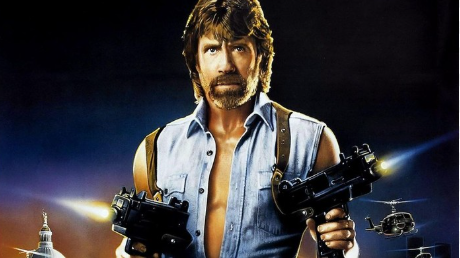
Invasion U.S.A. is perhaps the most perfect embodiment of the filmmaking philosophy of its legendary production company, The Cannon Group, Inc. Run by Israeli cousins Menahem Golan and Yoram Globus, Cannon Films dominated the 80s action market with a simple but effective formula: make explosive, high-concept, low-budget films that could be sold to international markets based on a striking poster and a killer title. Invasion U.S.A. was the crown jewel of their 1985 slate. The iconic poster, featuring Chuck Norris standing defiantly with two Uzis crossed over his chest, was created long before the film was even shot. Golan and Globus sold the film worldwide on the power of that image alone. They famously gave their directors immense creative freedom, as long as they delivered the requisite amount of action and explosions and stayed on budget. This B-movie-on-a-blockbuster-scale approach is what gave Cannon films their unique and beloved charm.
4. Real Suburban Homes and Malls Were Blown Up
The film is famous for its shocking scenes of violence erupting in mundane, everyday locations. The most memorable of these is the suburban Christmas scene where Rostov fires a rocket launcher into a family home. To achieve this shocking level of realism, the production didn’t use miniatures or studio sets. They located an actual residential neighbourhood in the suburbs of Atlanta, Georgia, that was slated for demolition to make way for an airport expansion. The production company bought several of the condemned houses for a low price, allowing them to stage and film real, large-scale explosions in a genuine suburban environment. Similarly, the chaotic shootout in the shopping mall was filmed at the abandoned Avondale Mall in Georgia. The filmmakers were given free rein to stage massive gunfights, crash cars through the entrance, and cause immense cosmetic damage, creating a level of visceral reality that would be impossible to achieve today without CGI.
5. Chuck Norris Co-Wrote the Screenplay
Not content to just star in the film, Chuck Norris took an active role in shaping its narrative and themes. He received a “Screenplay by” credit, having worked on the script alongside his brother, Aaron Norris. This was a common practice for Norris on his Cannon films, as he wanted to ensure the final product reflected his personal values of patriotism, strength, and justice. His involvement is what gives Matt Hunter his stoic, almost mythical quality. The dialogue is sparse and direct, focusing more on action than words. This “less is more” approach to character development became a Norris trademark, creating the template for the invincible, All-American hero that would define his career and eventually inspire the “Chuck Norris Facts” internet phenomenon.
6. The Director Was Hired Because of a Friday the 13th Film
The man chosen to orchestrate all of the on-screen chaos was director Joseph Zito. Zito was not known for large-scale action films at the time. His biggest success was a horror movie: 1984’s Friday the 13th: The Final Chapter. The producers at Cannon were impressed with Zito’s ability to deliver visceral thrills and suspense on a tight budget and schedule. They felt that the skills required to make a successful slasher film—pacing, practical effects, and creating a sense of dread—would translate well to their action-packed invasion story. Zito had also previously directed the excellent slasher The Prowler, which starred Richard Lynch, so he already had a working relationship with the man who would play his villain. Zito’s hiring was a shrewd move, and he brought a gritty, suspenseful edge to the action that set it apart from other films in the genre.
7. Real Military Personnel Were Used as Extras
To add a layer of authenticity to the large-scale battle sequences, particularly the climactic fight at the impromptu military command center, the production enlisted the help of the Georgia National Guard. Many of the soldiers seen fighting alongside Matt Hunter and the other characters were not paid extras; they were real, off-duty members of the National Guard who volunteered to be in the film. Their presence lent a sense of realism to the military procedures and combat scenes. Using actual military personnel was also a cost-effective measure for the famously frugal Cannon Films, saving them the expense of hiring and training dozens of actors to portray soldiers convincingly.
8. It Was a Massive Box Office Success
Despite being savaged by critics who lambasted its jingoistic politics and over-the-top violence, Invasion U.S.A. was a huge commercial success. The film opened at number one at the U.S. box office, knocking Commando out of the top spot and earning more in its opening weekend than its entire production budget of approximately $12 million. It went on to become one of Cannon Films’ highest-grossing movies and solidified Chuck Norris’s status as a bankable action star, second only to Sylvester Stallone and Arnold Schwarzenegger in terms of 80s action hero popularity. The film’s success proved that audiences were hungry for the kind of straightforward, patriotic, good-versus-evil action that Cannon and Norris were experts at delivering.
9. The Film Tapped into Real Cold War Anxieties
Invasion U.S.A. is a perfect time capsule of the era in which it was made. Released during a particularly tense period of the Cold War, the film directly tapped into the widespread public anxiety about a potential conflict with the Soviet Union. Along with other films from the same period like Red Dawn and Rocky IV, it reflected a national mood of patriotic fervor and anti-communist sentiment. The film’s depiction of foreign invaders disguised as ordinary citizens, striking at the heart of American life—in schools, churches, and shopping malls—was a powerful and resonant fear for many people at the time. While it may seem outlandish and cartoonish today, in 1985, the film’s premise felt frighteningly plausible to a segment of the audience.
10. The Iconic Truck Was a Character in Itself
Matt Hunter’s weapon of choice, besides his Uzis, was his heavily modified Dodge Ram pickup truck. The black, four-wheel-drive truck, often seen tearing through swamps or crashing through buildings, became almost as iconic as the hero himself. The production used multiple identical trucks to perform the various stunts required in the film. The trucks were customized for the different action sequences, with some reinforced for jumps and crashes, and others rigged with concealed (non-functional) weapons. The truck became an extension of Hunter’s character: tough, reliable, and capable of inflicting serious damage. It was the perfect vehicle for the ultimate 80s action hero, a symbol of rugged American individualism ready to take on any threat.
Conclusion
In the annals of 80s action cinema, Invasion U.S.A. stands as a loud, proud, and explosive monument to its time. It’s a film powered by the singular vision of its star, the B-movie brilliance of its producers, and a whole lot of pyrotechnics. It’s a cinematic gut-punch, a jingoistic fever dream that perfectly captured the political anxieties of its era and transformed Chuck Norris into a living embodiment of American justice. While it may lack nuance, it more than makes up for it with sheer, unadulterated spectacle and a sincere belief in its own explosive worldview. It’s a film that reminds us that when terrorists invade your local mall, there’s only one man to call. It’s not just an action movie; it’s a Chuck Norris movie, and that says it all. What is your favourite explosive moment from Invasion U.S.A.? Let us know in the comments below!
Dive Deeper
- Electric Boogaloo: The Wild, Untold Story of Cannon Films (2014 documentary film): This hilarious and essential documentary is the definitive story of producers Menahem Golan and Yoram Globus. It provides the perfect context for understanding how and why a gloriously over-the-top film like Invasion U.S.A. got made.
- Red Dawn (1984 film): To fully appreciate the Cold War “invasion” genre, you must watch the film that started it all. Released a year before Invasion U.S.A., this film tells the story of a group of high school students who form a guerrilla resistance when the Soviet Union invades their small Colorado town.
The Official Chuck Norris Fact Book: 101 of Chuck’s Favorite Facts and Storiesby Chuck Norris: Get the story from the man himself. In this book, Norris shares some of his favorite “Chuck Norris Facts” and tells the real-life stories and personal philosophies behind them, offering a glimpse into the mindset that created characters like Matt Hunter.




Leave a Reply