
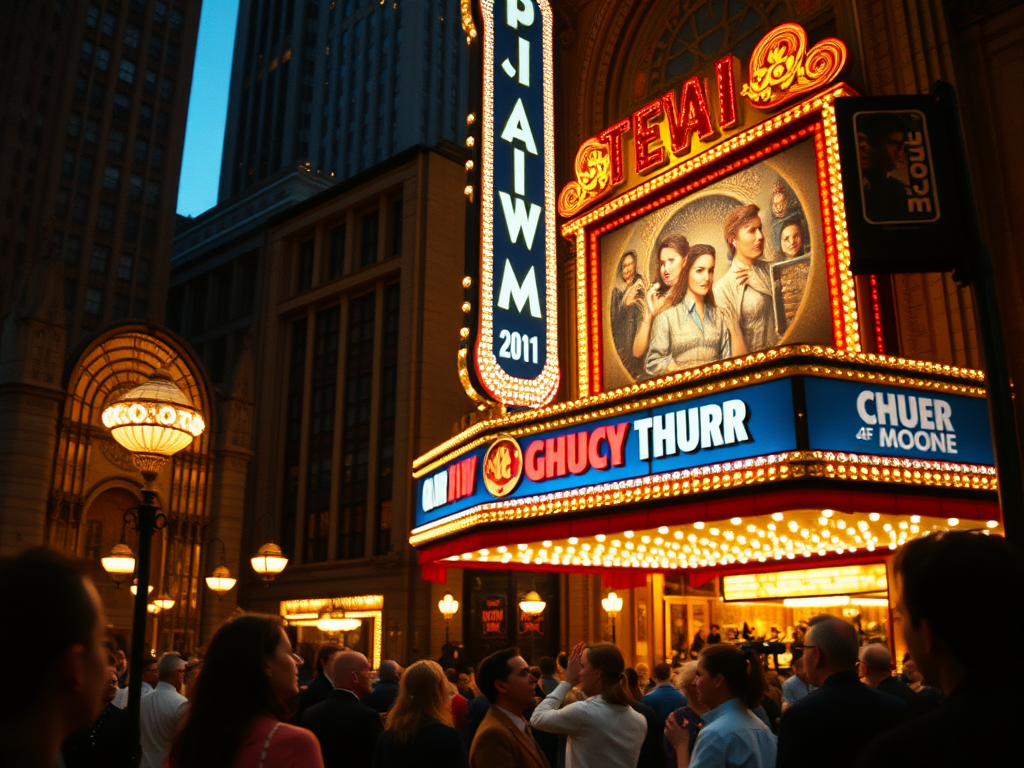
The moment the house lights dim, a hush falls over the audience, and the first notes from the orchestra pit swell through the air. For millions of people every year, the experience of a Broadway show is pure magic—a transportive journey into a world of story, song, and spectacle. But behind the velvet curtain and the dazzling stage lights lies a high-stakes, multi-billion-dollar industry built on a unique and complex business model. Broadway is as much about real estate and union negotiations as it is about choreography and standing ovations.
This legendary theatrical world is a place of dizzying financial risks and staggering potential rewards, where 80% of productions fail, but a single hit can become a global phenomenon that runs for decades. It’s a delicate ecosystem of producers, investors, theatre owners, and powerful unions, all working together in a system honed over a century of triumphs and failures. To truly appreciate the magic on stage, it helps to understand the intricate and fascinating machinery that makes it all possible. From the surprising power of real estate to the contractual clause that can shutter a show overnight, here are 10 facts that reveal how the business of Broadway really works.
## 1. “Broadway” Is a Tiny Geographic Area with Specific Rules
The word “Broadway” conjures images of the entire street in New York City, but in the world of theatre, it has a very specific and technical meaning. A “Broadway” theatre is not just any venue on Broadway; it is a professional theatre located within a designated “Theater District” in Midtown Manhattan (roughly from 41st to 54th Street between Sixth and Eighth Avenues) that also contains 500 or more seats. This official designation is determined by The Broadway League, the national trade association for the Broadway industry. There are currently only 41 of these official Broadway theatres.
This definition is crucial because it separates Broadway from its smaller, often more experimental, counterparts. Off-Broadway theatres are also located in Manhattan but have a seating capacity of 100 to 499. This smaller scale allows for more artistic risks and lower production costs. Taking it a step further, Off-Off-Broadway venues have fewer than 100 seats and are the home of avant-garde and emerging works. This tiered system creates a theatrical ecosystem where new plays and musicals can be developed and tested in smaller venues before making the high-risk, high-reward leap to an official Broadway house.
## 2. Three Companies Own Most of the Theatres
While dozens of shows may be running on Broadway at any given time, the physical real estate is overwhelmingly controlled by just three powerful entities. These are not production companies that create the shows, but landlords who own the buildings. The “big three” are The Shubert Organization (which owns 17 theatres), the Nederlander Organization (owning 9), and Jujamcyn Theaters (owning 5). This means that these three companies control 31 of the 41 Broadway houses, giving them immense power and influence over the entire industry.
This concentration of ownership makes securing a theatre one of the most challenging hurdles for any new production. Producers must pitch their show to these landlords, who decide which productions get a coveted spot. The theatre owners don’t just collect rent; they are active partners in the show’s financial life, typically taking a percentage of the box office gross in addition to a guaranteed weekly fee. This makes them gatekeepers who can make or break a show before it even begins rehearsals. Their decision to grant a theatre is a major vote of confidence that can help producers attract investors and signal to the industry that a show is a serious contender.
## 3. Producers Are the CEOs Who Raise Millions for a Single Show
In the world of theatre, the producer is the ultimate entrepreneur. While the director and creative team shape the show’s artistic vision, the producer is the CEO responsible for making it a reality. Their most critical job is raising the money. Mounting a new Broadway production is an incredibly expensive venture. A play might cost anywhere from $3 to $6 million to get to opening night, while a large-scale musical can easily cost between $15 and $25 million, or even more. This initial investment, known as the “capitalisation,” covers everything from building the sets and creating costumes to marketing and paying the cast and crew during rehearsals.
To raise this capital, producers must assemble a team of investors, often a mix of wealthy individuals, investment groups, and other entertainment companies, who are willing to take a huge financial risk. The producer’s job involves optioning the rights to a script, hiring the entire creative team (director, writer, composer), negotiating with unions, and developing the marketing strategy. They are the driving force from the initial idea to opening night and beyond, making the high-stakes decisions that will determine whether a show becomes a smash hit or a costly flop.
## 4. Most Broadway Shows Actually Lose All Their Money
Despite the glamour and the stories of blockbuster hits, the financial reality of Broadway is brutal. The vast majority of shows—an estimated 75% to 80%—fail to recoup their initial investment. Broadway is a high-risk, high-reward business, much like venture capital. For every long-running, mega-profitable hit like Hamilton, Wicked, or The Lion King, there are dozens of other shows that open to hopeful reviews and then quietly close a few months later at a significant financial loss for their investors.
A show’s success is measured by whether it “recoups.” This means the production has earned back its entire initial capitalisation. Only after a show has recouped can it begin to distribute profits to its investors. Many shows can run for a year or more and still close without ever turning a profit because their weekly running costs are so high. This financial uncertainty is why the industry relies on a small number of long-running, reliable hits and tourist favourites to keep the ecosystem afloat, providing a steady income stream for the theatre owners and the industry as a whole while new, riskier shows test their luck.
## 5. The “Stop Clause” Can Evict a Show at Any Time
Even if a show is selling a decent number of tickets and making a small weekly profit for its investors, it can still be forced to close. This is because of a crucial and often unforgiving part of the contract between a production and a theatre owner known as the “stop clause.” This clause specifies a minimum weekly box office gross that the show must achieve. If the show’s ticket sales fall below this pre-determined figure for two consecutive weeks, the theatre owner has the contractual right to evict the production, often with just a few weeks’ notice.
This gives the theatre owner immense power. Their primary goal is to have a hit show that sells out every night, maximising their percentage of the box office receipts. A show that is only limping along, even if it’s not losing money for its own producers, is occupying valuable real estate that could potentially house the next blockbuster. The stop clause ensures that theatre owners can cut their losses on an underperforming show and free up the venue for a more promising production. It’s a constant, looming threat for any show that isn’t a certified smash hit, adding another layer of pressure to the already high-stakes business.
## 6. Powerful Unions Govern Nearly Every Job Onstage and Backstage
Broadway is a union town, and nearly every person who works on a show, from the biggest star to the person who sweeps the stage, is a member of a professional union. These organisations are the backbone of the industry, and they play a powerful role in shaping its business practices. The most well-known is Actors’ Equity Association, which represents actors and stage managers, setting minimum salaries, dictating work hours, and ensuring safe working conditions. But they are just one piece of the puzzle.
The International Alliance of Theatrical Stage Employees (IATSE) represents the vast army of backstage professionals—stagehands, electricians, sound engineers, wardrobe staff, and ushers. The Stage Directors and Choreographers Society (SDCS) represents the creative leads, and the American Federation of Musicians (AFM) represents the orchestra members. These unions negotiate complex contracts that dictate minimum crew sizes for each theatre, overtime rules, and health and pension benefits. While these agreements provide crucial protections and fair wages for theatre professionals, they are also a major factor in the high running costs of a Broadway show.
## 7. The Tony Awards Can Mean Life or Death for a Show
The Antoinette Perry “Tony” Awards are Broadway’s equivalent of the Oscars, celebrating the highest artistic achievements of the season. But they are far more than just an awards ceremony; they are a powerful marketing engine with a direct and immediate impact on a show’s financial health. A nomination, and especially a win, in a major category can be the difference between closing in a month and running for years. The most coveted prize, Best Musical, almost always guarantees that the winning show will recoup its investment and become a long-running hit.
The magic of the Tonys comes from the national television exposure. The broadcast provides millions of dollars in free advertising, showcasing performance numbers from the nominated shows to a huge audience of potential ticket-buyers across the country. A spectacular performance on the Tony broadcast can cause a show’s ticket sales to skyrocket overnight, reviving a struggling production. For many plays and smaller musicals, this exposure is their only chance to reach a mass audience and build the momentum needed to survive in the fiercely competitive Broadway landscape.
## 8. National Tours Are Often the Real Money-Makers
For a Broadway blockbuster, the New York City run is often just the beginning of its financial life. The real, long-term profits are frequently generated by the national and international touring productions. Once a show has proven itself to be a hit on Broadway, producers can license the rights to create replica productions that travel to cities across North America and around the world. These tours bring the magic of Broadway to a much wider audience who may never have the chance to visit New York.
From a business perspective, touring productions are often more profitable than the original. While they are still expensive to mount, the weekly running costs can be lower than in New York, and they play in large venues for shorter, guaranteed runs, often with pre-negotiated financial terms with the local theatres. A successful show like The Phantom of the Opera or Wicked can have multiple tours running simultaneously for decades, generating a steady stream of revenue for the original producers and investors long after the initial Broadway buzz has faded. It’s the touring circuit that transforms a Broadway hit into a global entertainment brand.
## 9. Ticket Prices Are Dynamic and Constantly Changing
The price you see for a Broadway ticket is not a fixed number. The industry operates on a dynamic pricing model, very similar to how airlines and hotels sell their inventory. The price of a specific seat for a specific performance can change daily, or even hourly, based on demand. For a struggling show, producers might lower prices or offer discounts through services like TKTS to fill empty seats. For a smash hit, however, prices can soar far above the “face value” printed on the ticket.
This is where premium seating comes in. Producers identify the best seats in the house and price them at a much higher, market-driven rate to capitalize on high demand. Furthermore, the rise of official secondary markets, like Telecharge’s “Broadway Official Resale,” allows ticket holders to resell their tickets at a market price, similar to StubHub. This entire system is designed to maximize revenue for every single performance. It means that the cost of seeing a show is a direct reflection of how many other people want to see it at that exact moment.
## 10. The Phantom of the Opera Ran for 35 Years
To understand what a true Broadway phenomenon looks like, one needs to look no further than Andrew Lloyd Webber’s The Phantom of the Opera. The musical opened at the Majestic Theatre on January 26, 1988. It went on to become the longest-running show in Broadway history, playing for an astonishing 35 years before finally closing in April 2023. Over its historic run, it played 13,981 performances to nearly 20 million people and grossed over $1.3 billion on Broadway alone.
Phantom exemplifies the concept of a long-running “anchor” show. These are productions that become synonymous with the Broadway brand itself—they are reliable, must-see tourist destinations that provide incredible stability for their theatre owners and the industry at large. Their consistent success helps to subsidise the risk of bringing new, unproven shows to the stage. While its record-breaking run is an extreme outlier, it serves as the ultimate symbol of the Broadway dream: to create a piece of theatre so magical and universally appealing that it defies the odds and becomes a permanent part of the cultural landscape for generations.
Further Reading
For those who want to take a deeper dive into the fascinating world of Broadway’s business and history, these books are excellent starting points:
- Razzle Dazzle: The Battle for Broadway by Michael Riedel
- The Secret Life of the American Musical: How Broadway Shows Are Built by Jack Viertel
- Act One: An Autobiography by Moss Hart
- The Fabulous Invalid: The True Story of the Broadway Theatre by Ken Bloom
Here at Zentara.blog, our mission is to take those tricky subjects and unlock them, making knowledge exciting and easy to grasp for everyone. But the adventure doesn’t stop on this page! We’re constantly exploring new frontiers and sharing discoveries across the digital universe. Want to dive deeper into more mind-bending Top 10s and keep expanding your world? Come join us on our other platforms – we’ve got unique experiences waiting for you on each one!
Get inspired by visual wonders and bite-sized facts: See the world through Zentara’s eyes on Pinterest!
Pin our fascinating facts and stunning visuals to your own boards. Explore Pins on Pinterest: https://uk.pinterest.com/zentarablog/
Discover quick insights and behind-the-scenes peeks: Hop over to Tumblr for snippets, quotes, and unique content you won’t find anywhere else. It’s a different flavour of discovery! Follow the Fun on Tumblr: https://www.tumblr.com/zentarablog
Ready for deep dives you can listen to or watch? We’re bringing our accessible approach to video and potentially audio! Subscribe to our YouTube channel and tune into future projects that make learning pop! Subscribe on YouTube: https://www.youtube.com/@ZentaraUK
Seeking even more knowledge in one place? We’ve compiled some of our most popular topic deep dives into fantastic ebooks! Find them on Amazon and keep the learning journey going anytime, anywhere. Find Our Ebooks on Amazon: https://www.amazon.co.uk/s?k=Zentara+UK&ref=nb_sb_noss
Connect with us and fellow knowledge seekers: Join the conversation on BlueSky! We’re sharing updates, thoughts, and maybe even asking you what wonders we should explore next. Chat with Us on BlueSky: https://bsky.app/profile/zentarablog.bsky.social
Perfect for learning on the move! We post multiple 10-minute podcasts per day on Spotify. Pop on your headphones and fill your day with fascinating facts while you’re out and about! Listen on Spotify: https://open.spotify.com/show/3dmHbKeDufRx95xPYIqKhJFollow us on Instagram for bytesize knowledge! We post multiple posts per day on our official Instagram account. https://www.instagram.com/zentarablog/ Every click helps us keep bringing honest, accessible knowledge to everyone. Thanks for exploring with us today – see you out there in the world of discovery!




Leave a Reply