
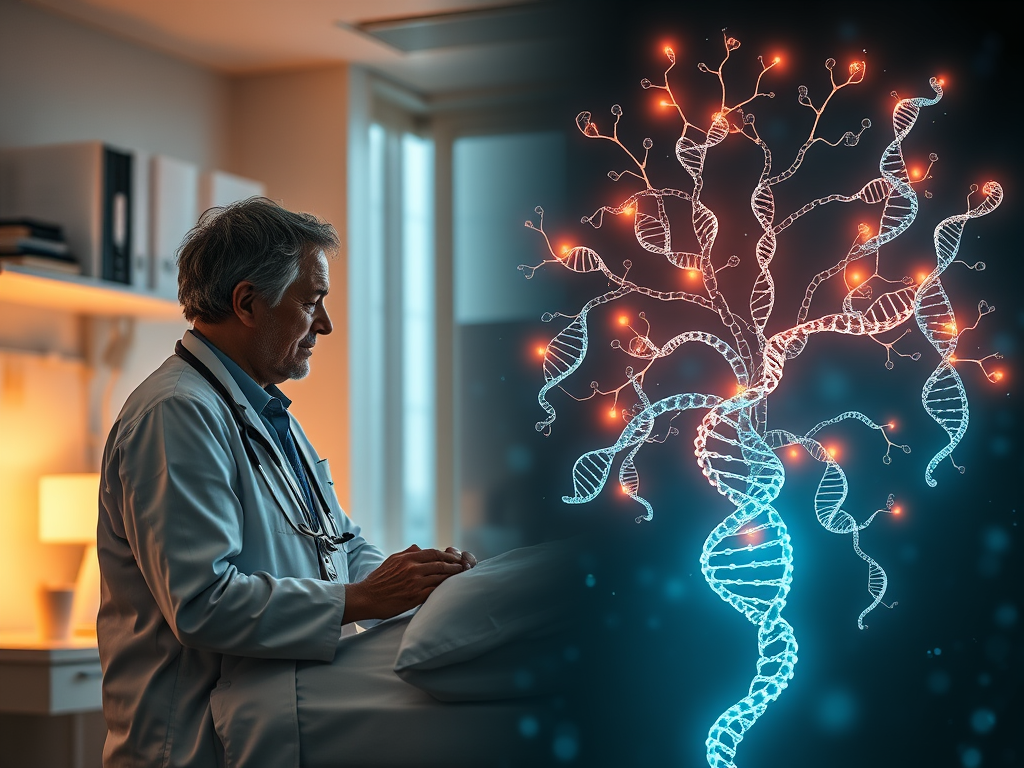
Perhaps the most fundamental ethical question is where to draw the line between using gene editing as a therapeutic tool versus an enhancement tool. On one side of the line, the argument is overwhelmingly clear and compassionate. Using a technology like CRISPR-Cas9 to correct a single faulty gene that causes a devastating illness like Huntington’s disease, sickle cell anaemia, or cystic fibrosis seems like a moral imperative. It’s a way to alleviate immense human suffering and is a natural extension of what medicine has always sought to do: heal the sick. This is somatic gene therapy, targeting non-reproductive cells to treat disease in a single individual.
The ethical waters get murky, however, as we approach the line and then cross it. What about editing genes to reduce a person’s risk of developing Alzheimer’s or heart disease later in life? Is that therapy or enhancement? What about boosting a person’s immune system to be more resistant to viruses? The line blurs further when we contemplate editing for traits that have nothing to do with disease. Should parents be able to choose to make their children taller, more muscular, or have a higher IQ? This is the slippery slope that worries bioethicists. Once we start down the path of “improving” ourselves, we may transition from a society that accepts human limitations to one that views them as problems to be engineered away, potentially creating a new kind of social pressure and inequality.
The Germline Question
The debate over therapy versus enhancement is supercharged when we consider germline editing. This is the critical distinction in the entire gene editing conversation. Somatic editing, as mentioned, affects only the patient. The genetic changes made to their lung or blood cells die with them. Germline editing, on the other hand, involves altering the DNA of reproductive cells—sperm, eggs, or early-stage embryos. This is a monumental leap because any changes made are heritable; they will be passed down through all subsequent generations. We wouldn’t just be curing one person; we would be altering the genetic inheritance of an entire lineage.
This power is both awe-inspiring and terrifying. Proponents argue that this is the only way to truly eradicate a genetic disease from a family line forever. Why only treat the symptoms in every generation when you could remove the faulty gene from the family’s “recipe book” permanently? The ethical counter-argument, however, is profound. Are we wise enough to make permanent changes to the human gene pool? A mistake, or an edit with unforeseen long-term consequences, would not just harm one person but could cascade through generations, becoming a permanent part of our species’ genetic legacy. This question asks whether we have the right to make such irrevocable decisions for the future of humanity.
The Specter of “Designer Babies”
Once germline editing for therapeutic purposes is accepted, the door swings open to the most famous of all sci-fi tropes: “designer babies.” If we can remove the gene for Tay-Sachs disease from an embryo, why not also select for genes associated with athletic prowess, musical talent, or high intelligence? This could lead to a free-market eugenics, where affluent parents can shop for genetic traits to give their children a competitive edge in life. The 1997 film Gattaca vividly portrayed such a future, where society is divided between the genetically “valid” and the “in-valid.”
The ethical problems here are manifold. It could fundamentally change the nature of parenting, shifting the focus from unconditional love for a child as they are, to viewing a child as a product to be designed and perfected. It raises questions about what happens to children who don’t live up to their genetic potential. More broadly, it threatens our sense of shared humanity. If society is split between the genetically enhanced and the natural-born, would it erode social solidarity and our belief that we are all created equal? The fear is that we would create a biological caste system, entrenching privilege not just in our social structures, but in our very DNA.
Equity and Access
New medical technologies are almost always incredibly expensive when first introduced, and gene editing therapies will be no exception. The first approved gene therapies have come with price tags in the millions of dollars. This immediately raises a critical question of justice and equity. Who will get access to these potentially life-saving or life-enhancing treatments? If only the wealthiest individuals and nations can afford them, we risk creating a profound genetic divide.
Imagine a future where the rich can afford to edit away predispositions to cancer, dementia, and other age-related diseases, while the poor cannot. The wealthy would not only live longer, healthier lives, but they could also pass these genetic advantages on to their children if germline editing becomes available. This would exacerbate existing social inequalities and bake them into our biology. Health disparities that are currently driven by socioeconomic factors could become genetically encoded. A core ethical challenge, therefore, is to ensure that these revolutionary technologies don’t become a tool that widens the gap between the haves and the have-nots, creating a world of the “genetically-rich” and the “genetically-poor.”
Consent of the Unborn
In modern medicine, the principle of informed consent is sacred. A doctor cannot perform a procedure on a patient without their explicit, informed agreement. But how does this principle apply to germline gene editing? The “patient” is an embryo, a being that cannot consent to the permanent alterations being made to its genome. More than that, the decision also affects all of its future descendants, none of whom can consent either.
Who has the right to provide consent on behalf of these future generations? The parents? The state? A scientific committee? Critics argue that making such a fundamental and irreversible choice for another person is a profound ethical violation. It imposes a set of values and a biological blueprint onto an individual without their permission. While parents make many decisions for their children, this one is unique in its permanence and its heritability. We are, in effect, making a decision that will bind the hands of our descendants, shaping their biology in ways they may not have chosen for themselves. The question of who, if anyone, has the moral authority to grant this kind of proxy consent remains one of the most difficult to resolve.
Unintended Consequences
The CRISPR-Cas9 system is often described as “molecular scissors” that can cut DNA with incredible precision. While it is remarkably accurate, it’s not perfect. One of the biggest technical and ethical concerns is the risk of “off-target effects”—unintended cuts or edits at the wrong location in the genome. There is also the risk of “on-target effects” that are unforeseen, such as a large deletion or complex rearrangement of genes at the intended site. In somatic therapy, such an error could harm the patient, perhaps by deactivating a tumour-suppressing gene and causing cancer. The risk, while serious, is confined to one person.
In germline editing, the stakes are exponentially higher. A single off-target mistake in an embryo’s DNA would be replicated in every cell of the resulting person’s body and would then be passed on to their children. A tiny error could introduce a new genetic disease into a family line forever. Furthermore, we still have a limited understanding of how genes interact. A gene that we think only has one function (pleiotropy) might have other, subtle roles that we are unaware of. “Fixing” one problem could inadvertently create another. Given the permanence of germline changes, the ethical question is: what level of risk is acceptable when the consequences of being wrong are potentially catastrophic and irreversible?
The Disability Rights Critique
While many see gene editing as a way to eliminate suffering, the disability rights community offers a crucial and challenging perspective. Advocates raise the concern that the drive to “cure” or “prevent” disabilities sends a powerful and damaging social message: that the lives of people currently living with those conditions are less valuable, or are lives that should be prevented from existing. They draw a distinction between a disease that causes pain and suffering (like Huntington’s) and a genetic condition that results in a different way of being in the world (like deafness or dwarfism).
Many members of the Deaf community, for example, do not view deafness as a disability to be cured, but as a unique cultural identity with its own language (sign language) and heritage. From this perspective, using gene editing to prevent deafness is a form of eugenics that devalues this identity. This critique forces us to confront difficult questions. What is the difference between curing a disease and erasing a form of human diversity? Does the quest for genetic perfection implicitly promote intolerance for those who fall outside a narrow definition of “normal”? It urges society to focus not just on “fixing” people to fit the world, but on fixing the world to be more inclusive and accommodating for all people.
The Definition of “Normal”
If we begin to edit the human genome, we are implicitly creating a standard of what is genetically “normal” or “desirable.” This raises a deeply political and ethical question: who gets to define what a “good” gene is? Historically, attempts to define a “desirable” human population have led to the horrors of the eugenics movement, which was based on racist and ableist pseudoscience. The fear is that gene editing could become a high-tech vehicle for a new era of eugenics.
Will the standards of genetic perfection be set by the values of a specific, dominant culture? Will they be influenced by market forces and consumer trends? The traits that society values can be superficial and can change over time. If we begin to pathologize and edit out traits that are simply considered undesirable, we risk reducing the richness of human diversity. This question forces us to be deeply skeptical of our own biases and to ask whether any person, government, or corporation should have the power to decide which versions of the human genome are acceptable and which are not.
Humanity’s Relationship with Nature
Beyond the practical concerns, gene editing prompts a more philosophical, even spiritual, debate about our relationship with the natural world. For millennia, human life has been shaped by the “genetic lottery”—the random combination of genes passed down from our parents. While we have always tried to manage our health and environment, direct and intentional editing of our species’ genetic code represents a fundamental shift in this relationship. It moves humanity from being a product of evolution to being a director of it.
This raises the “playing God” question. Are we overstepping a natural or sacred boundary by rewriting the fundamental code of life? Critics worry that this represents the ultimate form of human hubris, an attempt to master and control something that should remain beyond our dominion. Proponents might counter that using our intelligence to improve our condition is precisely what makes us human. This question isn’t easily answered by data; it probes our deepest values. It asks us to consider whether a future where we control our own evolution is a desirable one, and what such a profound change in power might do to our sense of humility, our connection to nature, and our understanding of what it means to be human.
Governance and Regulation
Finally, there is the immensely practical and difficult question of governance. CRISPR technology is relatively cheap, accessible, and easy to use compared to previous genetic engineering tools. This has democratised its use in labs worldwide, but it also means it is susceptible to misuse. How do we, as a global community, regulate such a powerful and accessible technology? Different countries and cultures have vastly different ethical views, and what is banned in one nation may be permitted or even encouraged in another.
A global moratorium on germline editing has been called for by many scientists, but it is non-binding. The spectre of “reproductive tourism”—where wealthy individuals travel to jurisdictions with lax laws to access controversial procedures—is very real. How can we establish international norms and enforceable regulations to prevent rogue scientists or unethical fertility clinics from forging ahead with dangerous or socially irresponsible experiments? The challenge is to create a framework for global oversight that respects national sovereignty while also protecting the shared genetic heritage of all humanity. Without effective governance, the power of gene editing could easily outpace our wisdom to control it.
Further Reading
For those who wish to delve deeper into the complex world of gene editing ethics, these books provide an excellent foundation:
- A Crack in Creation: Gene Editing and the Unthinkable Power to Control Evolution by Jennifer Doudna and Samuel H. Sternberg
- The Gene: An Intimate History by Siddhartha Mukherjee
- The Case Against Perfection: Ethics in the Age of Genetic Engineering by Michael J. Sandel
The conversations around these ten questions are among the most important of the 21st century. The answers we decide upon will shape not only the future of medicine but the future of our species.
Here at Zentara.blog, our mission is to take those tricky subjects and unlock them, making knowledge exciting and easy to grasp for everyone. But the adventure doesn’t stop on this page! We’re constantly exploring new frontiers and sharing discoveries across the digital universe. Want to dive deeper into more mind-bending Top 10s and keep expanding your world? Come join us on our other platforms – we’ve got unique experiences waiting for you on each one!
Get inspired by visual wonders and bite-sized facts: See the world through Zentara’s eyes on Pinterest!
Pin our fascinating facts and stunning visuals to your own boards. Explore Pins on Pinterest: https://uk.pinterest.com/zentarablog/
Discover quick insights and behind-the-scenes peeks: Hop over to Tumblr for snippets, quotes, and unique content you won’t find anywhere else. It’s a different flavour of discovery! Follow the Fun on Tumblr: https://www.tumblr.com/zentarablog
Ready for deep dives you can listen to or watch? We’re bringing our accessible approach to video and potentially audio! Subscribe to our YouTube channel and tune into future projects that make learning pop! Subscribe on YouTube: https://www.youtube.com/@ZentaraUK
Seeking even more knowledge in one place? We’ve compiled some of our most popular topic deep dives into fantastic ebooks! Find them on Amazon and keep the learning journey going anytime, anywhere. Find Our Ebooks on Amazon: https://www.amazon.co.uk/s?k=Zentara+UK&ref=nb_sb_noss
Connect with us and fellow knowledge seekers: Join the conversation on BlueSky! We’re sharing updates, thoughts, and maybe even asking you what wonders we should explore next. Chat with Us on BlueSky: https://bsky.app/profile/zentarablog.bsky.social
Perfect for learning on the move! We post multiple 10-minute podcasts per day on Spotify. Pop on your headphones and fill your day with fascinating facts while you’re out and about! Listen on Spotify: https://open.spotify.com/show/3dmHbKeDufRx95xPYIqKhJFollow us on Instagram for bytesize knowledge! We post multiple posts per day on our official Instagram account. https://www.instagram.com/zentarablog/ Every click helps us keep bringing honest, accessible knowledge to everyone. Thanks for exploring with us today – see you out there in the world of discovery!




Leave a Reply