
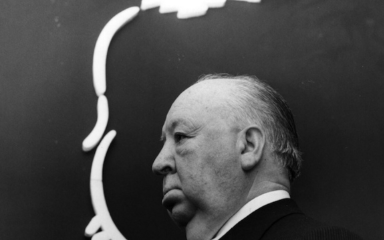
Alfred Hitchcock wasn’t just a director; he was an architect of anxiety, a maestro of the macabre who played the audience’s nerves like a violin. His nickname, the “Master of Suspense,” was not a mere marketing slogan but a perfect distillation of his genius. For over five decades, he crafted films that did more than just tell a story—they manipulated emotions, exploited common fears, and immersed viewers in a world of paranoia and psychological dread. He achieved this through a unique and now-iconic cinematic language, a toolbox of signature tricks and techniques that became his trademark. From the way his camera moved to the characters he tormented, Hitchcock’s style was so distinct that it became an adjective: “Hitchcockian.” Understanding these techniques is to pull back the curtain on the master’s magic, to see how he so skillfully made our hearts pound and our palms sweat. Here are the ten signature tricks that defined Alfred Hitchcock’s legendary career.
1. The Art of Suspense Over Surprise (The Bomb Theory) 💣
This is the absolute cornerstone of Hitchcock’s filmmaking philosophy. He famously explained the difference between suspense and surprise using his “bomb theory.” Imagine two people are having a conversation at a table, and suddenly a bomb hidden underneath explodes. The audience gets a few seconds of shock. That’s surprise. Now, imagine the same scene. The audience is shown that there is a bomb under the table, set to go off at 1 p.m., and the clock on the wall shows it’s 12:45. The characters are blissfully unaware, discussing trivial matters. As the minutes tick by, the audience is screaming internally, “Get out of there!” That’s suspense. Hitchcock believed that giving the audience information the characters didn’t have was the key to true audience involvement. This technique of dramatic irony makes the viewer an active, and often helpless, participant in the scene. We are not shocked by the outcome; we are tortured by the anticipation of it. This principle is the engine that drives his greatest films, from the ticking clock of a real-time thriller like Rope to the audience’s agonizing awareness of Norman Bates’s secret in Psycho.
2. The MacGuffin: The Secret Everybody Wants (But Doesn’t Matter)
What are the spies after in The 39 Steps? What are the government secrets in North by Northwest? What’s inside the wine bottles in Notorious? The answer, in Hitchcock’s own words, is the MacGuffin. The MacGuffin is a plot device—an object, a goal, or a secret—that the characters in the story are obsessed with, but which is, to the audience, ultimately irrelevant. Its only function is to set the plot in motion and create conflict. Hitchcock understood that the audience doesn’t really care about the stolen microfilm or the secret formula. What they care about is how the hero and heroine will survive and whether they will fall in love while being pursued for it. By treating the central object of the plot as essentially meaningless, he could focus on what truly mattered to him: character development, psychological tension, and, of course, suspense. The MacGuffin is one of his most influential inventions, a narrative sleight-of-hand that brilliantly distracts us while the real drama unfolds.
3. The “Wrong Man” Theme: Paranoia and Mistaken Identity
One of Hitchcock’s most persistent and personal themes is that of the innocent, ordinary man who is suddenly and inexplicably plunged into a world of danger and chaos due to a case of mistaken identity. Think of Roger Thornhill in North by Northwest, mistaken for a government agent, or Dr. Richard Kimble in The Fugitive (a story heavily influenced by Hitchcock’s work). This theme tapped into a universal fear: the loss of control and the terrifying idea that your life could be upended by a random mistake. Hitchcock, who had a lifelong fear of the police stemming from a childhood incident, masterfully exploited this paranoia. The “wrong man” plotline allowed him to explore the fragility of identity and the thin veneer of order in civilized society. The audience identifies deeply with the protagonist’s desperation as he is hunted by both the authorities and the shadowy villains, with no one to trust and nowhere to hide. This recurring scenario was a perfect vehicle for generating the suspense and psychological distress that defined his work.
4. Voyeurism and the Power of the Gaze 👁️
Hitchcock’s camera is rarely a passive observer; it is an active participant, often implicating the audience in the act of looking. His films are filled with characters who are spying, watching, and peeping, and he forces us to watch along with them. The most profound exploration of this theme is Rear Window, where the entire film is seen from the perspective of L.B. Jefferies, a photographer confined to his apartment who passes the time by spying on his neighbors. We, the audience, become his co-conspirators in this voyeurism, sharing in his curiosity, his assumptions, and eventually his guilt and fear. Hitchcock uses this technique to create a morally ambiguous and psychologically complex experience. He also famously uses the Point-of-View (POV) shot to put us directly into the character’s shoes, making us see the world through their eyes. This forces a powerful identification with the character and heightens the subjective experience of terror and suspense, making it impossible for the viewer to remain a detached observer.
5. The Icy, Enigmatic “Hitchcock Blonde”
From Grace Kelly and Kim Novak to Eva Marie Saint and Tippi Hedren, Hitchcock’s films are famous for a specific female archetype: the “Hitchcock Blonde.” These women were typically elegant, sophisticated, and cool on the surface, but with a hidden fire, a complex psychology, and often a dark secret or a moral ambiguity lurking beneath their pristine exterior. They were not just damsels in distress; they were often the catalysts for the plot and active participants in the intrigue. Hitchcock seemed to believe that the placid, cool demeanor of these blonde actresses created a greater contrast and surprise when their hidden passions or vulnerabilities were revealed. He meticulously controlled their appearance, from their tailored suits to their perfectly coiffed hair, making them objects of both desire and suspicion. This recurring character type became a central, and often controversial, element of his cinematic world, a beautiful and mysterious puzzle for both the male protagonist and the audience to solve.
6. The Famous Cameo Appearances
One of Hitchcock’s most playful and beloved trademarks was his brief, silent cameo appearance in nearly all of his films. spotting him became a fun game for audiences. He might be seen struggling to get a cello onto a train (Strangers on a Train), walking dogs out of a pet shop (The Birds), or appearing in a “before-and-after” weight loss ad in a newspaper (Lifeboat, when a physical appearance was impossible). Early in his career, he did it out of necessity, to fill the frame. Later, it became a deliberate signature. He once said he made his appearances early in the film so that the audience could get the “game” over with and focus on the story. These cameos were a clever way of putting his authorial stamp on the film, a wink to the audience that reminded them they were in the hands of a master storyteller who was in complete control of the world they were watching.
7. Manipulating Time and Space (The Dolly Zoom)
Hitchcock was a technical virtuoso who used the camera to distort perception and create a feeling of psychological unease. His most famous technical innovation is the dolly zoom, also known as the “Vertigo effect,” which he pioneered in his 1958 masterpiece Vertigo. To create the shot, the camera is physically moved away from a subject on a dolly, while the lens simultaneously zooms in. The result is a deeply unsettling visual effect where the foreground remains stable, but the background appears to stretch away or collapse inwards. He used it to visually represent the acrophobia and crippling anxiety of the film’s protagonist, Scottie Ferguson. This was a revolutionary technique for translating a character’s internal, psychological state into a purely visual experience. It’s a perfect example of how Hitchcock didn’t just film a story; he used the very mechanics of filmmaking to manipulate the audience’s physical and emotional reactions.
8. The Use of Landmark Locations for Grand Set Pieces
Hitchcock loved to stage his most thrilling and suspenseful sequences in famous, public locations. This technique served two purposes. First, it grounded his often-fantastical plots in a recognizable reality, making the unbelievable seem more plausible. Second, it created a brilliant contrast between the normal, everyday world and the sinister events unfolding within it. The chaos feels more shocking when it erupts in a place associated with order and grandeur. The most iconic examples are the climactic chase across the faces of the presidents on Mount Rushmore in North by Northwest, the dramatic assassination attempt at the Royal Albert Hall in The Man Who Knew Too Much, and the terrifying scene at the Statue of Liberty in Saboteur. These grand set pieces were not just backdrops; they were active environments that added to the scale, the spectacle, and the tension of the story, creating some of the most memorable moments in cinema history.
9. The Thematic Power of Birds and Stairs
Two recurring visual motifs in Hitchcock’s films are birds and staircases. Long before his film The Birds made our feathered friends a source of ultimate terror, he used them as symbols of impending doom or psychological entrapment. Stuffed birds loom ominously in the parlor of the Bates Motel in Psycho, hinting at Norman’s predatory nature and his taxidermy hobby. A staircase, for Hitchcock, was never just a way to get from one floor to another. It was a powerful visual metaphor for psychological ascent or descent, a space of immense vulnerability and suspense. Think of the agonizingly slow climb of the detective in Vertigo, the camera looking down the seemingly endless staircase at the Bates house in Psycho, or the dramatic final struggle on the grand staircase in Notorious. Hitchcock shot staircases from dramatic high or low angles to emphasize a character’s powerlessness or the looming threat waiting just at the top or bottom.
10. The Ambiguous Ending
While Hitchcock was a master of meticulously crafted plots, he often denied his audience a neat and tidy conclusion. He preferred to end his films on a note of ambiguity, leaving the viewer with a lingering sense of unease. He understood that the questions that remain unanswered are often more haunting than those that are resolved. The classic example is the ending of The Birds. After surviving a harrowing night of attacks, the main characters drive away from Bodega Bay into a landscape filled with thousands of unnervingly calm, watchful birds. The threat has not been vanquished; there is no explanation for their behavior, and there is no guarantee of safety. The film simply stops, leaving the audience to contemplate the fragility of human existence in the face of an inexplicable and potentially recurring horror. This refusal to provide easy answers or a complete sense of closure was a final, brilliant trick, ensuring that the suspense of the film would follow the audience out of the theater and into their own lives.
Further Reading
For those who wish to dive deeper into the mind and methods of the Master of Suspense, these books are essential reading:
- “Hitchcock/Truffaut” by François Truffaut
- “Alfred Hitchcock: A Life in Darkness and Light” by Patrick McGilligan
- “The Art of Alfred Hitchcock: Fifty Years of His Motion Pictures” by Donald Spoto
- “Hitchcock’s Films Revisited” by Robin Wood
- “A Hitchcock Reader” edited by Marshall Deutelbaum and Leland Poague
Here at Zentara.blog, our mission is to take those tricky subjects and unlock them, making knowledge exciting and easy to grasp for everyone. But the adventure doesn’t stop on this page! We’re constantly exploring new frontiers and sharing discoveries across the digital universe. Want to dive deeper into more mind-bending Top 10s and keep expanding your world? Come join us on our other platforms – we’ve got unique experiences waiting for you on each one!
Get inspired by visual wonders and bite-sized facts: See the world through Zentara’s eyes on Pinterest!
Pin our fascinating facts and stunning visuals to your own boards. Explore Pins on Pinterest: https://uk.pinterest.com/zentarablog/
Discover quick insights and behind-the-scenes peeks: Hop over to Tumblr for snippets, quotes, and unique content you won’t find anywhere else. It’s a different flavour of discovery! Follow the Fun on Tumblr: https://www.tumblr.com/zentarablog
Ready for deep dives you can listen to or watch? We’re bringing our accessible approach to video and potentially audio! Subscribe to our YouTube channel and tune into future projects that make learning pop! Subscribe on YouTube: https://www.youtube.com/@ZentaraUK
Seeking even more knowledge in one place? We’ve compiled some of our most popular topic deep dives into fantastic ebooks! Find them on Amazon and keep the learning journey going anytime, anywhere. Find Our Ebooks on Amazon: https://www.amazon.co.uk/s?k=Zentara+UK&ref=nb_sb_noss
Connect with us and fellow knowledge seekers: Join the conversation on BlueSky! We’re sharing updates, thoughts, and maybe even asking you what wonders we should explore next. Chat with Us on BlueSky: https://bsky.app/profile/zentarablog.bsky.social
Perfect for learning on the move! We post multiple 10-minute podcasts per day on Spotify. Pop on your headphones and fill your day with fascinating facts while you’re out and about! Listen on Spotify: https://open.spotify.com/show/3dmHbKeDufRx95xPYIqKhJFollow us on Instagram for bytesize knowledge! We post multiple posts per day on our official Instagram account. https://www.instagram.com/zentarablog/ Every click helps us keep bringing honest, accessible knowledge to everyone. Thanks for exploring with us today – see you out there in the world of discovery!




Leave a Reply