
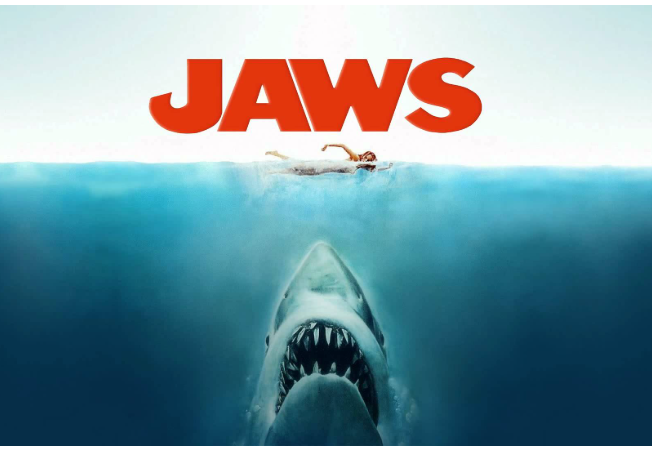
The Shark That Changed Everything: 10 Terrifying Secrets Behind the Making of Jaws
The ocean is a vast, shimmering blue mystery, but for millions of people, that mystery became a source of primal dread following the release of a single film. Before this production hit the silver screen, the beach was seen as a place of relaxation and sun-drenched serenity. After it, the water belonged to something else—something with rows of serrated teeth and a black, expressionless eye. That film, of course, is the masterpiece of suspense that defined the “summer blockbuster” and made a young director a household name.
To understand why this movie remains the gold standard of the thriller genre, one must look at the chaotic, salt-sprayed, and nearly disastrous production that took place off the coast of Martha’s Vineyard. It was a “perfect storm” of technical failures, clashing egos, and creative desperation. The film didn’t just scare audiences out of the water; it fundamentally changed how movies were made, marketed, and experienced. It turned a simple creature feature into a high-stakes character drama that resonates across generations. Whether you are a fan of the iconic score or the gritty realism of the Orca, these ten insights reveal the teeth behind the legend.
1. The Mechanical Nightmare Known as “Bruce”
One of the most famous stories in cinema history involves the three full-sized pneumatic sharks created for the film. Named “Bruce” after the director’s lawyer, these mechanical beasts were a marvel of engineering on paper but a complete catastrophe in the water. The first time the production team put a shark in the ocean, it promptly sank to the bottom. The salt water played havoc with the electronics and the hydraulic systems, leading to constant breakdowns that stretched the filming schedule from 55 days to a grueling 159.
The frustration on set was palpable. The shark’s eyes would cross, its jaws wouldn’t close, and the skin would soak up water, making it look bloated and unrealistic. However, this technical failure was the greatest gift the film ever received. Because the shark rarely worked, the director was forced to find creative ways to suggest the predator’s presence without actually showing it. This led to the use of floating yellow barrels and POV shots that built a level of suspense that a functional mechanical shark could never have achieved. It proved that in the realm of horror, the monster you imagine is always more terrifying than the one you see.
2. The Hitchcockian Mastery of the Unseen Predator
Because “Bruce” was often out of commission, the film shifted from a monster movie to a psychological thriller. The director drew inspiration from Alfred Hitchcock, utilizing the “less is more” philosophy. By using the camera to represent the shark’s perspective—gliding silently beneath the dangling legs of swimmers—the audience was put in the position of the hunter, which inadvertently made the eventual attacks feel more intimate and shocking.
This “unseen” approach allowed the tension to simmer for the first hour of the film. The audience’s imagination was forced to do the heavy lifting. When the shark finally makes its full, terrifying appearance during the chumming scene, the payoff is immense because the suspense has been coiled like a spring for so long. This stylistic choice became a blueprint for future filmmakers, demonstrating that the key to a truly frightening experience isn’t the creature’s design, but the atmosphere created in the void where the creature should be.
3. The Primal Power of the Two-Note Theme
It is impossible to discuss this film without mentioning the contribution of the composer. When the director first heard the primary two-note motif played on a piano, he reportedly laughed, thinking it was a joke. He had expected something more complex and orchestral. However, the composer insisted that the “dun-dun, dun-dun” rhythm represented the shark as an unstoppable, elemental force—like a heartbeat or the steady approach of an engine.
The score became the shark’s voice. In scenes where the mechanical prop couldn’t be used, the music told the audience exactly when the danger was present. It created a Pavlovian response in the viewers: the moment those low strings began to vibrate, pulses quickened and hands gripped armrests. The score went on to win an Academy Award and remains one of the most recognizable pieces of music in human history. It serves as a masterclass in how sound can be used to bypass the intellect and tap directly into the primitive fear centers of the human brain.
4. The Real-Life Friction Between Shaw and Dreyfuss
The chemistry between the three leads—the weary police chief, the young oceanographer, and the grizzled shark hunter—is the heart of the movie. However, the tension between Robert Shaw (Quint) and Richard Dreyfuss (Hooper) wasn’t entirely scripted. Shaw was a legendary “actor’s actor” and a heavy drinker who enjoyed testing the mettle of his younger colleagues. He reportedly viewed Dreyfuss as a pampered “stage actor” and took every opportunity to needle him.
This off-screen friction bled into their performances, creating a palpable sense of rivalry on the Orca. Dreyfuss’s nervous energy and Shaw’s intimidating, salt-of-the-earth persona clashed perfectly, making their eventual bond in the “Show Me Your Scars” scene feel earned and authentic. While the production was miserable for many, this personality clash provided a layer of grit and realism that elevated the film from a standard adventure story into a compelling character study about class, age, and mutual respect in the face of death.
5. The Haunting Brilliance of the Indianapolis Speech
In a film filled with jump scares and action, the most terrifying moment is arguably a three-minute monologue delivered in the cramped cabin of a boat. Quint’s recount of the sinking of the USS Indianapolis is widely considered one of the greatest speeches in cinematic history. It grounds the fictional shark hunt in a horrifying historical reality, explaining Quint’s obsessive hatred for the creatures that “have black eyes, like a doll’s eyes.”
The story behind the speech is as legendary as the monologue itself. The script went through several hands, but Robert Shaw, a playwright himself, performed the final edit to make it fit his character’s voice. On the first day of shooting the scene, Shaw was reportedly too intoxicated to complete the performance. Realizing his mistake, he called the director that night and asked for another chance. The next day, he nailed the performance in just a few takes, delivering a chilling, somber, and perfectly paced soliloquy that gives the shark a mythological, almost demonic status.
6. The Logistical Nightmare of Shooting on the Open Sea
Before this film, most “ocean” scenes were filmed in large tanks on studio backlots or in calm, controlled lagoons. The director of this film, however, insisted on shooting on the actual Atlantic Ocean to achieve a level of realism that had never been seen. He wanted the audience to see the horizon and feel the isolation of the characters. While the visual results were stunning, the logistics were a nightmare for the crew.
Filming on water meant that the “set” was constantly moving. Boats would drift out of frame, the sun would shift, and the salt air would corrode the cameras. The production became a war of attrition against the elements. A support boat actually sank during filming, nearly taking the actors and the expensive sound equipment with it. The crew, nicknamed the “flotsam and jetsam,” spent hours waiting for the tide or the weather to cooperate. This insistence on authenticity, while nearly breaking the budget and the crew’s spirits, is exactly why the film looks so timeless and visceral today.
7. Martha’s Vineyard and the Realism of Amity Island
The choice of Martha’s Vineyard as the stand-in for the fictional Amity Island was a stroke of genius. The production designers didn’t want a tropical paradise; they wanted a quaint, blue-collar New England town that felt lived-in and vulnerable. Many of the “extras” in the film were actual residents of the island, which added an unmistakable layer of authenticity to the town meetings and beach scenes.
The island’s geography also played a role in the film’s success. The shallow waters off the coast allowed the mechanical shark to be mounted on the seafloor (when it worked), and the natural fog and overcast skies of the North Atlantic provided a moody, somber atmosphere that contrasted sharply with the bright “summer fun” marketing of the town’s mayor. By making Amity feel like a real place with real stakes—rather than a Hollywood set—the filmmakers made the threat to the community feel personal to the audience.
8. The “Bigger Boat” Ad-Lib That Defined a Hero
One of the most quoted lines in movie history happens after Chief Brody catches his first real glimpse of the Great White while tossing chum into the water. He backs into the cabin and tells Quint, “You’re gonna need a bigger boat.” While it feels like a perfectly scripted moment of dry humor, the line was actually an “inside joke” that actor Roy Scheider ad-libbed throughout the production.
During the difficult shoot, the phrase “you’re gonna need a bigger boat” became a common refrain among the crew whenever something went wrong—which was often. The “bigger boat” in question was the support barge that was supposed to hold the equipment but was frequently inadequate. Scheider decided to slip the phrase into the scene, and it worked so perfectly as a reaction to the sheer size of the predator that it was kept in the final cut. It perfectly captured Brody’s realization that they were woefully underprepared for the primordial force they were hunting.
9. Capturing Real Great White Footage in Australia
While “Bruce” handled the heavy lifting for the interactions with the actors, the production also used real footage of Great White sharks to add a sense of documentary-style realism. Famous underwater cinematographers Ron and Valerie Taylor were hired to film actual sharks off the coast of Australia. To make the real sharks look as large as the 25-foot fictional monster, the crew used a miniature shark cage with a small actor (a little person) inside to create a forced perspective of scale.
This led to one of the most famous unscripted moments in the film. While filming, a real Great White became entangled in the cage’s cables and began thrashing violently, eventually tearing the cage apart. Fortunately, the “stunt double” wasn’t in the cage at the time. The footage was so terrifying and authentic that the director changed the script to include the shark destroying the empty cage, allowing Hooper to survive by hiding in the reefs. This blend of mechanical effects and real-life animal behavior is what gives the film its enduring, terrifying edge.
10. The Birth of the Modern Summer Blockbuster
Prior to the mid-70s, “big” movies were usually released in the winter or around holidays. Summer was considered a “dumping ground” for lower-quality films because people were outside enjoying the weather. This film flipped that model entirely. The studio decided to release the movie simultaneously in hundreds of theaters across the country—a “wide release” that was unheard of at the time—and backed it with a massive television advertising campaign.
The result was a cultural explosion. People lined up around blocks in the sweltering heat to see the film, creating a “must-see” event that turned the cinema into a summer destination. It became the highest-grossing film of its time, proving that a well-marketed, high-concept thriller could dominate the box office. Every superhero movie and seasonal tentpole film that followed owes its existence to the marketing and release strategy of this shark story. It didn’t just change our relationship with the ocean; it changed the very business of entertainment.
Further Reading
- The Jaws Log by Carl Gottlieb
- Jaws: Memories from Martha’s Vineyard by Matt Taylor
- Joe Alves: Designing Jaws by Dennis Prince
- On Location: The Making of the Movie Jaws by Edith Blake
- Podcast Episode: Classic Films And Horror Icons
- 10 The Exorcist III (1990) Movie Facts You Didn’t Know
- 10 Scream (1996) Movie Facts That Changed Horror
- 10 The Lion King (1994) Facts That Made It Iconic – Classic Movie
- 10 Forrest Gump (1994) Facts That Make It Timeless – Classic Movie
- 10 Fight Club (1999) Facts That Still Surprise Fans – Classic Movie
- 10 Hostel (2005) Movie Facts That Shocked Viewers
- 10 Avatar (2009) Facts That Changed Cinema – Classic Movie
- 10 Hellraiser (1987) Movie Facts That Built Its Legacy
- 10 Jurassic Park (1993) Facts That Changed Movies Forever – Classic Movie



