
Table of Contents
Cast your mind back to 1997. The first-person shooter (FPS) was the undisputed king of PC gaming, a fast-paced, precision-mouse-and-keyboard world dominated by Doom and Quake. On home consoles, the genre was a clumsy, almost unplayable afterthought. Then, two full years into the Nintendo 64’s lifespan, a movie tie-in game developed by a small team at Rare didn’t just join the conversation—it changed it.
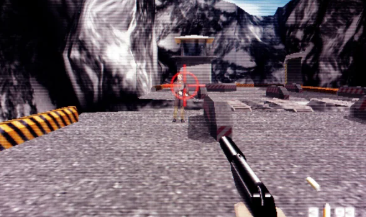
That game was GoldenEye 007.
While its single-player campaign was a masterpiece of stealth, espionage, and objective-based gameplay, its multiplayer mode was something else entirely. It was a “happy accident,” a feature added by a few developers in the final months of production without the full backing of management. This “tacked-on” mode would go on to not only define the N64 but also write the entire blueprint for “couch co-op” and set the standard for every console shooter that followed.
It wasn’t just that it had multiplayer; it was how it did it. Let’s dive into the 10 ways GoldenEye 007 perfected the art of the console deathmatch.
1. The 4-Player Split-Screen Revolution
Before 1997, console multiplayer was typically a two-player affair. But the Nintendo 64 was built differently: it had four controller ports right on the front. It was a console designed to be a party, and GoldenEye 007 was the guest of honor.
This was the game’s secret weapon. It wasn’t a sterile, online battle against anonymous screen names; it was a loud, chaotic, and personal war waged in a living room. The 4-player split-screen turned the television into a digital colosseum. You were crammed on a couch with your three best friends (or worst enemies), and the air was electric with trash-talk, laughter, and the occasional thrown controller.
This “local” nature was key. You could hear your friend gasp when you planted a proximity mine near their spawn point. You could see them lean forward in concentration as they hunted you. And, most importantly, you could peek at their quadrant of the screen to see exactly where they were hiding—a tactic so common it earned its own name: “screen-looking.” Was it cheating? Absolutely. Was it part of the fun? 100%. GoldenEye wasn’t just a game; it was a social event, and it all started with those four glorious controller ports.
2. The Analog Stick: Precision Aiming Comes to Consoles
A major reason console FPS games felt so inferior to their PC counterparts was the controller. How could a simple D-pad ever compete with the fluid, 1:1 precision of a mouse? The N64’s revolutionary analog stick was the answer.
GoldenEye was one of the first games to truly harness its power. For the first time on a console, you had full 360-degree control over your movement. You could run, strafe (sidestep), and aim with a subtlety that was previously impossible. The default control scheme (“Honey”) used the analog stick to move and the C-buttons to strafe and look up/down. This combination allowed players to perform the essential “circle-strafe”—running circles around an opponent while keeping your aim locked on them.
This new-found precision was the bedrock of the entire multiplayer experience. It meant that a console shooter could finally be a game of skill. It was no longer just about who saw who first; it was about who had the steadier thumb. This control scheme was the missing link, the “console mouse” that made the entire genre viable on a TV.
3. Level Design as a Social Playground
A great multiplayer game needs great maps, and GoldenEye’s were legendary. They weren’t just sterile, symmetrical arenas. They were intricate, real-world “jungle gyms” of chaos, pulled directly from the single-player campaign.
The undisputed champion was Facility. This map is GoldenEye multiplayer. It was a labyrinth of tight corridors, computer rooms, and, most famously, a “secret” ventilation duct system that allowed for surprise attacks. The bathroom at the end of the main hallway, with its multiple stalls, was the site of countless ambushes.
Then there was Stack, a multi-level maze of towering bookshelves that rewarded verticality. Archives was a sniper’s paradise with its long corridors and glass partitions. Temple was a wide-open deathtrap with a massive central pyramid. Each map had a distinct personality, creating a “home-field advantage” for players who took the time to memorize ammo spawns, body armor locations, and the perfect ambush spots. They were blueprints for betrayal and strategy, and we memorized every inch of them.
4. “Slappers Only!”: The Joy of Deep Customization
Modern shooters live and die by their customization options, but in 1997, GoldenEye was a revelation. The game gave you an absurd level of control over the match, allowing you and your friends to essentially create your own game modes.
You could choose the level, the time limit, and the weapons. This last option was the game-changer. Don’t like the rocket launcher? Turn it off. Want a high-stakes match? Set it to “License to Kill” (one-shot kills) with Pistols only.
This menu was the source of endless, hilarious “house rules.” The most famous, of course, was “Slappers Only!” By setting the weapon to “unarmed,” the entire match devolved into a frantic, farcical brawl of karate chops. It was completely ridiculous and utterly brilliant. Other popular modes included “Proximity Mines Only” (turning the Facility into a single, map-wide explosion) or “Man with the Golden Gun,” where one player was hunted by all. This flexibility gave the game a near-infinite replayability that kept it in N64 consoles for years.
5. The Legend of Oddjob: A “Built-in” House Rule
GoldenEye featured a massive roster of characters from the Bond universe, from Jaws and Baron Samedi to various Russian soldiers. While most were just cosmetic “skins,” one character was so notoriously “broken” that he became an ethical dilemma in households across the globe: Oddjob.
The Goldfinger henchman was, true to the film, incredibly short. In GoldenEye’s game engine, this meant he was below the standard auto-aim height. Players would fire, and their bullets would whistle harmlessly over his bowler-hatted head. To hit him, you had to manually tilt your aim down, a clumsy process in the heat of battle.
Choosing Oddjob was, therefore, universally seen as a “cheap” move. He was the game’s built-in “cheat,” and playing as him instantly made you the villain of the living room. This led to the most sacred of all GoldenEye house rules: “No Oddjob allowed.” The fact that a character’s design could create a social contract that everyone knew is a testament to the game’s quirky and unforgettable personality.
6. A Perfectly “Unbalanced” and Iconic Arsenal
Modern multiplayer games are obsessed with “balance.” Every weapon is tweaked and patched to ensure no single gun is dominant. GoldenEye 007 spat in the face of this philosophy. Its weapons were a chaotic, unbalanced, and glorious mess, which is exactly what made them so much fun.
You had the iconic PP7 (Silenced), Bond’s classic, which was surgical and stealthy. You had the KF7 Soviet, the reliable workhorse. And then you had the “problem” guns. The Klobb was famously, hilariously useless, spraying bullets everywhere except at your target. At the other end was the RC-P90, a 50-round-clip monster that was so overpowered it was practically a “win” button.
Then there were the explosives. Proximity Mines were the ultimate tool of betrayal, perfect for planting on a doorway or a body armor spawn. Remote Mines let you set elaborate traps and watch the carnage from a safe distance. This wild imbalance meant that getting a “good” weapon felt like a major victory, and killing someone who had an RC-P90 with a Klobb made you a living legend.
7. The Golden Gun: A Perfect Mode in a Single Weapon
While the regular weapons were iconic, one gun was so special it transcended the game’s arsenal to become a game mode in itself: The Golden Gun.
Pulled from Bond lore, this weapon was the great equalizer. It held a single bullet, forcing a reload after every shot. But that one bullet was an instant kill, no matter where it hit. When the “Man with the Golden Gun” mode was selected (or when it was found on the Egyptian map), the entire dynamic of the game shifted.
It was no longer a frantic firefight. It became a tense, “wild west” duel. The game became a high-stakes hunt for the one player (or the one weapon spawn) that held all the power. The tension of lining up that single, perfect shot—and the panic of missing and having to reload while your friends charged you—was a masterful piece of game design. It was a perfect, self-contained story of ultimate power and ultimate vulnerability, all wrapped up in a single, shiny pistol.
8. Stealth, Strategy, and Betrayal
Because GoldenEye 007’s multiplayer maps were ripped from the single-player game, they weren’t designed like modern, “three-lane” competitive arenas. They were complex, sprawling, and filled with places to hide. This allowed for a level of strategy that went beyond simple “run and gun.”
Sure, you could run in, all guns blazing. But you could also play it smart. You could be the “troll” who hid in the Facility’s bathroom stalls with a Shotgun. You could be the “trapper” who littered the basement of the Archives with Proximity Mines. You could be the “camper” who grabbed the Sniper Rifle and hid in the rafters of the Stack.
The game’s radar was basic, showing only player positions but not their elevation. This allowed for clever vertical ambushes. This variety of playstyles made every match feel different. It wasn’t just a test of reflexes; it was a test of wits, patience, and how willing you were to betray your friends’ trust.
9. The “Happy Accident” That Became the Standard
One of the most legendary facts about GoldenEye 007 is that its multiplayer mode almost didn’t exist. It was not part of the original design. It was a “skunkworks” project, created in the final six weeks of development by a tiny team (primarily programmer Steve Ellis and level designer David Doak) who thought it would be a fun, extra feature.
They built it “in secret,” using the single-player engine and levels. Because it was an unofficial side project, it was free from the pressure of management oversight. It was just a few developers making something they personally would want to play.
This is why it felt so good. It wasn’t designed by a committee or tested in focus groups. It was a passion project that, at the last minute, was shown to Nintendo and approved. This “happy accident” ended up being the game’s single most important legacy, a feature that was arguably more popular and influential than the main game itself.
10. It Wrote the DNA for the “Couch Co-op” King: Halo
GoldenEye’s influence is incalculable. It didn’t just sell millions of copies; it sold millions of Nintendo 64s. It was the “system seller” that proved, once and for all, that first-person shooters belonged on consoles.
Its successor, Perfect Dark (also by Rare), would refine the formula with better AI, more customization, and a smoother framerate. But the true spiritual successor arrived four years later on the Xbox: Halo: Combat Evolved.
Halo took the “couch co-op” blueprint that GoldenEye had created and perfected it. The 4-player split-screen, the mix of vehicles and on-foot combat, the unbalanced-but-fun weapons (Pistol, anyone?), and the social, party-game atmosphere—all of it was the DNA of GoldenEye evolving into its next, more powerful form. GoldenEye walked so that Halo could run. It created a genre, a culture, and a million shared memories built around a single TV.
Conclusion
GoldenEye 007 was a true lightning-in-a-bottle moment. It wasn’t just a great game; it was a cultural phenomenon that defined an entire console generation. It solved the puzzle of how to make a 3D shooter feel good on a controller, and it transformed gaming from a solitary hobby into the main event of any social gathering.
It was chaotic, it was unbalanced, it had a terrible framerate, and it was, without question, one of the most perfect multiplayer experiences ever created.
Further Reading
For those who want to dig deeper into the 90s gaming revolution, the rise of the FPS, and the history of the N64, here are a few essential reads:
- Masters of Doom: How Two Guys Created an Empire and Transformed Pop Culture by David Kushner
- Game Over: How Nintendo Conquered the World by David Sheff
- Replay: The History of Video Games by Tristan Donovan
- N64: a visual compendium by Bitmap Books (Features a foreword by GoldenEye’s own David Doak)
Here at Zentara.blog, our mission is to take those tricky subjects and unlock them, making knowledge exciting and easy to grasp for everyone. But the adventure doesn’t stop on this page! We’re constantly exploring new frontiers and sharing discoveries across the digital universe. Want to dive deeper into more mind-bending Top 10s and keep expanding your world? Come join us on our other platforms – we’ve got unique experiences waiting for you on each one!
Get inspired by visual wonders and bite-sized facts: See the world through Zentara’s eyes on Pinterest!
Pin our fascinating facts and stunning visuals to your own boards. Explore Pins on Pinterest: https://uk.pinterest.com/zentarablog/
Discover quick insights and behind-the-scenes peeks: Hop over to Tumblr for snippets, quotes, and unique content you won’t find anywhere else. It’s a different flavour of discovery! Follow the Fun on Tumblr: https://www.tumblr.com/zentarablog
Ready for deep dives you can listen to or watch? We’re bringing our accessible approach to video and potentially audio! Subscribe to our YouTube channel and tune into future projects that make learning pop! Subscribe on YouTube: https://www.youtube.com/@ZentaraUK
Seeking even more knowledge in one place? We’ve compiled some of our most popular topic deep dives into fantastic ebooks! Find them on Amazon and keep the learning journey going anytime, anywhere. Find Our Ebooks on Amazon: https://www.amazon.co.uk/s?k=Zentara+UK&ref=nb_sb_noss
Connect with us and fellow knowledge seekers: Join the conversation on BlueSky! We’re sharing updates, thoughts, and maybe even asking you what wonders we should explore next. Chat with Us on BlueSky: https://bsky.app/profile/zentarablog.bsky.social
Perfect for learning on the move! We post multiple 10-minute podcasts per day on Spotify. Pop on your headphones and fill your day with fascinating facts while you’re out and about! Listen on Spotify: https://open.spotify.com/show/3dmHbKeDufRx95xPYIqKhJFollow us on Instagram for bytesize knowledge! We post multiple posts per day on our official Instagram account. https://www.instagram.com/zentarablog/ Every click helps us keep bringing honest, accessible knowledge to everyone. Thanks for exploring with us today – see you out there in the world of discovery!




Leave a Reply