
Table of Contents
Our planet is a vast, complex, and resilient system. It has weathered ice ages, asteroid impacts, and supervolcanoes. But in the last few centuries, a new force has begun to alter its chemistry and biology at an unprecedented speed: humanity. While our ingenuity has built civilizations, it has also, at times, unleashed catastrophes. These man-made environmental disasters are more than just accidents; they are chilling case studies in hubris, negligence, and the unintended consequences of our own power.
These are not stories of natural forces like hurricanes or earthquakes. These are tragedies born from human error, corporate greed, flawed engineering, and political ambition. They serve as permanent, toxic monuments to our mistakes, etching themselves into the land, the water, and the very DNA of the life they touched. Let’s explore the 10 most significant and devastating environmental disasters engineered by our own hands.
1. The Chernobyl Disaster: A Nuclear Nightmare
On April 26, 1986, the No. 4 reactor at the Chernobyl Nuclear Power Plant in Soviet-controlled Ukraine was undergoing a late-night safety test. A combination of flawed reactor design and inadequately trained operators led to a catastrophic power surge, triggering a series of explosions. The 1,000-ton reactor lid was blown off, and a fire burned for 10 days, spewing a cloud of radioactive material that dwarfed the atomic bombs of Hiroshima and Nagasaki.
This was not a contained accident; it was a nuclear volcano. The fallout contaminated over 150,000 square kilometers across Belarus, Ukraine, and Russia. The toxic cloud drifted over all of Europe. Hundreds of thousands of “liquidators”—firefighters, soldiers, and workers—were sent to the site, many with little to no protection, to “liquidate” the consequences. They heroically shoveled radioactive graphite off the roof and built a “sarcophagus” over the exposed core, sacrificing their own health in the process.
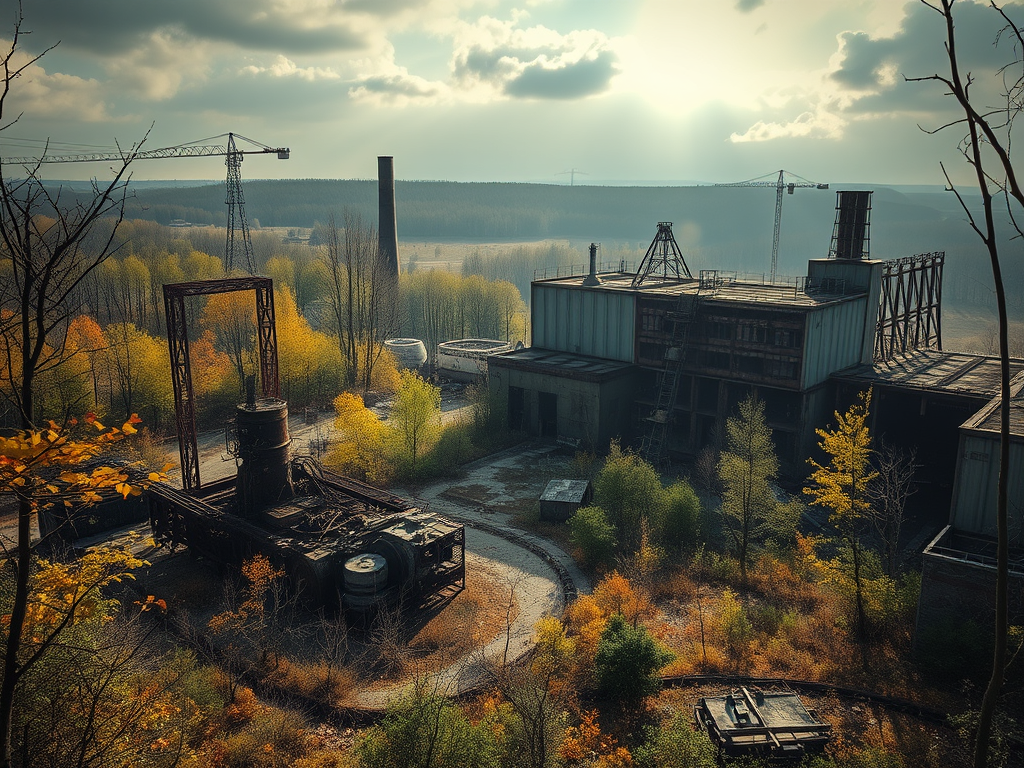
The long-term effects of the Chernobyl disaster are staggering. While the immediate death toll was in the dozens, the World Health Organization estimates thousands of future cancer deaths are attributable to the radiation. A 30-km “Exclusion Zone” remains, an eerie ghost world where nature is retaking the abandoned city of Pripyat.
2. The Bhopal Gas Tragedy: A City Gassed
Just before midnight on December 2, 1984, a pesticide plant in Bhopal, India—owned by a subsidiary of the American company Union Carbide—experienced a catastrophic leak. Water entered a tank containing 42 tons of methyl isocyanate (MIC), a highly toxic chemical. The resulting runaway reaction turned the tank into a pressure cooker, which then vented a dense, poisonous cloud over the sleeping city.
The gas, heavier than air, hugged the ground. It silently flooded the shantytowns surrounding the plant, killing thousands in their beds. People awoke choking, their lungs and eyes burning. The immediate stampede for safety caused more deaths. The official immediate death toll was over 3,700, but local estimates and subsequent deaths from gas-related illnesses put the real number at over 20,000.
The Bhopal gas tragedy stands as the world’s worst industrial disaster. It was the result of appalling corporate negligence; safety systems, including refrigeration units for the MIC tanks, had been shut off to cut costs. Decades later, the site remains a toxic waste dump, contaminating the groundwater and continuing to cause birth defects and chronic illnesses in a population that has never seen justice.
3. The Aral Sea Desiccation: An Ocean Turned to Dust
This disaster wasn’t an explosive event; it was a slow-motion strangulation, an “environmental suicide” committed by a state. In the 1960s, the Soviet Union decided to become a self-sufficient cotton-producing superpower. To do this, it began diverting the two mighty rivers that fed the Aral Sea—once the fourth-largest inland body of water on Earth—to irrigate vast, arid deserts in Kazakhstan and Uzbekistan.
The plan “worked.” The desert bloomed with cotton. But the Aral Sea began to die. Starved of its water source, it shrank at an astonishing rate. By the 2000s, it had lost over 90% of its volume, splitting into smaller, hyper-saline “lakes.” The once-thriving fishing industry, which employed 40,000 people, vanished completely. The city of Muynak, once a bustling port, now sits 100 kilometers from the nearest shore, its fishing trawlers rusting in a sea of toxic sand.
This created a new, terrifying problem. The exposed seabed, laced with decades of pesticide and fertilizer runoff, dried into a toxic dust. “Toxic dust storms” now plague the region, causing staggering rates of tuberculosis, respiratory cancers, and birth defects.
4. The Deepwater Horizon Oil Spill: An Uncapped Gusher
On April 20, 2010, the Deepwater Horizon, a state-of-the-art, semi-submersible drilling rig, exploded in the Gulf of Mexico, killing 11 workers. Two days later, it sank. But the true disaster had just begun. A mile below the surface, the wellhead had ruptured, and oil began gushing, unchecked, into the ocean.
For 87 agonizing days, the world watched as BP engineers failed, one after another, to cap the well. It became the largest marine oil spill in history, releasing an estimated 134 million gallons of crude oil. The oil contaminated 1,300 miles of coastline from Texas to Florida, devastating fragile marsh ecosystems and tourism-based economies.
The Deepwater Horizon oil spill‘s impact on wildlife was apocalyptic. Images of oil-drenched pelicans and sea turtles became symbols of the catastrophe. Over 800,000 birds were estimated to have died. Dolphins and whales were found dead in record numbers. Long-term studies show that dolphin populations in the area suffered from reproductive failure and lung disease for years, a toxic legacy that persists in the deep ocean.
5. The Great Smog of London: The “Pea-Souper” That Killed
For centuries, London was famous for its “pea-souper” fogs. But what happened on December 5, 1952, was something different. A period of cold weather led Londoners to burn unusually large amounts of low-grade, high-sulfur coal in their home fireplaces. This, combined with the pollution from local factories, was trapped by a windless, stagnant weather event called an anticyclone.
A cold, dense layer of air became trapped under a “lid” of warmer air, and the city was enveloped in a thick, yellowish-black, acrid smog. It was so dense that visibility dropped to a few feet. People couldn’t see their own hands. Transport stopped. People abandoned their cars.
But the real horror was medical. The smog—a lethal cocktail of sulfur dioxide, hydrochloric acid, and other pollutants—was a chemical weapon. It attacked the lungs of the elderly, the young, and the sick. By the time the smog finally lifted five days later, over 4,000 people had died. Subsequent analysis places the total death toll at over 12,000. The Great Smog of London was such a profound shock that it directly led to the passage of the revolutionary Clean Air Act of 1956, the world’s first major piece of air pollution legislation.
6. Minamata Disease: A Poisoned Fishing Village
In the 1950s, a baffling and terrifying illness emerged in the small, coastal city of Minamata, Japan. It began with the cats. Locals described them as “dancing cats,” convulsing, screaming, and throwing themselves into the sea. Soon, the “disease” struck the human population. People experienced a loss of motor control, slurred speech, sensory numbness, and severe, uncontrollable tremors.
The cause was a chemical plant owned by the Chisso Corporation. From 1932 to 1968, the plant discharged its industrial wastewater directly into Minamata Bay. This wastewater was heavily contaminated with methylmercury, a highly toxic compound. The mercury was absorbed by plankton, which were eaten by small fish, which were eaten by larger fish, bioaccumulating up the food chain.
The local population, whose diet depended on the fish from the bay, was systematically poisoned. The most heartbreaking victims were congenital, born with severe deformities, mental disabilities, and paralysis after being poisoned in the womb. The company and the government actively suppressed the research for years, but the tireless work of victims and activists finally exposed the truth, making Minamata disease the preeminent symbol of industrial heavy-metal poisoning.
7. Love Canal: A Toxic Suburb
In the 1970s, Love Canal was a quiet, working-class neighborhood in Niagara Falls, New York. But it was built on a toxic secret. From 1942 to 1953, the Hooker Chemical Company had used the site, an abandoned canal, as a dumping ground for 21,800 tons of toxic waste. The company then “covered” the site with clay and sold it to the local school board for $1, with a disclaimer in the deed.
A school was built, and suburban homes soon followed. But by the 1970s, after heavy rains, the chemicals began to leach. Corroded, 55-gallon drums surfaced in backyards. Oily, multi-colored chemicals bubbled up into basements. Residents reported horrific chemical smells, children received chemical burns from playing outside, and the local women suffered from an astronomical rate of miscarriages and birth defects.
Activist Lois Gibbs, a local mother whose son fell ill, organized the community and demanded action. Her tireless protests led to President Jimmy Carter declaring a federal emergency in 1978. The Love Canal scandal was the first major national story of its kind, and it directly led to the creation of the “Superfund” Act of 1980, a law that holds polluters financially responsible for cleaning up their toxic sites.
8. The Kuwaiti Oil Fires: An Act of Eco-Terrorism
This disaster was not an accident; it was a deliberate act of environmental warfare. As the Gulf War of 1991 concluded, a defeated Iraqi army retreated from Kuwait. In a final, vindictive “scorched earth” policy, they systematically set fire to over 600 Kuwaiti oil wells.
The result was an environmental inferno. For seven months, the desert burned. The fires consumed an estimated six million barrels of oil per day, releasing a plume of smoke and soot that blocked out the sun, turning day into night. Black, oily rain fell as far away as the Himalayas. At its peak, the smoke plume was so vast it caused a measurable drop in temperature—a “nuclear winter” effect—in the Persian Gulf region, with daytime temperatures 10°C (18°F) below normal.
Firefighting teams from around the world, led by the legendary Red Adair, battled the blazes, which were like “trying to put out a blowtorch with a garden hose.” The long-term impact includes a landscape scarred by “oil lakes” and soil so saturated with soot and crude that it may remain toxic for a century.
9. The Exxon Valdez Oil Spill: A Pristine Wilderness Fouled
On March 24, 1989, the oil tanker Exxon Valdez was navigating Prince William Sound in Alaska. The ship’s captain, Joseph Hazelwood, who had a history of drinking, was not on the bridge. The ship, with a single-hull design now considered obsolete, struck Bligh Reef, ripping its hull open.
Over 11 million gallons of crude oil spilled into one of the most pristine and remote marine ecosystems on Earth. The oil slick ultimately covered 1,300 square miles and fouled 1,300 miles of coastline. The timing and location could not have been worse. The spill occurred during the spring herring spawn and the migration of birds and sea mammals.
The immediate die-off was horrific: an estimated 250,000 seabirds, 2,800 sea otters, 300 harbor seals, 250 bald eagles, and billions of salmon and herring eggs were killed. Cleanup efforts were slow and often ineffective in the rugged, rocky terrain. Decades later, the Exxon Valdez oil spill‘s legacy endures. Oil can still be found buried under the beaches, and some wildlife populations, like a specific pod of orcas, have never recovered. The disaster directly led to the Oil Pollution Act of 1990, which mandated that all new tankers be built with double hulls.
10. Three Mile Island: The Meltdown That Halted an Industry
On March 28, 1979, the Three Mile Island nuclear plant near Harrisburg, Pennsylvania, experienced a partial meltdown. It was the most significant nuclear accident in U.S. history and became a terrifying lesson in the danger of cascading failures.
It began with a minor plumbing problem. But then, a crucial relief valve got stuck open, allowing thousands of gallons of reactor coolant to drain away. In the control room, a confusing and poorly designed indicator light falsely told operators the valve was “closed.” Compounding the error, operators, overwhelmed by a symphony of alarms and misinterpreting the situation, manually shut down the emergency core cooling systems that were trying to save the reactor.
With the coolant gone, the nuclear core overheated and partially melted. A hydrogen bubble formed, raising fears of an explosion that could breach the containment building. While the Three Mile Island accident led to no direct deaths and only a minor release of radiation, its psychological and political impact was immense. It shattered public confidence in nuclear power, leading to sweeping, permanent reforms in NRC regulations, operator training, and safety protocols. It also effectively froze the construction of new nuclear plants in the UnitedS States for three decades.
Further Reading
These events are complex, with deep human, scientific, and political stories. For those who want to learn more, here are some of the most essential books on these disasters:
- Midnight in Chernobyl: The Untold Story of the World’s Greatest Nuclear Disaster by Adam Higginbotham
- Voices from Chernobyl: The Oral History of a Nuclear Disaster by Svetlana Alexievich
- Five Past Midnight in Bhopal: The Epic Story of the World’s Deadliest Industrial Disaster by Dominique Lapierre and Javier Moro
- Fire on the Horizon: The Untold Story of the Deepwater Horizon Disaster by John Konrad and Tom Shroder
- Chasing the Sea: Lost Among the Ghosts of Empire in Central Asia by Tom Bissell
- Minamata: The Story of the Poisoning of a City by W. Eugene Smith
- Laying Waste: The Poisoning of America by Toxic Chemicals by Michael H. Brown
Here at Zentara.blog, our mission is to take those tricky subjects and unlock them, making knowledge exciting and easy to grasp for everyone. But the adventure doesn’t stop on this page! We’re constantly exploring new frontiers and sharing discoveries across the digital universe. Want to dive deeper into more mind-bending Top 10s and keep expanding your world? Come join us on our other platforms – we’ve got unique experiences waiting for you on each one!
Get inspired by visual wonders and bite-sized facts: See a the world through Zentara’s eyes on Pinterest!
Pin our fascinating facts and stunning visuals to your own boards. Explore Pins on Pinterest: https://uk.pinterest.com/zentarablog/
Discover quick insights and behind-the-scenes peeks: Hop over to Tumblr for snippets, quotes, and unique content you won’t find anywhere else. It’s a different flavour of discovery! Follow the Fun on Tumblr: https://www.tumblr.com/zentarablog
Ready for deep dives you can listen to or watch? We’re bringing our accessible approach to video and potentially audio! Subscribe to our YouTube channel and tune into future projects that make learning pop! Subscribe on YouTube: https://www.youtube.com/@ZentaraUK
Seeking even more knowledge in one place? We’ve compiled some of our most popular topic deep dives into fantastic ebooks! Find them on Amazon and keep the learning journey going anytime, anywhere. Find Our Ebooks on Amazon: https://www.amazon.co.uk/s?k=Zentara+UK&ref=nb_sb_noss
Connect with us and fellow knowledge seekers: Join the conversation on BlueSky! We’re sharing updates, thoughts, and maybe even asking you what wonders we should explore next. Chat with Us on BlueSky: https://bsky.app/profile/zentarablog.bsky.social
Perfect for learning on the move! We post multiple 10-minute podcasts per day on Spotify. Pop on your headphones and fill your day with fascinating facts while you’re out and about! Listen on Spotify: https://open.spotify.com/show/3dmHbKeDufRx95xPYIqKhJFollow us on Instagram for bytesize knowledge! We post multiple posts per day on our official Instagram account. https://www.instagram.com/zentarablog/ Every click helps us keep bringing honest, accessible knowledge to everyone. Thanks for exploring with us today – see you out there in the world of discovery!



Leave a Reply