
Table of Contents
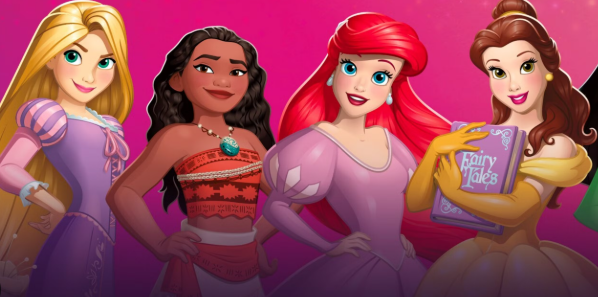
The sparkle, the song, the castle, the crown. For decades, the Disney Princesses have been the undisputed, glitter-dusted icons of “happily ever after.” They are a global brand, a multi-billion dollar juggernaut, and a core part of childhood for millions. But beyond the glass slippers and magic carpets lies a story that is far more complex, calculated, and fascinating than you might imagine.
The official “Disney Princess” line-up isn’t just a casual collection of any royal heroine; it’s an exclusive, high-stakes franchise with specific rules, a surprising history, and a few “members” who technically shouldn’t be there at all. We’re pulling back the royal curtain to reveal 10 facts you probably didn’t know about the world’s most famous princess club.
1. The “Official” Lineup Is an Exclusive (and Profitable) Club
This is the most fundamental fact you must know: the “Disney Princess” line is a marketing franchise, not just a list of all princesses from Disney films. It was created in the early 2000s by a Disney executive named Andy Mooney, who noticed that little girls at a “Disney on Ice” show were wearing homemade, mix-and-match princess costumes. He realized Disney was missing a huge opportunity to cross-promote these heroines.
The official, “canonical” list currently has 13 members: Snow White, Cinderella, Aurora, Ariel, Belle, Jasmine, Pocahontas, Mulan, Tiana, Rapunzel, Merida, Moana, and Raya.
But wait, you’re thinking. Why aren’t Anna and Elsa Disney Princesses? The answer is simple and purely business: they are too successful. The Frozen franchise is a multi-billion dollar entity all on its own. Anna and Elsa headline their own separate, monstrously profitable brand. Adding them to the “Disney Princess” line would be like merging two empires; it’s cleaner to keep them separate, as Frozen is a powerhouse that doesn’t need the “princess” label.
2. Snow White Is Technically a 14-Year-Old Child
The one who started it all, Snow White, is also the youngest Disney Princess. According to the official Disney canon, the princess in the 1937 film Snow White and the Seven Dwarfs is only 14 years old. This can be jarring to modern audiences, especially when “true love’s kiss” comes from a prince she just met. However, this was more in line with the classic (and admittedly, darker) European fairy tales from which the story was pulled, where “coming of age” happened much earlier.
Her voice was just as groundbreaking. Walt Disney wanted a voice that was innocent and almost childlike, not a mature, 1930s jazz singer. He found 19-year-old Adriana Caselotti, whose high-pitched, operatic voice became the defining sound of the “classic” princess. Her contract was so restrictive (to protect the “magic”) that it effectively prevented her from taking other major roles for the rest of her life, ensuring she would always be known as the one, true voice of Snow White.
3. Princess Aurora Has Only 18 Minutes of Screen Time
She is the star of one of Disney’s most visually stunning films, Sleeping Beauty (1959), but the title character is barely in it. If you time it, Princess Aurora (or “Briar Rose”) is only awake and on-screen for approximately 18 minutes of the film’s 75-minute runtime. She also has only 18 lines of dialogue.
Why? Because the movie isn’t really about her. The true protagonists of Sleeping Beauty are the three good fairies: Flora, Fauna, and Merryweather. The story is driven by their quest to protect the baby, their 16-year struggle to raise her in secret, and their magical war against the film’s real star, the magnificent villain Maleficent. Aurora is, in many ways, the ultimate “damsel in distress”—a beautiful, graceful plot device that the actual main characters must fight over and protect.
4. Ariel’s Red Hair Was a Strategic Move Against… Tom Hanks
The Little Mermaid (1989) was a massive gamble that launched the “Disney Renaissance.” But as the film was in production, animators had a problem. In 1984, a different mermaid movie had been a blockbuster hit: Splash, starring Tom Hanks and a blonde mermaid played by Daryl Hannah.
Disney executives, particularly Jeffrey Katzenberg, were worried a blonde mermaid would look like a Splash rip-off. The animators, led by Glen Keane, argued for a vibrant red hair color. This served two purposes: it distinguished Ariel from her live-action predecessor, and it was a brilliant thematic choice. The fiery, rebellious red of her hair perfectly matched her personality and created a stunning visual contrast against the cool blues and greens of the ocean world she desperately wanted to leave. It was a technical headache to animate, but it defined her character before she even spoke a word.
5. Belle Was Intentionally Designed to Be the “Odd One Out”
How do you show, in a big, bombastic opening number, that your main character is different from everyone else? The animators of Beauty and the Beast (1991) used a simple and brilliant visual trick. Watch the opening song, “Belle,” and pay attention to the colors.
The villagers are all dressed in rustic, earthy tones: browns, greens, oranges, and reds. The only character in the entire village who wears blue is Belle. This immediately and subconsciously isolates her from the “provincial” crowd. It visually reinforces that she is an outsider, lost in her books and dreams. The color also links her to another “odd one out” in the film—the Beast, who wears a formal blue suit—and subtly hints at the “blue-blooded” royalty she is destined to join.
6. Jasmine Is a “Supporting” Princess in Her Own Movie
Princess Jasmine from Aladdin (1992) was groundbreaking. She was the first non-white princess (a title sometimes debated with Peter Pan‘s Tiger Lily, but Jasmine was the first heroine) and was fiery, rebellious, and refused to be a “prize to be won.” But she has one major difference from all the princesses who came before her: she is not the main character of her film.
Aladdin is, without a doubt, Aladdin’s story. He is the protagonist, and the film revolves around his journey from “street rat” to prince. Jasmine is the “deuteragonist,” or the secondary lead. While she has her own character arc (gaining the freedom to choose her own path), her story is in service to Aladdin’s. This was a major shift, proving a character could be a “Disney Princess” without being the film’s sole focus.
7. Pocahontas Is the Only Princess (Loosely) Based on a Real Person
The Disney Princess line-up is filled with characters from fairy tales (Cinderella), literature (Ariel), and original screenplays (Merida). But Pocahontas (1995) is unique: she is the only princess based, however extremely loosely, on a real, historical figure.
This is also what makes the film one of Disney’s most controversial. The real Pocahontas (whose name was Amonute, “Pocahontas” being a nickname) was a child when she met John Smith, likely around 10 to 12 years old. There was no “Colors of the Wind” romance; that entire part of the story was invented by Disney, which aged her up to be a young adult. While the film was praised for its art and music, it has been heavily criticized for its historical revisionism and romanticizing of a complex and tragic colonial story.
8. Mulan Is the Only “Princess” Who Isn’t Actually a Princess
This is the ultimate “rule-breaker.” Over time, the Disney Princess franchise established a few “rules” for inclusion. A character must:
- Be born royal (like Aurora).
- Marry into royalty (like Cinderella).
- Perform a significant act of heroism (a rule added later).
Mulan (1998) is the only one in the classic line-up who gets in purely on rule #3. She isn’t the daughter of a king. And at the end of her film, she doesn’t marry a prince (General Li Shang is not royalty). She saves all of China by defeating the Hun army. Her inclusion was a revolutionary act for the brand, proving that the “princess” title was about more than a bloodline; it was about character, courage, and heroism.
9. Tiana Was a Hard-Won Victory (and a Major Re-Write)
The Princess and the Frog (2009) was a landmark event, introducing Tiana, the first Black Disney Princess. But the road to her creation was fraught with controversy. The film’s original concept was… not good.
The working title was The Frog Princess. The princess’s name was “Maddy,” and she wasn’t an ambitious chef; she was a chambermaid working for a rich, white family. The prince wasn’t from her culture, and the story was criticized for potential offensive undertones. After a significant backlash (and new leadership from Pixar’s John Lasseter), the story was completely overhauled. “Maddy” became “Tiana,” an empowered, ambitious entrepreneur. Her goal wasn’t to “find a prince” but to open her own restaurant. This crucial rewrite turned a potential stereotype into one of the most self-motivated and inspiring princesses in the entire line-up.
10. Merida Is the Only Pixar Princess (And Fought for Her Look)
If Mulan bent the rules, Merida from Brave (2012) broke the mold. She is the only Pixar character to be inducted into the Disney Princess line. But her “coronation” in 2013 was a disaster.
For her official induction, Disney unveiled a “glamorous” 2D redesign. They slimmed her waist, gave her a sparkly, off-the-shoulder dress, removed her bow and arrow, and “tamed” her iconic, wild red hair. The backlash was immediate and fierce. Brave‘s own creator, Brenda Chapman, called the makeover “atrocious,” and fans argued that the entire point of Brave was that Merida rejected this exact kind of conventional, glamorous femininity. Disney quickly and quietly pulled the redesign, and Merida has been allowed to keep her original, wild, bow-wielding 3D look ever since.
Further Reading
Want to learn more about the art, history, and real-life women behind the magic? Here are a few books to add to your royal library.
- The Queens of Animation: The Untold Story of the Women Who Made the Disney Magic by Nathalia Holt
- An essential, eye-opening history of the real-life women who worked at Disney—often in the background—and were responsible for some of the most iconic moments in Snow White, Cinderella, and more.
- The Art of the Disney Princess by Disney Book Group
- A beautiful coffee-table book that showcases concept art, sketches, and “re-imagined” new art of the princesses, offering a great visual history of their design evolution.
- Disney’s Art of Animation: From Mickey Mouse to Hercules by Bob Thomas
- While not just about princesses, this book provides the crucial context for the “Disney Renaissance” (Ariel, Belle, Jasmine) and the “classic” era (Snow White, Cinderella, Aurora), explaining the technology and artistry that brought them to life.
Here at Zentara.blog, our mission is to take those tricky subjects and unlock them, making knowledge exciting and easy to grasp for everyone. But the adventure doesn’t stop on this page! We’re constantly exploring new frontiers and sharing discoveries across the digital universe. Want to dive deeper into more mind-bending Top 10s and keep expanding your world? Come join us on our other platforms – we’ve got unique experiences waiting for you on each one!
Get inspired by visual wonders and bite-sized facts: See the world through Zentara’s eyes on Pinterest!
Pin our fascinating facts and stunning visuals to your own boards. Explore Pins on Pinterest: https://uk.pinterest.com/zentarablog/
Discover quick insights and behind-the-scenes peeks: Hop over to Tumblr for snippets, quotes, and unique content you won’t find anywhere else. It’s a different flavour of discovery! Follow the Fun on Tumblr: https://www.tumblr.com/zentarablog
Ready for deep dives you can listen to or watch? We’re bringing our accessible approach to video and potentially audio! Subscribe to our YouTube channel and tune into future projects that make learning pop! Subscribe on YouTube: https://www.youtube.com/@ZentaraUK
Seeking even more knowledge in one place? We’ve compiled some of our most popular topic deep dives into fantastic ebooks! Find them on Amazon and keep the learning journey going anytime, anywhere. Find Our Ebooks on Amazon: https://www.amazon.co.uk/s?k=Zentara+UK&ref=nb_sb_noss
Connect with us and fellow knowledge seekers: Join the conversation on BlueSky! We’re sharing updates, thoughts, and maybe even asking you what wonders we should explore next. Chat with Us on BlueSky: https://bsky.app/profile/zentarablog.bsky.social
Perfect for learning on the move! We post multiple 10-minute podcasts per day on Spotify. Pop on your headphones and fill your day with fascinating facts while you’re out and about! Listen on Spotify: https://open.spotify.com/show/3dmHbKeDufRx95xPYIqKhJFollow us on Instagram for bytesize knowledge! We post multiple posts per day on our official Instagram account. https://www.instagram.com/zentarablog/ Every click helps us keep bringing honest, accessible knowledge to everyone. Thanks for exploring with us today – see you out in the world of discovery!
Leave a Reply