
Table of Contents
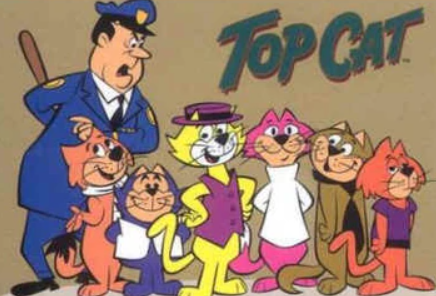
In the concrete jungle of animated classics, one smooth-talking feline stands a class apart. With a snap of his fingers and a tip of his porkpie hat, Top Cat turned a grimy alley into a kingdom of clever schemes and unshakeable friendships. From his “police-phone” telephone booth, T.C., the charismatic and undisputed leader of Hoagy’s Alley, navigated the world with a blend of charm, wit, and the loyal backing of his gang: Benny the Ball, Choo-Choo, Spook, Fancy-Fancy, and The Brain.
Their constant foil, the ever-flustered Officer Charles “Charlie” Dibble, just wanted a bit of order, but T.C.’s gang always seemed one step ahead, even when their plans were two steps behind. The show, which first aired in 1961, became a cornerstone of Hanna-Barbera’s television empire. But while you might remember the catchy theme song and the alley shenanigans, the story behind the story is filled with fascinating, and often surprising, facts.
Let’s pull back the curtain on the alley-cat impresario and uncover ten unbelievable facts about the most e-ffec-tu-al Top Cat.
1. The Leader of the Gang: T.C. Was a Feline Phil Silvers
This is the most well-known, and most crucial, fact for understanding the show’s DNA. Top Cat wasn’t just inspired by the popular 1950s sitcom The Phil Silvers Show (also known as Sgt. Bilko); it was a direct, animated homage. Phil Silvers played Master Sergeant Ernest G. Bilko, a fast-talking, charismatic con artist who ran get-rich-quick schemes from his army-base post.
Hanna-Barbera transplanted this entire premise into an animated world. Top Cat is a perfect mirror of Sgt. Bilko, right down to the voice. The studio hired voice actor Arnold Stang specifically to do a Phil Silvers impression, and he nailed the unique, nasal, and rapid-fire delivery. The parallels didn’t stop there. T.C.’s main sidekick, the portly, naive, and sweet-natured Benny the Ball, was a direct parallel to Bilko’s loyal right-hand man, Private Doberman. In a brilliant casting move, Hanna-Barbera hired the same actor, Maurice Gosfield, to voice Benny. This wasn’t a subtle nod; it was a deliberate creative choice to capture the proven comedic dynamic that had made The Phil Silvers Show a massive hit.
2. A Primetime “Flop”: Top Cat’s Shockingly Short 30-Episode Run
Ask anyone who grew up with Top Cat, and they’ll likely describe it as a Saturday morning staple that seemed to run for years. This is a fascinating trick of television history. The truth is, Top Cat had an incredibly short, and initially unsuccessful, original run. Like its predecessor The Flintstones, Top Cat was one of the first cartoons designed to air in primetime, appealing to adults as much as children.
It premiered on ABC on September 27, 1961, airing on Wednesday nights. Unfortunately, it was placed in a brutal time slot against the popular series Wagon Train. The show failed to find a large primetime audience and was cancelled after just one season of 30 episodes. Its “classic” status wasn’t cemented until years later when these 30 episodes were put into heavy rotation on Saturday morning cartoon blocks. There, free from primetime competition, T.C. and his gang found their true, adoring audience, and the show ran in syndication for decades, creating the illusion of a long and prolific series.
3. A “Boss” By Any Other Name: Why the UK Knew Him as ‘Boss Cat’
For generations of viewers in the United Kingdom, the show wasn’t called Top Cat at all. It was known as Boss Cat. This name change is a classic piece of international trivia, rooted in the strict advertising rules of the BBC. When the show was first imported to the UK, there was a major problem: “Top Cat” was the name of a very popular brand of cat food.
The BBC, being a public-service broadcaster funded by a license fee, has historically had stringent rules prohibiting advertising and commercial promotion. Airing a show called Top Cat would have been seen as giving free, massive publicity to the pet food brand, a clear violation of their charter. To get around this, the BBC simply renamed the show Boss Cat. The title cards were edited, but the theme song presented a comical problem. They couldn’t easily re-record it, so the original lyrics—which clearly sing “Top Cat… the most e-ffec-tu-al Top Cat!”—remained, creating a funny disconnect for eagle-eared British kids who wondered why the song was calling their “Boss Cat” by a different name.
4. The Voices of the Alley: A Mix of Legends and Newcomers
The voice cast of Top Cat was a remarkable blend of talent. We’ve already mentioned the “Bilko” imports: Arnold Stang (T.C.) and Maurice Gosfield (Benny). But the rest of the cast were just as brilliant. Officer Dibble was voiced by Allen Jenkins, a veteran Hollywood “tough guy” character actor who had appeared in hundreds of films since the 1930s. His gruff-but-lovable voice, honed from decades of playing cops and sidekicks, was perfect for the perpetually exasperated Dibble.
The rest of the cat gang was filled out by Hanna-Barbera regulars. John Stephenson, a prolific voice actor (who would later be Mr. Slate on The Flintstones), voiced the suave, ladies’-man cat, Fancy-Fancy. The other two cats, Spook and The Brain, were voiced by Leo de Lyon, who also provided the voice for Choo-Choo. This meant de Lyon was often talking to himself in multi-character scenes, a testament to his vocal versatility. What’s notable is who wasn’t in the cast. This was one of the few early Hanna-Barbera shows that didn’t feature Daws Butler (Yogi Bear, Huckleberry Hound) or Don Messick (Boo-Boo, Scooby-Doo) in primary roles, giving Top Cat a unique sonic identity all its own.
5. The Professor of Hoagy’s Alley: T.C.’s Bizarre Calling Card
Top Cat has always presented himself as a creature of high-class tastes and intellectual superiority, despite living in a trash can. He’s the very definition of “champagne tastes on a beer budget.” This trait was perfectly and hilariously codified in the episode “The $1,000,000 Flim-Flam.” In the episode, T.C. and the gang try to impress a visiting millionaire (who they mistake for a vagrant).
To establish his credentials, T.C. presents the man with his personal calling card. The card, seen in close-up, reads “T.C., Ph.D.” The bewildered millionaire, surprised to find such an educated feline in an alley, asks him what the “Ph.D.” stands for. Without missing a beat, Top Cat replies, “Professor of Philosophy, of course!” This single gag is the most concise summary of his character ever written: a blend of unshakeable confidence, street-smart savvy, and grandiose self-delusion. He’s not just a con artist; in his own mind, he’s a scholar of the streets.
6. The “Collar” That Made TV Animation Possible
If you look closely at Top Cat, Officer Dibble, and even the rest of the gang, you’ll notice they all wear something around their necks. T.C. has his turtleneck vest, Dibble has his police shirt and tie, Choo-Choo has a white turtleneck, and Benny has his shirt collar. This wasn’t just a fashion choice; it was the secret weapon of Hanna-Barbera’s entire business model. This technique, known as “limited animation,” was pioneered to produce cartoons at the speed and low cost required for television.
The collar creates a distinct line separating the character’s head from their body. This allowed animators to save an enormous amount of time and money. For a scene with dialogue, they only had to draw the character’s head (with different mouth shapes) on a small set of “cels” (animation sheets) and place them over a single, static drawing of the character’s body. Without the collar, the entire head and torso would have to be redrawn for every single frame of speech, as the neck and shoulders would move. This cost-saving trick, used on The Flintstones and Yogi Bear as well, made weekly animated television financially viable for the first time.
7. The Case of the Missing Setting: Is Hoagy’s Alley in New York?
The show screams New York City. The towering tenements, the classic blue-and-white police phone, the specific design of the trash cans and fire hydrants, Officer Dibble’s Irish-American beat cop accent—it all points directly to Manhattan. The entire vibe is that of a bustling, concrete, mid-century American metropolis. And yet, the show never once explicitly states that it’s set in New York.
This ambiguity was likely intentional. By keeping the city generic, Hanna-Barbera made the show relatable to audiences across the entire country. It could be any big city. However, the visual evidence is so overwhelming that it feels like a “don’t ask, don’t tell” policy. The artists and writers were clearly drawing from New York, particularly boroughs like Brooklyn or the Lower East Side, for inspiration. Hoagy’s Alley (itself a pun on the 19th-century high-society phrase “Hoagland’s Alley”) is the archetypal New York back-alley, a perfect, self-contained stage for T.C.’s operatic schemes.
8. “The Most E-ffec-tu-al”: The Genius of the Theme Song
The Top Cat theme is one of the most iconic in television history. Composed by the legendary Hoyt Curtin, with lyrics by Hanna-Barbera, it’s a jazzy, scat-filled masterpiece that tells you everything you need to know about the main character in under 60 seconds. The song establishes his personality: he’s “the boss,” the “king,” and the “chief.” He’s a “challenge” and a “big romance.”
But the lyrical high-point is its most famous line: “He’s the most e-ffec-tu-al / Top Cat!” The brilliant, syncopated splitting of the word “effectual” is pure genius. It mirrors the very “con” that T.C. represents. It sounds sophisticated and intellectual, but it’s also playful, slightly off-kilter, and improvisational—just like T.C. himself. The song, with its finger-snapping brass and smooth vocals, isn’t just a jingle; it’s a character statement. It’s the sound of cool, mid-century confidence, and it sets the stage perfectly for the show that follows.
9. The 21st Century Cat: T.C.’s Surprising Modern Legacy
While T.C. and the gang were mainstays in reunion specials like Yogi’s Treasure Hunt in the 1980s, their solo legacy has had a strange and powerful 21st-century resurgence. In 2011, a feature-length animated film, Top Cat: The Movie (Spanish: Don Gato y su Pandilla), was produced by Mexico’s Ánima Estudios. The film was a massive box-office success in Latin America, where the show has always been incredibly popular, breaking records in Mexico. It was followed by a 2015 prequel, Top Cat Begins.
But T.C.’s most high-profile modern gig was in the UK, where his “Boss Cat” persona has enduring popularity. From 2016 to 2019, Top Cat became the animated “spokes-cat” for the UK bank Halifax. In a series of cleverly animated commercials, T.C. (with a new voice actor) used his old schemes to try and get his hands on the bank’s services, only to be foiled by a savvy Halifax employee. This campaign solidified his status as an archetype: the loveable rogue whose charm is truly timeless.
10. The Cat Who Knew He Was on TV: Breaking the Fourth Wall
Long before Ferris Bueller or Deadpool made it their signature move, Top Cat was one of the first and most consistent “fourth-wall breakers” in television. T.C. was fully, comically aware that he was the star of a TV show. He didn’t just live in his world; he was a presenter, and the audience members were his personal confidantes.
Nearly every episode, especially at the end, T.C. would turn directly to the camera to address the viewers. If a scheme had just spectacularly imploded, he might shrug and sigh, “Well, what can you do? We’ll have to try again next week.” If he’d managed a small victory, he’d give the camera a sly wink. This “meta” commentary was incredibly sophisticated for a 1960s cartoon. It made the audience feel like they were in on the joke, part of T.C.’s gang. It bridged the gap between his alley and our living rooms, transforming us from simple viewers into co-conspirators.
Conclusion
Top Cat may have only produced 30 episodes, but its impact was monumental. By blending the adult-oriented, rapid-fire dialogue of a primetime sitcom with the appeal of funny animals, it created a hybrid that was smarter than the average cartoon. T.C. was more than a cat; he was an archetype. He was the charming, fast-talking dreamer, the rogue with a heart of gold who, despite his grand ambitions, was ultimately just trying to get by with a little help from his friends.
His unshakeable loyalty to his gang—and his bizarrely co-dependent “frenemy” relationship with Officer Dibble—gave the show a warmth that balanced its cynical schemes. That’s why, over 60 years later, the “most effectual” Top Cat remains the undisputed king of his alley.
📚 Further Reading
If you’re interested in diving deeper into the world of classic animation and the creators behind Top Cat, here are a few accessible books to get you started:
- The Hanna-Barbera Treasury: Rare Art and Mementos from Your Favorite Cartoon Classics by Jerry Beck
- This beautifully illustrated book provides a wonderful, nostalgic overview of the studio’s golden age, with sections on Top Cat and its contemporaries, giving context to the art style and production.
- This Laugh Is On Me: The Phil Silvers Story by Phil Silvers
- To truly understand Top Cat, you must first understand his inspiration, Sgt. Bilko. Phil Silvers’ own autobiography is a sharp, funny, and fascinating look at the life of the man who created the archetype T.C. was based on.
- A Cast of Friends by Arnold Stang
- The memoir from the voice of Top Cat himself. Stang was a prolific actor in radio, television, and film, and his book offers a glimpse into the life of the man who gave T.C. his unforgettable, rapid-fire voice.
Here at Zentara.blog, our mission is to take those tricky subjects and unlock them, making knowledge exciting and easy to grasp for everyone. But the adventure doesn’t stop on this page! We’re constantly exploring new frontiers and sharing discoveries across the digital universe. Want to dive deeper into more mind-bending Top 10s and keep expanding your world? Come join us on our other platforms – we’ve got unique experiences waiting for you on each one!
Get inspired by visual wonders and bite-sized facts: See the world through Zentara’s eyes on Pinterest!
Pin our fascinating facts and stunning visuals to your own boards. Explore Pins on Pinterest: https://uk.pinterest.com/zentarablog/
Discover quick insights and behind-the-scenes peeks: Hop over to Tumblr for snippets, quotes, and unique content you won’t find anywhere else. It’s a different flavour of discovery! Follow the Fun on Tumblr: https://www.tumblr.com/zentarablog
Ready for deep dives you can listen to or watch? We’re bringing our accessible approach to video and potentially audio! Subscribe to our YouTube channel and tune into future projects that make learning pop! Subscribe on YouTube: https://www.youtube.com/@ZentaraUK
Seeking even more knowledge in one place? We’ve compiled some of our most popular topic deep dives into fantastic ebooks! Find them on Amazon and keep the learning journey going anytime, anywhere. Find Our Ebooks on Amazon: https://www.amazon.co.uk/s?k=Zentara+UK&ref=nb_sb_noss
Connect with us and fellow knowledge seekers: Join the conversation on BlueSky! We’re sharing updates, thoughts, and maybe even asking you what wonders we should explore next. Chat with Us on BlueSky: https://bsky.app/profile/zentarablog.bsky.social
Perfect for learning on the move! We post multiple 10-minute podcasts per day on Spotify. Pop on your headphones and fill your day with fascinating facts while you’re out and about! Listen on Spotify: https://open.spotify.com/show/3dmHbKeDufRx95xPYIqKhJFollow us on Instagram for bytesize knowledge! We post multiple posts per day on our official Instagram account. https://www.instagram.com/zentarablog/ Every click helps us keep bringing honest, accessible knowledge to everyone. Thanks for exploring with us today – see you out there in the world of discovery!




Leave a Reply