
Table of Contents
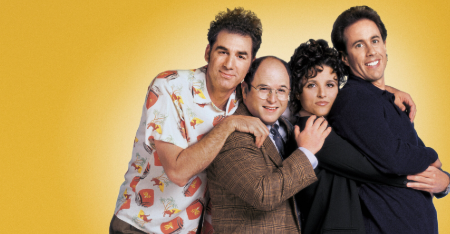
For nine seasons, Seinfeld dominated television screens, reshaping the sitcom landscape with its unique brand of observational humor and cynical charm. Co-creators Larry David and Jerry Seinfeld famously pitched it as a “show about nothing,” focusing on the minutiae of daily life rather than grand, sentimental story arcs. Even decades after its finale, the show remains a cultural touchstone, streaming constantly and influencing a new generation of comedies.
However, behind the laughs, the “yada yada yadas,” and the close-talking, there lies a treasure trove of production secrets and bizarre true stories that even the most devoted fans might have missed. From casting changes that saved the series to real-life lawsuits sparked by character inspirations, the history of Seinfeld is just as fascinating as the episodes themselves. Whether you are a casual viewer or a die-hard fan who can recite “The Marine Biologist” monologue by heart, these insights will deepen your appreciation for the show that changed everything.
Here are 10 interesting facts you didn’t know about Seinfeld.
1. The “No Hugging, No Learning” Rule
Why the characters never evolved and why we loved them for it. Unlike virtually every other sitcom of its era, Seinfeld operated under a strict, unwritten commandment from co-creator Larry David: “No hugging, no learning.” In the 1980s and 90s, shows like Cheers, Friends, and Full House relied heavily on sentimental moments where characters would learn a moral lesson, grow emotionally, or share a heartwarming embrace by the time the credits rolled. David found this trope disingenuous and antithetical to the type of comedy he wanted to write.
This philosophy meant that Jerry, George, Elaine, and Kramer were forbidden from experiencing genuine personal growth or moral redemption. If they did something terrible—which they often did—they never felt lasting remorse or learned from their mistakes. This commitment to cynicism is what gave the show its sharp, distinct edge. It allowed the writers to place the characters in increasingly absurd and selfish situations without the burden of having to “redeem” them in the final minute. This rule remained in effect until the very bitter end; in the finale, as the four sit in a jail cell, they engage in the exact same trivial conversation about a shirt button that started the series pilot, proving once and for all that they had learned absolutely nothing.
2. The Theme Song Was Never the Same Twice
The musical secret hiding in plain sight. If you listen closely to the iconic Seinfeld intro, you might notice something peculiar: the rhythm seems to stutter and shift in a way that traditional theme songs do not. This is because the show’s composer, Jonathan Wolff, re-recorded the theme music for every single episode. The opening of the show typically featured Jerry Seinfeld performing a stand-up routine, and Wolff needed the music to interact organically with Jerry’s delivery, punctuating jokes and filling silences without stepping on the punchlines.
Wolff used a synthesizer to create the signature “slap bass” sound (it wasn’t a real bass guitar) and layered it with various mouth noises, pops, and clicks to create a frantic, urban jazz vibe. Because Jerry’s monologues had different tempos and lengths each week, a static pre-recorded track would not work. Wolff had to watch the specific footage for that week’s episode and improvise a new musical arrangement to match the specific timing of Jerry’s jokes. This level of sonic customization was unheard of in television production at the time and added a subtle layer of kinetic energy that helped define the show’s frantic pacing.
3. Elaine Benes Wasn’t in the Original Pilot
The missing piece of the puzzle. It is difficult to imagine the group without Elaine Benes’ shove, her “little kicks” dance, or her “Get out!” catchphrase, but the original pilot, titled “The Seinfeld Chronicles,” did not feature her at all. Instead, the female lead was a waitress named Claire, played by Lee Garlington. Claire was a more grounded character who worked at the coffee shop (then a luncheonette called Pete’s) and offered friendly advice to Jerry and George.
When the show was picked up for a full season, NBC executives felt the dynamic was too male-centric and lacked a strong female perspective within the core group, rather than just as an observer. The creators decided to scrap the character of Claire and introduced Elaine Benes, an ex-girlfriend of Jerry’s who remained a platonic friend. This crucial change altered the show’s DNA, moving the action away from just the diner and into a broader social world. Julia Louis-Dreyfus was cast, bringing a neurotic energy that matched the men perfectly. Garlington, for her part, didn’t know why she was let go until years later, initially thinking the show wouldn’t be a hit anyway.
4. George Costanza Was Based on Two Real People
The man, the myth, the lawsuit. George Costanza is widely known as the on-screen alter ego of co-creator Larry David. Many of George’s most famous storylines, such as quitting a job and returning the next day as if nothing happened, were lifted directly from David’s real life. However, the character’s name and certain aspects of his background were inspired by a real man named Michael Costanza, a college friend of Jerry Seinfeld.
While Larry David provided the neuroses, the “real” Costanza felt the show borrowed too much of his identity, including his physical appearance and specific quirks. In a bizarre twist of life imitating art, Michael Costanza sued Jerry Seinfeld, Larry David, and NBC for $100 million, claiming the show had violated his privacy and that his likeness was used without permission. He alleged that he, too, was short, stocky, bald, and had a friend named Jerry. The lawsuit was eventually dismissed, with the judge ruling that the statute of limitations had passed and that “George Costanza” was clearly a fictional creation, albeit one with a very familiar name.
5. The “Soup Nazi” Was a Real Restaurateur
No soup for you! (Unless you follow the rules). One of the most famous episodes in television history, “The Soup Nazi,” features a tyrannical soup stand owner who bans customers for the slightest infraction. This character was not a product of pure imagination but was based on a real soup vendor named Al Yeganeh, who ran a popular soup kitchen called “Soup Kitchen International” in midtown Manhattan.
Just like in the show, Yeganeh was known for his incredible soups (like the famous Crab Bisque) and his incredibly strict rules for ordering. Customers had to move to the extreme left, have their money ready, and not engage in unnecessary conversation. When the Seinfeld writers (specifically Spike Feresten) decided to turn their experiences at his stand into an episode, Yeganeh was furious. He hated the “Nazi” moniker and felt the portrayal was disrespectful. Ironically, the episode made him world-famous, leading to franchise opportunities and long lines of tourists hoping to be yelled at. Despite the fame, he famously banned Jerry Seinfeld from his actual stand after the episode aired.
6. Susan Ross Died Because the Cast Couldn’t Act with Her
The dark truth behind the cheap envelopes. The Season 7 arc involving George’s engagement to Susan Ross ended in one of the darkest comedic twists in sitcom history: Susan dies from licking toxic wedding envelopes. For years, fans wondered why the writers chose such a grim conclusion for a major character. The truth, revealed years later by Jason Alexander (George), was that the cast simply struggled to find comedic chemistry with the actress, Heidi Swedberg.
Swedberg was a talented dramatic actress, but her instincts were very different from the “reflexive” comedy style of the core four. Alexander noted that he couldn’t figure out how to play off her, describing it as “punching into jelly.” When he vented his frustrations to Julia Louis-Dreyfus and Jerry Seinfeld, they initially dismissed it until they shared scenes with her. Finally, Julia allegedly joked, “Don’t you just want to kill her?” Larry David, hearing this, realized that killing Susan was the perfect, cynical end to George’s engagement saga. It wasn’t personal animosity, but a pragmatic creative decision to solve a chemistry mismatch.
7. The “Puffy Shirt” Lives in the Smithsonian
From a low talker to a national treasure. Few articles of clothing are as instantly recognizable as the “Puffy Shirt” from Season 5. The storyline, involving Jerry accidentally agreeing to wear a pirate-like shirt on the Today Show because he couldn’t hear a “low talker,” is a classic. But the shirt has transcended the show to become a genuine artifact of American pop culture history.
In 2004, Jerry Seinfeld donated the actual prop used in the episode to the Smithsonian’s National Museum of American History in Washington, D.C. It joined the ranks of Dorothy’s ruby slippers from The Wizard of Oz and Archie Bunker’s chair. The shirt was designed by the show’s costume designer, Charmaine Simmons, who had to create something that looked ridiculous but plausible as a fashion trend. Its induction into the Smithsonian serves as a testament to Seinfeld‘s immense impact on the American zeitgeist, proving that even a show about “nothing” could leave a tangible legacy.
8. Frank Costanza Was Originally Played by a Different Actor
The serenity now came later. Jerry Stiller’s portrayal of Frank Costanza, George’s shouting, high-strung father, is legendary. It is hard to imagine anyone else delivering lines like “Serenity now!” or describing the tenets of Festivus. However, Stiller was not the first actor cast in the role. In the Season 4 episode “The Handicap Spot,” Frank Costanza was originally played by veteran actor John Randolph.
Randolph gave a much more subdued, typical fatherly performance. It wasn’t until later that the creators realized the character needed to be more intense to explain why George turned out the way he did. They recast the role with Jerry Stiller, who brought the manic energy we now associate with the character. Remarkably, after Stiller took over the role and made it iconic, Larry David decided to reshoot Randolph’s scenes from “The Handicap Spot” with Stiller for syndication reruns. This ensures continuity for viewers today, though the original version with Randolph can still be found on DVD sets and online.
9. Kramer’s “Reality Tour” Was a Real Thing
When art imitates life imitating art. Cosmo Kramer is known for his wild “get rich quick” schemes, and one of his most meta ventures was the “J. Peterman Reality Tour,” where he charged people to go on a bus tour of his life. This plotline was directly lifted from the life of the “real” Kramer—Kenny Kramer, Larry David’s former neighbor across the hall in New York City.
Kenny Kramer was an eccentric character who lived a life startlingly similar to the TV version (minus the physical slapstick). Realizing he was the inspiration for a hit TV character, Kenny launched “Kramer’s Reality Tour,” a real bus tour in NYC that took fans to locations featured in the show. The writers found this hilarious and, true to form, wrote it back into the show. So, the TV Kramer was running a tour based on his life, which was a parody of the real Kenny Kramer running a tour based on the show that was based on him. It is a perfect example of the feedback loop between the show and reality.
10. Festivus Is a Real Holiday with Deep Roots
A Festivus for the rest of us! “Festivus,” the alternative holiday celebrated on December 23rd featuring an aluminum pole and the “Airing of Grievances,” is often assumed to be a pure invention of the Seinfeld writers. In reality, it was a genuine holiday celebrated by the family of writer Dan O’Keefe. O’Keefe’s father, an editor and author, invented Festivus in the 1960s to celebrate the season without the commercialism of Christmas.
The real-life version was slightly different—there was no aluminum pole (it involved a clock in a bag nailed to a wall, which is arguably stranger), but the “Airing of Grievances” into a tape recorder was very real. Dan O’Keefe was actually reluctant to share the family tradition with the other writers, fearing it was too weird. The writing staff, however, loved the concept and adapted it for the episode “The Strike.” The holiday struck a chord with viewers tired of holiday stress, and today, Festivus is celebrated earnestly by fans around the world, complete with meatloaf and feats of strength.
Further Reading
- Seinfeldia: How a Show About Nothing Changed Everything by Jennifer Keishin Armstrong
- SeinLanguage by Jerry Seinfeld
- Is This Anything? by Jerry Seinfeld
- The Seinfeld Aptitude Test by Beth B. Golub
- Seinfeld: The Official Cookbook by Julie Tremaine and Brendan Kirby
Keep the Discovery Going!
Here at Zentara, our mission is to take tricky subjects and unlock them, making knowledge exciting and easy to grasp. But the adventure doesn’t stop at the bottom of this page. We are constantly creating new ways for you to learn, watch, and listen every single day.
Watch & Learn on YouTube
Visual learner? We publish 4 new videos every day, plus breaking news shorts to keep you smarter than the headlines. From deep dives to quick facts, our channel is your daily visual dose of wonder.
[Click here to Subscribe to Zentara on YouTube]
Listen on the Go on Spotify
Prefer to learn while you move? Tune into the Zentara Podcast! We drop a new episode daily, perfect for your commute, workout, or coffee break. Pop on your headphones and fill your day with fascinating facts.
[Click here to Listen on Spotify]
Every click, view, and listen helps us keep bringing honest knowledge to everyone. Thanks for exploring with us today—see you out there in the world of discovery!




Leave a Reply