
Beyond the Construction Paper: 10 Surprising South Park Facts That Prove It’s a Work of Genius
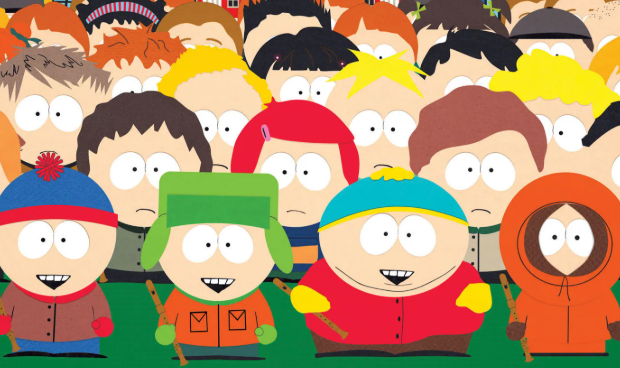
Since its debut in the late 1990s, South Park has evolved from a crude, paper-cutout curiosity into one of the most sophisticated pieces of social satire in the history of television. Created by Trey Parker and Matt Stone, the show has spent decades skewering everyone from world leaders and religious icons to A-list celebrities and internet trends. While the animation remains intentionally simple, the machinery behind the scenes is anything but. The show’s longevity is a testament to its ability to adapt, offend, and enlighten in equal measure.
To the casual observer, South Park might look like a series of fart jokes and foul language, but for enthusiasts, it is a masterclass in production, storytelling, and cultural commentary. Whether it’s the record-breaking turnaround time for episodes or the secret rules of writing that keep the plots moving at breakneck speed, the lore of Quahog—wait, wrong show—the lore of the quiet mountain town of South Park is filled with hidden gems. This guide explores the essential facts that define the series, revealing the technical brilliance and the sheer chaos that bring Eric Cartman and the gang to life every week.
1. The Viral Genesis of the “Spirit of Christmas”
Before the world knew Stan, Kyle, Cartman, and Kenny, they existed as characters in a student short film called The Spirit of Christmas. In the early 1990s, Trey Parker and Matt Stone, then students at the University of Colorado, created a short titled Jesus vs. Frosty using little more than construction paper, glue, and an old 8mm camera. This primitive pilot featured a proto-Cartman (named Kenny) and established the dark, irreverent humor that would become the show’s hallmark. A few years later, a Fox executive commissioned a second short, Jesus vs. Santa, as a video greeting card for his friends.
This second short became one of the internet’s first truly viral videos. Long before streaming platforms and social media dominated the landscape, people were sharing digital copies of this video via email and bootleg tapes. The buzz generated by The Spirit of Christmas was so immense that it sparked a bidding war between major networks. Comedy Central eventually won the rights, giving the duo the freedom to maintain their edgy tone. This origin story is a reminder that South Park wasn’t just a TV show that found an audience; it was a grassroots phenomenon that forced its way into the mainstream through sheer, unfiltered creativity.
2. The Six-Day Miracle: A Production Cycle Like No Other
Most animated series take months to produce a single episode, often shipping the animation work to overseas studios to manage the workload. South Park operates on a completely different planet. Since the early 2000s, the show has famously followed a “six-day-to-air” schedule. This means that an episode begins its life as a blank script on a Thursday and is finished, rendered, and uploaded to the network just hours before it airs on the following Wednesday. This grueling pace allows the show to be incredibly topical, often parodying news events that happened less than 48 hours prior.
This rapid-fire production is made possible by a highly specialized pipeline and a dedicated team of animators working 100-hour weeks. While the pilot was made of real paper, the series now uses advanced software (primarily Autodesk Maya) to mimic that original “paper” look. The documentary 6 Days to Air provides a harrowing and hilarious look at this process, showing Trey Parker writing dialogue in the middle of the night while animators wait in the next room to start their work. This commitment to being “current” is why the show remains relevant decade after decade; it doesn’t just comment on the world—it reacts to it in real-time.
3. The Celebrity Animal Cameo Prank
In the early seasons, South Park became an instant hit, and Hollywood celebrities were eager to lend their voices to the show. However, Trey Parker and Matt Stone were famously suspicious of celebrity culture and decided to play a long-running prank on those who asked for guest roles. Instead of giving them major speaking parts, they offered A-list stars the chance to voice non-human characters or animals. George Clooney, one of the biggest stars in the world, famously voiced Stan’s dog, Sparky, in the episode “Big Gay Al’s Big Gay Boat Ride.”
Clooney’s “performance” consisted entirely of barks and panting, yet he accepted the role enthusiastically because he was a massive fan of the original viral shorts. This wasn’t a one-off joke; Jay Leno later provided the meows for Cartman’s cat, Kitty, in a Season 1 finale. This practice highlighted the creators’ “punk rock” attitude toward the industry. They didn’t want the show to rely on celebrity star power to gain viewers; they wanted the humor and the characters to stand on their own. To this day, these hidden cameos remain a favorite piece of trivia for fans who enjoy the irony of a multimillionaire actor portraying a flatulent household pet.
4. The Jerry Seinfeld “Turkey” Incident
While some celebrities were happy to play along with the animal voice prank, others weren’t as amused. One of the most famous near-misses in the show’s history involved Jerry Seinfeld. At the height of his fame, Seinfeld’s representation contacted the South Park team to see if there was a role for him in a Thanksgiving-themed episode titled “Starvin’ Marvin.” True to their tradition, Parker and Stone offered Seinfeld the part of “Turkey #4.” The role, as expected, involved no actual dialogue—just various turkey gobbling sounds.
Seinfeld’s people reportedly declined the offer, perhaps not seeing the humor in a legendary comedian playing a background bird. This incident became legendary in the comedy world, as it underscored the fact that South Park bowed to no one. It didn’t matter how famous you were; in the town of South Park, you were either a target for satire or a turkey. This uncompromising stance helped the show build its reputation as a fearless outlier in the world of television. It also paved the way for more “serious” celebrities to eventually voice themselves or their likenesses once they understood that being “in on the joke” was better than being left out of it.
5. The Three-Month Paper Pilot vs. The Digital Age
The very first episode of South Park, “Cartman Gets an Anal Probe,” is a technical anomaly compared to the rest of the series. Because the creators had no budget and no staff, they produced the entire pilot by hand using traditional stop-motion animation. Every character, every background, and every prop was cut out of construction paper and moved frame-by-frame. It took Trey Parker, Matt Stone, and a tiny crew three grueling months to complete the 22-minute episode. If you look closely at the pilot today, you can see the slight shadows cast by the paper and the occasional smudge of glue.
Once the show was picked up for a full season, the creators realized they could never sustain that pace. They transitioned to using computers to replicate the paper look, which allowed them to animate much faster while retaining the “shabby” aesthetic that fans loved. Today, what took three months can be done in a matter of hours. However, the pilot remains a sacred piece of history for the show. It established the “cutout” style that would define the brand, proving that you don’t need high-end CGI or Disney-level animation to tell a compelling story—you just need a pair of scissors and a very dark sense of humor.
6. The Creators Voice Almost Everyone
One of the most impressive feats of South Park is that the vast majority of the male characters are voiced by just two people: Trey Parker and Matt Stone. Trey provides the voices for Stan Marsh, Eric Cartman, Randy Marsh, Mr. Garrison, and many others. Matt voices Kyle Broflovski, Kenny McCormick, Butters Stotch, and various background characters. Their ability to carry out entire scenes—sometimes involving five or six different characters—all by themselves is a major reason why the show has a consistent comedic rhythm.
The voices are often manipulated in post-production to achieve the high-pitched “kid” sound, but the acting and timing are all done live in the booth. This DIY approach to voice acting allows the creators to improvise and change lines on the fly during the frantic six-day production window. If they had to wait for a cast of 20 different actors to come in for every episode, the show’s topicality would vanish. While they do have talented female voice actors like April Stewart and Mona Marshall, the heart of the show’s vocal identity is the dynamic duo of Trey and Matt talking to themselves in a recording studio.
7. The Legend of the Hidden Aliens
A favorite pastime for “superfans” of the show is the hunt for the hidden aliens. Since the very first episode, the animators have frequently hidden “Visitors”—the tall, grey-skinned aliens with teardrop heads—in the background of scenes. They might be standing in a crowd, appearing as a drawing on a classroom wall, or peeking out from behind a building. For many years, it was a popular rumor that an alien appeared in every single episode, though the creators have since clarified that while they are in many, they aren’t in all of them.
These hidden Visitors are a nod to the show’s pilot, which focused on alien abductions. The practice of hiding them became a way for the animators to have fun and reward attentive viewers. Sometimes the aliens are obvious, while other times they are blurred in the background or disguised in costumes. This “Easter egg” culture helped build the show’s online community in the early days of the internet, as fans would take screenshots and share the locations of the hidden Visitors. It adds a layer of “re-watchability” to the episodes, encouraging fans to scour every frame for a glimpse of an extraterrestrial observer.
8. The “But-Therefore” Rule of Storytelling
While South Park is known for its absurdity, the writing is actually governed by a very strict set of narrative rules. Trey Parker often speaks about the “But-Therefore” rule, which he uses to ensure that every plot point feels earned and connected. According to this rule, the beats of a story should never be connected by the words “and then.” If you can say “this happened, and then this happened,” the writing is failing. Instead, the beats should be connected by “but” or “therefore.”
For example: “The boys want to see a movie, therefore they try to sneak in, but they get caught, therefore they are grounded.” This creates a chain of cause and effect that keeps the audience engaged and ensures the story moves forward logically, no matter how crazy the situation becomes. This simple grammatical trick is the secret behind the show’s narrative momentum. It prevents the episodes from becoming a series of disconnected sketches and forces the characters to constantly react to the consequences of their actions. It’s a masterclass in screenwriting hidden behind a veil of toilet humor.
9. The Mystery of Kenny’s Face and Voice
For the first several seasons of the show, Kenny McCormick’s face was a complete mystery, hidden behind the tightly pulled hood of his orange parka. His voice was equally obscured, rendered as a series of muffled, indiscernible mumbles that only the other characters could understand. This became the show’s longest-running gag, alongside his frequent and grisly deaths. Fans spent years speculating about what lay beneath the hood and whether Kenny was actually saying real words (spoiler: his muffled lines are actually scripted and often incredibly foul-mouthed).
The mystery was finally “officially” solved in the 1999 feature film, South Park: Bigger, Longer & Uncut. In the movie’s emotional climax, Kenny removes his hood to say goodbye to his friends, revealing a shock of blonde hair and a perfectly normal voice. Since then, Kenny has appeared without his hood in a handful of episodes, and his “superhero” alter-ego, Mysterion, allowed him to speak clearly for the first time in the series. Despite these reveals, the “muffled” version of the character remains the iconic image of Kenny, proving that sometimes the funniest thing about a character is what you can’t see or hear.
10. The Scientific Detail of Hidden Jokes
Despite its reputation for being “crude,” the show’s production team has a surprising eye for detail and technical accuracy—especially when it comes to Easter eggs. For instance, in the movie, there is a scene involving a piano from a brand called “Felcher and Sons.” While it sounds like a generic name, “felching” is a highly specific and graphic sexual term. This level of “hidden-in-plain-sight” humor is everywhere in the show’s background art.
Furthermore, the show frequently incorporates real-world science or technical data into its plots, albeit for comedic effect. Whether it’s the specific mechanics of a V-chip or the “science” behind Tegridy Farms, the writers often do just enough research to make the satire bite. This attention to detail extends to the show’s music as well; Trey Parker is a classically trained musician, and many of the show’s songs are complex parodies of Broadway or Disney tropes. This blend of high-brow technical skill and low-brow subject matter is the core of the South Park identity, proving that it takes a lot of intelligence to make a show this successfully “stupid.”
Further Reading
- Oh my God, Kenny’s alive!: The Little Guide to South Park by OH (Headline Publishing)
- South Park and Philosophy: You Know, I Learned Something Today by Robert Arp
- South Park Conservatives: The Revolt Against Liberal Media Bias by Brian C. Anderson
- “South Park”: The Scripts (A Channel Four book) by Trey Parker and Matt Stone
- 10 The Crown TV SHOW Facts That Keep People Watching
- 10 Futurama TV SHOW Facts That Still Hold Up
- 10 Things You Should Know About Speedy Gonzales – Looney Tunes
- 10 Things You Should Know About Yosemite Sam – Looney Tunes
- 10 Things You Should Know About Starlight From The Boys TV Show
- 10 Things You Should Know About Road Runner – Looney Tunes
- 10 Things You Should Know About Wile E. Coyote – Looney Tunes
- 10 Things You Should Know About Tweety Pie – Looney Tunes
- 10 Things You Should Know About Sylvester The Cat – Looney Tunes
- 10 Things You Should Know About Porky Pig – Looney Tunes



