
Table of Contents
The Godfathers of Britpop and the Dysfunction That Fueled Them
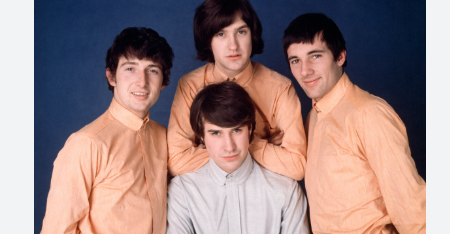
If you were to draw a family tree of modern rock music, The Kinks would be the gnarly, twisted root system from which everything else grew. While The Beatles and The Rolling Stones were conquering the world with polish and swagger, The Kinks were busy inventing heavy metal by accident, pioneering the concept album, and getting banned from the United States during the most crucial years of the 1960s.
Led by the genius but famously difficult Ray Davies and his younger, wilder brother Dave, The Kinks were the quintessential “cult” band that somehow managed to have massive hits. They were distinctly British—obsessed with village greens, afternoon tea, and the decline of the Empire—yet their influence is woven into the DNA of American punk, metal, and indie rock.
But behind the jaunty melodies of “Sunny Afternoon” and “Lola” lies a history of sibling violence, industry blacklisting, and near-tragic accidents that would have destroyed lesser bands. This is not just a story about music; it’s a story about survival. Whether you’re a casual listener or a dedicated follower of fashion, here are 10 fascinating facts about the band that turned dysfunction into an art form.
1. Dave Davies Invented Distortion with a Razor Blade and Rage
It is one of the most pivotal moments in rock history, yet it happened in a suburban living room out of sheer frustration. In 1964, a teenage Dave Davies was unhappy with the clean, polite sound of his little green Elpico amplifier. He wanted something grittier, something that sounded like the anger he felt.
Lacking money for expensive equipment, he took a literal razor blade and slashed the speaker cone of the amp. He didn’t know if it would destroy the amp or do nothing at all. When he plugged in his guitar, the sliced paper cone vibrated against itself, creating a buzzing, jagged, “fuzz” sound that had never been heard before.
He took this mutilated amp into the studio and recorded the riff for “You Really Got Me.” That menacing, crunching sound was the birth of distortion. It was the first time a guitar sounded truly dangerous. That single razor slash laid the sonic groundwork for The Who, Jimi Hendrix, and the entire genres of heavy metal and punk rock. Every time you hear a distorted guitar today, you are hearing the echo of Dave Davies’ slashed speaker.
2. They Were Banned from the United States for Four Years
Imagine being one of the biggest bands in the world during the “British Invasion,” only to be legally forbidden from entering the world’s biggest music market. That is exactly what happened to The Kinks. In 1965, just as they were peaking, the American Federation of Musicians refused to issue them work permits, effectively banning them from touring or performing in the U.S. for four years.
The ban was the result of a disastrous tour plagued by unprofessionalism, fights with promoters, and an on-air punch-up where Ray Davies reportedly hit a union official. While The Beatles were playing Shea Stadium and The Rolling Stones were becoming American icons, The Kinks were stuck in England.
This ban had a profound unintended consequence: it forced Ray Davies to look inward. Cut off from American blues and rock influences, he began writing songs that were aggressively English. He wrote about Waterloo sunsets, village greens, and Victorian anxiety. This isolation created the unique “Kinks sound” that influenced Britpop bands like Blur and Oasis decades later. The ban may have killed their commercial momentum in the 60s, but it saved their artistic soul.
3. “Lola” Had to Be Flown Across the Atlantic to Change One Word
“Lola” is a rock anthem famous for its controversial subject matter—a young man unknowingly dancing with a transgender woman. However, the controversy that almost got the song banned by the BBC wasn’t about gender; it was about a soft drink.
The original lyrics to the opening verse were: “Where you drink champagne and it tastes just like Coca-Cola.” The BBC had a strict policy against “product placement” in songs. They viewed the mention of a specific brand name as free advertising, which was a violation of their charter. They refused to play the song unless the lyric was changed.
The problem was that the band was already on tour in the United States when the ultimatum came down. Ray Davies had to fly all the way back to London, dash into the studio, and record just two words: “Cherry Cola.” He then immediately flew back to the U.S. to resume the tour. If you listen closely to the single version, the recording quality on “Cherry Cola” is slightly different from the rest of the verse, a permanent scar of the frantic transatlantic dash to save the hit.
4. “You Really Got Me” Inspired Van Halen’s Career
While The Kinks wrote “You Really Got Me” in 1964, a massive chunk of the American population knows the song because of Van Halen. When Eddie Van Halen and David Lee Roth were trying to break out of the Pasadena backyard party scene in the late 70s, they needed a song that would bridge the gap between hard rock and pop.
They chose “You Really Got Me” as their debut single in 1978. Eddie Van Halen took Dave Davies’ proto-punk riff and supercharged it with high-gain Marshall amps and his signature finger-tapping solos. The cover was so successful that it arguably launched Van Halen’s career and validated The Kinks’ influence on the hard rock genre.
Interestingly, Dave Davies was not initially a fan of the cover. He felt it lacked the “angst” and raw energy of the original, describing it as too polished and “Americanized.” Over the years, however, the tension softened, and the cover stands as a testament to the timelessness of that original razor-blade riff—it works just as well in a sweaty London club as it does in a sold-out California arena.
5. “Come Dancing” Is a Tragic Tribute to Ray’s Sister
To the casual listener, the 1982 hit “Come Dancing” is a catchy, nostalgic synth-pop tune about the old days of British dance halls. But the true story behind the song is heartbreaking. It is a tribute to Ray and Dave’s older sister, Rene.
Rene was the sibling who introduced Ray to music. On his 13th birthday, she gave him his very first guitar—a Spanish acoustic model—and they played a few songs together. That same evening, she went out to a local dance hall, the Lyceum Ballroom in London.
Tragically, Rene suffered a heart attack on the dance floor and died in the arms of a stranger. She was only 31 years old. Ray Davies lost his sister and gained his musical instrument on the exact same day. “Come Dancing” was his way of immortalizing her memory, rewriting the ending so that she is still dancing, looking down from her window. It transforms a fun pop song into a poignant elegy for a lost sister.
6. Ray Davies Was Shot in New Orleans Chasing a Thief
Ray Davies is known for being a sensitive songwriter, not an action hero. However, in 2004, life imitated a gritty crime drama. While vacationing in New Orleans, Ray and his girlfriend were walking through the French Quarter when a car pulled up, and a man jumped out to snatch his girlfriend’s purse.
Instead of playing it safe, the then 59-year-old rock legend instinctively chased the thief down the street. The mugger turned around and shot Davies in the leg. The bullet shattered his femur, a serious injury that required emergency surgery and left him in excruciating pain for months.
The incident was a major news story, shocking fans worldwide. True to his nature, Davies didn’t let the trauma silence him. He eventually turned the experience into art, writing about the shooting and his recovery in his memoir and using the streets of New Orleans as a backdrop for his later solo work. It proved that the man who wrote “Village Green Preservation Society” had a surprising amount of fight in him.
7. The “Cardiff Incident” Almost Ended the Band in 1965
Sibling rivalry is one thing, but The Kinks took inter-band violence to a level that makes Oasis look like a church choir. The most dangerous moment occurred in Cardiff, Wales, in 1965. Tensions were high between guitarist Dave Davies and drummer Mick Avory.
During the second song of the set, Dave insulted Mick and kicked over his drum kit. In a blind rage, Mick Avory picked up a heavy cymbal stand (some accounts say the cymbal itself) and smashed it over Dave’s head. Dave collapsed unconscious, blood pouring from a severe gash.
Mick, thinking he had actually killed his bandmate, fled the venue and went into hiding. The police were called, and the show was cancelled. Dave survived (obviously), but required 16 stitches. Astonishingly, the band didn’t break up. Management smoothed it over, Mick returned, and they continued playing together for another 20 years, proving that their dysfunction was the glue that held them together.
8. “Waterloo Sunset” Was Inspired by a Sister, Not Movie Stars
“Waterloo Sunset” is widely considered one of the most beautiful songs in the English language. For decades, a persistent rumor claimed the lyrics—”Terry meets Julie, Waterloo Station”—were about the famous 60s actors Terence Stamp and Julie Christie, who were the “it couple” of the era.
Ray Davies has since debunked this myth. The song is actually far more personal. The “Terry and Julie” in the song represent the aspirations of his older sister (another sister, not Rene) and her boyfriend, who were part of the generation trying to find a new life after World War II.
The song is a fantasy about them meeting and emigrating to a better world. The narrator stays behind, watching the “dirty old river” and finding peace in his solitude while the lovers embark on their journey. This personal connection is what gives the song its deep, melancholic resonance—it’s not about celebrity gossip; it’s about family, hope, and the simple beauty of London at twilight.
9. Ray Attempted a “Suicide” Retirement on Stage
The pressure of fame often cracked Ray Davies. In 1973, during a concert at White City Stadium in London, the stress reached a boiling point. The band was suffering from poor reviews and internal strife. Mid-show, Ray began to verbally abuse the audience and his bandmates.
Suddenly, he announced to the stunned crowd, “I’m fucking sick of the whole thing,” and declared he was quitting the music business forever. He then walked off stage and reportedly collapsed from a drug overdose, requiring immediate hospitalization.
For a brief period, it seemed The Kinks were finished. Ray was in critical condition and mentally shattered. However, much like the Cardiff incident, the band refused to die. Ray recovered, and instead of quitting, he pivoted into his “theatrical” phase, writing massive rock operas like Preservation Act 1. The breakdown became a breakthrough, launching one of the strangest and most creative periods of the band’s career.
10. They Released Four Rock Operas in Two Years
Most bands release one concept album and call it a day. The Kinks, driven by Ray’s theatrical ambitions, released four in a row between 1973 and 1975: Preservation Act 1, Preservation Act 2, Soap Opera, and Schoolboys in Disgrace.
These weren’t just albums; they were sprawling narratives with characters, plots, and costumes. Ray Davies effectively turned the band into a traveling theater troupe. They would perform these albums in their entirety, often with brass sections and female backing singers, confusing fans who just wanted to hear “Lola.”
Critics hated them at the time, calling them self-indulgent and confusing. However, in retrospect, this era is seen as a bold artistic statement. It paved the way for the theatricality of bands like Queen and Pink Floyd. While it nearly bankrupted them and alienated their fanbase, it proved that The Kinks were fearless artists who refused to be boxed in by the expectations of pop music.
Further Reading
To understand the madness, the melody, and the men behind The Kinks, these books are essential:
- “X-Ray: The Unauthorized Autobiography” by Ray Davies – A unique, semi-fictionalized memoir where Ray interviews his younger self, offering a glimpse into his complex mind.
- “Kink: An Autobiography” by Dave Davies – The other side of the coin. Dave’s account is raw, honest, and often contradicts Ray’s version of events, giving the full picture of their rivalry.
- “God Save The Kinks: A Biography” by Rob Jovanovic – A comprehensive and well-researched biography that connects the band’s turbulent history to their enduring influence on modern music.
- “You Really Got Me: The Story of The Kinks” by Nick Hasted – An excellent deep dive into the cultural impact of the band, exploring how they shaped the British identity in rock.
Keep the Discovery Going!
Here at Zentara, our mission is to take tricky subjects and unlock them, making knowledge exciting and easy to grasp. But the adventure doesn’t stop at the bottom of this page. We are constantly creating new ways for you to learn, watch, and listen every single day.
📺 Watch & Learn on YouTube
Visual learner? We publish 4 new videos every day, plus breaking news shorts to keep you smarter than the headlines. From deep dives to quick facts, our channel is your daily visual dose of wonder.
Click here to Subscribe to Zentara on YouTube
🎧 Listen on the Go on Spotify
Prefer to learn while you move? Tune into the Zentara Podcast! We drop a new episode daily, perfect for your commute, workout, or coffee break. Pop on your headphones and fill your day with fascinating facts.
Click here to Listen on Spotify
Every click, view, and listen helps us keep bringing honest knowledge to everyone. Thanks for exploring with us today—see you out there in the world of discovery!




Leave a Reply