
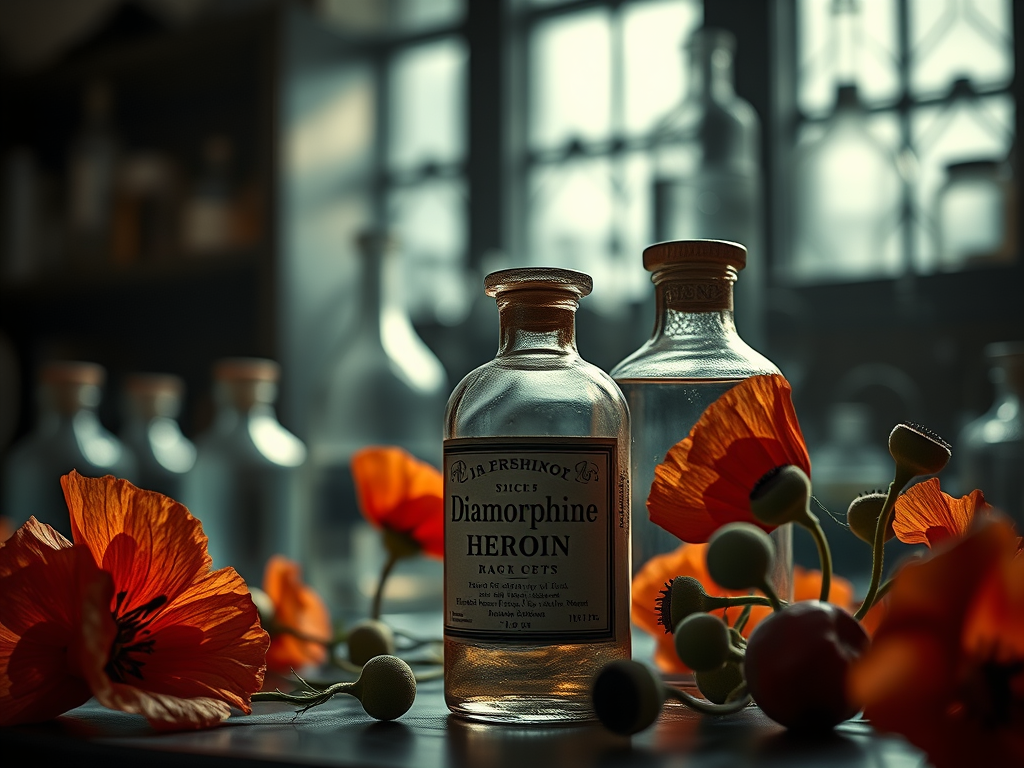
Heroin is a name that carries heavy weight in modern society. It is often portrayed as the ultimate “dead-end” drug, a substance so potent and destructive that its very mention evokes a sense of tragedy. Yet, behind the stigma and the harrowing news cycles lies a complex chemical history that stretches back to the dawn of civilization. Heroin, or diamorphine, was not born in a back-alley lab; it was born in the prestigious laboratories of European pharmaceutical giants and marketed as a safe, family-friendly medicine.
To truly understand the opioid crisis of today, one must look at the history of heroin and the biological reality of how it interacts with the human nervous system. It is a story of well-intentioned medical breakthroughs gone wrong, shifting global economies, and the incredible resilience of the human brain. Whether you are seeking heroin facts for educational purposes or trying to understand the effects of heroin on the brain, this deep dive explores ten facets of the drug that remain largely unknown to the general public.
1. The “Joy Plant”: An Ancient Connection to Opium
The story of heroin begins thousands of years before the modern era with the opium poppy (Papaver somniferum). The earliest known reference to the poppy comes from the Sumerians in lower Mesopotamia (modern-day Iraq) around 3400 BCE. They referred to the plant as Hul Gil, which translates to the “joy plant.” For the Sumerians, the milky latex harvested from the poppy pod was a sacred gift used to induce sleep and relieve pain.
This ancient relationship highlights that humans have been seeking the relief of opioids for nearly as long as we have been practicing agriculture. From the Sumerians, knowledge of the poppy passed to the Assyrians, the Babylonians, and eventually the Egyptians, who featured it in the Ebers Papyrus as a remedy for “excessive crying” in children. This deep-rooted history shows that heroin is not a modern “invention” but rather a highly refined and concentrated version of a natural substance that has fascinated and comforted humanity for five millennia. Understanding the history of heroin requires acknowledging that our biology has evolved alongside these botanical compounds, making our susceptibility to them a fundamental part of the human experience.
2. The Bayer Marketing Blitz: A “Non-Addictive” Wonder Drug
In 1898, the German pharmaceutical company Bayer—now famous for its aspirin—launched a new product. They called it “Heroin,” a name derived from the German word heroisch (heroic), because the chemists who tested it felt powerful and “heroic” after a dose. At the time, the medical community was desperately searching for a safer alternative to morphine, which had become a major source of addiction for Civil War veterans and upper-class citizens alike.
Bayer aggressively marketed heroin as a non-addictive morphine substitute and a powerful cough suppressant. It was sold in over-the-counter syrups for children and adults, recommended for everything from bronchitis to tuberculosis. Advertisements from the early 1900s showed heroin being given to toddlers to stop them from coughing at night. It took nearly a decade of widespread use for doctors to realize that the body actually metabolizes heroin into morphine, making it just as—if not more—addictive than its predecessor. This era serves as a cautionary tale in the history of heroin, reminding us how marketing can sometimes outpace scientific understanding with devastating consequences.
3. The Aspirin Connection: Felix Hoffmann’s Double Discovery
One of the most surprising heroin facts is the identity of its creator. In 1897, a Bayer chemist named Felix Hoffmann was working on two different chemical syntheses. He was looking for a way to make salicylic acid easier on the stomach, which led him to create acetylsalicylic acid—better known as Aspirin. Just days later, using a similar chemical process (acetylation), he synthesized diacetylmorphine, which Bayer would brand as Heroin.
Hoffmann is arguably one of the most influential chemists in history, having created both the world’s most popular pain reliever and its most notorious illicit drug in the same week. While Aspirin went on to save millions of lives through its anti-inflammatory and heart-protective properties, heroin’s legacy became one of addiction and control. This historical irony illustrates that chemistry is neutral; the same laboratory techniques that produce life-saving medicine can also create substances that challenge the very fabric of society. The history of heroin is inextricably linked to the birth of the modern pharmaceutical industry.
4. Medical Heroin Today: The UK and Diamorphine
While heroin is strictly banned for medical use in the United States and many other countries, it remains a legitimate medicine in the United Kingdom. Under its generic name, diamorphine, it is used as a potent painkiller in hospitals for severe physical trauma, post-surgical pain, and palliative care for terminal illnesses. In the UK, it is often preferred over morphine because it is more soluble, allowing for smaller, less painful injections.
The existence of medical heroin in 2025 challenges the notion that the substance is purely “evil.” In a controlled clinical setting, administered by professionals, it is a highly effective tool for managing extreme suffering. This medical use is strictly regulated, but it highlights the pharmaceutical reality: heroin is essentially a “pro-drug” that the body converts into morphine. The difference between the street drug and the hospital medicine lies entirely in purity, dosage, and the environment of use. This fact is crucial for understanding heroin facts and drug policy, as it shows that the molecule itself has therapeutic value when divorced from the chaos of the illicit market.
5. Hijacking the Reward Center: The Science of “The Rush”
When someone uses heroin, the drug crosses the blood-brain barrier with incredible speed—far faster than morphine. Once inside the brain, it binds to specific receptors known as mu-opioid receptors. These receptors are located in the “reward center,” particularly the nucleus accumbens. Under normal circumstances, these areas regulate our feelings of pleasure from eating, social bonding, or exercise by managing the release of dopamine.
Heroin acts like a master key that forces the dopamine gates to stay open. It suppresses the inhibitory neurons that normally keep dopamine in check, leading to a massive surge of the neurotransmitter. This creates “the rush”—an intense, overwhelming sense of euphoria and warmth. However, the effects of heroin on the brain are not just about pleasure. Because the brain constantly seeks “homeostasis” (balance), it responds to this flood by shutting down its own natural endorphin production and reducing the number of dopamine receptors. This is why users quickly develop a tolerance; they eventually need the drug just to feel “normal,” as their brain’s internal reward system has been essentially “hijacked.”
6. “On the Nod”: The Physical Reality of Use
The experience of being on heroin is often described in two phases: the initial rush and a longer period known as being “on the nod.” This state is a peculiar mix of wakefulness and sleep, where the user may appear to be drifting off, only to snap back to consciousness moments later. This occurs because heroin is a powerful central nervous system depressant. It slows down heart rate, lowers blood pressure, and, most dangerously, suppresses the respiratory system.
During this phase, the effects of heroin on the brain extend to the brainstem, the area responsible for automatic functions like breathing. This is the primary cause of overdose: the brain simply “forgets” to tell the lungs to breathe. Other physical heroin facts include pinpoint pupils (miosis), extreme itchiness caused by histamine release, and severe constipation. Understanding the “nod” is essential for recognizing the signs of use and understanding the profound level of sedation the drug induces, which effectively detaches the user from both physical and emotional pain.
7. Narco-Deforestation: The Hidden Environmental Cost
When we discuss the damage caused by the drug trade, we often overlook the environmental impact. The production of heroin requires massive amounts of opium, which is harvested from poppy fields in regions like the Golden Crescent (Afghanistan, Pakistan, Iran) and the Golden Triangle (Myanmar, Laos, Thailand). To make room for these crops, “narco-deforestation” occurs, where vast areas of native forests are cleared, destroying biodiversity and contributing to climate change.
As of 2025, production shifts have seen Myanmar reclaim a lead role in global opium supply following bans in Afghanistan. The processing of opium into heroin is a chemical-intensive process. Jungle laboratories use toxic precursors like acetic anhydride, ammonium chloride, and hydrochloric acid. Because these labs are illegal and hidden, these chemicals are often dumped directly into local soil and water sources once the batch is finished. This poisons local ecosystems and endangers the health of indigenous communities living downstream. The history of heroin production is, therefore, not just a human tragedy but a significant environmental one as well.
8. The Fentanyl Era: A Lethal Shift in Purity
In the modern landscape of 2025, “pure” heroin is increasingly rare on the street. The global drug market has been fundamentally altered by the introduction of synthetic opioids, most notably fentanyl. Fentanyl is 50 to 100 times more potent than morphine and is significantly cheaper and easier to manufacture in a lab than growing poppy fields. Consequently, many drug traffickers “cut” or completely replace heroin with fentanyl to increase profits.
This shift has made heroin use more dangerous than ever before. Because fentanyl is so potent, even a microscopic “hot spot” in a bag of heroin can lead to a fatal overdose. This reality has changed the conversation around heroin facts; the risk is no longer just the drug itself, but the unpredictability of what is actually in the powder. Public health officials now emphasize the use of fentanyl test strips and the widespread distribution of Naloxone (Narcan) to combat this wave of synthetic poisonings. The era of traditional heroin is being eclipsed by a much deadlier synthetic crisis.
9. The Hipster and the Jazz Scene: A Cultural Evolution
Heroin has a long and complex history in Western pop culture, often associated with counterculture movements and artistic “genius.” In the 1930s and 40s, it became intertwined with the Harlem jazz scene. Many legendary musicians, like Charlie Parker and Billie Holiday, struggled with addiction, which led to a tragic romanticization of the drug among some fans. By the 1950s, the “Beat Generation” writers like William S. Burroughs (author of Junky) further cemented heroin’s place in the underground “hipster” identity.
This cultural footprint has shifted over the decades—from the “heroin chic” fashion trends of the 1990s to the current portrayal of the opioid crisis as a suburban and rural epidemic. These cultural shifts reflect how society views addiction: moving from seeing it as a moral failing of the “fringe” to recognizing it as a widespread public health crisis. The history of heroin in film, music, and literature serves as a mirror to our own changing attitudes toward pain, creativity, and the “American Dream.”
10. The Fear of Withdrawal: Why Quitting is So Hard
One of the most significant heroin facts is the sheer physical agony of heroin withdrawal. Because the brain has “rebalanced” itself to expect the drug, removing it causes a violent systemic shock. Withdrawal symptoms—which can begin as soon as six hours after the last dose—include intense muscle and bone pain, tremors, vomiting, diarrhea, and “cold turkey” (goosebumps and chills). While rarely fatal on its own, the psychological and physical distress is so high that many users continue to use the drug not to get high, but simply to avoid getting sick.
Fortunately, modern medicine in 2025 offers effective pathways for recovery. Treatments like methadone and buprenorphine (Suboxone) work by occupying the brain’s opioid receptors without producing the intense high, effectively “stabilizing” the brain’s chemistry. This allows individuals to regain their functionality and focus on therapy. Understanding the biology of withdrawal is key to replacing judgment with empathy, recognizing that heroin addiction is a chronic brain disease that requires long-term management, much like diabetes or heart disease.
Further Reading
- Junky by William S. Burroughs
- A raw, semi-autobiographical account of life as a heroin addict in the 1950s, providing unparalleled insight into the “junkie” subculture.
- Dope Sick: Prophets, Poisons, and the Redemption of Appalachia by Beth Macy
- A powerful look at the modern opioid crisis, tracing how corporate greed and pharmaceutical marketing led to a resurgence of heroin use.
- The Big Short of the Opioid Crisis (Various investigative reports/books on the Sackler family)
- While focusing on OxyContin, these works explain the “gateway” effect that moved many individuals from prescription pills to heroin.
- In the Realm of Hungry Ghosts by Gabor Maté
- A compassionate look at the science and psychology of addiction, blending personal stories with cutting-edge neurobiology.
Keep the Discovery Going!
Here at Zentara, our mission is to take tricky subjects and unlock them, making knowledge exciting and easy to grasp. But the adventure doesn’t stop at the bottom of this page. We are constantly creating new ways for you to learn, watch, and listen every single day.
📺 Watch & Learn on YouTube
Visual learner? We publish 4 new videos every day, plus breaking news shorts to keep you smarter than the headlines. From deep dives to quick facts, our channel is your daily visual dose of wonder.
Click here to Subscribe to Zentara on YouTube
🎧 Listen on the Go on Spotify
Prefer to learn while you move? Tune into the Zentara Podcast! We drop a new episode daily, perfect for your commute, workout, or coffee break. Pop on your headphones and fill your day with fascinating facts.
Click here to Listen on Spotify
Every click, view, and listen helps us keep bringing honest knowledge to everyone. Thanks for exploring with us today—see you out there in the world of discovery!




Leave a Reply