
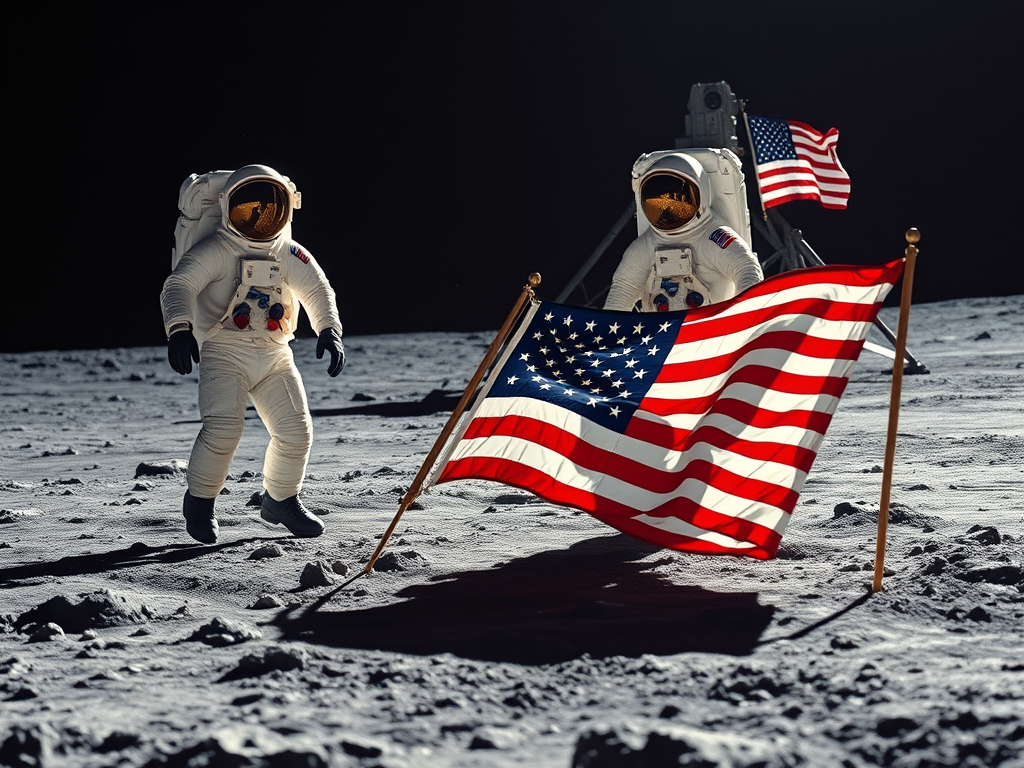
On July 20, 1969, the world stood still. An estimated 600 million people—roughly one-fifth of the global population at the time—watched a grainy, black-and-white broadcast of Neil Armstrong and Buzz Aldrin stepping onto the lunar surface. It was the “giant leap” that defined the 20th century. However, what we saw on television was the polished, heroic version of a mission that was, in reality, a series of near-disasters, ingenious improvisations, and bizarre administrative hurdles.
Beyond the famous quotes and the iconic flag-planting, the Apollo 11 moon landing was a gritty, high-stakes gamble. The astronauts weren’t just explorers; they were test pilots operating a spacecraft with less computing power than a modern toaster, facing challenges that “The Eagle” was never fully prepared for. From the strange scent of lunar dust to the secret life insurance plan involving thousands of signatures, here are the top 10 things you likely didn’t know about humanity’s first visit to another world.
1. The “In Event of Moon Disaster” Speech
While the world celebrated the successful landing, a somber document sat in a folder at the White House. President Richard Nixon had a prepared speech titled “In Event of Moon Disaster” ready to be read to the nation if Armstrong and Aldrin were stranded on the lunar surface. At the time, the technology to launch a vehicle from the Moon’s surface back into orbit was entirely experimental. If the Lunar Module Eagle’s ascent engine failed, there was no rescue mission possible.
The plan was for the President to call the “widows-to-be” first, then address the public. The speech began with the haunting line, “Fate has ordained that the men who went to the Moon to explore in peace will stay on the Moon to rest in peace.” Following the address, NASA would have cut off communication with the stranded astronauts, and a clergyman would have performed a ceremony similar to a burial at sea. This morbid contingency plan serves as a stark reminder of just how thin the margin of error was for NASA’s most famous mission.
2. A Broken Switch and a Felt-Tip Pen
One of the most terrifying moments of the mission happened after the moonwalk was over. When Armstrong and Aldrin climbed back into the Lunar Module, they discovered a piece of plastic on the floor. It was the knob for the circuit breaker that armed the ascent engine—the very engine they needed to get home. Without it, they were effectively stranded.
Armstrong had accidentally snapped the switch with his bulky life-support backpack. After reporting the issue to Mission Control and trying to get some sleep, the duo had to find a solution. Buzz Aldrin, displaying the legendary “engineer’s grit,” realized he could jam a felt-tip pen into the slot where the switch had been. It worked. That simple plastic pen allowed them to engage the engine and blast off from the Sea of Tranquility. It’s a classic example of how, in the vacuum of space, sometimes the most sophisticated Apollo 11 technology is no match for a bit of terrestrial MacGyvering.
3. The Infamous 1202 Program Alarms
During the final minutes of the descent, the Apollo Guidance Computer (AGC) began screaming at the astronauts with “1202” and “1201” error codes. In the cockpit of a descending spacecraft, an unknown alarm is the ultimate nightmare. Armstrong and Aldrin had no idea what the codes meant, and for a few heart-stopping seconds, it looked like they might have to abort the landing.
The issue was essentially a “buffer overflow.” The computer was being overwhelmed by data from the rendezvous radar—which wasn’t needed for landing but had been left on just in case they needed to abort. A young engineer in Houston, Jack Garman, recognized the code from a simulation weeks earlier and realized that as long as the alarms didn’t stay on constantly, the computer was just rebooting and prioritizing critical tasks. He gave the “Go” to continue, allowing the moon landing history to be written as a success rather than a tragic “what-if.”
4. The Moon Smells Like Spent Gunpowder
We often think of the Moon as a sterile, vacuum-sealed environment, but the astronauts brought a piece of it back into the cabin with them. Lunar dust is incredibly clingy; it’s jagged and abrasive because there is no wind or water to wear down its edges. When Armstrong and Aldrin repressed the cabin and took off their helmets, they were hit with a distinct, pungent odor.
Both astronauts described the scent as “spent gunpowder” or the smell of air after a firework display. This “moon smell” is believed to be the result of the highly reactive lunar soil coming into contact with the oxygen-rich atmosphere of the Lunar Module. The dust was so pervasive that it tracked everywhere, irritating their throats and smelling like a “wet fireplace.” It’s a sensory detail that rarely makes it into the history books but provides a vivid picture of the alien environment they occupied.
5. Landing on “Empty”
The Eagle did not land where it was supposed to. As they descended, Armstrong looked out the window and realized the computer was guiding them into a “boulder field” surrounding a large crater. To avoid a crash, he took manual control, hovering the lander like a helicopter as he searched for a clear spot.
This maneuvering ate up precious seconds and even more precious fuel. As they hovered, the “low fuel” light flickered on. Mission Control began a 60-second countdown, then a 30-second countdown. In the final moments, the astronauts were essentially flying on fumes. They eventually touched down with only about 25 seconds of fuel remaining before they would have been forced to abort. The tension in Houston was so high that Charlie Duke, the CAPCOM (Capsule Communicator), famously told the astronauts, “You got a bunch of guys about to turn blue. We’re breathing again.”
6. The World’s Most Expensive Customs Declaration
Even heroes have to deal with bureaucracy. After traveling 240,000 miles and making history, the Apollo 11 crew—Armstrong, Aldrin, and Michael Collins—were required to sign a customs declaration form upon their return. The form, filed at the Honolulu Airport, listed their flight route as “Cape Kennedy, Florida, to the Moon, to Honolulu, Hawaii.”
In the “Cargo” section, they officially declared “moon rock and moon dust samples.” Furthermore, because scientists were terrified of “space germs” or unknown pathogens, the trio was immediately placed into a mobile quarantine trailer. They spent three weeks in isolation, even celebrating birthdays behind glass, until it was determined that the Moon was indeed sterile. It’s a humorous, humanizing footnote to a mission that felt almost superhuman in its execution.
7. Life Insurance via Autographs
In 1969, the risks of spaceflight were so high that no insurance company would provide life insurance to the astronauts. To ensure their families would be financially secure if the mission ended in tragedy, the crew came up with a creative “postal” insurance plan.
During their pre-launch quarantine, the three astronauts signed hundreds of envelopes (known as “covers”) that were postmarked on important dates, such as the day of the launch and the day of the landing. They gave these to a trusted friend. The logic was simple: if they died, the value of these Apollo 11 autographs would skyrocket, and their families could sell them to support themselves. Fortunately, the “insurance policy” was never cashed in for its intended purpose, but these “insurance covers” remain some of the most sought-after items in space memorabilia today.
8. The Flag Fell Over Almost Immediately
The iconic images of the American flag standing tall on the Moon are a bit misleading regarding the Apollo 11 mission specifically. While the flag was designed with a horizontal bar to keep it “flying” in the vacuum, it didn’t stay upright for long.
When the ascent stage of the Eagle ignited to leave the Moon, the exhaust from the engine was so powerful that it blew the flag over. Buzz Aldrin reported seeing it topple into the dust as they lifted off. For subsequent missions, NASA made sure to plant the flag much further away from the lander to avoid the same fate. So, while the footprints of Armstrong and Aldrin may remain for millions of years due to the lack of wind, the very first flag planted by humans likely spent the last few decades bleaching white and lying in the lunar dirt.
9. The “Missing” Original Tapes
You might have noticed that the footage of the first steps is quite blurry. Interestingly, the video sent back to Earth was actually of much higher quality than what the public saw. The Moon-to-Earth transmission used a “Slow Scan” TV format that wasn’t compatible with standard commercial broadcasting. To get the image onto home TVs, NASA simply pointed a conventional camera at a high-resolution monitor.
Unfortunately, the original high-quality data tapes of the landing were later lost or overwritten during the 1970s and 80s when NASA was facing severe budget cuts and a shortage of magnetic tape. While restored versions of the broadcast footage exist today, the “raw” data that could have shown us the landing in crisp detail is gone forever. This loss has ironically fueled countless conspiracy theories, though the reality is simply a case of mundane government record-keeping errors.
10. There Were No Seats in the Eagle
Weight is the enemy of spaceflight. To save every possible ounce, the designers of the Grumman Lunar Module made a radical decision: the astronauts would not have seats. Instead, Armstrong and Aldrin stood during the entire descent and landing phase, held in place by a series of pulleys and cables (essentially bungee cords) that kept them stable in the low-gravity environment.
By removing the seats, NASA saved the weight of the chairs and the reinforced flooring required to support them. It also allowed for a larger triangular window that gave the pilots a better view of the ground. This meant that after a three-day journey across the void, the two men had to perform the most difficult landing in history while standing up, looking through a window the size of a laptop screen.
Further Reading
- A Man on the Moon by Andrew Chaikin – Often cited as the definitive account of the Apollo program, based on extensive interviews with the astronauts.
- Carrying the Fire: An Astronaut’s Journeys by Michael Collins – A witty and deeply personal memoir from the “third man” who orbited the Moon while his crewmates walked its surface.
- First Man: The Life of Neil A. Armstrong by James R. Hansen – The authorized biography that delves into the complex personality of the first human to step on the Moon.
- Apollo 11 Owners’ Workshop Manual by Christopher Riley and Philip Dolling – For those interested in the technical “how-to,” this book breaks down the engineering of the Saturn V and the Lunar Module.
Keep the Discovery Going!
Here at Zentara, our mission is to take tricky subjects and unlock them, making knowledge exciting and easy to grasp. But the adventure doesn’t stop at the bottom of this page. We are constantly creating new ways for you to learn, watch, and listen every single day.
Watch & Learn on YouTube
Visual learner? We publish 4 new videos every day, plus breaking news shorts to keep you smarter than the headlines. From deep dives to quick facts, our channel is your daily visual dose of wonder.
Click here to Subscribe to Zentara on YouTube
Listen on the Go on Spotify
Prefer to learn while you move? Tune into the Zentara Podcast! We drop a new episode daily, perfect for your commute, workout, or coffee break. Pop on your headphones and fill your day with fascinating facts.
Click here to Listen on Spotify
Every click, view, and listen helps us keep bringing honest knowledge to everyone. Thanks for exploring with us today—see you out there in the world of discovery!




Leave a Reply