
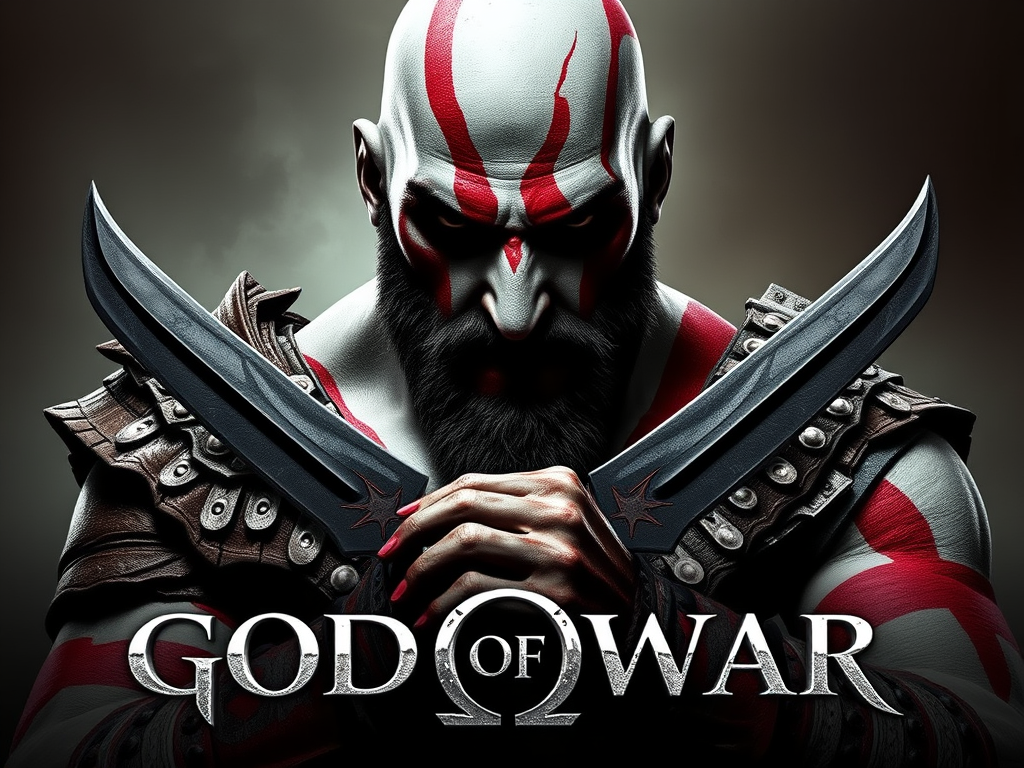
When God of War crashed onto the PlayStation 2 in 2005, it didn’t just push the boundaries of the console; it ripped them apart with the sheer brute force of a Spartan rage. Kratos, the Ghost of Sparta, became an instant icon, defining the “hack and slash” genre with his brutal Blades of Chaos and tragic backstory. For years, the series was synonymous with anger, excess, and Quick Time Events. Then, in 2018, the franchise pulled off one of the greatest pivots in media history, transforming its one-dimensional anti-hero into a complex, stoic father figure navigating the frozen wilds of Norse mythology.
But the saga of Kratos is as epic behind the scenes as it is on the screen. The development of the franchise is a tale of massive risks, scrapped concepts, and technical nightmares that almost sank the studio. Did you know the iconic red tattoo was almost blue? Or that the acclaimed 2018 reboot nearly took place in Egypt instead of Scandinavia? From the hidden phone numbers of the PS2 era to the technical wizardry of the “one-shot” camera, here are ten facts that reveal the human struggles behind the god-slaying spectacle.
1. Kratos’ Tattoos Were Originally Blue (Until Diablo 2 Came Out)
Kratos’ look is iconic: the ash-white skin and the bold, blood-red tattoo swirling over his left eye and shoulder. However, in the early design stages, that tattoo was bright blue. The character design, led by Charlie Wen, had settled on the blue markings as a way to differentiate the character.
Just days before the design was finalized, someone on the team pointed out a glaring issue: the Barbarian class in the recently released PC game Diablo II also had blue war paint. Fearing that their character would look like a copycat of the Blizzard hero, the team panicked. David Jaffe, the game’s director, quickly ordered the color changed to red. This last-minute switch not only avoided copyright accusations but also thematically fit Kratos’ violent, blood-soaked narrative far better than blue ever could have.
2. The 2018 Reboot Was Almost Set in Ancient Egypt
When Sony Santa Monica decided to bring Kratos back from his Greek vacation (and apparent death), they knew they needed a new mythology to explore. While the frozen fjords of Norse mythology eventually won out, the team was split down the middle between Norse and Egyptian mythology.
Concept art from this period shows Kratos and Atreus (then just a concept) standing before massive pyramids and fighting sphynxes. Director Cory Barlog eventually decided against Egypt because he felt the setting—with its pharaohs, armies, and civilization—was too crowded for the story he wanted to tell. He wanted a sense of isolation and wilderness to focus on the father-son relationship, and the desolate, snowy landscapes of the Norse realms provided the perfect “lonely” backdrop that the bustling Nile could not.
3. Kratos Was Almost a Blind Monk with a Baby on His Back
Before Kratos became the muscular Spartan we know today, the art team threw dozens of wild concepts at the wall. One of the most famous rejected designs was a blind monk who carried a baby on his back. The idea was that the character would be physically weak but deadly with weapons, and the baby would serve as his “eyes” or a source of magic.
Another concept depicted Kratos as a fugitive with a darker, more feral appearance, while another looked remarkably like a traditional high-fantasy elf. These ideas were eventually scrapped in favor of the “brutal, angry soldier” archetype, but the idea of a warrior burdened by a child eventually resurfaced—albeit in a very different form—almost 15 years later with the introduction of Atreus in the 2018 game.
4. Christopher Judge Replaced the Original Voice Actor Because He Was Too Tall
For the entire Greek era of the franchise, Kratos was voiced by actor T.C. Carson. His booming, raspy delivery defined the character’s rage. However, when production began on the 2018 reboot, Carson was replaced by Stargate SG-1 actor Christopher Judge. This wasn’t because of Carson’s performance, but because of the camera technology.
The new game used a “single-shot” camera technique that required the voice actors to perform the physical motion capture (mocap) simultaneously with their lines. T.C. Carson is significantly shorter than Kratos, while Christopher Judge is a towering 6’3″. If Carson had done the mocap, the eye-lines between Kratos and his son Atreus would have been physically incorrect, making the scenes look awkward. The studio needed an actor who physically embodied Kratos’ size to make the chemistry with the child actor (Sunny Suljic) work realistically.
5. Atreus Was Almost Cut from the Game entirely
The heart of the modern God of War saga is the relationship between Kratos and his son, Atreus. But during development, the inclusion of “Boy” was a massive point of contention. Sony executives and even some team members were terrified that adding a companion character would turn the game into one long, frustrating escort mission—a mechanic historically hated by gamers.
Furthermore, programming a companion AI that didn’t get stuck in walls or annoy the player was expensive and technically difficult. There were multiple points where the production team suggested cutting Atreus to save the budget and the schedule. Cory Barlog famously threatened that if they cut Atreus, the game wouldn’t work, and he would have effectively written “a movie for nothing.” He stood his ground, the AI team delivered a miracle, and Atreus became an essential part of the combat and story.
6. The “One-Shot” Camera Technique Was Deemed Impossible
God of War (2018) is famous for its “no-cut” camera—the entire game, from the opening menu to the final credits, plays out as one continuous shot without loading screens or camera cuts. When Cory Barlog first pitched this idea, he was met with skepticism and resistance.
Veterans from the gaming industry, including friends at Crystal Dynamics (makers of Tomb Raider), told him it was a bad idea and potentially impossible to pull off on the hardware. It required intricate level design, clever tricks to hide loading (like walking through narrow cracks or holding doors open), and perfect choreography in cutscenes. The team had to essentially relearn how to make a video game. The gamble paid off, creating an unparalleled sense of immersion that made the player feel like a documentary cameraman following Kratos.
7. The Blades of Chaos Were Designed Before the Character
Usually, in game development, you design a character and then give them a weapon that fits their look. For God of War, it was the opposite. The gameplay team, led by combat designer Eric Williams, perfected the “fluidity” of the combat first. They created the mechanic of a character swinging chain-blades, which allowed for both close-quarters and ranged attacks.
The team fell in love with the “flow” of the chains and the visceral feeling of the gameplay. Kratos was subsequently designed around the weapons. His brutal, scarred physique and aggressive stance were created specifically to explain why a man would be wielding such chaotic, impractical weapons. The gameplay literally birthed the hero.
8. A Hidden Phone Number in the First Game Revealed a Secret Message
The original God of War (2005) on PS2 was packed with secrets, but one required the real world to solve. At the end of the game, players who smashed two specific statues of the gods obtained a scrambled code. If players deciphered the code, it revealed a real-world toll-free telephone number: 1-888-447-5594.
If you called the number (which is now disconnected), you were greeted by a pre-recorded message from Kratos himself. He would shout, “By the Gods, you have done it!” followed by a meta-commentary conversation between Kratos and the game’s director, David Jaffe. It was a hilarious fourth-wall-breaking Easter egg that rewarded the most dedicated fans with a personal touch that the internet era has largely made obsolete.
9. Kratos’ Ash-White Skin Was a Narrative Fix for a Visual Choice
Kratos is known as the “Ghost of Sparta” because his skin is as white as the moon. In the lore, this is a tragic curse: the village oracle bound the ashes of his dead wife and daughter to his skin, forcing him to wear his sin forever.
However, from a development standpoint, the “ash” story was reverse-engineered. The artists originally just wanted Kratos to have pale skin to make him stand out against the warm, bronze colors of the Greek environments. They realized that a standard tan skin tone blended in too much with the background. Once they settled on the striking white visual, the writers had to come up with a reason why he looked that way. They invented the tragic backstory of the ashes to justify the art direction, proving that sometimes the deepest lore comes from simple color theory.
10. The Boat Captain is the Series’ Unluckiest Running Gag
In the first game, there is a minor NPC known as the Boat Captain. Kratos saves him from a Hydra, only to steal his key and throw him down the monster’s throat to his death. This callous act was meant to show Kratos’ cruelty, but the Boat Captain became a recurring joke for the developers.
In God of War II, Kratos encounters the Captain again as a soul in the Underworld and kills him a second time. In later games, he appears in notes, scribbles, and Easter eggs. Even in the 2018 Norse reboot, which takes place hundreds of years later and in a different realm, there is a treasure map that references a captain who lost his key to a “brutal warrior,” confirming that the legend of the universe’s unluckiest sailor traveled across mythologies.
Further Reading
- The Art of God of War (2018) by Sony Interactive Entertainment
- God of War: Lore and Legends by Rick Barba
- Raising Kratos (Documentary/Book adaptation available via digital platforms)
- God of War (Novelization) by J.M. Barlog
Keep the Discovery Going!
Here at Zentara, our mission is to take tricky subjects and unlock them, making knowledge exciting and easy to grasp. But the adventure doesn’t stop at the bottom of this page. We are constantly creating new ways for you to learn, watch, and listen every single day.
📺 Watch & Learn on YouTube
Visual learner? We publish 4 new videos every day, plus breaking news shorts to keep you smarter than the headlines. From deep dives to quick facts, our channel is your daily visual dose of wonder.
Click here to Subscribe to Zentara on YouTube
🎧 Listen on the Go on Spotify
Prefer to learn while you move? Tune into the Zentara Podcast! We drop a new episode daily, perfect for your commute, workout, or coffee break. Pop on your headphones and fill your day with fascinating facts.
Click here to Listen on Spotify
Every click, view, and listen helps us keep bringing honest knowledge to everyone. Thanks for exploring with us today—see you out there in the world of discovery!


Leave a Reply