
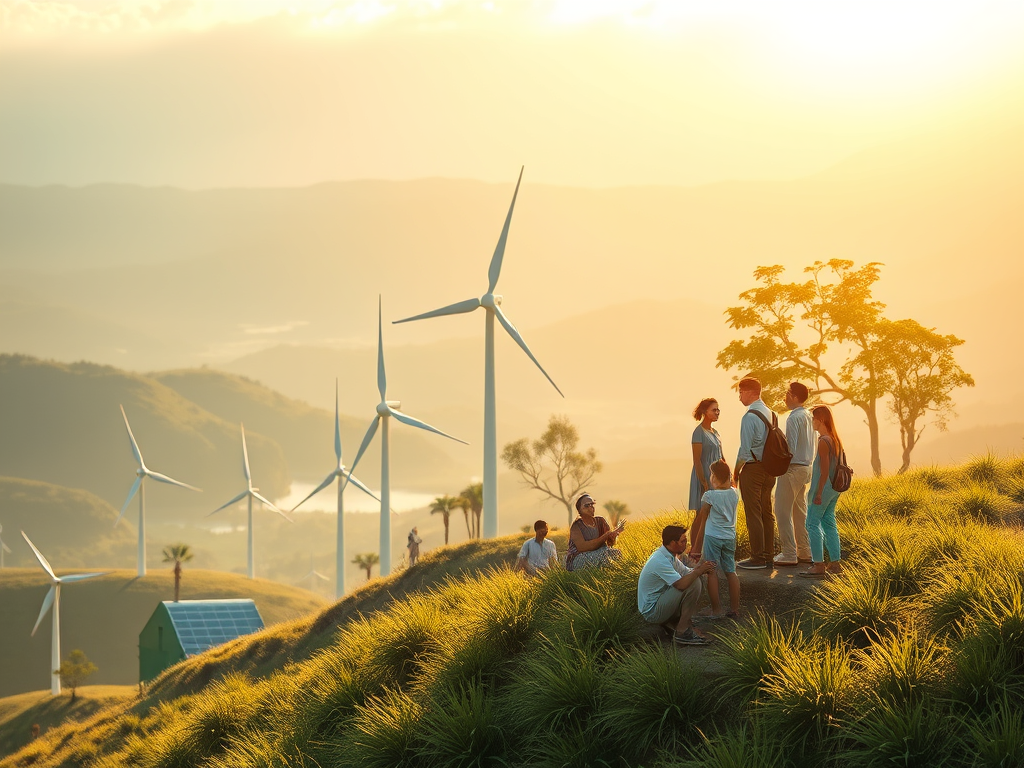
For nearly a century, the phrase “energy security” was synonymous with “oil and gas.” The global political map was largely defined by who had these fossil fuels and who needed them. This dynamic created a world of “haves” and “have-nots,” leading to decades of resource-driven conflicts, volatile price spikes, and uncomfortable political alliances. However, as we move through 2026, a profound shift is occurring. The transition to renewable energy isn’t just a climate strategy; it’s a peace strategy.
By shifting from finite, geographically concentrated fuels to abundant, localized resources like sun, wind, and water, the world is slowly dismantling the traditional triggers of geopolitical friction. While the transition brings its own set of challenges—such as the race for critical minerals—the overall trajectory is toward a more stable, decentralized, and equitable global order. Here are the top 10 ways the green energy revolution is lowering global tensions and fostering a more peaceful international landscape.
1. Dismantling the “Oil Weapon” and Resource Extortion
Throughout the 20th and early 21st centuries, major oil-producing nations often used their exports as a “weapon” to influence the foreign policies of importing countries. If a superpower didn’t agree with an exporter’s actions, the exporter could simply “turn off the tap,” causing economic chaos. In 2026, this form of resource extortion is becoming increasingly obsolete. As nations in Europe and Asia diversify their energy mixes with domestic solar and wind, the leverage held by fossil fuel autocracies is evaporating.
Think of it like a neighborhood where everyone used to rely on a single, moody grocery store owner for food. If the owner got angry, the whole block went hungry. Now, imagine every house has its own backyard garden. While they might still buy some items from the store, the owner can no longer threaten them with starvation. This energy independence allows countries to make sovereign diplomatic decisions based on their values and international law, rather than being forced into silence by the fear of a mid-winter heating crisis. The democratization of energy generation is effectively taking the “ammunition” out of the hands of those who used fossil fuels to bully their neighbors.
2. Reducing Conflict Over Strategic Chokepoints
Much of the world’s oil and gas must travel through narrow “chokepoints” like the Strait of Hormuz or the Malacca Strait. These tiny strips of water are some of the most militarized zones on Earth because a single blockage can derail the global economy. Consequently, superpowers spend trillions of dollars on naval presence to “protect” these routes. Renewable energy is lowering these geopolitical tensions by reducing the volume of combustible fuel that needs to be shipped across oceans.
Unlike oil, you cannot “blockade” the sun or the wind. As a nation moves toward 80% or 90% renewable electricity, its reliance on long, vulnerable maritime supply chains decreases. This leads to what experts call “de-securitization”—where a resource is no longer seen as a military target. When energy is harvested locally, there is less need for “aircraft carrier diplomacy” to guard tankers. By thinning out the traffic of high-stakes energy commodities, we are essentially removing the tinder from some of the world’s most dangerous geopolitical flashpoints.
3. Decentralization as a Defense Against Kinetic Attacks
In traditional energy systems, a single hit on a massive power plant or a central pipeline can plunge an entire country into darkness. This “centralized vulnerability” makes energy infrastructure a primary target in modern warfare. However, renewable energy thrives on decentralization. A solar-powered country isn’t powered by one big “beating heart,” but by millions of small “cells” spread across rooftops, fields, and mountains.
If an adversary strikes a centralized gas plant, the lights go out for millions. If they strike a single solar farm, the rest of the distributed network—microgrids, residential panels, and battery storage—keeps humming. This “resilience by design” makes energy a less attractive target for kinetic attacks and cyber-warfare. In 2026, we are seeing “crisis-induced decarbonization” in regions like Ukraine and Lebanon, where citizens have turned to off-grid solar not just for the planet, but because it’s the only power source an enemy can’t easily destroy. By making the energy grid harder to “kill,” renewables are making the prospect of attacking it less strategically valuable.
4. Mitigating the “Resource Curse” and Civil Unrest
Many conflicts in the Global South are fueled by the “Resource Curse”—a phenomenon where a country’s vast oil or mineral wealth leads to corruption, inequality, and civil war as factions fight for control of the “pot of gold.” Because oil wealth is easily centralized, it often funds oppressive regimes or rebel groups. Renewables, by contrast, are difficult to monopolize.
While a dictator can seize an oil well and sell the contents on the black market, it is much harder to “capture” and export sunlight or wind in the same way. Renewable energy projects often involve local ownership and distributed benefits, which helps spread wealth more evenly. By providing affordable, local power to rural and impoverished areas, renewables are addressing the root causes of civil unrest—energy poverty and economic exclusion. When people have reliable electricity to run businesses and schools, the “desperation” that often leads to radicalization and conflict begins to diminish.
5. Climate Diplomacy as a New “Common Language”
While nations might disagree on trade or borders, the reality of a warming planet is a shared threat that ignores all boundaries. This has turned climate diplomacy into a unique “neutral ground” for international cooperation. Even during periods of high tension, major rivals often continue to talk about green technology standards, carbon markets, and disaster resilience.
Renewable energy acts as the “connective tissue” of modern diplomacy. Cooperative projects, such as the “Green Grids Initiative” which aims to link solar power from sunny deserts to rainy industrial hubs across borders, are creating a new form of interdependence. This is different from the “predatory interdependence” of the oil era; it’s a mutual-gain system. When countries are physically connected by a shared electrical grid, the cost of going to war with one another becomes prohibitively high. In 2026, “peace through electricity” is becoming a tangible diplomatic strategy, replacing the old “balance of terror” with a balance of shared infrastructure.
6. Stability Through Predictable Energy Pricing
One of the greatest sources of global tension is the extreme volatility of fossil fuel prices. A sudden spike in oil prices can trigger inflation, lead to “bread riots” in developing nations, and topple governments. This unpredictability creates a world of constant anxiety and short-term thinking. Renewable energy, however, offers a “fixed-price” future.
Once a wind turbine or solar panel is installed, the “fuel” (the wind or sun) is free forever. This shifts energy from a volatile commodity to a predictable piece of infrastructure. This economic stability is a massive “peace dividend.” Governments can plan their budgets decades in advance without worrying about a war in a distant region tripling their energy bills. For a nation’s citizens, stable bills mean more disposable income and less economic frustration—the primary ingredient in social instability. By removing the “chaos factor” of global energy markets, renewables are cooling the economic tempers of the world.
7. Ending the “New Great Game” in the Arctic and Deep Sea
As traditional oil and gas reserves on land have dwindled, nations have begun to eye “frontier” territories like the melting Arctic or the deep seabed with predatory intent. This has led to a “New Great Game,” with countries planting flags on the seafloor and conducting military drills in once-untouched wilderness. The transition to renewables is slowing this dangerous race.
As the demand for long-term oil projects (which take 20+ years to pay off) falls, the economic incentive to start a risky, high-cost conflict over a deep-sea oil field vanishes. Why fight a war over an expensive, hard-to-reach oil deposit in the Arctic when you can build a cheaper, safer wind farm in the North Sea? While we still see competition for critical minerals like lithium and cobalt, the geography of these resources is broader and more varied than “oil-rich” zones. The shift toward renewables is effectively “lowering the temperature” in these high-stakes territorial disputes.
8. Empowering “Energy-Poor” Nations Toward Sovereignty
For decades, many developing nations have been trapped in a cycle of debt, borrowing money from the Global North to buy oil to power their economies. This “energy debt” often gives lending nations or organizations immense power over the borrower’s domestic policies. Renewables are the ultimate tool for economic decolonization.
Nations in Africa, Southeast Asia, and Latin America often have the world’s best solar and geothermal potential. By tapping into these resources, they can stop the “drain” of currency leaving their borders to pay for foreign fuel. This newfound energy sovereignty allows these nations to participate in the global community as equals rather than dependents. When a country is no longer “begging” for energy, it is less likely to be a theater for proxy wars between superpowers. Empowered, self-sufficient nations are the building blocks of a stable and peaceful global order.
9. Preventing “Water Wars” Through Clean Power
A hidden driver of global tension is the link between energy and water. Traditional power plants (coal, gas, and nuclear) require vast amounts of water for cooling. In water-stressed regions, this creates a “zero-sum game” between the power grid and the thirsty population. Many experts have predicted that the “wars of the future” will be fought over water, not oil.
Renewable energy, particularly solar PV and wind, requires virtually no water to generate electricity. By switching to these technologies, countries can preserve their precious freshwater for agriculture and human consumption. Furthermore, cheap renewable energy is making desalination (turning seawater into fresh water) economically viable for the first time. By solving the energy crisis, we are inadvertently solving the water crisis. When nations aren’t fighting over a shrinking river or a shared aquifer, the risk of regional conflict drops significantly.
[Image showing the “Water-Energy Nexus”: a comparison of water consumption between coal/nuclear plants and solar/wind farms]
10. Building a “Circular Economy” for Mineral Security
Critics often point out that the “Green Peace” might be interrupted by a new struggle for “Green Minerals” like lithium. However, unlike fossil fuels, minerals are not “burned” and gone forever; they are permanent assets. Once you have enough lithium for your battery fleet, you can recycle it almost indefinitely.
This is leading to a shift toward a circular economy, where “mining” happens in recycling plants in your own backyard rather than in a conflict-prone mine halfway across the world. In 2026, breakthroughs in sodium-ion batteries and other “earth-abundant” materials are already reducing the strategic importance of any single mineral. As recycling technology matures, the “geopolitics of minerals” will likely become a trade of technology and innovation rather than a violent scramble for land. By moving from a “depletion” model to a “retention” model, we are building an energy system that is fundamentally less prone to zero-sum conflict.
Further Reading
- The New Map: Energy, Climate, and the Clash of Nations by Daniel Yergin
- Taming the Sun: Innovations to Harness Solar Energy and Power the Planet by Varun Sivaram
- The Rare Metals War: The Dark Side of Clean Energy and Digital Technologies by Guillaume Pitron
- Electrifying Peace: How the Energy Transition Could Change Global Geopolitics (IRENA Report Series)
- The Third Industrial Revolution: How Lateral Power Is Transforming Energy, the Economy, and the World by Jeremy Rifkin
Keep the Discovery Going!
Here at Zentara, our mission is to take tricky subjects and unlock them, making knowledge exciting and easy to grasp. But the adventure doesn’t stop at the bottom of this page. We are constantly creating new ways for you to learn, watch, and listen every single day.
📺 Watch & Learn on YouTube
Visual learner? We publish 4 new videos every day, plus breaking news shorts to keep you smarter than the headlines. From deep dives to quick facts, our channel is your daily visual dose of wonder.
Click here to Subscribe to Zentara on YouTube
🎧 Listen on the Go on Spotify
Prefer to learn while you move? Tune into the Zentara Podcast! We drop a new episode daily, perfect for your commute, workout, or coffee break. Pop on your headphones and fill your day with fascinating facts.
Click here to Listen on Spotify
Every click, view, and listen helps us keep bringing honest knowledge to everyone. Thanks for exploring with us today—see you out there in the world of discovery!




Leave a Reply