
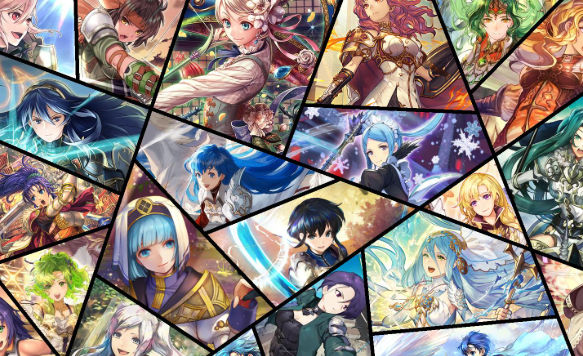
Long before it was a mainstay of modern gaming and a heavyweight in the tactical RPG genre, the Fire Emblem franchise was a precarious experiment. Born from a desire to blend the strategic depth of war games with the emotional resonance of traditional role-playing adventures, the series has survived near-cancellations, international obscurity, and a total shift in its mechanical identity. Today, players recognize its signature “Perma-death” system and the complex “Weapon Triangle,” but the path to becoming a global phenomenon was paved with risky decisions and hidden inspirations. From its origins on 8-bit hardware to its status as a cornerstone of tactical storytelling, these ten revelations pull back the fog of war on one of gaming’s most storied sagas.
1. The Near-Extinction That Saved the Series
It is a rare occurrence in the gaming industry when a “final ultimatum” actually results in a masterpiece, but that is exactly what happened to Fire Emblem. After several entries saw declining sales, the developers were given a strict mandate: the next title had to sell a specific, high-volume number of units or the franchise would be permanently retired. Instead of playing it safe, the team poured every ambitious idea they had into a single project. They overhauled the social mechanics, introduced a massive cast of characters, and polished the tactical gameplay to a mirror sheen. The result was a runaway success that didn’t just meet the sales goal—it shattered it. This “do-or-die” moment transformed the series from a niche tactical simulator into a mainstream powerhouse, proving that the threat of “game over” can be just as motivating for developers as it is for players.
2. The Smash Bros. Effect: A Global Awakening
For over a decade, the Fire Emblem series was a strictly Japanese phenomenon. Western audiences had no idea that a deep, character-driven tactical RPG even existed until two mysterious swordsmen appeared in a popular crossover fighting game. When Marth and Roy joined the roster of Super Smash Bros. Melee, players in North America and Europe were immediately intrigued by these elegant, blue-haired warriors. The overwhelming curiosity from the international community convinced the publishers that there was a global appetite for the series. This led to the very first international release of a Fire Emblem title, which, interestingly, featured a completely different protagonist. This “accidental” marketing remains one of the most successful examples of cross-promotion in gaming history, effectively launching a global brand through a single guest appearance.
3. The Philosophy of Perma-death and Emotional Weight
The most defining—and often most stressful—feature of the franchise is “Perma-death.” In most RPGs, a fallen comrade can be revived with a simple item or a trip to an inn. In Fire Emblem, once a unit’s health hits zero, they are gone from the story forever. This wasn’t implemented just for difficulty; it was a narrative choice designed to make the player feel like a true commander. The developers wanted every tactical decision to carry the weight of a human life. By giving every unit a unique name, a backstory, and personal relationships, the game forces players to view them not as “chess pieces,” but as people. This emotional stakes-driven gameplay is what separates the series from other strategy titles, turning a map of sprites into a high-stakes drama where one wrong move results in a permanent loss.
4. A Hidden Inspiration in Traditional Chess
While the series is often categorized alongside fantasy novels, its mechanical DNA is deeply rooted in the ancient game of chess. The creator of the series envisioned a version of chess where the pieces had personalities and could gain experience. In traditional chess, a pawn is always a pawn, but in this franchise, that “pawn” has a name, a family, and the potential to promote into a powerful Hero or General. The movement on a grid, the importance of positioning, and the concept of protecting a “Lord” (the King) are direct homages to chess. By adding a layer of statistical growth and weapon advantages, the developers created a “living board game” that combined the cold logic of strategy with the warmth of a character-driven epic.
5. The Evolution of the Iconic Weapon Triangle
One of the most recognizable systems in strategy gaming is the “Weapon Triangle”—a rock-paper-scissors style mechanic where Swords beat Axes, Axes beat Lances, and Lances beat Swords. Surprisingly, this cornerstone of the franchise wasn’t present in the very first game. It was introduced several entries deep into the series to add another layer of tactical consideration to the battlefield. The Triangle forced players to diversify their army rather than relying on a single powerful unit to “tank” through an entire map. This system turned every encounter into a mini-puzzle, requiring the player to scout the enemy’s equipment before committing to an attack. It became so iconic that even when modern entries occasionally experiment with removing it, the core DNA of weapon-based advantages remains central to the player’s strategy.
6. The Origins of the “Social Link” Support System
Modern fans often point to the “Support” system—where characters talk to each other between battles to gain stat bonuses—as their favorite feature. This mechanic actually evolved from very humble beginnings. Initially, these bonuses were hidden “passive” buffs that occurred simply by standing units next to each other. Over time, the developers realized that players were imagining the conversations these characters were having on the battlefield. They decided to write those conversations into the game, creating the Support system. This allowed for deep world-building without bloating the main plot, as players could choose which relationships to pursue. It transformed the game from a series of battles into a social simulation, where the bonds formed between soldiers were just as vital as the swords they carried.
7. The “Fire Emblem” Isn’t Always a Shield
Despite the franchise being named after it, the “Fire Emblem” itself changes its form and function in almost every distinct world the games inhabit. In the original tales, it is a legendary shield that holds magical orbs. In other storylines, it has appeared as a royal crest, a gemstone, a literal flame, or even a sacred medallion housing a chaotic god. This versatility allows the developers to reset the mythology for new players while maintaining a thematic “north star.” Regardless of its physical shape, the Fire Emblem always represents a source of great power—and great responsibility—that the protagonist must wield to prevent a global catastrophe. It serves as the ultimate symbol of the series’ core theme: the light of hope in a world consumed by the flames of war.
8. A Musical Legacy and the Famous Theme Song
The Fire Emblem Theme is one of the most recognizable pieces of music in gaming, yet its lyrics are rarely heard in the games themselves. Originally composed for the Famicom debut, the theme was designed to sound like a grand, military march. However, for a television commercial in the early 90s, an opera-style vocal version was recorded, featuring lyrics that described the peril of the battlefield. This “Opera Version” became so popular in Japan that it is often the version fans associate with the series’ identity. The music across the franchise is meticulously crafted to shift dynamically; the soundtrack often transitions seamlessly from a calm “map” theme to an energetic “battle” arrangement the moment two units engage, a technical feat that has become a staple of the series’ polished presentation.
9. The Unseen Influence of Archanea and Valentia
The series often utilizes a “multiverse” or “split continent” approach to storytelling, but the first few games established a blueprint of interconnected lands that still influences modern design. The original continent, Archanea, set the standard for the “European Middle Ages” aesthetic, while the neighbor continent of Valentia introduced more experimental RPG elements like world maps and dungeon crawling. Many modern entries are actually “spiritual successors” or reimaginings of the conflicts found in these early lands. Even when a game takes place in an entirely new world with new gods, the structural tropes—the “Red and Green Cavalier” duo, the “Late-game Dragon Boss,” and the “Traitorous Advisor”—all trace their lineage back to the foundational stories of the 8-bit era.
10. The Shift from Military Sim to High Fantasy Romance
Throughout its history, the franchise has undergone a massive tonal shift. The early entries focused heavily on the logistics of war, political maneuvering, and the grim reality of being a soldier. However, as the series evolved, it began to embrace “High Fantasy” tropes and, eventually, romance mechanics. This shift wasn’t a coincidence; the developers noticed that fans were deeply invested in the “shipping” of characters. By allowing players to influence which characters fell in love and, in some cases, seeing their future children join the fray, the series tapped into a massive new demographic. This pivot saved the franchise from stagnation, proving that while players come for the deep strategy, they stay for the personal stories and the ability to shape the lineage of their digital army.
Further Reading
- The Art of Fire Emblem: Awakening by Nintendo
- Fire Emblem: Character Encyclopedia by Nintendo & Intelligent Systems
- The Minds Behind the Games: Interviews with Cult and Classic Video Game Developers by Patrick Hickey Jr.
- Game Design Theory by Keith Burgun




Leave a Reply