
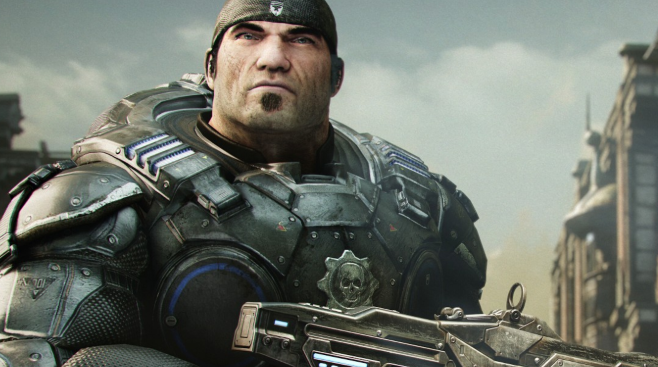
The sound of a chainsaw bayonet revving is unmistakable. For millions of players, it represents the heart-pounding essence of Gears of War, a franchise that redefined the third-person shooter and brought “tactical gore” into the mainstream. While fans have spent countless hours ducking behind waist-high walls and diving away from Ticker explosions, the history behind the creation of Sera and the Delta Squad is as rugged and intense as the COG soldiers themselves.
Beyond the grizzly executions and the “dude-bro” exterior lies a masterclass in world-building, technical innovation, and surprising inspirations. From its humble beginnings as a completely different genre to the secret science behind its most iconic weapon, the story of Gears is one of risks that paid off. Whether you are a veteran of the Pendulum Wars or a fresh recruit, these ten deep dives into the franchise’s lore and development will change how you see the battle for survival.
1. The Unreal Birth of the “Cover Shooter” Genre
Before it was the flagship for gritty, over-the-shoulder action, Gears of War began its life as a project called Unreal Warfare. In its earliest stages, the game was envisioned as a class-based multiplayer shooter, leaning more toward the fast-paced, floaty mechanics of the Unreal Tournament series. However, as the team at Epic Games experimented with the pacing, they realized that slowing the movement down and emphasizing the weight of the characters created a far more visceral experience.
This shift led to the refinement of the “stop-and-pop” gameplay loop. While it wasn’t the first game to use cover, Gears perfected the “sticky” cover system, making it feel intuitive rather than clunky. The developers wanted players to feel like they were “heavy” soldiers wearing hundreds of pounds of armor, which dictated everything from the camera shake during the “Roadie Run” to the way blood splatters on the screen. This technical pivot didn’t just change the game; it set the blueprint for nearly every third-person action title for the next decade, proving that sometimes, slowing down is the best way to move forward.
2. The Lancer’s Chainsaw was a “Make-or-Break” Risk
It is impossible to imagine the franchise without the Mk 2 Lancer Assault Rifle. However, during development, the inclusion of a chainsaw bayonet was highly controversial within the studio. Some designers feared it was too “over the top” or “cheesy,” potentially undermining the serious, somber tone of a world on the brink of extinction. There were even technical concerns about how to make a melee weapon work seamlessly in a game focused entirely on ranged cover-based combat.
The breakthrough came when the team realized the Lancer wasn’t just a weapon; it was a tool for “aggressive defense.” By allowing players to saw through an enemy that got too close, it solved the problem of being flanked while in cover. The iconic “vroom” of the engine and the subsequent cinematic execution became the game’s primary marketing hook. It transformed the Lancer from a standard sci-fi rifle into one of the most recognizable icons in gaming history, symbolizing the brutal, “never-say-die” attitude of the Coalition of Ordered Governments.
3. A World Inspired by “Destroyed Beauty”
The aesthetic of Sera—the planet where the series takes place—is often described by its creators as “Destroyed Beauty.” The lead art directors didn’t want a generic, post-apocalyptic wasteland filled with rusty shacks and desert sand. Instead, they looked to 18th-century European architecture, specifically the grand cathedrals and marble plazas of Italy and Russia. The goal was to show a world that was once highly sophisticated and opulent before it was torn apart by the Locust Horde.
This design philosophy creates a haunting contrast. Seeing a squad of hulking, armor-clad soldiers fighting inside a crumbling, ornate library or a shattered opera house adds a layer of tragedy to the violence. It suggests a civilization that had reached its peak before being forced back into the mud. By focusing on “Destroyed Beauty,” the developers ensured that the environments felt like they had a history worth fighting for, making the desolation feel earned rather than accidental.
4. The Surprising Influence of “Band of Brothers”
While many sci-fi shooters look to Star Wars or Aliens for inspiration, the narrative heart of Gears of War was heavily influenced by World War II media, specifically the HBO miniseries Band of Brothers. The writers wanted to move away from the “lone wolf” hero trope common in the early 2000s and instead focus on the concept of “The Squad.” The bond between Marcus Fenix and Dominic Santiago isn’t just a plot point; it’s the emotional anchor of the entire series.
This focus on brotherhood influenced the gameplay, leading to the seamless “drop-in, drop-out” co-op that became a franchise staple. The dialogue was written to reflect the gallows humor and shorthand used by real soldiers under extreme pressure. By grounding the fantastical war against subterranean monsters in the relatable emotions of loyalty and loss, the franchise managed to make players care deeply about characters who, on the surface, appeared to be nothing more than walking mountains of muscle.
5. The Secret Origins of the Locust Horde
For years, the origins of the Locust Horde were shrouded in mystery. Players initially believed they were simply aliens from beneath the surface, but the lore eventually revealed a much darker, man-made tragedy. The Locust weren’t natural inhabitants of Sera; they were the result of secret government experiments at the New Hope Facility. Scientists were attempting to cure “Rustlung,” a disease caused by exposure to Imulsion (the planet’s volatile energy source), by crossbreeding humans with indigenous creatures.
This revelation shifts the entire perspective of the war. It turns the Locust from a faceless “evil” into a mirror of humanity’s own hubris and scientific ethics gone wrong. The “Sires”—the deformed, pale creatures found in secret labs—represent the missing link between humans and the Locust. This narrative depth elevates the franchise from a simple monster-slayer into a cautionary tale about the lengths a government will go to for power and the unintended consequences of playing God with biology.
6. The “Roadie Run” was Born from Camera Hacks
The “Roadie Run”—the low-crouched, shaky-cam sprint—is one of the most distinctive movement mechanics in gaming. Interestingly, it was born out of a desire to solve a technical problem: how to make moving between cover feel fast without breaking the third-person perspective. Traditional sprinting often looked stiff and disconnected from the environment.
By dropping the camera lower to the ground and adding a slight rhythmic shake, the developers mimicked the look of a combat cameraman following soldiers through a war zone. This “handheld” camera feel increased the sense of speed and danger, making the player feel vulnerable even while moving quickly. It also helped mask some of the animation transitions when snapping into cover. This “hack” of the camera perspective became so popular that it has been imitated by countless other action games seeking to capture that same sense of cinematic urgency.
7. The Tragedy of Maria Santiago was a Turning Point
In the early days of the franchise, many critics dismissed it as a “meathead” shooter. That perception changed significantly with the storyline involving Maria Santiago, Dom’s missing wife. Her eventual discovery and the heart-wrenching choice Dom has to make served as a “tonal shift” for the industry. It was a rare moment in a blockbuster action game where the violence was paused to address the crushing psychological toll of war.
This plot point was vital because it humanized the characters. It showed that despite their massive size and tough exteriors, they were broken men driven by grief. The “Maria” arc proved that a game about chainsawing monsters could also handle complex themes like PTSD, loss, and the ethics of mercy. It remains one of the most discussed and emotional moments in the series, cementing the franchise’s reputation for having a “soul” beneath its gritty armor.
8. Imulsion: The Double-Edged Sword of Energy
The entire conflict on Sera is driven by Imulsion, a glowing, low-viscosity fluid found deep underground. Originally thought to be a miracle fuel that would solve all of humanity’s energy problems, it became the catalyst for the Pendulum Wars—a 79-year global conflict—and eventually the catalyst for the emergence of the Lambent. The “twist” regarding Imulsion is that it isn’t just a mineral; it is a living, parasitic organism.
This biological nature of Imulsion is what causes the “Lambency” mutation, which eventually threatens both humans and the Locust alike. It serves as a brilliant environmental allegory. The very resource that allowed Sera to flourish also became the thing that destroyed it, forcing the two warring factions (the COG and the Locust) into a desperate struggle against a common, microscopic enemy. It adds a layer of “cosmic horror” to the series, as the characters realize they aren’t just fighting monsters—they are fighting the planet itself.
9. The Evolution of “Horde Mode”
While Gears of War didn’t invent the concept of fighting waves of enemies, its “Horde Mode” perfected the formula and popularized it across the entire industry. When it first debuted, it was a simple addition meant to extend the game’s replayability. However, it quickly became a cultural phenomenon, leading to virtually every other major shooter (from Call of Duty to Halo) implementing their own version of a cooperative wave-based survival mode.
The genius of Horde Mode lay in its synergy with the game’s core mechanics. Because the game is built on tactical cover and teamwork, surviving 50 waves of increasingly difficult enemies required genuine strategy and communication. It turned the “lonely” experience of a shooter into a social, defensive puzzle. The mode’s success demonstrated that players were just as interested in working together against AI as they were in competing against each other, changing the landscape of multiplayer gaming forever.
10. The Mystery of the Queen’s Humanity
One of the most enduring debates among fans involves Queen Myrrah, the leader of the Locust Horde. Unlike her monstrous, grey-skinned subjects, Myrrah looks remarkably human. This was a deliberate design choice to create a sense of unease and mystery. How could a human lead a race of subterranean monsters dedicated to the extinction of mankind?
As the lore expanded, it was revealed that Myrrah was a descendant of the original New Hope scientists and possessed a unique genetic immunity to Imulsion. She saw the Locust not as monsters, but as her “children”—a new, purer step in evolution. This makes her one of the most complex villains in gaming. She isn’t motivated by simple evil, but by a maternal, albeit twisted, desire to protect her people from the Lambent threat. Her human appearance serves as a constant reminder that the line between “us” and “them” is far thinner than the COG soldiers would like to believe.
Further Reading
- Gears of War: Aspho Fields by Karen Traviss
- Gears of War: Jacinto’s Remnant by Karen Traviss
- Gears of War: The Slab by Karen Traviss
- Gears of War: Bloodlines by Jason M. Hough




Leave a Reply