
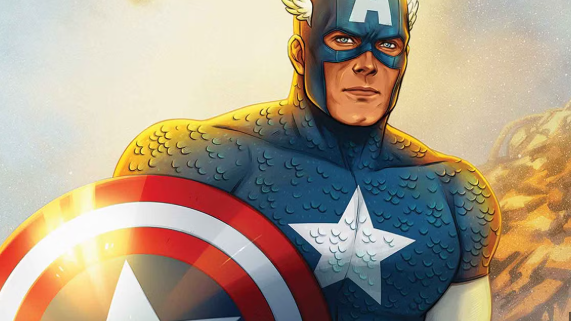
In the pantheon of Marvel legends, few figures cast a shadow as long or as inspiring as Captain America. Clad in the red, white, and blue, Steve Rogers is far more than a simple propaganda tool or a soldier in a costume; he is the moral North Star of the Marvel Universe. For decades, he has represented the ideal of what a person can be when their spirit is as unbreakable as their shield. Whether you know him from the silver screen or the classic panels of comic books, there is a profound depth to this character that transcends simple heroism.
Understanding Captain America requires peeling back the layers of a man who is literally and figuratively a “man out of time.” He is a living relic of a bygone era, navigating a world that has grown increasingly complex and cynical. Yet, his core principles—courage, integrity, and self-sacrifice—remain evergreen. This guide dives deep into the lore of the Sentinel of Liberty, exploring the nuances of his origin, his incredible equipment, and the heavy burden of the mantle he carries.
1. The Miraculous Transformation of Steve Rogers
Before he was a powerhouse of physical perfection, Steve Rogers was a frail, sickly young man from Brooklyn. His origin is a masterclass in the “hero’s journey,” centered on the idea that true strength comes from within. During a global conflict, Rogers attempted to enlist multiple times, only to be rejected due to his litany of health issues. His persistence caught the eye of Dr. Abraham Erskine, who saw in Steve not a perfect soldier, but a “good man.”
Steve was selected for Project Rebirth, an experimental initiative designed to create the ultimate human being. Through the administration of the Super Soldier Serum and exposure to “Vita-Rays,” Steve’s body was pushed to the absolute peak of human potential. This wasn’t just about muscle mass; the serum enhanced his metabolism, bone density, and healing capabilities. However, the tragedy of his origin lies in the immediate assassination of Dr. Erskine by a saboteur. This meant that the secret of the serum died with its creator, leaving Steve Rogers as a singular, irreplaceable miracle. This weight of being the “only one” has defined his career, as he constantly strives to live up to the impossible standard set by the miracle that created him.
2. The Engineering Marvel of the Indestructible Shield
If Captain America is the soul of the Avengers, his shield is the heart. While many fans assume it is a standard piece of military gear, its composition is one of the greatest mysteries in Marvel science. The shield is a unique alloy of Vibranium and an experimental steel (often referred to as Proto-Adamantium). Created by Dr. Myron MacLain, the exact process used to fuse these metals was an accident—MacLain fell asleep during the tempering process, and an unknown catalyst allowed the elements to bond in a way that has never been successfully replicated.
The result is a weapon that defies the laws of physics. Because of the Vibranium component, the shield absorbs kinetic energy rather than reflecting it. This is why Captain America can block a punch from a god like Thor or a blast from a tank without his arm shattering from the impact. Furthermore, the shield’s aerodynamic properties are unparalleled. Steve Rogers has mastered the art of “shield-slinging,” a combat style that uses the shield as a projectile. He can calculate trajectories in a split second, allowing the disk to ricochet off multiple surfaces and return to his hand like a boomerang. It is both the ultimate defense and a versatile tool of offense.
3. The Psychological Burden of the Man Out of Time
One of the most poignant aspects of Captain America’s character is his status as a “man out of time.” After a climactic battle during the Great War, Steve Rogers was plunged into the icy waters of the North Atlantic and frozen in a state of suspended animation. He remained in this cryogenic sleep for decades, preserved by the Super Soldier Serum in his veins. When he was finally discovered and thawed by the Avengers, he awoke to a world he no longer recognized.
This transition is a recurring theme in his history. Steve lost his best friend, his love interests, and the cultural context of his youth. This creates a perpetual sense of melancholy; he is a soldier who never truly “came home” because the home he knew ceased to exist. This displacement allows him to view modern society with a unique, objective perspective. He often challenges modern ethics, reminding his peers of the foundational values they may have forgotten. While he has adapted to technology and modern warfare, he remains a spiritual immigrant, forever looking back at a simpler time while fighting for a better future.
4. The Strategic Genius of the Battlefield
While his physical prowess is impressive, Steve Rogers’ greatest “superpower” is his mind. He is widely considered the greatest tactician in the Marvel Universe. His brain functions with heightened efficiency, allowing him to process information, analyze enemy movements, and formulate complex strategies in the heat of combat. He doesn’t just fight; he orchestrates. In many battles, even those involving cosmic entities, the Avengers look to Captain America not for his strength, but for his orders.
His leadership style is built on trust and empowerment. He has the uncanny ability to see the potential in others, often turning a group of disparate, ego-driven heroes into a cohesive unit. Whether he is leading a small strike team or a global resistance, Steve understands the “big picture.” He can anticipate an opponent’s move three steps ahead, often using the environment and his teammates’ specific powers to achieve victory with minimal casualties. This tactical brilliance is why he is often given command over heroes who are technically much more powerful than he is.
5. The Legacy of the Captain America Mantle
One of the most important things to understand about Captain America is that the title is a mantle, not just an identity. While Steve Rogers is the most famous bearer, the shield has been passed to several others throughout history. This reinforces the idea that Captain America is a symbol that belongs to the people, rather than a single individual. Notable figures like Bucky Barnes (the Winter Soldier) and Sam Wilson (the Falcon) have taken up the mantle, each bringing their own perspective to the role.
When Bucky Barnes became Captain America, his tenure was defined by redemption and a more aggressive, black-ops approach to heroism. Conversely, Sam Wilson’s time as the Captain focused on social justice and the complexities of representing a nation with a flawed history. Other characters, like John Walker, have also stepped into the boots, often highlighting what happens when the mantle is held by someone who lacks Rogers’ moral compass. This legacy demonstrates that being Captain America is an office—one that requires a specific temperament and a deep commitment to liberty, regardless of who is behind the mask.
6. The Unique Chemistry of the Super Soldier Serum
It is a common misconception that the Super Soldier Serum simply gave Steve Rogers “powers.” In reality, the serum is a metabolic enhancer that keeps him at the “pinnacle of human evolution.” In the comics, this means Steve is not superhuman in the way Spider-Man or the Hulk are; rather, he is the maximum of what a human can be. He can run at speeds up to 30 miles per hour, lift nearly 1,200 pounds, and exert himself at peak capacity for hours before fatigue toxins begin to affect his blood.
An often-overlooked detail is that the serum also enhances the user’s personality traits. Dr. Erskine famously noted that the serum “magnifies everything that is inside, so good becomes great; bad becomes worse.” This is why Steve, who was fundamentally selfless and brave, became a paragon of virtue. In contrast, when the serum or its variants were given to individuals with darker impulses (like the Red Skull or certain failed test subjects), it amplified their malice and instability. This chemical interaction ensures that the “man” is always more important than the “formula.”
7. A Political Statement Born in the Golden Age
Captain America’s creation was a bold political statement before he even appeared on a single page. Created by Joe Simon and Jack Kirby, the character debuted with a cover showing him punching a real-world dictator. At the time, the world was embroiled in tension, and the creators—both Jewish—used their art to take a stand against tyranny. This history is baked into the character’s DNA; he is an activist hero.
Because of this origin, Captain America has always been a character that reflects the political climate of the era in which he is written. He is not a blind servant of the government; in fact, he has frequently rebelled against the authorities when he felt they were violating the principles of the Constitution. He famously gave up his identity to become “The Nomad” or “The Captain” when he became disillusioned with political corruption. This distinction is vital: Captain America serves the American Dream and the American People, not the American Government. He is a defender of the ideal, even when the reality falls short.
8. The Indomitable Will and Worthiness
What makes Steve Rogers truly dangerous to his enemies is not his shield or his strength, but his indomitable will. He simply does not know how to give up. This “never-say-die” attitude is his defining character trait. In the comics, this iron will is often portrayed as a near-supernatural force. He has stood his ground against cosmic villains like Thanos and Galactus, even when his shield was shattered and his allies were defeated.
This strength of character is best exemplified by his “worthiness.” In the Marvel Universe, very few beings are capable of lifting Mjolnir, the hammer of Thor, which requires the wielder to be pure of heart and noble of spirit. On several occasions, Captain America has proven worthy of the power of Thor, wielding the hammer to defend the innocent. This is the ultimate validation of his character; it proves that his nobility is recognized not just by men, but by the mystical standards of the universe itself. His willpower allows him to overcome mind control, physical torture, and overwhelming odds.
9. The Iconic Rivalry with the Red Skull
Every great hero is defined by their shadow, and for Captain America, that shadow is Johann Shmidt, the Red Skull. Their rivalry is one of the most enduring in comic book history because it is purely ideological. If Captain America represents the best of humanity—selflessness, liberty, and equality—the Red Skull represents the absolute worst—hatred, totalitarianism, and the belief in the inherent superiority of one group over another.
The Red Skull was a protege of darkness, trained to be the antithesis of the American hero. Throughout their long history, the Skull has attempted to break Steve Rogers’ spirit more than his body. He has cloned Rogers, stolen his body, and manipulated global events to make the world lose faith in the Captain. Unlike other villains who seek wealth or power, the Red Skull seeks the destruction of the ideals Steve Rogers stands for. This eternal struggle highlights the fact that Captain America’s fight isn’t just against “bad guys,” but against the very concepts of fascism and oppression.
10. The Conscience of the Avengers
While he was not a founding member in the very first issue of the team’s history, Captain America is universally recognized as the heart and soul of the Avengers. He was given “founding member status” in honor of his discovery from the ice, and he quickly became the team’s field commander. In a group filled with volatile personalities like the Hulk, wealthy geniuses like Iron Man, and literal gods like Thor, Captain America acts as the moral anchor.
He is the one who keeps the team focused on their mission: protecting those who cannot protect themselves. Without him, the Avengers often descend into internal bickering or ethical compromises. He is the “conscience” who reminds them why they fight. His presence elevates those around him; heroes find themselves wanting to be better versions of themselves when they are in his company. Whether he is leading the “Kooky Quartet” of reformed villains or the modern-day “Earth’s Mightiest Heroes,” his leadership ensures that the team remains a symbol of hope rather than just a collection of power.
Further Reading
- Captain America: Man Out of Time by Mark Waid
- Captain America: Winter Soldier by Ed Brubaker
- Captain America: The Chosen by David Morrell
- Captain America: War & Remembrance by Roger Stern and John Byrne




Leave a Reply