
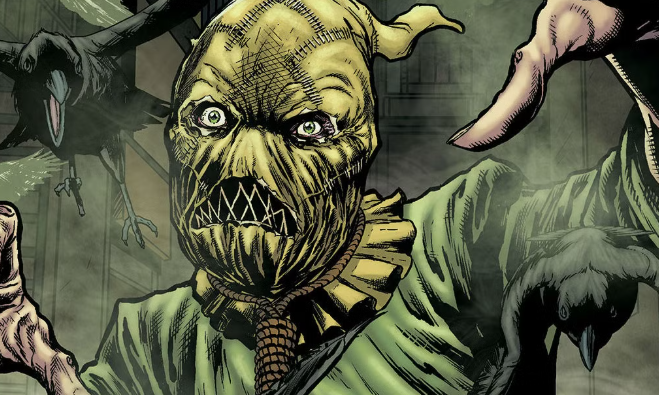
In the rain-slicked, shadow-drenched alleys of Gotham City, terror takes many forms. While some villains seek wealth and others crave chaos, one figure stands apart as the definitive architect of nightmares: Dr. Jonathan Crane, better known as the Scarecrow. He is not merely a criminal; he is a scientist of the psyche, a man who has turned the primal instinct of fear into a refined, lethal weapon. To understand the Scarecrow is to look into a dark mirror and see your own deepest anxieties staring back.
The Scarecrow remains one of the most enduring figures in the DC Universe because he strikes at a universal human experience. We all know what it feels like for our hearts to race, our palms to sweat, and our minds to spiral into panic. Crane doesn’t just exploit this; he worships it. For the uninitiated, he might seem like a man in a simple burlap mask, but for those who have faced his “Fear Toxin,” he is a god of despair. This guide explores the intricate layers of the Master of Fear, providing a comprehensive look at why he remains the ultimate shadow over Gotham.
1. The Twisted Origins of Dr. Jonathan Crane
Long before he donned the mask, Jonathan Crane was a child defined by the very emotion he would later master. Raised in an environment of neglect and cruelty, Crane was often the target of relentless bullying due to his lanky frame and bookish nature, frequently being compared to the awkward Ichabod Crane from literary lore. This early exposure to humiliation didn’t break him; instead, it sparked a clinical obsession. He became a student of his own torment, observing how fear paralyzed his peers and empowered his abusers.
His academic journey was fueled by a pathological need to understand the physiological and psychological mechanics of fright. Crane didn’t just want to heal phobias; he wanted to control them. As a professor of psychology, his methods were as brilliant as they were unethical, eventually leading to his expulsion from the academic world after he fired a gun in a crowded classroom to demonstrate a point about the “startle response.” This transition from a respected doctor to a masked criminal was not a descent into madness, but rather a calculated evolution. He realized that to truly study fear, he had to become the source of it.
2. The Chemistry of Chaos: Decoding Fear Toxin
The Scarecrow’s primary weapon is his infamous Fear Toxin, a sophisticated hallucinogenic compound that targets the amygdala—the brain’s emotional processing center. This chemical cocktail is not a “one size fits all” drug; it is a bespoke nightmare. When inhaled or injected, the toxin forces the victim to hallucinate their worst possible fears with vivid, tactile realism. If you fear spiders, the world becomes a crawling mass of legs; if you fear failure, you see your life crumbling in real-time.
What makes the toxin so terrifying is its versatility. Crane has developed countless iterations: aerosol sprays hidden in his sleeves, coated needles, and even gas-filled pellets. The chemical composition is constantly evolving to bypass the filters of Batman’s cowl or to overcome a victim’s growing resistance. Analogous to a biological virus, the Fear Toxin mutates to find the cracks in a person’s mental armor. It is the ultimate equalizer, capable of bringing even the most powerful heroes—those who normally stand tall against physical gods—down to their knees in a fit of uncontrollable sobbing.
3. A Master of Psychological Warfare
Beyond the gadgets and the gas, the Scarecrow is a formidable opponent because of his profound understanding of human vulnerability. He is a doctor of psychology first and a supervillain second. Crane possesses an uncanny ability to read people, identifying their “breaking points” through observation and cold, clinical analysis. He doesn’t just attack the body; he dismantles the ego. He understands that fear is often more potent in the anticipation than in the realization.
Crane often employs “mind games” that require no chemicals at all. By using environmental storytelling—leaving cryptic messages, utilizing eerie lighting, or manipulating a victim’s surroundings—he can induce a state of high-alert paranoia. He views Gotham as his laboratory and its citizens as his test subjects. This psychological depth makes him a unique threat compared to the Joker’s random chaos or the Penguin’s greed. The Scarecrow’s goals are educational in a dark, twisted sense; he wants to see how much the human mind can endure before it snaps entirely, making him one of the most intellectually dangerous residents of Arkham Asylum.
4. The Symbolic Power of the Burlap Mask
The Scarecrow’s aesthetic is a masterclass in primal symbolism. The choice of a scarecrow—a figure designed to ward off pests and protect a harvest—is a dark irony. In Crane’s hands, the scarecrow becomes a sentinel of the harvest of souls. The tattered burlap mask serves multiple purposes: it protects him from his own airborne toxins, it conceals his identity, and most importantly, it acts as a “Rorschach test” for his victims. The mask is intentionally primitive, tapping into ancient, folkloric fears of the “uncanny valley.”
The design of the mask often features a stitched-shut mouth or exaggerated, hollow eyes, reflecting Crane’s own detachment from humanity. When a victim is under the influence of his gas, the mask often appears to move, breathe, or transform into a skeletal demon. It is the face of the “Boogeyman” brought to life. By adopting this persona, Crane sheds his identity as a frail academic and adopts the mantle of a mythological entity. He understands that a man can be killed, but a symbol of fear is much harder to eradicate from the collective consciousness of a city.
5. The “Violent Crane” Martial Arts Style
One of the most overlooked aspects of the Scarecrow is his physical lethality. While he prefers to let his toxins do the heavy lifting, Crane is a deceptively dangerous hand-to-hand combatant. He developed a personal fighting style known as “Violent Crane,” which is a dark hybrid of Kung Fu and his own lanky, unorthodox movements. This style utilizes his long limbs to keep opponents at a distance, using unpredictable, jerky motions that mimic a straw-filled effigy caught in the wind.
This fighting style is designed to be disorienting. He uses scythes, sickles, and even his own pharmaceutical tools as weapons, turning his slender frame into a whirlwind of sharp edges. Because he often fights while his opponents are hallucinating, his movements appear even more supernatural and terrifying. He doesn’t fight with the disciplined grace of Batman or the raw power of Bane; he fights with a frantic, desperate energy that catches even the most seasoned combatants off guard. It is a physical manifestation of his psychological philosophy: unpredictability breeds panic.
6. Wielder of the Yellow Ring: The Sinestro Corps
The Scarecrow’s reputation for instilling terror eventually garnered attention far beyond the borders of Gotham City. In a notable cosmic event, Crane was selected as a deputy of the Sinestro Corps. This organization utilizes the Yellow Light of Fear from the emotional electromagnetic spectrum. Because Crane is one of the few beings in the universe capable of instilling “great fear,” he was deemed a perfect candidate for a power ring.
During his time with the ring, the Scarecrow’s power reached god-like proportions. He was no longer limited by the range of his gas; he could create hard-light constructs of his victims’ nightmares. However, the most fascinating aspect of this era was Crane’s reaction to the ring. For a man who had become desensitized to his own chemicals, the ring provided a “fix” for his addiction. It allowed him to feel the fear of others with such intensity that it became a form of ecstasy. While he eventually lost the ring, his brief stint as a cosmic harbinger of dread solidified his status as one of the most significant villains in the DC hierarchy.
7. The Tragedy of the “Fearless” Man
There is a profound irony at the heart of Jonathan Crane’s character: he is often unable to feel fear himself. Years of self-experimentation and constant exposure to his own toxins have essentially “burnt out” his emotional receptors. For most people, fear is a deterrent; for Crane, it is the only thing that makes him feel alive. This has led to a dangerous addiction where he constantly seeks out higher stakes and more terrifying experiences just to catch a glimmer of the adrenaline he once felt as a bullied child.
This dynamic creates a fascinating relationship between Scarecrow and Batman. To Crane, Batman is the ultimate specimen because the Dark Knight is the only thing that can still make him feel a twinge of genuine dread. This makes Crane’s obsession with Batman deeply personal. He doesn’t want to kill the Batman as much as he wants to use him as a catalyst for his own emotional resurrection. He is a man trapped in a cold, grey world, desperately trying to set the world on fire just to feel the heat.
8. Alliances and the Secret Society of Super Villains
While the Scarecrow often operates as a “lone wolf” to maintain the purity of his experiments, he is a frequent and valuable member of various villainous syndicates. He has served as a core member of the Injustice Gang and the Secret Society of Super Villains. In these groups, Crane often acts as the “interrogator” or the tactical “disruptor.” His ability to break the will of even the most stubborn heroes makes him an asset that leaders like Lex Luthor or Ra’s al Ghul highly prize.
Despite these alliances, Scarecrow is rarely a loyal follower. He views his teammates as either variables in his experiments or as temporary shields against the law. His tenure with the Legion of Doom showcased his ability to scale his terror tactics to a global level, proving that while he is a Gotham-centric villain, his “science” is applicable to any hero, regardless of their powers. Whether he is working alongside the Joker or the Penguin, Crane always maintains a chilling professional distance, reminded that at any moment, he could turn his gas on his “friends” just to see what color their fear turns.
9. Iconic Rivalries Beyond the Bat
While Batman is his primary adversary, the Scarecrow has had significant encounters with the broader DC roster. His toxins have been used to dismantle the Justice League, proving that even “gods” have phobias. For example, he has forced Superman to see a world where he accidentally destroys those he loves, and he has challenged the will of Green Lanterns, who are supposedly “men without fear.” These crossovers highlight the universal nature of his power.
One of his most interesting dynamics is with other “fear-based” characters. His interactions with villains like Sinestro or heroes like Raven provide a deep dive into the different philosophies of fear. While Sinestro uses fear as a tool for order, Crane uses it for the sake of the sensation itself. These rivalries demonstrate that the Scarecrow is not just a “Batman villain” but a foundational pillar of the DC Universe’s emotional landscape. He represents the darkness that exists even in the brightest heroes, the shadow that cannot be outrun.
10. The Evolution of the Nightmare
The Scarecrow has evolved significantly since his first appearance. Initially portrayed as a somewhat campy, lanky professor in a straw suit, he has morphed into a figure of genuine horror. Modern interpretations often lean into body horror, showing Crane with needles integrated into his fingers or a mask that seems fused to his face. This evolution mirrors the shifting cultural understanding of fear; as society’s anxieties have become more complex and psychological, so has the Scarecrow.
Today, he is often depicted as a high-functioning sociopath whose “Scarecrow” persona is more “real” than Jonathan Crane. He has become a staple of every medium, from comic books and animated series to major motion pictures and video games. His legacy is one of constant reinvention. As long as humanity has secrets they are afraid to face, the Scarecrow will have a place in the shadows of Gotham, waiting with a needle and a smile to show us what we are truly afraid of.
Further Reading
- Batman: Scarecrow Tales – A curated collection of the most significant Scarecrow stories across several decades, showcasing his evolution.
- Batman: Year One: Scarecrow by Bruce Jones – A deep dive into the early days of Jonathan Crane and his transition into the Master of Fear.
- Batman: Knightfall by Doug Moench and Chuck Dixon – This massive epic features Scarecrow in a pivotal role as he exploits a city in chaos.
- Batman: The Long Halloween by Jeph Loeb – A classic mystery where Scarecrow appears as part of a larger ensemble of Gotham’s most dangerous rogues.

Leave a Reply