
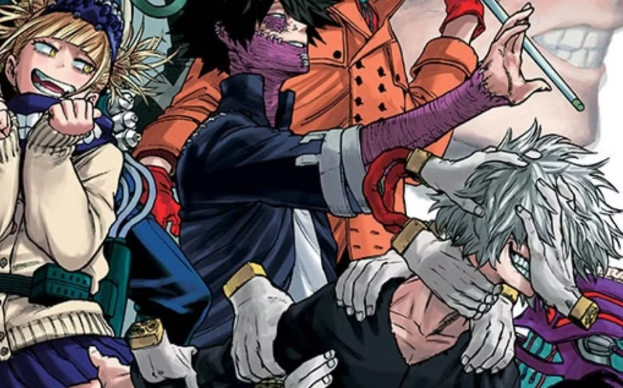
In a world where the extraordinary has become the ordinary, My Hero Academia (Boku no Hero Academia) stands as a towering pillar of modern storytelling. It is a narrative that deftly bridges the gap between the classic “Hero’s Journey” found in ancient myths and the high-octane, colorful spectacle of modern comic book culture. At its core, the series is more than just a battle of “good versus evil”—it is a profound exploration of what it means to be a hero in a society that has institutionalized heroism into a career path.
Since its inception in the pages of Weekly Shonen Jump, My Hero Academia has captured the hearts of millions across the globe. It tells the story of Izuku Midoriya, a boy born without powers in a world where nearly everyone possesses a “Quirk.” His journey from a “Quirkless” dreamer to the greatest hero the world has ever known serves as the emotional heartbeat of the franchise. Whether you are a seasoned anime veteran or a newcomer curious about the hype, understanding the depth of this world requires looking beneath the surface of the flashy fights and into the intricate world-building and character philosophies that define this epic.
1. The Visionary Mind of Kohei Horikoshi
Behind the vibrant world of My Hero Academia is the immense talent of creator Kohei Horikoshi. A lifelong fan of both Japanese manga and American superhero comics, Horikoshi’s work is a love letter to the genres that shaped him. Before finding massive success with this series, Horikoshi faced several professional setbacks, with previous projects struggling to find an audience. However, it was his passion for the “superhero” archetype—specifically the idea of a character who helps others with a smile—that eventually birthed the story of Deku.
Horikoshi is renowned for his meticulous art style, which often features incredibly detailed hands and expressive character designs that reflect Western comic influences (like those of Jack Kirby or Steve Ditko) while remaining firmly rooted in shonen tradition. He often draws inspiration from his own anxieties and feelings of inadequacy, channeling them into the protagonist, Izuku Midoriya. This personal connection makes the series feel grounded and emotionally resonant, as the struggles of the characters often mirror the real-world pressures of performance, expectation, and the desire to belong.
2. The Quirk System: A Genetic Revolution
In the universe of My Hero Academia, approximately 80% of the human population possesses a “Quirk”—a superhuman ability that manifests around the age of four. This isn’t just “magic”; it is depicted as a biological evolution or a genetic mutation. Unlike many stories where powers are granted by radioactive spiders or alien heritage, Quirks are an intrinsic part of a person’s physical makeup. They are akin to a muscle; they can be trained, strained, and even exhausted if used too frequently.
Quirks are categorized into three main types: Emitter (releasing substances or altering the environment), Transformation (temporarily changing the user’s body), and Heteromorph (permanent physical alterations, like having wings or a tail). This classification system adds a layer of “hard sci-fi” to the fantasy, allowing for creative combat scenarios where victory is determined by strategy and understanding the biological limits of an opponent’s power. The existence of Quirks has completely reshaped human history, leading to the collapse of traditional governments and the rise of a new social order built around the management of these abilities.
3. Izuku Midoriya and the Legacy of “One For All”
The protagonist, Izuku “Deku” Midoriya, begins his story as a member of the 20% “Quirkless” population. In a society that equates power with worth, Deku is an outcast, yet he possesses the most vital trait of a hero: the innate instinct to save others. His life changes forever when he meets his idol, All Might, who chooses the boy to inherit “One For All.” This unique, stockpiling Quirk can be passed from one person to another, accumulating the strength of every previous wielder.
The burden of One For All is a central theme of the series. Because Deku’s body is not naturally built for such immense power, his journey is one of physical and mental endurance. He must learn to control the energy to prevent it from destroying his own bones. This “earned” progression is a staple of the series; Deku does not become a master overnight. His growth is slow, painful, and documented through his constant note-taking and tactical analysis. He represents the idea that while power can be given, true heroism is something that must be cultivated through sacrifice and intelligence.
4. All Might: The Burden of the Symbol of Peace
Toshinori Yagi, better known as All Might, is the “Symbol of Peace” and the world’s top-ranked hero. With his booming laugh and Western-style heroics, he is the sun around which the world of My Hero Academia orbits. However, All Might is a tragic figure. When the story begins, he is already in decline, hiding a debilitating injury that limits his hero work to just a few hours a day. His presence alone is what keeps the crime rate low, creating a fragile peace built on the shoulders of one man.
All Might serves as a mentor to Deku, but he also represents the flaws in a society that relies too heavily on a single individual. The concept of the “Symbol of Peace” is a double-edged sword; while it provides hope, it also creates a sense of complacency among the public and other heroes. All Might’s struggle to find a successor and his eventual “retirement” from active duty force the world—and the students of UA High—to confront a reality where they can no longer live in the shadow of a single god-like protector.
5. UA High School: The Fortress of Future Heroes
UA High School is the premier academy for aspiring heroes in Japan. It is much more than a simple school; it is a high-tech training ground designed to mold raw talent into professional-grade peacekeepers. The school is divided into departments, including Heroics, General Education, Support (for tech and gadgets), and Management. This structure highlights the “business” side of heroism, showing that the society of My Hero Academia treats saving lives as a regulated and licensed profession.
The students of Class 1-A, where the story primarily focuses, are a diverse group that represents various facets of heroism. From the hot-headed Katsuki Bakugo to the stoic Shoto Todoroki, each student deals with their own pressures of legacy and identity. UA High provides the setting for iconic “school life” tropes—like sports festivals and dorm living—but constantly interrupts them with the harsh reality of villain attacks. The school serves as a microcosm of society, where young people are forced to grow up quickly in the face of an increasingly dangerous world.
6. The Philosophy of the Villain: Shigaraki and Stain
A hero is only as good as their villain, and My Hero Academia features some of the most philosophically challenging antagonists in modern fiction. Two of the most prominent are Tomura Shigaraki and Hero Killer Stain. Stain introduced a radical ideology: he believed that modern heroes were “fake,” motivated by money and fame rather than a true desire to help. His violent crusade forced both the heroes and the public to question the morality of the current system.
Tomura Shigaraki, the leader of the League of Villains, represents the “discarded” of society. He is the product of a world that failed to protect its most vulnerable, and his goal is the total destruction of the current social order. Unlike many villains who want to rule the world, Shigaraki simply wants to tear it down. The series does not treat its villains as mere monsters; it explores the systemic failures—such as the “Quirk Singularity” theory and social ostracization—that create them. This moral complexity makes the conflict feel significant, as the heroes must figure out how to fix the world, not just punch the bad guy.
7. The “Plus Ultra” Spirit and Character Growth
“Plus Ultra”—Latin for “Further Beyond”—is the motto of UA High School and the guiding principle of the series. It encourages heroes to push past their physical and mental limits to achieve the impossible. This theme of self-improvement is central to the character arcs of everyone in the series, not just the protagonist. Katsuki Bakugo, for instance, undergoes a massive transformation from a bullying prodigy to a young man learning the true meaning of teamwork and atonement.
Similarly, Shoto Todoroki’s journey involves reclaiming his identity from his abusive father, Endeavor. The series excels at taking “rival” archetypes and giving them deep, psychological motivations. Character growth in My Hero Academia is rarely a straight line; it involves setbacks, trauma, and the slow process of unlearning toxic behaviors. This focus on emotional maturity ensures that the “power-ups” the characters receive feel earned through their personal evolution rather than just narrative convenience.
8. The Intersection of Heroism and Celebrity Culture
One of the most unique aspects of this series is its commentary on celebrity culture. In this world, heroes have rankings, “popularity polls,” and endorsement deals. They have “Support Companies” that design their costumes for aesthetic appeal as much as functionality. This commodification of heroism creates a tension between the altruistic ideal of a hero and the reality of being a public figure.
This dynamic is best seen in the character of Endeavor, who obsessed over his rank to the point of destroying his family. The series asks: Can a person be a “Great Hero” if they are a “Bad Person”? This exploration of the public vs. private self adds a layer of maturity to the story. It forces the audience to consider the ethics of a world where saving lives is tied to a leaderboard. The “Hero Billboard Chart JP” is not just a list of the strongest; it is a reflection of what society values, often prioritizing charisma and efficiency over heart.
9. The Art of the Battle: Strategy over Strength
While My Hero Academia features plenty of planet-shaking attacks, the battles are often won through “Quirk Science” and tactical ingenuity. Because every Quirk has a drawback—such as overusing ice causing frostbite or fire causing heatstroke—combatants must constantly manage their “meters.” This leads to battles that feel like high-stakes puzzles. Deku, in particular, often spends the first half of a fight observing and analyzing his opponent’s movement patterns.
The series also emphasizes the importance of “Support Items.” From Bakugo’s grenade gauntlets that store his explosive sweat to Deku’s specialized boots for “Shoot Style” combat, technology plays a vital role in augmenting a hero’s natural abilities. This synergy between biological power and mechanical engineering keeps the action sequences fresh. It also allows characters with “weaker” Quirks to remain competitive by using their intelligence and specialized gear to outmaneuver more powerful foes.
10. A Global Cultural Bridge
My Hero Academia has become a global phenomenon because it speaks a universal language of hope and perseverance. It arrived at a time when the “superhero” genre was dominating global cinema, but it offered a fresh, “outsider” perspective from Japan. By blending the high-stakes drama of shonen manga with the iconic visual language of American comics, it created a bridge between two of the largest fanbases in the world.
The series has influenced everything from professional sports to street fashion, proving that the story of a boy trying to do his best resonates regardless of culture. It captures the modern zeitgeist—the feeling of being a small person in a world full of giants and the determination to stand up anyway. As long as there are people who feel like underdogs, the story of the “Quirkless” boy who became the greatest hero will continue to be a source of inspiration, reminding everyone to go “Plus Ultra.”
Further Reading
- My Hero Academia (Manga Series) – Kohei Horikoshi. The original source material, known for its incredible art and pacing.
- My Hero Academia: Vigilantes – Hideyuki Furuhashi and Betten Court. A prequel/spin-off that explores the darker, un-licensed side of hero society.
- My Hero Academia: School Briefs – Anri Yoshi. A series of light novels focusing on the everyday lives and “off-duty” moments of Class 1-A.
- The Art of My Hero Academia – Kohei Horikoshi. A collection of sketches, character designs, and commentary from the creator.
- 10 Essential Facts About Avatar: The Last Airbender – Animated Series Explained

- 10 Essential One Piece Facts to Understand the Netflix Live Action Series

- One Piece: 10 Key Differences Between the Anime, Manga, and Netflix Series Explained

- 10 Essential One Piece Facts to Get Every New Fan Up to Speed

- The Secrets of the Walls: 10 Terrifying Truths You Must Know About the Titans




