
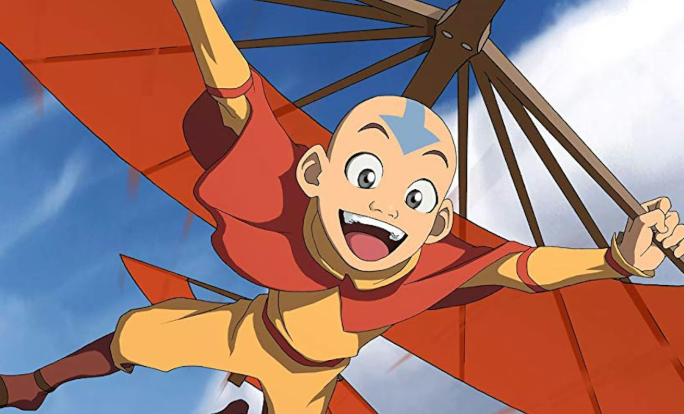
Water. Earth. Fire. Air. Long ago, the four nations lived together in harmony. Then, everything changed when the Fire Nation attacked. Even if you have never watched a single episode of this series, those opening lines likely echo in your mind with the weight of legend. Avatar: The Last Airbender is more than just a cartoon; it is a cultural touchstone that bridged the gap between Eastern and Western storytelling, creating a narrative so profound that it continues to capture the hearts of new generations decades after its initial debut.
While often classified alongside “anime” due to its stunning visual style and serialized storytelling, the series is actually a landmark achievement in Western animation. It tells the story of Aang, a young boy discovered frozen in an iceberg who must master the four elements to stop a global war. But beneath that simple “chosen one” premise lies a tapestry of political intrigue, deep spiritual philosophy, and some of the most human character growth ever put to film. Whether you are a newcomer preparing for your first watch or a veteran fan returning to the Four Nations, here is everything you need to know about this timeless masterpiece.
1. The Distinction Between Western Animation and Anime
One of the most frequent points of discussion surrounding the series is whether it qualifies as “anime.” Strictly speaking, anime refers to animation produced in Japan. Avatar: The Last Airbender was created by Bryan Konietzko and Michael Dante DiMartino for Nickelodeon, an American network. However, the confusion is a testament to the show’s quality. The creators drew heavy inspiration from Japanese animation styles—specifically the works of Studio Ghibli—and combined them with a distinct American sensibility for pacing and humor.
The result is a “bridge” series. It utilizes the expressive facial movements and high-octane action choreography common in anime, but it roots its narrative structure in a way that feels accessible to a global audience. The show also outsourced much of its animation to South Korean studios, further blurring the lines of its origin. Ultimately, while it may not be “anime” by a technical geographic definition, it shares the genre’s DNA of serialized, high-stakes drama and meticulous world-building, proving that great storytelling transcends regional labels.
2. A World Rooted in Diverse Cultural Heritage
Unlike many Western fantasy worlds that rely on a “pseudo-European” medieval setting, the world of the Avatar is deeply rooted in Asian and Indigenous cultures. The world-building is intentional and respectful, drawing from Chinese, Japanese, Tibetan, Indian, and Inuit influences. This isn’t just aesthetic; the philosophies of these cultures are baked into the very foundation of the story’s “bending” arts.
For example, the Earth Kingdom’s architecture and social structures mirror various eras of Chinese history, while the Air Nomads are heavily influenced by Tibetan Buddhism. The Water Tribes reflect the resilience and traditions of Arctic indigenous peoples. This diversity provides the show with a “lived-in” feeling that is rare in animation. Every location Aang visits feels like it has a thousand-year history behind it, making the stakes of the Fire Nation’s imperialist expansion feel tangible and devastating. It teaches viewers about the beauty of cultural distinctness while highlighting the universal human experiences that connect us all.
3. The Martial Arts Philosophy of Bending
In the Avatar universe, “bending” is the ability to telekinetically manipulate one of the four elements. However, this isn’t just magic performed with a wand or a word; it is an extension of physical movement and internal energy (Chi). The creators hired professional martial arts consultants to ensure that each bending style was based on a real-world discipline, giving the combat a grounded, rhythmic flow that feels incredibly satisfying to watch.
T’ai chi ch’uan, known for its fluid and gentle movements, serves as the basis for Waterbending. The firm, rooted stances of Hung Gar Kung Fu define Earthbending. The aggressive, explosive strikes of Northern Shaolin Kung Fu represent Firebending, while the circular, evasive maneuvers of Baguazhang are the foundation for Airbending. Because the “magic” is tied to physical discipline, the characters’ growth in power is always linked to their personal discipline and emotional state. When a character masters a new move, the audience understands that they have achieved a new level of self-mastery, not just found a new “power-up.”
4. Prince Zuko and the Gold Standard of Redemption
If you ask any critic what the strongest element of the series is, they will likely point to Prince Zuko. Starting the series as a hot-headed, disgraced prince obsessed with capturing the Avatar to regain his honor, Zuko’s journey is arguably the greatest redemption arc in the history of television. It is a slow, painful, and realistic transformation that avoids the common trope of a “sudden change of heart.”
Zuko’s path is defined by failure, backsliding, and internal conflict. He has to unlearn a lifetime of imperialist propaganda and abusive family dynamics. His struggle to define “honor” for himself, rather than seeking it from his tyrannical father, resonates with anyone who has ever felt lost or pressured by expectations. By the time Zuko finds his true path, his transition from villain to anti-hero to hero feels entirely earned. He serves as a powerful reminder that our past does not define our future, and that it is never too late to start doing the right thing.
5. The Infinite Wisdom of Uncle Iroh
While Aang and Zuko drive the plot, Uncle Iroh provides the series with its heartbeat. As Zuko’s mentor and a former Fire Nation General, Iroh is a character of immense complexity hidden behind a facade of tea-drinking and jokes. He represents the “ideal” elder: someone who has seen the horrors of war, suffered great personal loss, and come out the other side with nothing but compassion and a love for the simple joys of life.
Iroh’s guidance is often delivered through metaphors about tea or nature, but his advice is universally applicable. He teaches that “it is important to draw wisdom from many different places,” and that “while it is always best to believe in oneself, a little help from others can be a great blessing.” His relationship with Zuko is the emotional core of the show; his unconditional love for his nephew, even when Zuko is at his worst, provides the catalyst for the boy’s redemption. Iroh is the father figure we all wish we had, making his moments of wisdom some of the most quoted and cherished parts of the series.
6. Addressing Heavy Themes with Nuance
Despite being aired on a children’s network, the series never shies away from difficult subjects. It tackles genocide, systemic sexism, the morality of war, and the psychological effects of propaganda with a level of sophistication usually reserved for “prestige” adult dramas. The very premise begins with Aang discovering he is the sole survivor of an ethnic cleansing of his people, a heavy burden for a twelve-year-old protagonist.
The show manages these themes by showing rather than telling. We see the environmental destruction caused by the Fire Nation’s industrialization; we witness the refugees struggling to find a home; and we watch as young soldiers on both sides grapple with the reality that their enemies are human beings just like them. By grounding these massive geopolitical issues in the personal lives of its characters, the show teaches empathy and critical thinking. It doesn’t offer easy answers, acknowledging that even when a war ends, the scars and trauma remain for a long time.
7. Toph Beifong and the Subversion of Disability
One of the most popular characters in the series is Toph Beifong, a young girl who is blind and happens to be one of the most powerful Earthbenders in history. Toph is a masterclass in how to write a character with a disability without making that disability her entire identity or a “weakness” to be pitied. She “sees” by sensing vibrations through her feet, using a technique called seismic sense.
Toph is abrasive, fiercely independent, and often the funniest person in the room. She rejects the “helpless” role her wealthy parents try to force upon her and actively mocks the idea that she needs protection. Her inclusion in the “Gaang” (as fans call Aang’s group) changes the dynamic of the show, adding a layer of grit and blunt honesty. Toph’s character proves that different ways of interacting with the world can lead to unique strengths, and her invention of “Metalbending”—something previously thought impossible—showcases that innovation often comes from those who see the world differently.
8. The Tragedy and Terror of Princess Azula
Every great hero needs a great villain, and Princess Azula is one of the most terrifying antagonists in animation. As Zuko’s younger sister, she is a prodigy—a “perfect” Firebender whose blue flames represent her intense focus and cold-blooded nature. Unlike her brother, Azula is a master manipulator who rules through fear rather than loyalty.
What makes Azula truly compelling, however, is the eventual breakdown of her mental state. As the series reaches its climax, we see that her perfectionism is a shield for deep-seated insecurity and a desperate need for her father’s approval. Her descent into paranoia is tragic because it mirrors Zuko’s journey in reverse; while Zuko found a family and peace, Azula’s pursuit of power left her utterly alone. She is a cautionary tale about the corrosive nature of narcissism and the high cost of a “victory at any cost” mentality.
9. The Concept of the Avatar State
The “Avatar State” is the ultimate trump card in the series, but it is handled with surprising restraint and narrative weight. When Aang enters this state, his eyes and tattoos glow, and he gains the combined knowledge and power of all his past lives. It is a moment of raw, god-like power that often ends fights instantly. However, the show establishes a massive “high-stakes” rule: if the Avatar is killed while in the Avatar State, the cycle of reincarnation is broken, and the Avatar will cease to exist forever.
This mechanic prevents Aang from using his power as a “get out of jail free” card. Instead, the Avatar State becomes a source of fear for him. He is afraid of the destruction he can cause when he loses control, and he is terrified of the responsibility of being the world’s last hope. This internal struggle—the “monk who doesn’t want to be a weapon”—adds a layer of pacifist philosophy to the action. It forces Aang to find ways to resolve conflict through diplomacy and understanding, rather than just relying on overwhelming force.
10. A Legacy That Spans Generations
The story of Aang was just the beginning. The success of the original series birthed a massive “Avatarverse” that includes a sequel series, The Legend of Korra, which explores the world as it moves into an industrial, “steampunk” era. Beyond the screen, the story continues in a series of highly successful graphic novels that bridge the gaps between the two shows and resolve lingering mysteries, such as the fate of Zuko’s mother.
Furthermore, a series of “Chronicles of the Avatar” novels have delved into the lives of past Avatars like Kyoshi and Yangchen, offering a darker, more mature look at the history of the Four Nations. This expansion has allowed the franchise to grow with its audience. Those who watched Aang as children can now enjoy the more complex political and romantic themes of Korra or the gritty historical fiction of the novels. The enduring popularity of the franchise is a testament to the strength of its core themes: that hope can survive even in the darkest times, and that one person truly can change the world.
Further Reading
- The Rise of Kyoshi by F.C. Yee
- Avatar: The Last Airbender – The Search by Gene Luen Yang
- The Shadow of Kyoshi by F.C. Yee
- Avatar: The Last Airbender – The Promise by Gene Luen Yang
- 10 Essential Facts About Avatar: The Last Airbender – Animated Series Explained
- 10 Essential One Piece Facts to Understand the Netflix Live Action Series
- One Piece: 10 Key Differences Between the Anime, Manga, and Netflix Series Explained
- 10 Essential One Piece Facts to Get Every New Fan Up to Speed
- The Secrets of the Walls: 10 Terrifying Truths You Must Know About the Titans
- Beyond Plus Ultra: 10 Essential Facts Every Fan Must Know About My Hero Academia
- Unmasking the Tragedy: 10 Dark Secrets and Essential Truths of Tokyo Ghoul Every Fan Must Know
- Beyond the Big Screen: 10 Surprising Secrets Behind the World’s Biggest Anime Movie Hits
- The God of a New World: 10 Dark Truths Behind the Legend of Death Note
- Beyond the Walls: 10 Jaw-Dropping Secrets of Attack on Titan That Change Everything



