
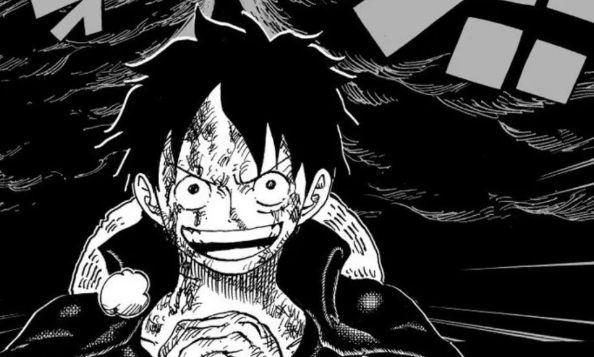
The journey of Monkey D. Luffy and his quest to become the Pirate King is a tale told through three distinct lenses: the original ink-and-paper manga, the vibrant weekly animation, and the high-budget cinematic live-action adaptation. While the core “Will of D” remains consistent across all versions, each medium interprets Eiichiro Oda’s world with unique stylistic choices, narrative restructuring, and tonal shifts. Navigating these versions is like sailing different routes on the Grand Line; the destination is the same, but the weather and the waves you encounter along the way vary wildly.
For the uninitiated, choosing where to start—or understanding why fans argue over specific scenes—requires a map of these variations. Whether it is the pacing of the story, the intensity of the violence, or the way central characters are introduced, these differences define the viewing experience. This guide breaks down the essential contrasts between the three primary ways to consume this global phenomenon, offering a comprehensive look at how a single story transforms when it moves from the page to the screen.
1. The Pacing Paradox: Compressed Speed vs. Extended Tension
The most immediate difference any fan will notice is the “internal clock” of each version. In the original manga, the story moves with the precision of a master clocksmith; every panel serves a purpose, and the narrative sprints forward without a moment of wasted motion. The manga is the “pure” experience, designed to be read at the consumer’s own speed. In contrast, the long-running anime often struggles with pacing because it must avoid catching up to the source material. This leads to “filler” episodes or scenes where a single punch might be drawn out over several minutes to fill the broadcast time.
The live-action adaptation on Netflix introduces a third speed: extreme compression. What takes dozens of chapters in the manga or dozens of episodes in the anime is often distilled into a single hour of television. This requires the live-action to merge plot points and cut out smaller “side quests” to maintain a cinematic momentum. While the anime expands on the world to buy time, the live-action trims the fat to keep the casual viewer engaged. Understanding these three distinct rhythms is key to appreciating why some fans prefer the lean manga over the sometimes bloated, but emotionally resonant, anime.
2. The Lens of Violence: Gritty Realism vs. Broadcast Standards
Eiichiro Oda’s original manga is surprisingly visceral. Characters frequently suffer significant injuries—lost limbs, deep gashes, and heavy scarring are common. The manga uses black-and-white ink to portray a world that is often harsh and unforgiving. However, when the story was adapted into a weekly animated series for a general television audience, many of these elements were softened. The anime often replaces blood with “scuff marks” or changes the nature of injuries to make them more palatable for younger viewers. For instance, a character losing a portion of their face in the manga might only lose a mustache in the anime.
The live-action adaptation takes a different path entirely, leaning into a “TV-MA” or “TV-14” level of realism. Because it features real actors, the violence feels more grounded and impactful. When a sword strikes a character in the live-action version, the consequences look like real-world trauma rather than “cartoon” damage. This brings the series closer to the manga’s original grit but adds a layer of physical reality that neither the drawings nor the animation can fully capture. This shift in “visual honesty” changes how the stakes are perceived in life-or-death battles.
3. The “Garp Factor”: Structural Changes in Character Introductions
One of the most radical departures in the live-action adaptation involves the character of Vice Admiral Garp. In both the manga and the anime, Garp’s true relationship with Luffy is a massive “slow burn” mystery that isn’t revealed until hundreds of chapters into the story. He is a looming, legendary figure who exists in the background of the early arcs. However, the Netflix series elevates Garp to a primary antagonist almost immediately, using him as a narrative anchor to provide a consistent “B-plot” following the Marines’ perspective.
This structural change completely alters the tension of the early journey. In the original versions, Luffy’s early adventures feel like a series of isolated incidents in the East Blue. In the live-action version, the constant pursuit by Garp creates a sense of immediate, looming danger from the World Government. While this helps television viewers track the overarching conflict, it sacrifices the long-term mystery that manga readers enjoyed for years. This “reordering” of information is a classic example of how different mediums prioritize immediate drama over long-term world-building.
4. The Mystery of the Cover Stories: Manga-Exclusive Lore
The manga contains a unique storytelling device that the anime and live-action versions almost entirely ignore: the “Cover Story” serials. In the manga, the first page of almost every chapter features a single-panel update on what previous villains or side characters are doing elsewhere in the world. These are not just artistic flourishes; they are canonical mini-arcs that explain how characters move from one location to another or how they gain new powers. For example, a villain defeated in the first arc might spend twenty “covers” traveling the sea before reappearing in the main story.
The anime occasionally adapts these into “filler” arcs, but more often than not, it simply skips them, leading to moments where characters reappear suddenly with no explanation of their interim journey. The live-action adaptation, due to its limited runtime, has virtually no room for these peripheral updates. For fans who want the “full picture” of the world’s geopolitics and the fates of every minor character, the manga remains the only source for these crucial narrative bridges. Without them, the world feels slightly smaller and less interconnected.
5. Visual Stylization: From “Rubber” Physics to Practical Effects
The core conceit of the series—a boy whose body is made of rubber—presents a unique challenge for each medium. In the manga, Oda uses the flexibility of the medium to create “squash and stretch” visuals that are expressive and chaotic. The anime takes this further, using vibrant colors and kinetic energy to make Luffy’s powers look fluid and fun. Animation allows for an infinite budget of “weirdness,” where anatomy can be distorted without breaking the viewer’s immersion.
The live-action adaptation faces the “Uncanny Valley.” Making a human being look like they are stretching their limbs like a rubber band can easily look horrifying or “cheap” if not handled correctly. Consequently, the live-action version treats the rubber powers with a sense of “physical weight.” Luffy’s stretches are less frequent and more impactful, often used as a “finishing move” rather than a constant state of being. This creates a different combat language; the anime and manga emphasize the “cartoonish” nature of the fruit, while the live-action emphasizes the “supernatural” and strange nature of the ability within a “real” world.
6. The Role of the Narrator and Information Dumps
The anime and manga both utilize a traditional narrative voice, though in different ways. The manga uses text boxes to explain the world’s history, the geography of the Grand Line, or the specifics of a character’s bounty. The anime utilizes a literal narrator—a deep-voiced guide who opens every episode and explains complex plot points during transitions. This voice becomes a comforting staple for fans, helping to ground the high-fantasy elements in a consistent mythological framework.
The live-action version takes a “Show, Don’t Tell” approach, stripping away the narrator entirely. Information that would traditionally be delivered via a text box or a voiceover is instead woven into the dialogue or shown through environmental storytelling (like maps, posters, or newspaper headlines). This makes the world feel more immersive and less like a “lesson,” but it can be harder for newcomers to grasp the complex political hierarchies of the World Government without that guiding voice. The lack of a narrator moves the live-action closer to the style of a modern prestige drama than a traditional epic.
7. The “Sanji Transformation”: Toning Down Archetypes
Character personalities often undergo subtle shifts to fit the tone of the medium. A prime example is Sanji, the crew’s cook. In the manga and anime, Sanji is portrayed as a “lovestruck” archetype, often depicted with heart-shaped eyes and exaggerated comedic reactions whenever he sees a woman. This is a common trope in Japanese media, intended for comedic effect. However, these “cartoonish” traits can be difficult to translate to a live-action setting without making the character feel predatory or annoying to a general Western audience.
In the live-action adaptation, Sanji is reimagined as a suave, flirtatious “charmer” rather than an obsessed devotee. He retains his chivalry and his love for women, but the delivery is grounded in real-world social dynamics. This shift makes the character more relatable to a broad audience but removes some of the “slapstick” humor that anime fans associate with him. Each version offers a different “flavor” of the same soul, illustrating the difference between a character designed for a comic strip versus one designed for a cinematic screen.
8. Chronology and World-Building: The “Log Pose” Logic
The way the world is introduced varies significantly. In the manga, world-building is a slow, steady drip. The reader learns about the Grand Line, the Seven Warlords, and the Four Emperors over hundreds of chapters. This creates a sense of “discovery” that mimics the characters’ journey. The anime follows this closely but often adds “filler” islands to keep the distance between major plot points feeling vast. This reinforces the idea that the ocean is endless and dangerous.
The live-action adaptation “front-loads” its world-building. It mentions major future concepts (like the Seven Warlords or specific legendary locations) much earlier than they appear in the source material. By doing this, the series creates a sense of a larger “cinematic universe” from the very first episode. While this helps TV viewers understand the “endgame,” it changes the experience from one of “organic discovery” to one of “established lore.” For the purist, the manga’s slow unveiling of the world’s secrets remains the most satisfying way to experience the mystery.
9. Combat Choreography: 2D Panels vs. 3D Space
The nature of combat is fundamentally different across the three. In the manga, fights are an exercise in composition. Oda uses dynamic angles and “impact frames” to show the power of a hit. A single panel can convey the entire weight of a battle. The anime takes these panels and adds “choreography,” showing the movement between the hits. However, the anime often adds “power-up” sequences or energy auras that aren’t in the manga, making the fights feel more like traditional “superhero” battles.
The live-action version must contend with the physical limitations of stunt performers and sets. As a result, the combat is much more focused on traditional martial arts and swordplay. The sword fights, particularly for the character Zoro, are choreographed with a focus on flow and physical athleticism. You lose the “impossible” physics of the anime, but you gain a sense of tactical reality. The live-action fights feel like “scraps” where characters get tired and hurt, whereas the manga and anime fights often feel like clashes between demigods.
10. The Emotional Core: The “Crying” Aesthetic
Finally, the way the series handles its legendary emotional moments differs by medium. One Piece is famous for its “ugly crying” scenes—where characters express grief with exaggerated, snot-nosed intensity. In the manga and anime, this is a hallmark of the series’ sincerity; the characters’ emotions are so big they cannot be contained in a “pretty” way. It is a bold, theatrical choice that defines the series’ heart.
In the live-action adaptation, these moments are played with cinematic subtlety. While the actors certainly cry and show deep emotion, the “ugly” aesthetic is replaced by a more standard dramatic performance. A scene that might be a ten-minute operatic breakdown in the anime becomes a two-minute quiet, tearful conversation in the live-action. Both versions aim for the heart, but they use different tools: the anime/manga use “maximalism” to overwhelm the viewer, while the live-action uses “minimalism” to create intimacy. Choosing which one “works” better is a matter of personal preference between the theatrical and the realistic.
Further Reading
- One Piece: Pirate Recipes by Sanji – A culinary journey through the world’s various cultures, proving that world-building exists even in the food.
- The Art of One Piece: Red, Blue, and Yellow by Eiichiro Oda – These databooks provide a deep dive into the manga’s logic and character stats that are often glossed over in adaptations.
- Manga: The Complete Guide by Jason Thompson – A great resource for understanding the historical context of the manga medium and how One Piece fits within it.
- 10 Essential Facts About Avatar: The Last Airbender – Animated Series Explained
- 10 Essential One Piece Facts to Understand the Netflix Live Action Series
- One Piece: 10 Key Differences Between the Anime, Manga, and Netflix Series Explained
- 10 Essential One Piece Facts to Get Every New Fan Up to Speed
- The Secrets of the Walls: 10 Terrifying Truths You Must Know About the Titans
- Beyond Plus Ultra: 10 Essential Facts Every Fan Must Know About My Hero Academia
- Unmasking the Tragedy: 10 Dark Secrets and Essential Truths of Tokyo Ghoul Every Fan Must Know
- Beyond the Big Screen: 10 Surprising Secrets Behind the World’s Biggest Anime Movie Hits
- The God of a New World: 10 Dark Truths Behind the Legend of Death Note
- Beyond the Walls: 10 Jaw-Dropping Secrets of Attack on Titan That Change Everything




One response to “One Piece: 10 Key Differences Between the Anime, Manga, and Netflix Series Explained”
[…] One Piece Explained – 10 Key Differences Between the Anime, Manga and Netflix Series […]