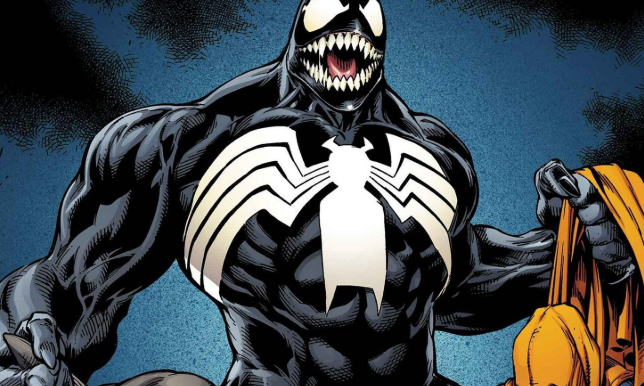
The Marvel Universe is teeming with legendary heroes and terrifying villains, but few characters occupy the dark, oily space between them quite like Venom. Since slithering onto the comic book scene, the character has evolved from a simple “evil twin” of Spider-Man into a complex cosmic entity with a deep, tragic mythology. Venom isn’t just a monster; he is a duality—a symbiotic relationship between a displaced alien organism and a human host, usually the disgraced journalist Eddie Brock. This partnership has redefined what it means to be a “hero” in a world that often sees things in black and white.
To understand Venom is to look into a mirror that reflects our own darker impulses and our capacity for redemption. Whether you know him from the big screen or are just cracking open your first omnibus, the history of the symbiote is a labyrinth of alien gods, military secrets, and psychological trauma. Here is everything you need to know about the lethal protector known as Venom.
1. The Alien Symbiote: More Than Just a Living Suit
To the uninitiated, Venom might look like a monstrous version of Spider-Man, but the “suit” is actually a sentient extraterrestrial life form known as a Klyntar. Originating from a distant corner of the galaxy, the Klyntar are a species of amorphous, ichor-like beings that require a host to achieve their full physical potential. While they provide their hosts with incredible strength, durability, and a suite of shapeshifting abilities, the bond is far from one-sided.
The symbiote is a biological sponge for emotion. It feeds on the adrenaline and dopamine of its host, but it also absorbs their personality traits and moral compass. This is why the Venom symbiote behaves differently depending on who is wearing it. With a vengeful host, it becomes a predator; with a heroic host, it strives for justice. The Klyntar are not inherently “evil,” but they are profoundly lonely beings that crave a “perfect bond,” often leading to obsessive and toxic relationships with those they latch onto.
2. The Secret Wars: A Fashion Choice Gone Wrong
The story of Venom begins not on Earth, but on a patchwork planet called Battleworld during the legendary “Secret Wars” event. When Peter Parker’s classic red-and-blue costume was shredded in battle, he discovered a machine he believed to be a fabric replicator. Instead, the device released the symbiote, which immediately bonded to him, forming the iconic black suit. For a time, Spider-Man loved the new look; the suit generated its own webbing, responded to his thoughts, and could even mimic civilian clothing.
However, the honeymoon period ended when Peter realized the suit was alive and was taking his body out for “test drives” while he slept, leaving him exhausted. Upon discovering the suit was a parasitic organism trying to permanently bond with his soul, Peter famously used the high-frequency vibrations of a church bell to forcibly separate himself from the creature. This rejection would define the symbiote’s future, turning its love for Peter into a burning, obsessive hatred that would eventually find a perfect partner in Eddie Brock.
3. Eddie Brock: The Symbiote’s Soulmate in Hatred
While there have been many Venoms, Eddie Brock remains the most significant host. Eddie was a journalist for the Daily Globe whose career was destroyed when Spider-Man inadvertently debunked a massive story Eddie had been working on. Finding himself jobless, disgraced, and abandoned by his family, Eddie contemplated suicide in the very same church where Peter Parker had rejected the symbiote. The two broken beings—the rejected alien and the ruined man—found each other in the rafters.
Their bond was forged in a “communion of hate” against Peter Parker. Unlike Spider-Man, who fought the suit’s influence, Eddie embraced it, referring to himself and the alien as “We.” This plural pronoun is a hallmark of the character, signifying that Venom is a singular consciousness born from two distinct perspectives. Eddie provided the physical frame and the moral justification, while the symbiote provided the power. Together, they became the first villain to truly get under Spider-Man’s skin, knowing his secret identity and possessing the ability to bypass his Spider-Sense.
4. The Biological Achilles’ Heel: Fire and Sonic Vibrations
Despite being nearly invulnerable to conventional weapons like bullets and blades, the Venom symbiote has two catastrophic weaknesses: intense heat and high-frequency sound. These vulnerabilities are rooted in the Klyntar’s evolutionary biology. Intense fire can literally cook the symbiote, causing it to retreat or even die, which is why Venom often avoids fights in burning buildings or against pyrotechnic foes.
Sonic vibrations are perhaps even more effective. Because the symbiote is a highly sensitive organism that communicates through a hive-mind frequency, loud noises—like church bells, sonic cannons, or even high-pitched screams—disrupt its molecular stability. High-decibel sound causes the symbiote to “scream” in agony and lose its grip on the host, often peeling away in tattered ribbons of black goo. Over the years, Venom has attempted to build up a resistance to these elements, but they remain the primary tools used by heroes and government agencies to keep the lethal protector in check.
5. The Lethal Protector: An Anti-Hero Is Born
Venom didn’t stay a villain forever. Eventually, the mutual hatred between Eddie Brock and Spider-Man reached a stalemate, leading to an uneasy truce. Eddie moved to San Francisco, where he transitioned into the role of the “Lethal Protector.” This era redefined the character; while he still used terrifying violence and occasionally threatened to “eat brains,” his primary goal was protecting the innocent and the downtrodden.
This shift introduced a complex moral code. Venom views himself as a hero, but one who isn’t afraid to cross the lines that Spider-Man or the Avengers won’t. He targets “evildoers” with a predatory zeal, often acting as judge, jury, and executioner. This “scary good guy” persona made him a fan favorite, as it allowed for stories that explored the gritty, street-level underbelly of the Marvel Universe through the eyes of a monster trying to do the right thing.
6. The Birth of Carnage: A Deadlier Offspring
Symbiotes reproduce asexually, and during one of Eddie Brock’s many prison breaks, the Venom symbiote left behind a small, red “spawn.” This offspring bonded with Eddie’s cellmate, the unhinged serial killer Cletus Kasady, creating the monster known as Carnage. Because Carnage was born on Earth and bonded with Kasady’s bloodstream, he is significantly more powerful, faster, and more unstable than his “father,” Venom.
The rivalry between Venom and Carnage is one of the most brutal in comic book history. Venom feels a deep sense of responsibility for the atrocities committed by his offspring, leading him to team up with his arch-enemy Spider-Man on multiple occasions just to stop Carnage’s rampages. This dynamic added a layer of fatherly guilt to Eddie Brock’s character and established a sprawling “symbiote family tree” that would eventually include other entities like Riot, Phage, Lasher, Agony, and Scream.
7. Agent Venom: The Symbiote as a Soldier
One of the most innovative chapters in Venom’s history occurred when the government took possession of the symbiote and bonded it to Flash Thompson, Peter Parker’s former high school bully and a decorated war veteran who had lost his legs in combat. In this “Project Rebirth 2.0,” the symbiote was used as a tactical suit, allowing Flash to walk again and serve as a secret agent for the United States.
Known as Agent Venom, Flash used chemicals to keep the symbiote’s predatory instincts suppressed, allowing him to use its powers for precision military strikes and heroism. This era explored the idea of the symbiote as a metaphor for addiction and PTSD. Flash struggled to maintain control over the “beast” inside him, while the symbiote slowly began to respect Flash’s genuine heroism. This version of the character eventually joined the Secret Avengers and the Guardians of the Galaxy, proving the symbiote could be a force for galactic good.
8. The King in Black: The God of the Symbiotes
For decades, the origins of the symbiotes were shrouded in mystery, until the discovery of Knull, the “King in Black.” Knull is an ancient, primordial deity who existed before the universe was filled with light. He created the first symbiote (in the form of a sword called All-Black the Necrosword) to slay the gods who were bringing light into his darkness. The Klyntar “planet” was eventually revealed to be a cage made of billions of symbiotes meant to keep Knull imprisoned.
This revelation elevated Venom from a street-level brawler to a cosmic player. The lore established that the symbiotes were originally a hive-mind army designed for universal conquest. Eddie Brock eventually had to face Knull in a battle for the fate of the Earth, a conflict that resulted in Eddie ascending to become the new “King in Black.” This evolution fundamentally changed the character’s power level, giving him control over the entire symbiote hive across the cosmos.
9. A Diverse Roster of Hosts
While Eddie and Flash are the most famous, the Venom symbiote has bonded with a surprising variety of Marvel characters. For a time, it bonded with Mac Gargan (the Scorpion), who gave into the symbiote’s most cannibalistic urges, creating a truly monstrous version of the character that served on the Dark Avengers. It also bonded with Anne Weying, Eddie’s ex-wife, who became She-Venom in a tragic turn of events that highlighted the psychological toll of the bond.
Even “The Merc with a Mouth,” Deadpool, had a brief encounter with the symbiote prior to Peter Parker, with some stories suggesting that Deadpool’s chaotic mind was what drove the symbiote “crazy” in the first place. This host-swapping nature proves that Venom is a legacy title; the alien is a constant, but the human element provides the flavor. Each host leaves a “codex” or a trace of their DNA within the symbiote, allowing it to retain memories and skills from everyone it has ever touched.
10. The Symbiote’s Hidden Biology: From Webbing to Pockets
The physical capabilities of Venom go far beyond just super-strength. Because the symbiote is a shapeshifter, it doesn’t just mimic Spider-Man’s powers—it improves them. Venom can camouflage himself perfectly into his surroundings, becoming virtually invisible. He can also form his biomass into blunt weapons, blades, or tendrils to grapple with multiple enemies at once.
Fascinatingly, the symbiote can also create “dimensional apertures” within its own mass. This allows the host to store items “inside” the suit, such as Eddie Brock’s camera or Flash Thompson’s firearms, effectively giving the character infinite pockets. Furthermore, because the symbiote spent so much time with Peter Parker, it can generate its own organic webbing, meaning it never runs out of “fluid.” This biological versatility makes Venom one of the most adaptive survivors in the Marvel Universe, capable of evolving to meet almost any threat.
Further Reading
If you want to experience the best of Venom’s dark and gritty adventures, check out these essential titles:
- Venom: Lethal Protector by David Michelinie – The definitive story of Eddie Brock’s move to San Francisco and his transition into an anti-hero.
- Venom by Donny Cates & Ryan Stegman – A modern masterpiece that redefines the symbiote’s mythology and introduces the King in Black.
- Spider-Man: The Birth of Venom by Various Authors – The classic collection covering Peter Parker’s black suit era and Eddie Brock’s terrifying debut.
- Venom by Rick Remender – The complete saga of Flash Thompson as Agent Venom, a high-stakes military thriller.
- The Architecture of Chaos: Order, Madness, and the Eternal War Between Batman and Joker

- The Dark Knight’s Doorway: Your Essential Guide to Starting the Batman Saga

- The Evolution of the Bat: A Complete Timeline of the Dark Knight’s Legendary Journey

- Beyond the Shadows: A Deep Dive into Gotham City—The World’s Most Dangerous Metropolis

- The Gallery of Rogues: 10 Iconic Batman Villains and Why They Haunt Gotham