
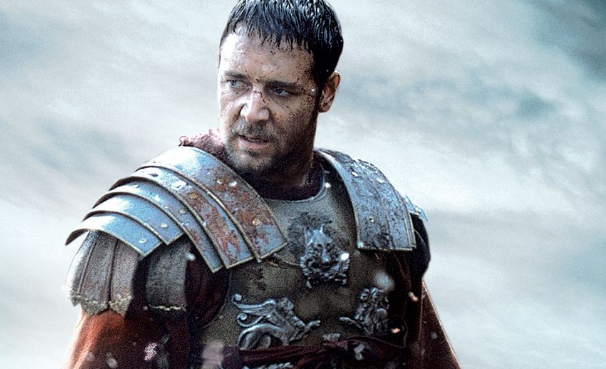
The historical epic was once considered a “dead” genre in Hollywood, a relic of a bygone era of cinema that had collapsed under the weight of its own excess. However, at the turn of the millennium, a single film roared into theaters and changed everything. Gladiator did more than just tell the story of a general who became a slave; it resurrected the “sword-and-sandals” epic for a new generation, blending visceral, modern filmmaking with the timeless grandeur of the Roman Empire.
To understand the legacy of Gladiator is to appreciate the perfect storm of talent, technology, and sheer grit that went into its production. Directed by Ridley Scott and anchored by a career-defining performance from Russell Crowe, the film was a high-stakes gamble that paid off with multiple Academy Awards and a permanent place in the cultural zeitgeist. It captured the “soul” of Rome—its brutality, its beauty, and its political complexity—in a way that felt immediate and raw. These ten pillars of Gladiator lore reveal the secrets behind the film’s enduring power and how it earned its place as a modern classic.
1. The 19th-Century Painting That Sparked a Vision
Before a single frame was shot, the visual soul of the film was inspired by a piece of art from the 1870s. When producers Walter Parkes and Douglas Wick approached Ridley Scott about directing a movie set in ancient Rome, he was initially hesitant. To convince him, they didn’t hand him a script—they showed him a reproduction of the painting “Pollice Verso” by French artist Jean-Léon Gérôme. The image depicts a gladiator standing over his defeated foe, looking up at the crowd for the “thumbs down” signal that meant death.
Scott was instantly captivated by the painting’s atmosphere and the way it captured the “spectacle” of the Roman arena. He famously stated that he took the job on the spot because the image suggested a world of light and shadow that he knew he could bring to life. This fact is essential because it highlights that Gladiator was always intended to be a visual experience first. The film’s aesthetic—the dusty atmosphere of the Colosseum, the glint of sunlight on armor, and the overwhelming scale of the crowds—was born from a desire to recreate the epic feeling of classical art through a modern lens.
2. The Real Fire of Bourne Woods
The film’s opening battle in the forests of Germania is widely regarded as one of the greatest war sequences in cinema history. To achieve the terrifying realism of the Roman legions clashing with “barbarian” tribes, Ridley Scott avoided the polished, clean look of older epics. Instead, he wanted the audience to feel the cold, the mud, and the fire. This was achieved through a stroke of luck and a massive, real-life inferno.
The sequence was filmed in Bourne Woods in Surrey, England. The Royal Forestry Commission had already slated a section of the forest for deforestation and replanting. Upon hearing this, the production team struck a deal: the filmmakers would pay to “clear” the land by burning it down, provided they could film the process. This allowed Scott to create a genuine battlefield of smoke and flame that CGI could not have replicated at the time. The result was a visceral introduction to the character of Maximus, establishing him not as a polished hero, but as a gritty, battle-worn leader forged in the literal fires of war.
3. A Digital Resurrection: The Loss of Oliver Reed
One of the most emotional challenges of the production was the sudden death of legendary actor Oliver Reed, who played the gladiator trainer Proximo. Reed passed away from a heart attack three weeks before his final scenes were scheduled to be filmed. At the time, such a tragedy usually meant a total rewrite of the character or even a recasting of the role, but Ridley Scott chose a path that would break new ground in the world of digital visual effects.
To complete Proximo’s arc, the production team utilized a combination of body doubles, outtakes from earlier scenes, and a digital mask of Reed’s face. This was a revolutionary move at the time, marking one of the first successful uses of “digital resurrection” for a major character. The rewrite allowed Proximo to go out as a hero, sacrificing himself to save Maximus, which added a poignant layer of reality to the performance. This technological feat ensured that Reed’s final screen performance remained intact, honoring the actor’s legacy while proving that cinema had entered a new era where even death could not stop the story from being told.
4. Building Rome in Malta: The Physical Colosseum
In an age where entire cities are now built in a computer, the production of Gladiator stands out for its commitment to physical scale. To recreate the heart of the Roman Empire, the crew traveled to Malta and spent seven months constructing a massive, one-third-scale replica of the Colosseum. Standing over 50 feet tall, the structure was a marvel of production design, complete with a working elevator to bring gladiators from the “hypogeum” (the underground tunnels) to the arena floor.
While the upper tiers and the “velarium” (the retractable roof) were later added with CGI, having a physical arena for the actors to interact with changed the energy of the film. Russell Crowe and the other gladiators weren’t just fighting in front of a green screen; they were surrounded by stone, dust, and thousands of real extras. This commitment to “tactile” world-building is a major reason why the film feels so authentic. The heat of the sun and the claustrophobia of the tunnels were real, translating into a sensory experience that grounds the film’s grander, more operatic moments in a tangible reality.
5. The Accidental Icon: The Hand in the Wheat Field
One of the most famous images from the film—the shot of a hand gently brushing through a field of golden wheat—became the visual motif for Maximus’s journey and his connection to the afterlife. Surprisingly, this shot was never actually in the script. It was a happy accident captured by a second-unit camera crew while filming in Tuscany.
The hand in the shot doesn’t even belong to Russell Crowe; it belongs to his stunt double, who was simply walking through the field during a break in filming. Ridley Scott saw the footage and realized it perfectly symbolized Maximus’s longing for his home and his peace. He chose to repeat the image throughout the film, turning a random moment of b-roll into a profound spiritual metaphor. This fact serves as a reminder that the greatest “masterpieces” are often the result of a director’s ability to recognize a beautiful accident and weave it into the fabric of the narrative, giving the film its poetic, almost dreamlike quality.
6. Real Tigers, Real Danger in the Arena
The climactic battle between Maximus and Tigris the Gaul is a masterclass in tension, made all the more terrifying by the presence of live tigers. While modern films would almost certainly use digital animals, the production of Gladiator used five real tigers on set. To ensure the safety of the cast, a veterinarian was always present with tranquilizer darts, and the animals were kept on chains controlled by handlers hidden beneath the arena floor.
Despite these precautions, the danger was very real. In one instance, a tiger came within two feet of Russell Crowe during a stunt, leading the actor to remark that the experience was “uncomfortably close.” This proximity to genuine predators forced a level of authentic reaction from the performers that is difficult to fake. When you see Maximus glancing nervously at the trapdoors in the floor, that is the look of an actor who knows that a 600-pound killing machine is lurking just out of sight. This raw, unmanufactured tension is a hallmark of the film’s “dangerous” atmosphere.
7. Strength, Honor, and the Art of Improvisation
While the screenplay for Gladiator underwent many revisions, some of its most iconic elements came directly from the actors themselves. Russell Crowe was notoriously protective of the character of Maximus, often challenging the writers to ensure the dialogue felt “Roman” and masculine. In fact, the famous greeting “Strength and Honor” was not in the original script; it was based on Crowe’s own high school motto, which he suggested to Ridley Scott as a way to define the bond between the soldiers.
Additionally, many of the character’s most humanizing moments were improvised. The scene where Maximus describes his home in Spain—detailing the smell of the herbs and the temperature of the soil—was largely made up by Crowe on the spot to add emotional depth to the character’s motivation. This collaborative environment allowed the film to transcend its “action movie” roots. By giving the actors the freedom to inject their own personal touches into the dialogue, the film achieved a level of “lived-in” authenticity that resonated deeply with audiences worldwide.
8. The Wardrobe of a Thousand Soldiers
To truly resurrect the Roman Empire, every detail of the world had to be meticulously crafted. Costume designer Janty Yates and her team were tasked with an almost impossible feat: creating a visual identity for an entire civilization. The production ultimately produced over 10,000 costumes and nearly 30,000 pieces of individual armor. Every breastplate, helmet, and tunic had to look like it had been through years of campaigning or carefully maintained in the imperial palace.
This massive undertaking wasn’t just about quantity; it was about storytelling. The armor worn by the Praetorian Guard, the elaborate gowns of Lucilla, and the decaying rags of the gladiators all served to illustrate the social hierarchy of Rome. Yates took inspiration from historical records but adjusted the designs to work for modern cinema, ensuring the characters looked “heroic” while maintaining a sense of historical weight. This attention to detail earned the film an Academy Award for Costume Design and set a new gold standard for how historical periods should be “dressed” on the big screen.
9. Redefining the Visual Language of War
The cinematography of Gladiator, handled by John Mathieson, broke away from the sweeping, static shots typical of older epics like Ben-Hur or Spartacus. Instead, Mathieson and Scott utilized a “shutter-speed” technique that created a jagged, staccato effect during the action sequences. This technique, which involves shooting at a higher frame rate with a narrow shutter angle, makes every drop of blood and every swing of a sword appear crystal clear and hyper-aggressive.
Inspired by the opening of Saving Private Ryan, this visual style put the audience directly into the “meat grinder” of ancient combat. It stripped away the romanticism of the arena and replaced it with a sense of frantic survival. By combining this modern, fast-paced editing with the sweeping scale of the Roman landscapes, the film created a “Visual Hybrid” that felt both classic and contemporary. It proved that a historical movie could be just as intense and “cool” as a modern thriller, effectively reinventing the way battle scenes were filmed for the next two decades.
10. The Omitted Truth of Roman Celebrity
While Ridley Scott aimed for a grounded, realistic feel, he famously chose to omit one historical fact because he believed audiences wouldn’t find it believable. In ancient Rome, successful gladiators were essentially the equivalent of modern sports superstars. They didn’t just fight; they were the faces of their era, even endorsing products like olive oil and sporting goods. Some wealthy Roman women even paid for vials of “gladiator sweat” to use as a beauty product or perfume.
Scott and the writers felt that showing Maximus as a “commercial spokesman” would undermine the gravity of his quest for vengeance. They chose to ignore the more “capitalistic” side of the games in favor of a narrative centered on honor and sacrifice. This decision highlights the difference between “Historical Accuracy” and “Narrative Truth.” By focusing on the spiritual and political struggle rather than the mundane details of Roman fame, the film was able to maintain its legendary, mythic tone. It allowed Maximus to remain a pure hero, unburdened by the reality of ancient celebrity culture.
Further Reading
- Those About to Die – Daniel P. Mannix
- Meditations – Marcus Aurelius
- SPQR: A History of Ancient Rome – Mary Beard
- The Emperor Commodus: God and Gladiator – John S. McHugh
- Podcast Episode: Classic Films And Horror Icons

- 10 The Exorcist III (1990) Movie Facts You Didn’t Know

- 10 Scream (1996) Movie Facts That Changed Horror

- 10 The Lion King (1994) Facts That Made It Iconic – Classic Movie

- 10 Forrest Gump (1994) Facts That Make It Timeless – Classic Movie




