
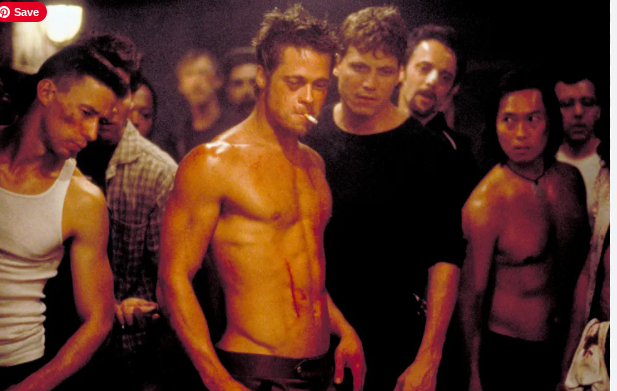
The First Rule of Fight Club: 10 Mind-Blowing Facts You Never Knew About the Cult Classic
When David Fincher’s adaptation of Chuck Palahniuk’s gritty novel first hit the silver screen, it didn’t just arrive—it exploded. Fight Club is more than a movie; it is a cultural earthquake that shook the foundations of consumerist society and redefined the “psychological thriller” for a whole generation of cinephiles. It’s a film about soap, insomnia, and the destructive beauty of hitting rock bottom. But beneath the layers of grime and the sweat of the basement floor lies a production as meticulous and chaotic as Tyler Durden himself.
To understand Fight Club is to understand the obsessive-compulsive brilliance of its director. Fincher is notorious for his “take after take” approach, often demanding dozens of repetitions to strip away the “acting” and find the raw, exhausted truth of a scene. This intensity bled into every frame, resulting in a film that rewards multiple viewings unlike almost any other in modern cinema. Whether you’re a newcomer wondering what all the bruises are about or a veteran “Space Monkey” who has seen the film a hundred times, the following facts offer a deeper look into the madness.
From real-life physical sacrifices to hidden visual messages that blink in and out of existence, the making of this masterpiece is a testament to the power of committed filmmaking. Grab your favorite bar of pink soap and get ready to break the first two rules of the club.
1. The Caffeine Conspiracy: A Starbucks Cup in Every Single Shot
If you look closely enough at the cluttered desks, the trash-filled streets, and the industrial kitchens of the film, you will notice a recurring guest: a Starbucks coffee cup. Director David Fincher has confirmed that there is at least one Starbucks cup hidden in every single shot of the movie (or at least, that was the production goal). This wasn’t a standard product placement deal; rather, it was a satirical jab at the ubiquity of corporate branding in the modern world.
Fincher’s logic was that in a city where consumerism has reached a fever pitch, it is impossible to escape the reach of a global coffee giant. Interestingly, Starbucks was reportedly fine with the film using their cups and name, though they drew the line at one specific scene. They refused to let their brand be used in the “corporate coffee shop” that gets destroyed by a giant rolling ball of art in a later sequence. This detail adds a layer of “Where’s Waldo” style engagement for viewers, turning the film’s critique of capitalism into a subtle, recurring visual gag that reinforces the Narrator’s sense of being trapped in a brand-name world.
2. Commitment to the Craft: Why Brad Pitt Voluntarily Chipped His Front Tooth
Tyler Durden is a character defined by his lack of vanity and his embrace of physical imperfection. To truly inhabit the skin of a man who rejects the “Calvin Klein” lifestyle, Brad Pitt made a radical decision: he visited a dentist to have his front teeth voluntarily chipped. Pitt felt that a man who spends his nights getting punched in the face for fun wouldn’t have a perfect, Hollywood smile.
This level of physical commitment went beyond just dental work. Both Pitt and Edward Norton took extensive lessons in boxing, taekwondo, and grappling to ensure their fight scenes looked authentic rather than choreographed. They even studied hours of UFC footage to understand the “ground and pound” style of fighting that was relatively new to mainstream audiences at the time. The chipped tooth remained for the duration of the shoot, giving Durden a rugged, asymmetrical look that perfectly complemented his “disposable” philosophy. After filming wrapped, Pitt had the tooth repaired, but the legendary dedication to the role remains a hallmark of his career.
3. The Hidden Protagonist: Subliminal Tyler Durden Flashes
Before the Narrator officially meets Tyler Durden on a plane, Tyler has already appeared on screen four times. These aren’t standard appearances, though—they are subliminal flashes, lasting only a single frame (1/24th of a second). These “blips” occur when the Narrator is at his most stressed or sleep-deprived, suggesting that Tyler is a projection of his fracturing psyche that is slowly clawing its way to the surface.
These flashes occur in the doctor’s office, at a support group meeting, when the Narrator’s boss is talking to him, and as he watches a group of people leave a building. Fincher used this technique to mirror the Narrator’s insomnia-driven hallucinations. If you blink, you miss them, which is exactly how the Narrator experiences his own mental decline. It’s a brilliant piece of visual storytelling that rewards the observant viewer and foreshadows the film’s massive twist. Furthermore, Tyler also appears in a “Welcome to Bridgeworth Suites” hotel advertisement on a television, further blurring the lines between reality and the Narrator’s manufactured corporate existence.
4. The “Punch in the Ear” Was a Total Surprise
One of the most famous moments in the film occurs when Tyler Durden is teaching the Narrator how to fight in a parking lot. Tyler tells the Narrator to “hit me,” and the Narrator responds by swinging a clumsy fist. In the script, the punch was supposed to be a fake “stage” hit to the shoulder. However, moments before the cameras rolled, David Fincher pulled Edward Norton aside and whispered for him to actually hit Brad Pitt in the ear.
Norton followed through, delivering a solid, unexpected blow to the side of Pitt’s head. The reaction you see in the film—Pitt wincing in genuine pain and shouting, “You hit me in the ear!”—is 100% real. Norton’s awkward, stifled laugh in response is also authentic, as he was reacting to the shock of actually striking one of the world’s biggest movie stars. This moment of unscripted reality helped ground the fight scenes in a sense of amateurish bumbling, perfectly capturing the theme of two men who have no idea what they are doing but are desperate to feel something real.
5. Helena Bonham Carter’s Left-Handed Makeup Technique
Marla Singer is one of the most enigmatic and “darkly glamorous” characters in cinema history. To achieve her signature “don’t care” look, Helena Bonham Carter came up with a unique requirement for her makeup artist. She insisted that her makeup be applied with the artist’s non-dominant left hand. The goal was to make her eye shadow and lipstick look slightly smudged, uneven, and applied with a sense of haste or indifference.
Bonham Carter felt that Marla wouldn’t spend hours in front of a mirror trying to look perfect; she was a woman who lived in the shadows and likely applied her makeup in the dark or while in a state of emotional distress. This subtle detail contributes to Marla’s chaotic energy and makes her feel like a real person rather than a stylized “femme fatale.” It’s a perfect example of how small, behind-the-scenes choices can build a character’s identity without a single line of dialogue. Her “look” has since become an iconic archetype for the “disheveled chic” aesthetic that defined much of the era’s alternative culture.
6. The Physical Transformation of Meat Loaf and the Fat Suit
Robert “Bob” Paulson, played by the legendary singer Meat Loaf, is the emotional heart of the story. To portray a man who has developed large breasts as a result of testicular cancer treatment (steatopygia), Meat Loaf had to wear a massive, 100-pound fat suit filled with birdseed. The suit was incredibly heavy and hot, making the physical performance an endurance test for the actor.
Because the suit was designed to hang naturally, it gave the character a tragic and vulnerable appearance that resonated deeply with the audience. Meat Loaf famously had to wear the suit during the intense emotional scenes where he hugs Edward Norton, and the “birdseed” filling allowed the suit to sag and move in a way that mimicked real human tissue. Additionally, the actor had to wear lifts to make him significantly taller than Norton, emphasizing his “gentle giant” persona. This physical transformation helped turn a potentially comedic concept into a heartbreaking representation of lost masculinity and the search for belonging within the club.
7. The Secret to Making Explosive Soap
The process of making soap from human fat is a central plot point in the film and the original novel. Tyler Durden explains that “without condiments, there is no survival,” and uses high-end lye and stolen fat to create his product. While the film’s explanation of the chemistry behind soap-making and explosives is famously detailed, the production team actually did their homework to ensure the dialogue sounded plausible.
In the book, Chuck Palahniuk reportedly researched real chemical formulas, though some details were slightly altered for public safety reasons (to prevent people from actually making bombs in their kitchens). During the filming of the “liposuction clinic” scene, where Tyler and the Narrator steal bags of human fat, the production used a specialized synthetic gel that mimicked the consistency and color of rendered fat. The scene is visceral and revolting, serving as a stark metaphor for the “beautiful people” of society literally fueling the destruction of the system that created them. It’s one of the film’s most potent social commentaries, wrapped in a layer of grimy, DIY chemistry.
8. Chuck Palahniuk Thinks the Movie is Better Than His Book
It is rare for an author to admit that a film adaptation improved upon their original work, but Chuck Palahniuk has been vocal about his preference for Fincher’s version. Specifically, Palahniuk praised the film’s streamlined narrative and the way it handled the ending. In the novel, the ending is somewhat more surreal and less “explosive,” involving a psychiatric hospital and a failed bomb plot.
The film’s climax, featuring the synchronized collapse of credit card buildings set to the haunting sounds of “Where Is My Mind?” by the Pixies, created a cinematic moment that Palahniuk felt was more impactful than his own conclusion. He noted that the film was able to make connections and “streamline” the themes of the book in a way that he hadn’t considered. This mutual respect between the author and the director is part of why the adaptation feels so faithful to the spirit of the source material while still standing as its own distinct piece of art.
9. The Narrator and Tyler Durden’s Synchronized Weight Changes
To subtly hint at the relationship between the Narrator and Tyler Durden, Edward Norton and Brad Pitt underwent controlled physical changes during production. As the film progresses, the Narrator (Norton) becomes increasingly gaunt, pale, and sickly. He loses weight and appears to be literally “fading away” as his insomnia and Tyler’s influence take their toll on his body.
In contrast, as the film moves toward the climax, Tyler Durden (Pitt) becomes more muscular, tanned, and vibrant. He seems to be “stealing” the life force and vitality from the Narrator. By the end of the film, they are at opposite ends of the physical spectrum—one is a hollowed-out shell, and the other is a peak specimen of humanity. This visual storytelling reinforces the idea that Tyler is growing stronger as he consumes the Narrator’s identity. It required a strict diet and exercise regimen for both actors, ensuring that their physical forms reflected the internal power struggle happening within a single mind.
10. The Breath in the Cave Was Recycled from Titanic
In one of the film’s most surreal sequences, the Narrator visits his “power animal”—a penguin in an icy cave. As he speaks to the penguin, you can see his breath misting in the cold air. However, the scene was filmed on a standard, climate-controlled set. To save time and money on digital effects, the production “borrowed” the CGI breath from another blockbuster.
The misting breath seen in the cave was actually a leftover digital asset from James Cameron’s Titanic. Because that film required extensive shots of actors breathing in freezing water, the digital “breath” had already been perfected. The Fight Club effects team simply took the existing “cold breath” renders and integrated them into the Narrator’s cave sequence. It’s a fascinating bit of industry crossover; the “king of the world” inadvertently helped a cult classic portray a man talking to a penguin in a psychological hallucination. This small technical detail is a perfect example of the clever resourcefulness found in high-level film production.
Further Reading
- Fight Club: A Novel – Chuck Palahniuk
- David Fincher: Mind Games – Adam Nayman
- The Philosophy of Fight Club – Edited by Thomas E. Wartenberg
- Best. Movie. Year. Ever.: How 1999 Blew Up the Big Screen – Brian Raftery
- Podcast Episode: Classic Films And Horror Icons
- 10 Things You Didnt Know About The Fifth Element (1997)
- 10 The Exorcist III (1990) Movie Facts You Didn’t Know
- 10 Scream (1996) Movie Facts That Changed Horror
- 10 Futurama TV SHOW Facts That Still Hold Up
- 10 Things You Should Know About The Making Of And History Of The Video Game – Diablo II
- 10 Things You Should Know About The Making Of And History Of The Video Game – The Legend of Zelda: Ocarina of Time
- 10 The Lion King (1994) Facts That Made It Iconic – Classic Movie
- 10 Forrest Gump (1994) Facts That Make It Timeless – Classic Movie
- 10 Fight Club (1999) Facts That Still Surprise Fans – Classic Movie



