
While the modern cinematic landscape is filled with interconnected heroes and sprawling narratives, the foundations of this universe were built on the shoulders of giants—one of whom happened to be green, angry, and incredibly misunderstood. The release of The Incredible Hulk in 2008 represented a pivotal moment for Marvel Studios. It was an attempt to course-correct after a previous cinematic outing and to prove that the success of Iron Man wasn’t a fluke.
This film is often referred to as the “forgotten” chapter of the early Marvel era, yet it contains some of the most visceral action and complex character work in the entire genre. From behind-the-scenes creative battles to groundbreaking visual effects, the story of Bruce Banner’s struggle for control is as much a technical marvel as it is a tragic character study. To truly understand how the modern superhero landscape was formed, one must look back at this gritty, grounded take on the Jade Giant.
1. The “Reboot-Quel” Strategy: Distancing Itself from the Past
One of the most confusing aspects for audiences at the time was whether this film was a sequel to the 2003 Hulk directed by Ang Lee. The production team, led by director Louis Leterrier, made a conscious decision to treat the film as a “soft reboot.” While it didn’t explicitly contradict the previous film, it chose to speed through the origin story during an opening credits montage rather than spending an hour on gamma radiation and lab accidents. This allowed the movie to hit the ground running, focusing on a Bruce Banner who had already been in hiding for years.
This strategy was essential for establishing the tone of a new, shared universe. By moving the setting to Brazil and focusing on Banner’s quest for a cure, the filmmakers created a cat-and-mouse thriller atmosphere. The goal was to distance the character from the more psychological, avant-garde approach of the 2003 version and return him to his “fugitive” roots, reminiscent of the classic television series. This choice ensured that the audience remained focused on the immediate stakes of Banner’s survival and his desperate attempt to keep the “monster” inside a cage of meditation and heart-rate monitors.
2. Edward Norton’s Intense Creative Influence and the “Norton Cut”
The casting of Edward Norton as Bruce Banner brought a level of “prestige” to the production, but it also brought a significant amount of creative friction. Norton, known for his meticulous approach to his roles, was not just an actor on the project; he was a primary script doctor. Throughout production, Norton rewrote scenes daily to emphasize character depth, dialogue, and a more somber tone. He envisioned the film as a dark, epic tragedy in the vein of Batman Begins, focusing heavily on Banner’s isolation.
However, this led to a famous clash during the editing process. Marvel Studios and director Louis Leterrier wanted a leaner, faster-paced action movie that clocked in under two hours. Norton and Leterrier reportedly clashed with the studio over a 70-minute chunk of footage that was eventually excised from the final theatrical version. This “lost” footage included extensive dialogue scenes and a much slower build-up to the action. While the theatrical version was a hit, the legend of the “Norton Cut” persists among fans who wonder what a more meditative, character-centric version of this Hulk story would have looked like.
3. The Brazilian Favela Sequence: A Masterclass in Location Scouting
One of the most visually stunning sequences in the film takes place in the winding, claustrophobic alleys of the Rocinha favela in Rio de Janeiro. Director Louis Leterrier insisted on filming on location to capture the authentic, lived-in feel of a man truly trying to disappear from the world. The production team worked closely with local residents to navigate the complex geography of the area. This sequence wasn’t just about aesthetics; it served as a perfect metaphor for Banner’s internal state—trapped, watched, and constantly on the run.
Filming in the favelas presented massive logistical challenges, including transporting heavy camera equipment through narrow stairways and managing the tropical heat. The result, however, was a chase scene that felt far more grounded and kinetic than a typical studio-bound production. It established Bruce Banner as a resourceful survivor rather than just a victim of science. The vibrant colors of the Brazilian landscape contrasted sharply with the cold, sterile military environments that would follow, highlighting the peace Banner was trying to find before his world was once again upended by General Ross.
4. Redesigning a Monster: The Anatomy of the New Hulk
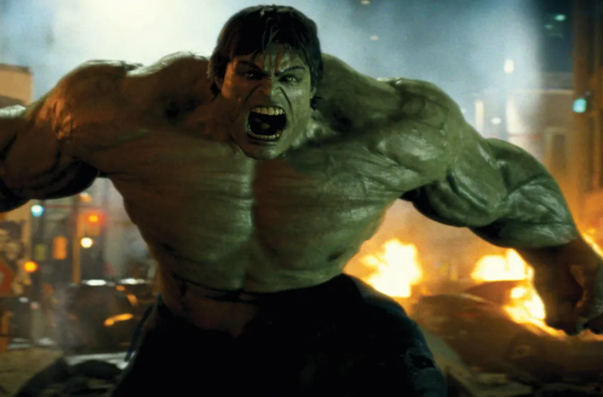
After the 2003 film, which featured a Hulk that many fans felt looked too “bright” and “smooth,” the 2008 production team went back to the drawing board. They wanted a Hulk that looked like a warrior—leaner, more muscular, and visibly burdened by the power he contained. The goal was to move away from the “bodybuilder” look and toward the look of a linebacker or a seasoned fighter. They emphasized vascularity, skin texture, and a darker, more olive-toned skin color to make the character feel like he occupied physical space.
The visual effects team at Rhythm & Hues used advanced muscle-simulation software to ensure that when the Hulk moved, his skin and muscles reacted realistically to the impact. This version of the Hulk was also significantly smaller than the previous cinematic iteration, standing at about nine feet tall. This change was intentional; it made him feel more “human-sized” in his interactions with the environment, allowing for more intimate and impactful fight choreography. The result was a creature that felt less like a cartoon and more like a biological anomaly—a terrifying force of nature that was both awe-inspiring and grotesque.
5. Tim Roth’s Emil Blonsky and the Evolution of the Abomination
To provide a physical threat that could actually challenge the Hulk, the filmmakers introduced the Abomination. However, the path to the monster began with Emil Blonsky, played with menacing intensity by Tim Roth. Unlike many villains who seek power for world domination, Blonsky’s motivation was purely professional—he was an aging soldier who wanted to regain his youthful peak. Roth’s performance grounded the film, showing the seductive and corrupting nature of the Super Soldier program.
When Blonsky finally transforms into the Abomination, the design took a radical departure from the comic books. In the comics, the Abomination has prominent fish-like ears and scales. For the film, the designers opted for a more skeletal, “inside-out” look, with protruding bone spurs and a distorted spine. They wanted to show that the transformation was painful and wrong—a perversion of the process that created the Hulk. This design choice emphasized the contrast between the two: while the Hulk represents repressed rage, the Abomination represents unchecked, tactical aggression. The final battle in Harlem remains one of the most brutal “monster vs. monster” brawls in modern cinema.
6. The Captain America Connection: The Frozen Shield Secret
Long before the “First Avenger” made his debut, The Incredible Hulk dropped a massive hint about the broader world. In an alternate opening sequence (which was featured prominently in the marketing and on home media releases), Bruce Banner travels to the remote Arctic to end his life. As he prepares to pull the trigger, he transforms, and the Hulk smashes a massive glacier in a fit of rage. For a split second, as the ice shatters, a human figure and a circular shield can be seen frozen deep within the ice.
This was a deliberate “Easter egg” intended to signal that Captain America was already part of the cinematic plans. While the scene was ultimately cut from the theatrical version because it was deemed too dark for the film’s opening, it became a legendary piece of trivia. It showed that the architects of this cinematic universe were already thinking several steps ahead, planting seeds that would take years to bloom. This connection reinforced the idea that the gamma research conducted by Banner was directly linked to the lost “Super Soldier” serum of the 1940s, tying the history of the world together.
7. The Voice of the Beast: Lou Ferrigno’s Triple Role
In a touching tribute to the character’s history, Lou Ferrigno—the man who played the Hulk in the iconic 1970s television series—was heavily involved in the 2008 production. Ferrigno provided the vocalizations for the Hulk, lending his legendary growls and roars to the digital character. This provided a sonic link between the new era of the Hulk and the version that had defined the character for a generation of fans. When the Hulk speaks his few lines of dialogue, it is Ferrigno’s gravelly voice that audiences hear.
Beyond the voice work, Ferrigno also makes a physical appearance in the film. During the sequence where Bruce Banner sneaks into the university to access his old data, he bribes a security guard with a pizza. That security guard is played by Lou Ferrigno. This cameo served as a “passing of the torch” and was a way for the filmmakers to acknowledge the legacy of those who had portrayed the character before. It was a moment of pure fan service that respected the roots of the franchise while pushing it into the high-tech future of digital effects.
8. Revolutionary Sound Design and the “Hulk Smash”
The auditory experience of The Incredible Hulk was designed to be as overwhelming as the visuals. The sound team didn’t just want the Hulk to sound loud; they wanted him to sound heavy. To achieve this, they layered the sounds of animal roars—including lions, tigers, and even walruses—with low-frequency mechanical noises. Every time the Hulk’s foot hit the ground, the sound designers incorporated the “boom” of a cannon or a controlled explosion to give the character a sense of immense weight and power.
The most iconic auditory moment, however, is the “Hulk Smash” during the final battle in Harlem. This was the first time the catchphrase was used in a modern live-action film, and the sound team ensured it landed with maximum impact. They treated the line not just as dialogue, but as a sonic event that cleared the surrounding noise of the city. The combination of Lou Ferrigno’s voice, the silence that preceded the shout, and the explosive sound of the Hulk clapping his hands together created a cinematic moment that defined the character’s raw, unbridled strength for a new generation.
9. The Tony Stark Cameo: Building the First Bridge
The final scene of The Incredible Hulk is perhaps its most famous, as it served as the very first “crossover” moment in the burgeoning Marvel Cinematic Universe. As General Ross sits in a bar, drowning his sorrows after the chaos in Harlem, he is approached by none other than Tony Stark. This brief interaction, where Stark mentions they are “putting a team together,” was an earth-shattering moment for comic book fans. It was the first time characters from two different film franchises acknowledged each other’s existence in a shared reality.
This cameo was filmed late in production to ensure it could be included as a surprise for audiences who had just seen Iron Man a few months prior. It served as a narrative bridge, suggesting that the events of both films were happening in the same world and that a much larger story was unfolding in the background. It also helped rehabilitate the film’s image by tethering it to the massive success of the Stark-centric film. This moment essentially gave birth to the concept of the “post-credits” or “end-of-movie” stinger as a tool for massive hype and world-building.
10. The Legacy of the Recast: A Unique Time Capsule
History ultimately took a turn that made The Incredible Hulk a unique “time capsule” within its franchise. After the film’s release, creative and contractual differences led to Edward Norton being replaced by Mark Ruffalo for future appearances of the character. This makes the 2008 film the only entry in its sprawling cinematic universe to feature a different lead actor for a major hero. Because of this, the film has a distinct, standalone energy compared to the movies that followed.
Despite the recasting, the film remains essential viewing because it establishes the foundational lore for several major supporting characters. The film’s cliffhangers—such as the transformation of Samuel Sterns into the Leader or the complicated relationship between Bruce and Betty Ross—remained dormant for years before being revisited in later chapters of the saga. This film serves as the gritty, intense “prologue” to the character’s journey, offering a version of the Hulk that is more dangerous, more tortured, and more physically imposing than any other iteration. It stands as a testament to the fact that even in a world of gods and aliens, the most compelling stories are often about the monsters we carry within ourselves.
Further Reading
- MCU: The Reign of Marvel Studios by Joanna Robinson, Dave Gonzales, and Gavin Edwards
- The Art of The Incredible Hulk by John Rhett Thomas
- Marvel Studios: The First Ten Years by Titan Books
- Hulk: The Incredible Guide by Tom DeFalco
- Marvel Cinematic Universe – 10 Things You Need To Know About The MCU’s Spider-Man (MCU) Explained
- The Marvel Blueprint: 10 Genius Ways the MCU Mastered the Art of the Interconnected Universe
- Infinite Realities: The Ultimate Guide to the MCU’s Multiverse Saga and What Lies Beyond the Sacred Timeline
- From Stones to Stars: The Ultimate Guide to the Infinity Saga and How It Changed Cinema Forever
- Earth’s Mightiest Heroes: The Ultimate Guide to the Avengers and Why They Rule the MCU
- The Genius Behind the Armor: 10 Defining Secrets of the MCU’s Iron Man Explained
- 10 Things You Need To Know About The Movie Iron Man 3 (2013)
- 10 Things You Need To Know About The Movie The Avengers (2012)
- 10 Things You Need To Know About Captain America: The First Avenger (2011)
- 10 Things You Need To Know About Thor (2011)



